
A pickleball court is 20×44 feet with a net 34 inches at center.
If you want a court that plays true and feels safe, the details matter. I’ve laid out and advised on dozens of builds, and this guide breaks down pickleball court dimensions in clear, simple steps. You’ll learn what to measure, why it matters, and how to get a pro result without guesswork.
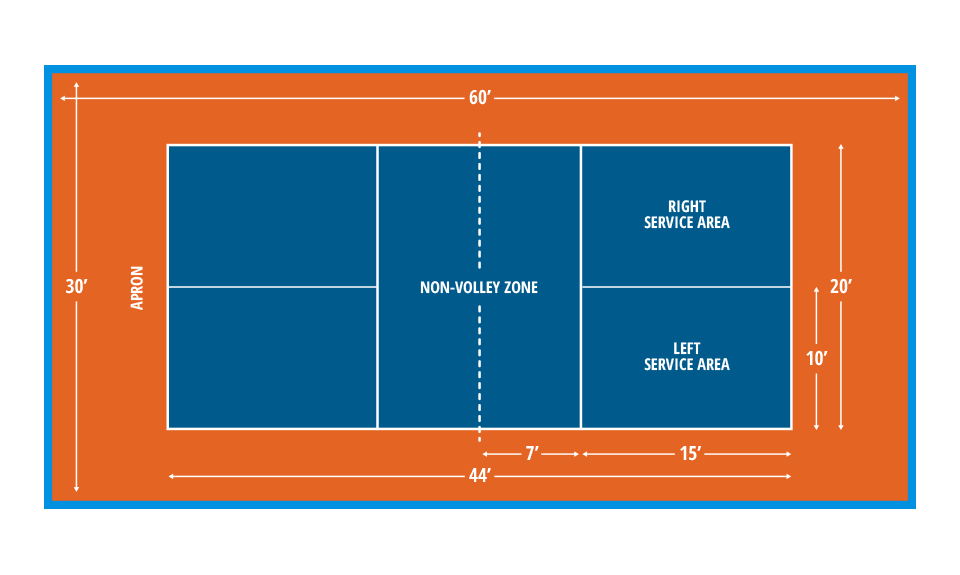
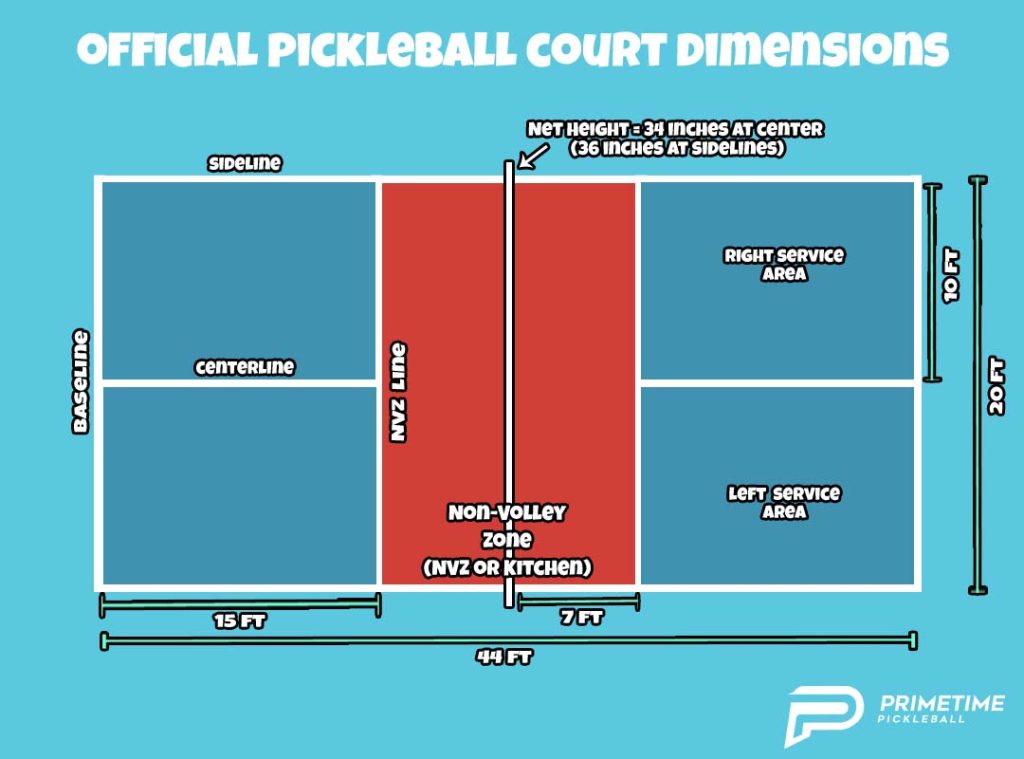
Official pickleball court dimensions
The standard court is the same for singles and doubles. If you follow these numbers, your court will match official play.
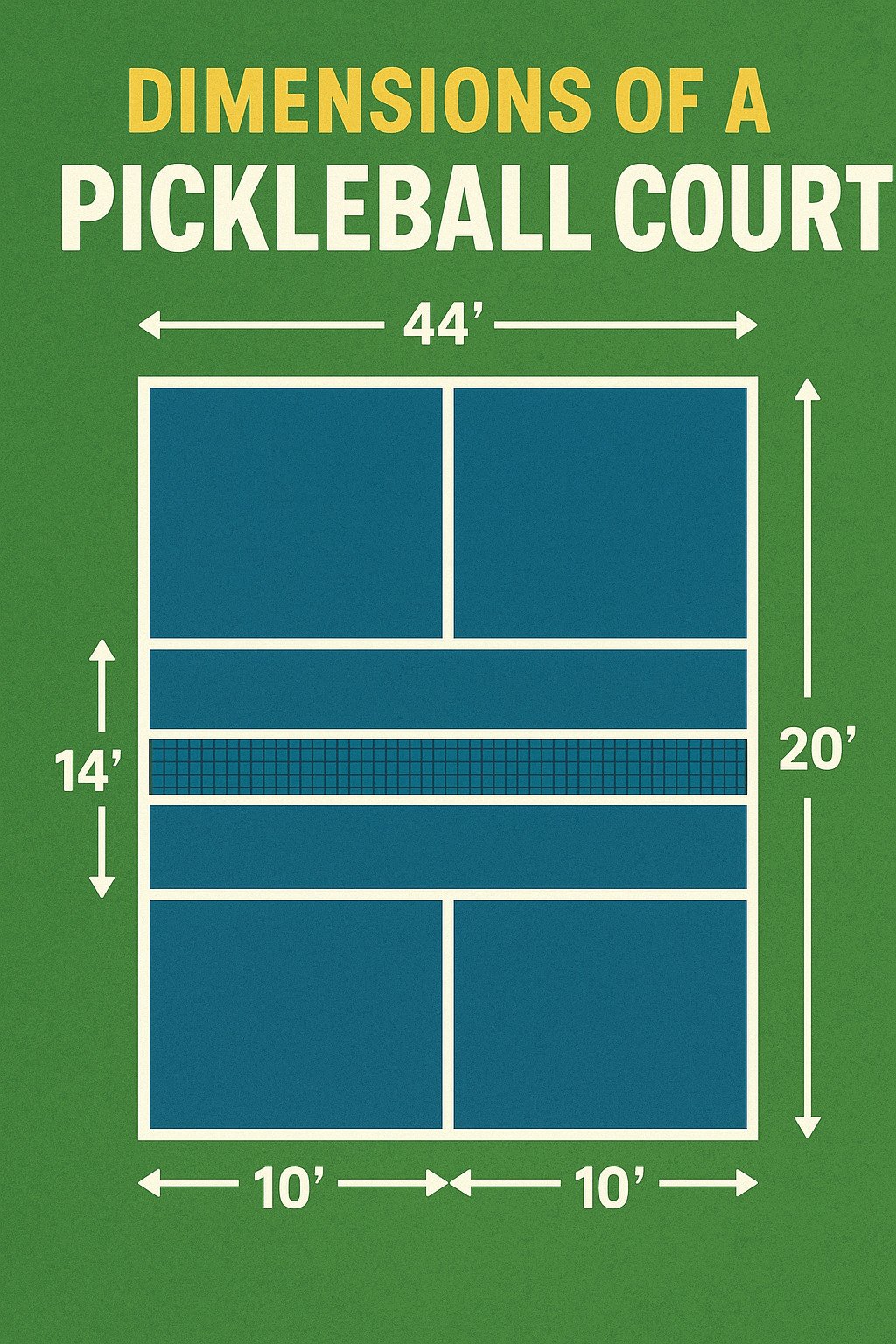
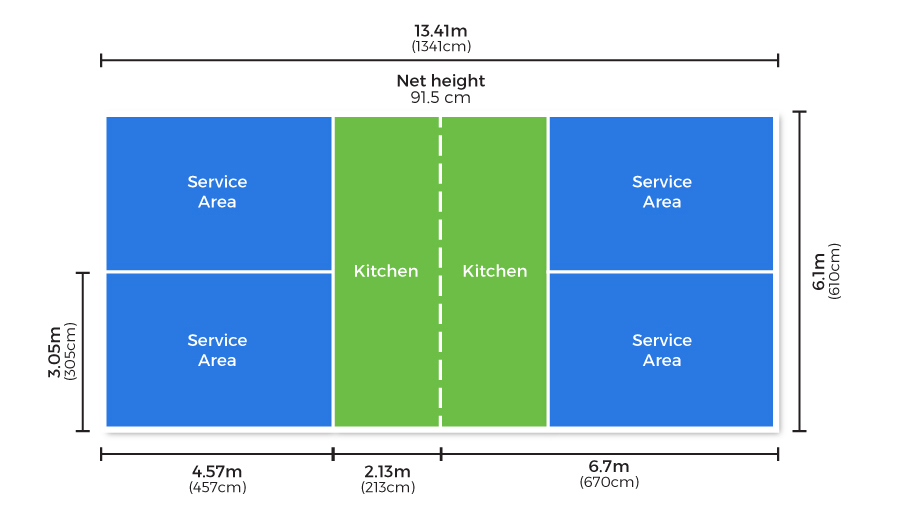
- Court size: 20 feet wide by 44 feet long
- Non-volley zone (kitchen): 7 feet from the net on both sides
- Service areas: two boxes per side, each 10 by 15 feet
- Net height: 36 inches at the sidelines, 34 inches at center
- Line width: 2 inches; lines are part of the court
- Post spacing: 22 feet apart, measured inside to inside
- Net length: about 21 feet 9 inches to fit between posts
These pickleball court dimensions are the base for every step that follows. Keep them handy as you plan and measure.

Lines and zones explained
Each line has a job. Get them right and rallies run smooth.
- Baselines: The back lines. Serves must land past the kitchen line and inside the side and baseline.
- Sidelines: The outer edges of the 20-foot width. Balls touching the line are in.
- Non-volley zone line: Runs parallel to the net at 7 feet. The line is part of the kitchen.
- Centerline: Splits each side into left and right service boxes. It runs from the kitchen line to the baseline.
- Service boxes: Each is 10 by 15 feet. Serves go crosscourt into the opposite box.
A common mistake is drawing skinny lines. Keep lines 2 inches wide. This affects calls and play feel. These details define true pickleball court dimensions.
Space and layout requirements around the court
The court is 20 by 44 feet. Players need safe space around it.
- Minimum total play area: 30 by 60 feet
- Recommended total play area: 34 by 64 feet
- Side clearance: 5 to 7 feet per side
- Baseline clearance: 8 to 10 feet behind each baseline
More space means fewer collisions and better chase-downs. If you can only hit the minimum, keep fences, walls, and benches well outside the play zone. This is where many DIY builds fail. Smart space planning supports the right pickleball court dimensions.
Indoor vs outdoor considerations
Indoors and outdoors play different. Plan for light, sound, and weather.
- Orientation outdoors: Run courts north–south to reduce sun glare.
- Lighting: Aim for even light with at least 30 foot-candles on the court. Avoid shadows across the kitchen line.
- Wind: Add wind screens on fences outdoors. It helps ball flight and noise control.
- Noise: If neighbors are close, use acoustic screens or softer balls. It keeps peace.
- Clearance indoors: Keep walls and obstacles out of the play area. Aim for the recommended 34 by 64 feet when possible.
- Floor grip: Indoor surfaces need good traction with ball-friendly texture.
Match your build to your setting. Good conditions make correct pickleball court dimensions shine.

Nets, posts, and center height
The net is simple but easy to get wrong.
- Post centers: 22 feet apart, measured inside to inside
- Net height: 36 inches at the posts, 34 inches at center
- Tension: Firm enough to avoid sag, but not over tight
- Portable nets: Choose sturdy frames that hold 34 inches at center
- Center support: Many portable nets include a center strap or bar to keep height true
Always measure net height before play. A one-inch error changes lobs, dinks, and drives. Correct net setup completes your pickleball court dimensions.

Marking and measuring a court step-by-step
Use simple tools. Take your time. Measure twice.
Tools I use often:
- 100-foot tape measure or measuring wheel
- String line and chalk
- Painter’s tape or court tape (2 inches wide)
- Carpenter’s square
- Temporary stakes or cones
Steps:
- Snap a center line for the 44-foot length. Mark both baselines.
- Measure 10 feet left and right from the center to set the 20-foot width.
- Square the corners. Use 3-4-5 triangles or check diagonals.
- For diagonals, a 20 by 44 rectangle has diagonals of about 48.33 feet. Match both.
- Mark the net line across the center. Add the kitchen line 7 feet from the net on both sides.
- Mark the centerlines from each kitchen line to each baseline.
- Tape or paint 2-inch lines. Keep edges crisp.
- Set posts 22 feet apart inside to inside. Install and tension the net.
- Measure net height: 36 inches at posts, 34 inches at center.
- Walk the court. Fix any wavy lines before the paint cures or tape sets.
This process locks in true pickleball court dimensions. Small checks prevent big rework.
Converting other courts or driveways
You can convert many spaces. Safety still comes first.
- Tennis courts: A full tennis court can hold up to four pickleball courts. Use portable nets and clear tape for shared use.
- Badminton: The length matches at 44 feet. Widen to 20 feet and add the kitchen lines.
- Basketball or parking lots: Check slope, cracks, and drainage. Add at least 5 feet of side space and 8 feet behind baselines.
- Driveways: Watch for car traffic and slopes. Use temporary lines and portable nets. Safety before play.
Keep lines visible but not slick. Court tape can get slippery when wet. Choose tape with texture that plays well and matches pickleball court dimensions.
Surfaces, colors, and ball visibility
Good surfaces protect joints and help the ball read.
- Base: Asphalt or concrete with a smooth, sound sub-base
- Coating: Acrylic sport surfacing with light texture for grip
- Colors: Use two-tone courts. Dark in play area, lighter in the kitchen or vice versa
- Contrast: Pick colors that make the ball pop in your light
- Slope: Gentle slope for drainage outdoors, under 1 percent and away from play traffic
A clear, matte finish helps you see spin and bounce. The right surface supports official pickleball court dimensions and fair calls.
Common mistakes and how to avoid them
I see the same problems again and again. Fix them before they start.
- Kitchen too shallow or too deep. Measure 7 feet exactly from the net.
- Net too high or too low. Check 36 inches at posts and 34 inches at center every time.
- Skewed rectangle. Confirm both diagonals match.
- Not enough run-off. Plan for at least 30 by 60 feet total.
- Slippery lines. Use textured paint or tape with grip.
- Bad orientation. Face courts north–south to manage sun.
- Poor contrast. Choose line and surface colors that stand out.
These quick checks protect your pickleball court dimensions and your players.
Budget, build, and maintenance basics
Costs vary by site. Plan the work in clear stages.
- Typical outdoor build: Site prep, base, posts, surface, lines, and fencing
- Budget range: Often mid five figures for a full, permanent court. Site work drives cost.
- Permits: Check local codes before you dig
- Drainage: Grade for steady water runoff. Keep water away from baselines
- Joints and cracks: Use proper crack fillers and expansion joints
- Care: Blow off grit, wash the surface, and touch up lines each season
- Lighting: Plan conduit early. Even light helps calls and keeps pickleball court dimensions readable at night
A steady maintenance plan extends surface life and keeps play safe.
Measurement cheatsheet and quick facts
Keep this list on your phone or clipboard.
- Court: 20 by 44 feet
- Kitchen: 7 feet from net on both sides
- Net: 36 inches at posts, 34 inches at center
- Lines: 2 inches wide and in-bounds
- Service boxes: 10 by 15 feet each
- Post spacing: 22 feet inside to inside
- Total area: 30 by 60 feet minimum, 34 by 64 feet ideal
- Diagonals: About 48.33 feet for a perfect rectangle
- Orientation: North–south outdoors
Use these quick facts to verify pickleball court dimensions at a glance.
Frequently Asked Questions of pickleball court dimensions
What are the official pickleball court dimensions?
The court is 20 feet wide by 44 feet long for singles and doubles. The non-volley zone is 7 feet deep on each side of the net.
How high is a pickleball net supposed to be?
It is 36 inches high at the sidelines and 34 inches at the center. Measure both points to confirm proper tension.
How much space do I need around a pickleball court?
Aim for 30 by 60 feet at minimum for the full play area. If you can, 34 by 64 feet feels safer and more comfortable.
Can I put a pickleball court in my driveway?
Yes, if the surface is safe and fairly level. Use portable nets and 2-inch tape, and keep cars and obstacles away from the play zone.
Can four pickleball courts fit on a tennis court?
Yes, many facilities fit four with portable nets and careful lines. Mind aisles between courts for safe movement.
Are the lines included in or out of bounds?
Lines are in. If the ball touches any part of a line, it counts as in.
Do indoor pickleball court dimensions differ from outdoor?
The dimensions are the same. The differences are in lighting, space clearance, and surface traction.
Conclusion
Great rallies start with accurate pickleball court dimensions and smart space planning. Measure with care, check your net, and give players safe room to move. Small details shape big moments on court.
If you are setting up at home or at a club, use the steps and cheatsheet here. Build once, play for years. Want more guides like this? Subscribe, share your questions, or drop your layout wins in the comments.