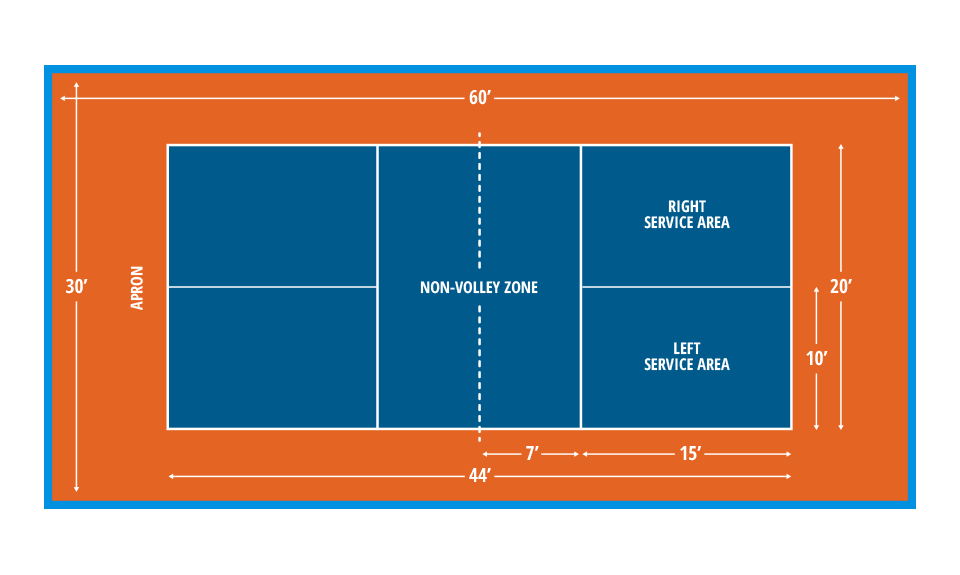
Pickleball court size is 20 feet wide by 44 feet long, lines included.
If you want clear, trusted guidance on pickleball court size, you’re in the right place. I’ve mapped, taped, and built courts for homes, schools, and clubs. In this guide, I’ll break down the dimensions, space needs, and setup steps you can use today. You’ll learn how to avoid costly mistakes and build a court that feels great to play on.
What Is the Official Pickleball Court Size?
The official pickleball court size is 20 feet by 44 feet for both singles and doubles. All boundary lines are part of the court. The non-volley zone, often called the kitchen, is 7 feet from the net on each side.
Key specs you can trust:
- Court size: 20 feet wide by 44 feet long
- Net height: 36 inches at the sidelines, 34 inches at the center
- Non-volley zone (kitchen): 7 feet from the net on each side
- Service areas: Two boxes per side, each 10 feet wide by 15 feet deep
- Line width: 2 inches, and lines count as in
I keep a simple mantra on site: measure twice, paint once. It saves time and keeps your pickleball court size accurate and fair for play.
Court Layout Explained: Lines, Zones, and Measurements
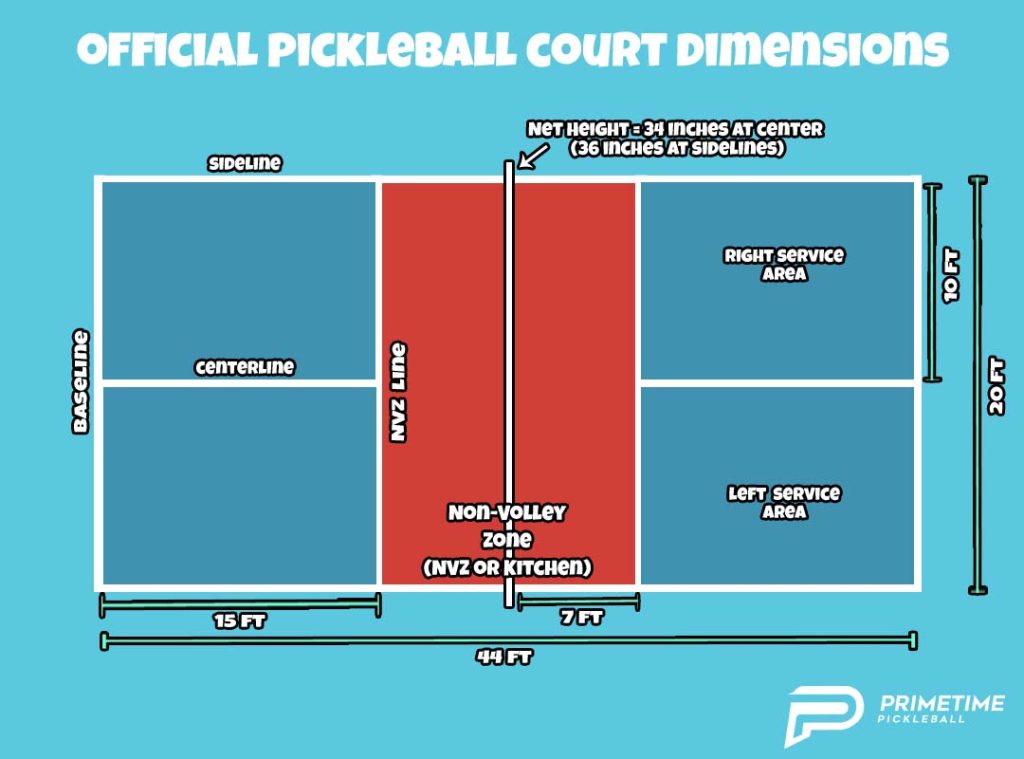
Think of the court as a rectangle split into clear zones. The more you know these zones, the better you set up and play.
Core parts:
- Baselines and sidelines: Mark the 20-by-44 rectangle. Lines are 2 inches wide.
- Centerline: Splits each side into right and left service boxes. It runs from the non-volley line to the baseline.
- Non-volley line: 7 feet from the net on each side. This line and space are the kitchen.
- Service boxes: Each is 10 feet wide and 15 feet deep. You must serve to the box cross-court.
Tip from experience: I use a bright chalk first to preview the layout. Players can rally on the chalk court, then I paint once the flow feels right. This keeps your pickleball court size true and the lines clean.

Space You Need Beyond the Lines
The marked 20-by-44 feet is only part of the plan. You also need safe run-off and room for movement.
Recommended play area:
- Minimum total space: 30 feet by 60 feet
- Preferred total space: 34 feet by 64 feet for tournament-level comfort
- Indoor ceiling: Aim for at least 18 to 20 feet clear height
Why it matters: Extra space reduces collisions, helps on lobs, and improves safety. When I added 2 extra feet behind each baseline at a rec center, players stopped stepping into the back fence. Your pickleball court size works best when the space around it supports open play.
Indoor vs Outdoor Pickleball Court Size and Surface
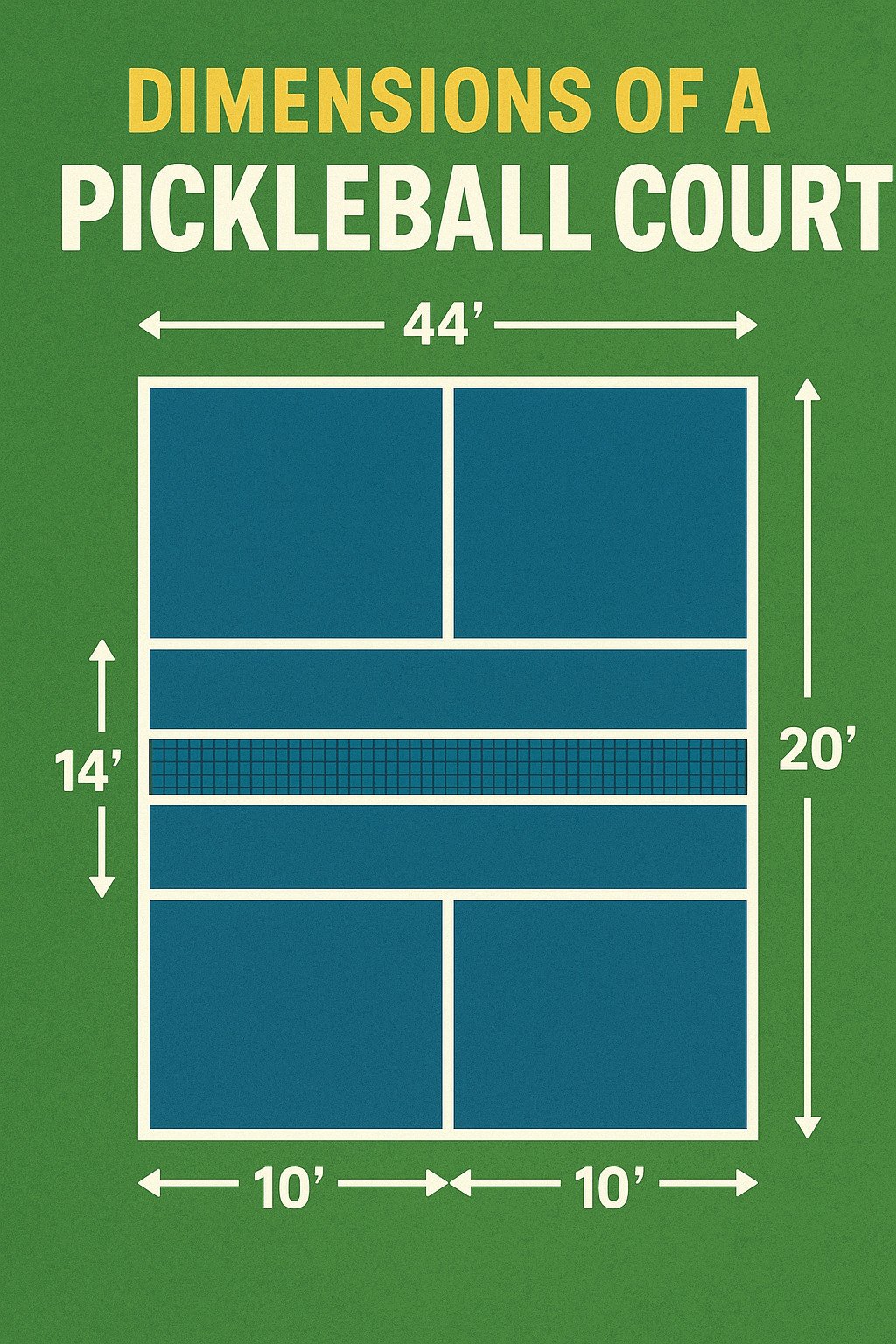
The pickleball court size is the same indoors and outdoors. But the surface, light, and ball choice change the feel.
What to consider:
- Indoor surfaces: Wood, vinyl sport tiles, or rubberized floors. They offer a smooth bounce and soft joints.
- Outdoor surfaces: Acrylic over asphalt or concrete. They add texture for grip and a crisp bounce.
- Lighting: Even, non-glare light helps judge depth. Aim for bright, uniform coverage.
- Ball choice: Indoor balls have larger holes and fly slower. Outdoor balls are firmer with smaller holes.
Pro note: If you play both, keep the same net and line colors. Your eyes adapt fast and you switch cleanly while keeping the same pickleball court size feel.

Building or Marking a Court: Step-by-Step Setup
Use this simple process to mark an accurate pickleball court size, fast.
What you need:
- 100-foot tape measure and a 25-foot tape
- Chalk line, painter’s tape or court tape, and a straight edge
- Square tool or 3-4-5 triangle method for right angles
- Portable net or a fixed net system
- Non-slip outdoor paint if making it permanent
Steps:
- Snap the center line of your space. This helps you square the court.
- Mark the baseline ends 20 feet apart. Use a square to set right angles.
- Measure 44 feet from one baseline to the other. Mark all corners.
- Check the diagonal distances match. This confirms your rectangle is square.
- Add the non-volley lines at 7 feet from the net on each side.
- Add the centerlines from the non-volley line to the baseline.
- Tape or paint all lines to 2-inch width. Keep edges crisp.
- Set the net to 36 inches at posts and 34 inches at center.
I always run a dry rally before paint cures. Any odd angles stand out fast. This quick test keeps your pickleball court size consistent across builds.
Converting a Tennis or Driveway Space
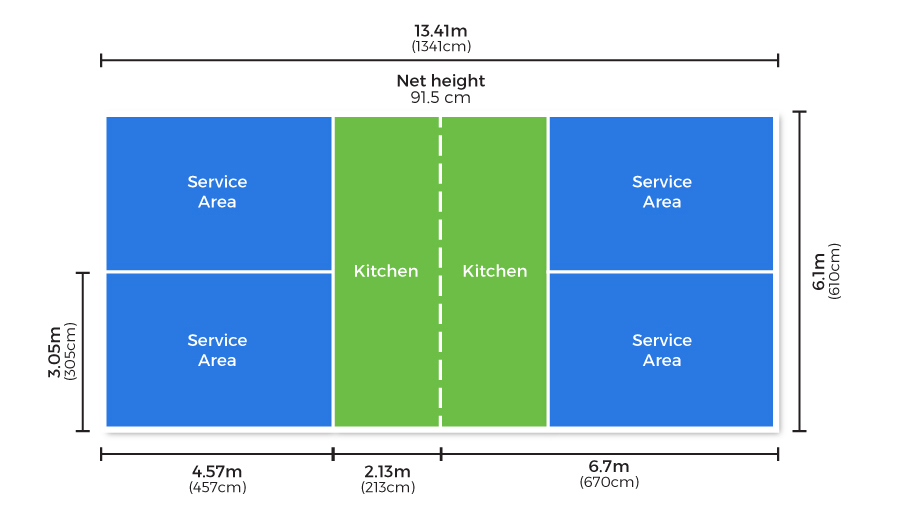
You can turn a tennis court or driveway into a great court with the right layout. The pickleball court size fits well in many places.
Tennis court conversions:
- One tennis court can fit 2 to 4 pickleball courts
- For 4 courts, use a tight layout and shared run-off. For 2 courts, enjoy more space
- Use portable nets if you need a quick setup
- Aim for a north-south orientation to reduce glare from the sun
Driveway setups:
- Check slope. A small slope is fine; steep slopes hurt play
- Use removable court tape or chalk to avoid damage
- Watch for drains and cracks. Fill and smooth first for safety
I’ve set up four courts on a single tennis court for weekend events. We used clear aisle space and bright corner markers. Players loved the flow, and the pickleball court size felt true even in a shared space.

Common Mistakes and Pro Tips from Experience
Small errors can ruin play. Here are the ones I see most and how to fix them.
Mistakes to avoid:
- Measuring the kitchen from the net posts, not the net cord. Measure from the net plane.
- Using thin or uneven lines. Lines must be 2 inches wide and crisp.
- Letting the net sag below 34 inches at center. Check often during play.
- Tight run-off behind baselines. Add a few feet if you can.
Pro tips:
- Use a string line to set a straight non-volley line.
- Test serves from both sides before paint. Adjust centerlines if needed.
- Pick a line color with strong contrast to the surface.
- Recheck key sizes after any surface resurface to keep your pickleball court size within spec.

Source: pickleballmax.com
Cost, Materials, and Maintenance Snapshot
Your budget will shape the path. You can go simple or pro-grade.
Typical costs:
- Temporary tape court: 30 to 60 dollars for tape and chalk
- Portable net: 120 to 250 dollars for a sturdy, regulation model
- Temporary line paint kits: 70 to 150 dollars
- Permanent acrylic court over asphalt or concrete: about 3 to 7 dollars per square foot for coatings, not including base work
- Full backyard builds with base, fence, and lights: often 8,000 to 25,000+ dollars based on site work and features
Maintenance tips:
- Sweep often. Dust and grit reduce grip and wear lines.
- Clean lines with mild soap. Bright lines help calls.
- Check net height before matches. Adjust center strap as needed.
- Recoat outdoor surfaces every few years depending on wear.
I track wear patterns. If the kitchen shows fast wear, I suggest a light texture topcoat. It boosts grip and extends the life of your pickleball court size markings.
Frequently Asked Questions of pickleball court size
Is the pickleball court size the same for singles and doubles?
Yes. The standard pickleball court size is 20 by 44 feet for both formats. You do not change the lines or net.
How high is the pickleball net supposed to be?
The net is 36 inches at the sidelines and 34 inches at the center. Use a center strap or a quick ruler check.
How big is the kitchen in pickleball?
The non-volley zone is 7 feet from the net on each side. The line is part of the kitchen.
What total space do I need around the court?
Aim for at least 30 by 60 feet for safe play. If you can, 34 by 64 feet feels better and supports more advanced shots.
Can I fit multiple pickleball courts on one tennis court?
Yes. One tennis court can fit 2 to 4 pickleball courts. Use portable nets and plan aisles for safe movement.
Are the lines part of the court in pickleball?
Yes, all lines are in. If the ball touches any line, it is in.
What is the best surface for a backyard pickleball court?
Acrylic over asphalt or concrete is common and durable. It gives a consistent bounce and clear traction.
Conclusion
Now you know the official pickleball court size and how to set it up with confidence. You can map lines, plan safe run-off, and pick surfaces that fit your budget and goals. A well-planned court lifts play, reduces injuries, and makes every rally more fun.
Ready to build or upgrade? Save this guide, share it with your crew, and start marking your space today. Got a question about your layout? Drop it in the comments and I’ll help you dial it in.