A pickleball court is 20 by 44 feet with a 7-foot non-volley zone.
If you’ve ever wondered what does a pickle ball court look like, you’re in the right place. I’ve designed, painted, and played on countless courts, and I’ll walk you through the shapes, lines, colors, and key details that matter. By the end, you’ll be able to picture what does a pickle ball court look like from memory and spot mistakes before they happen.

What Does a Pickle Ball Court Look Like: Dimensions and Layout
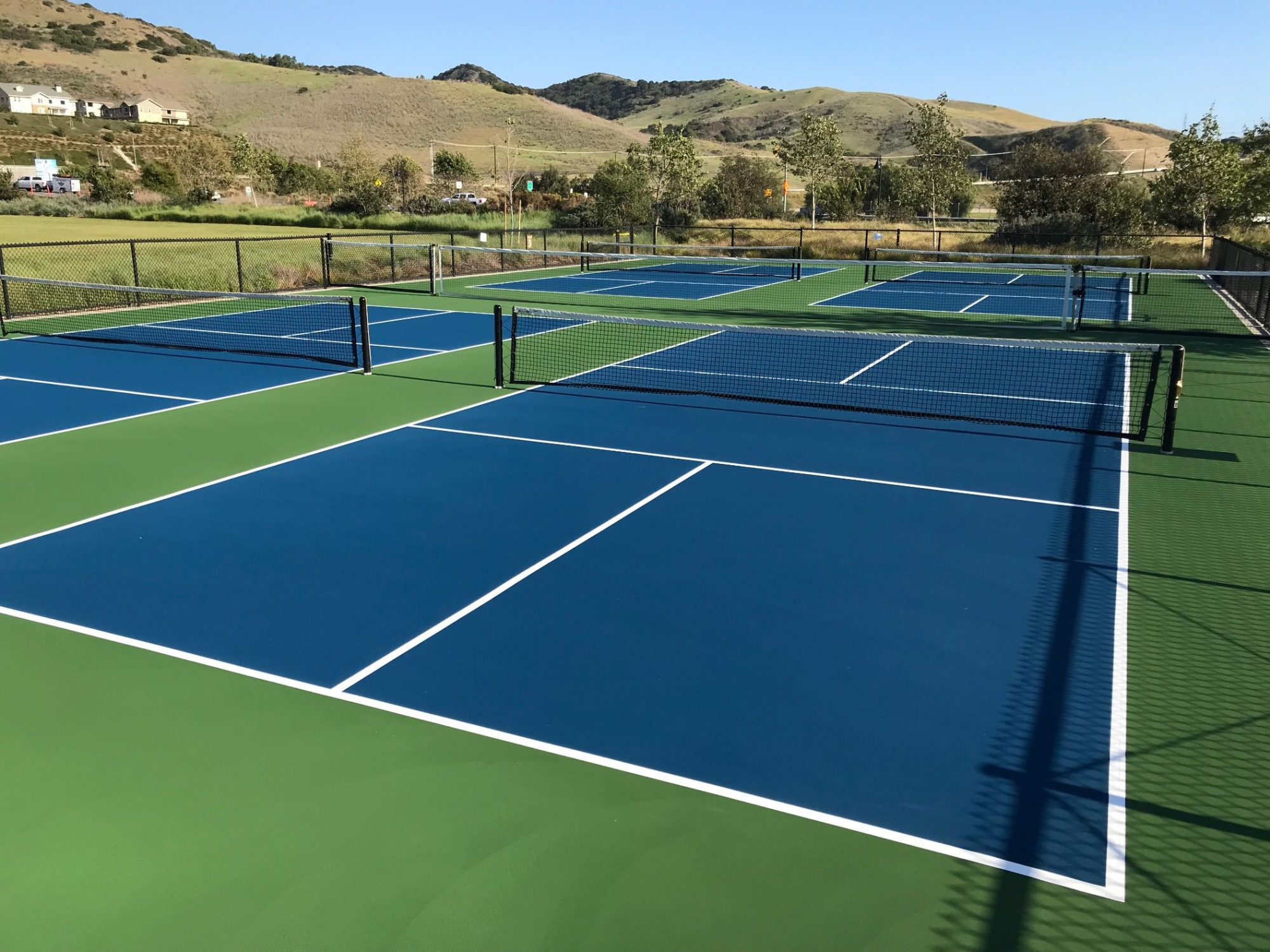
A standard pickleball court is a rectangle that is 20 feet wide and 44 feet long. This size works for both singles and doubles. The net splits the court in half, so each side is 20 by 22 feet.
Two main areas make up each side. The non-volley zone, often called the kitchen, is a 7-foot strip measured from the net. The rest of the side is the service area, divided into left and right service courts by a centerline.
Key lines and zones you’ll see:
- Baselines run along the back edges of the court.
- Sidelines mark the left and right edges.
- The non-volley zone line is 7 feet from the net on both sides.
- A centerline splits each service area into left and right courts.
If you’re trying to learn what does a pickle ball court look like, remember this: a compact 20-by-44 box, a net in the middle, a 7-foot kitchen on each side, and clean, high-contrast lines that guide every rally.
The Net and Posts: Heights, Tension, and Feel
The net is 36 inches high at the sidelines and 34 inches high at the center. That slight dip helps keep the ball in play and rewards smart shots. Posts sit just outside the sidelines so the net spans about 22 feet.
A good net has a durable top cord and solid tension. You want a firm net that does not billow in wind or sag in the middle. When people ask what does a pickle ball court look like up close, I tell them to check the net first. If the center sits at 34 inches and the sides at 36, the court is set right.

Lines, Colors, and Surface Materials
Lines are usually 2 inches wide in a color that contrasts with the surface. On most courts, the lines are white. Some facilities use a colored non-volley zone to help beginners see the kitchen fast.
Common surface choices include:
- Acrylic over asphalt or concrete for outdoor courts.
- Modular plastic tiles for quick installs or rooftop decks.
- Hardwood or synthetic sports floors for indoor gyms.
Color schemes vary, but blue, green, and teal are popular because they boost ball visibility. When someone asks what does a pickle ball court look like from a distance, I say to picture a bright, matte surface with crisp lines and a clear kitchen zone you can spot at a glance.
Space Around the Court, Fencing, and Safety
For safe play, plan for a minimum total area of about 30 by 60 feet per court. The ideal footprint is closer to 34 by 64 feet. That extra buffer lets players chase lobs without hitting a fence or bench.
Smart safety and comfort tips:
- Use fences 8 to 10 feet high with smooth gates.
- Add windscreens to cut glare and wind.
- Provide benches, water, and shade where you can.
After helping site several community builds, I learned a simple rule. If you want what does a pickle ball court look like at a quality club, think clean lines, strong nets, and enough run-off space so players feel free to move.

Indoor vs. Outdoor and Temporary Setups
Indoor courts often share space with basketball or volleyball. You’ll see taped or painted pickleball lines laid over other markings. Good lighting matters indoors. Aim for bright, even light with minimal glare and clear ball visibility.
Outdoor courts face sun and wind. North-south orientation helps cut sun in players’ eyes. For temporary setups, portable nets and removable court tape work well. If you wonder what does a pickle ball court look like in a driveway or parking lot, think portable nets, 2-inch tape, and cones for buffers.
Personal tip from many pop-up clinics: use thin vinyl court tape instead of painter’s tape when possible. It lays flatter, lasts longer, and peels cleaner.

How Each Line Works During Play
Once you know what does a pickle ball court look like, learn how the lines affect scoring and shots. Details matter, and small mistakes can change calls.
Here’s how each line behaves:
- Baseline: Serves must land in the opposite service court, beyond the non-volley zone.
- Sidelines: Balls landing on the line are in.
- Non-volley zone (kitchen) line: It is part of the kitchen. If your foot is on this line, you can’t volley.
- Centerline: Guides serves to the correct left or right service box.
In real matches, I see most confusion at the kitchen line. A volley with any toe on or over that line is a fault. Knowing this helps new players picture what does a pickle ball court look like during a rally, not just on paper.
Comparing Pickleball, Tennis, and Badminton Courts
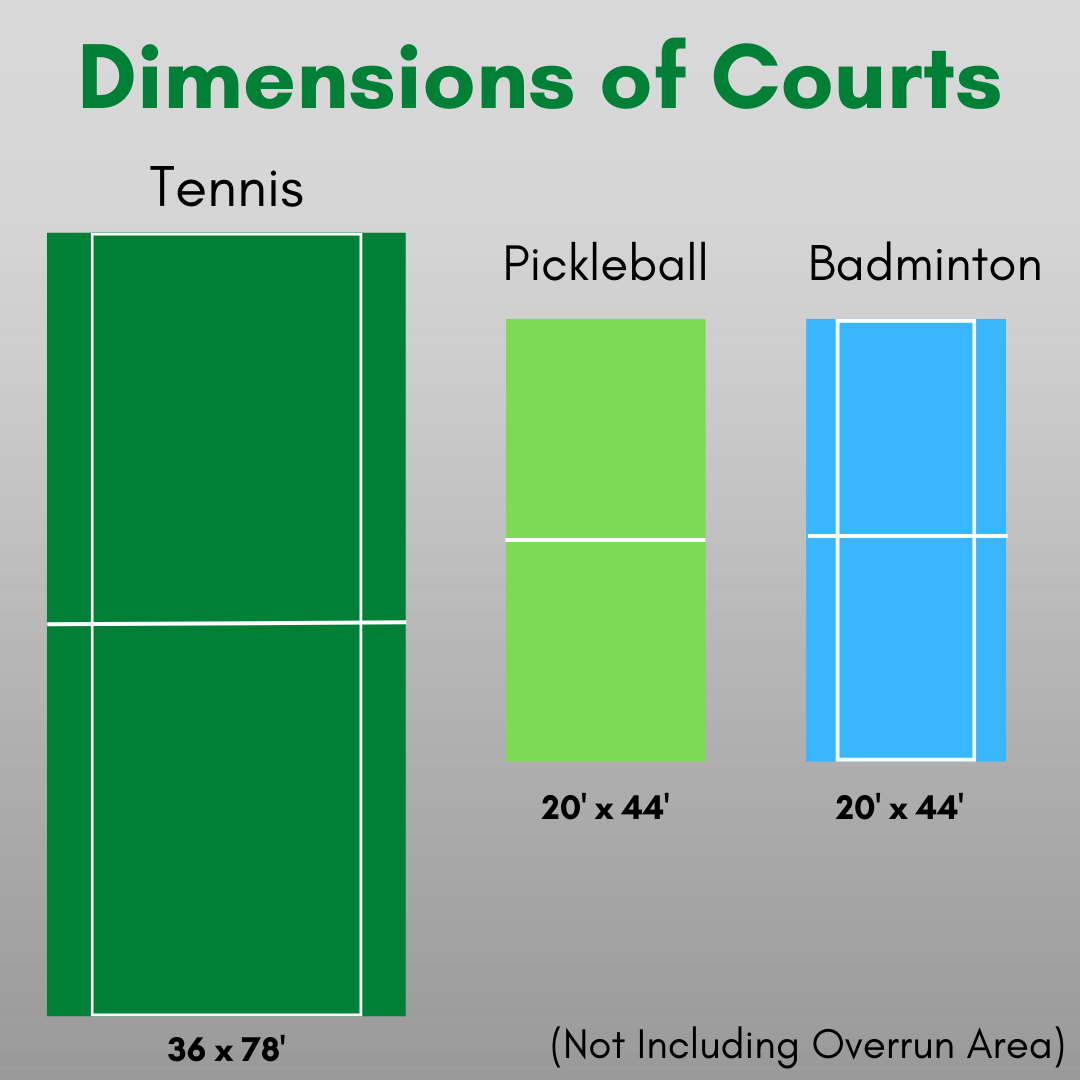
Tennis courts are much larger, and the net is higher, so the space feels open and long. Badminton doubles courts are the same size as pickleball, but the lines and net height differ. This is why people asking what does a pickle ball court look like often imagine a smaller tennis court, but it’s closer to a badminton footprint on a hard surface.
Look for these visual cues:
- A tight 20-by-44 playing box, not the long tennis rectangle.
- A clearly marked 7-foot kitchen on both sides of the net.
- Lower net center height than tennis, with a firm, even span.
When I coach first-timers, I say: if you see the kitchen clearly, you’re looking at pickleball. That one cue answers what does a pickle ball court look like within seconds.
Planning Your Own Court: Practical Steps
If you’re building or marking a court, get the basics right first. The setup is simple, but accuracy is key.
Steps I use on builds:
- Measure and mark a 20-by-44 rectangle with chalk.
- Set net posts so the net spans about 22 feet across.
- Measure 7 feet from the net on both sides for the kitchen line.
- Add the centerline to split the service area left and right.
- Paint 2-inch lines in a bright, contrasting color.
Before painting, I always dry-fit with tape and play a few points. This test catches small errors that tape can fix. If you want to show a contractor what does a pickle ball court look like, walk them through a taped mockup. It saves time and money.
Common Mistakes to Avoid
You don’t need much to get a court right, but errors sneak in fast. I’ve seen them all, and most are easy to prevent.
Watch for:
- Kitchen mis-measured at 6 or 8 feet instead of 7.
- Net too high at the center or too low at the posts.
- Lines thinner than 2 inches, which hurt visibility.
- Slippery gloss coatings that get slick with dust or dew.
If a friend asks what does a pickle ball court look like when it’s done wrong, I say it looks fine from 20 feet away but plays weird up close. Get the measurements right and use non-slip textures.
Durability, Maintenance, and Weather Tips
Courts last longer with routine care. Small habits make a big difference for grip and ball bounce.
Simple maintenance:
- Blow or sweep debris every few sessions.
- Rinse surfaces to remove dust and chalk build-up.
- Fix chips and cracks early before water expands them.
After storms, check the net height and retighten. When you picture what does a pickle ball court look like in great shape, think clean lines, dry surfaces, and a net that hits 34 inches at center every time.
Frequently Asked Questions of what does a pickle ball court look like
What are the exact pickleball court dimensions?
A standard court is 20 feet wide by 44 feet long. That includes the lines, which are part of the court.
How big is the non-volley zone, or kitchen?
The kitchen is 7 feet from the net on each side. The kitchen line itself counts as part of the kitchen.
How high is the net on a pickleball court?
The net is 36 inches at the sidelines and 34 inches at the center. That slight dip is intentional and helps rallies.
What colors are best for court visibility?
Blue and green courts with white lines are common because they contrast well with neon balls. Any matte, mid-tone color with high-contrast lines works.
Can I set up a temporary court on a driveway?
Yes, with a portable net and 2-inch tape or chalk. Measure carefully, mark the kitchen at 7 feet, and give yourself safe space behind the baseline.
How much total space do I need for one court?
Minimum safe space is about 30 by 60 feet. Ideal is 34 by 64 feet for better run-off and comfort.
What does a pickle ball court look like indoors?
It usually sits on a gym floor with painted or taped lines. Lighting is bright and even, and portable nets are common for multi-use spaces.
Conclusion
You now know what does a pickle ball court look like from the big picture down to the smallest line. It’s a 20-by-44-foot court, a 7-foot kitchen on both sides, a net at 34 inches in the middle, and clean, 2-inch lines that make play clear and fair. With that image in mind, you can plan, build, or spot-check any layout with confidence.
Ready to take the next step? Use this guide to sketch your space, tape a mock court, or talk with a contractor. If this helped clarify what does a pickle ball court look like, share it with a friend, subscribe for more how-tos, or leave a question and I’ll help you dial in the details.