
An Ernie is a legal sideline jump volley played beside the kitchen.
If you are curious what is an ernie in pickleball, you are in the right place. I have taught this shot to dozens of players, from new club members to tournament pairs. You will learn how it works, why it wins points, and how to do it with safe footwork and smart setups. By the end, you will know exactly what is an ernie in pickleball and when to use it.

What Is an Ernie in Pickleball?
When people ask what is an ernie in pickleball, I say this: it is a sideline attack. You move around the kitchen, jump or plant outside the sideline, and volley the ball. You do it close to the net. The goal is to cut off a down-the-line dink.
At its core, what is an ernie in pickleball comes down to space. You use the space outside the court to avoid the kitchen. You take the ball early. You deny time. You win the net.
You will also see the word spelled Erne. It comes from Erne Perry, who made it known. Many write ernie. The shot is the same. If you wonder what is an ernie in pickleball, think of a legal ambush near the post.
Why it works:
- It cuts off the line. The striker has no angle.
- It speeds up the point at your terms.
- It forces weak lobs or pop-ups.

The Rules and Legality of an Ernie
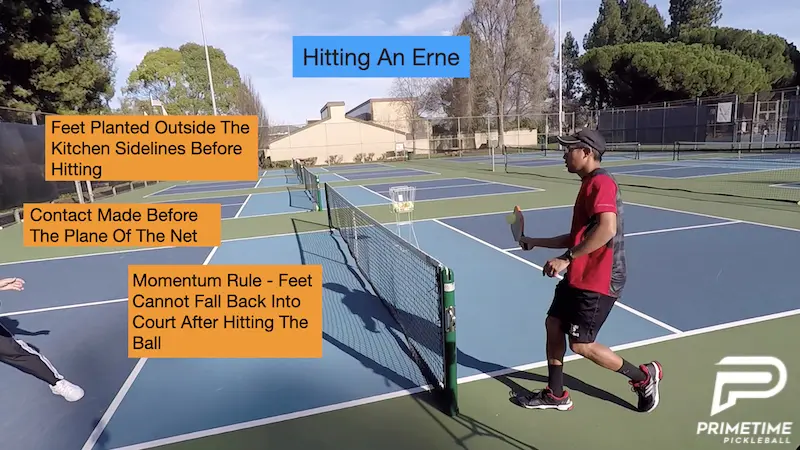
Before you try what is an ernie in pickleball, know the rules. The non-volley zone (the kitchen) is key. You cannot volley while any part of you touches the kitchen or its line. If your momentum after a volley carries you into the kitchen, that is a fault.
What makes an Ernie legal:
- You may step or land outside the sideline, past the kitchen corner.
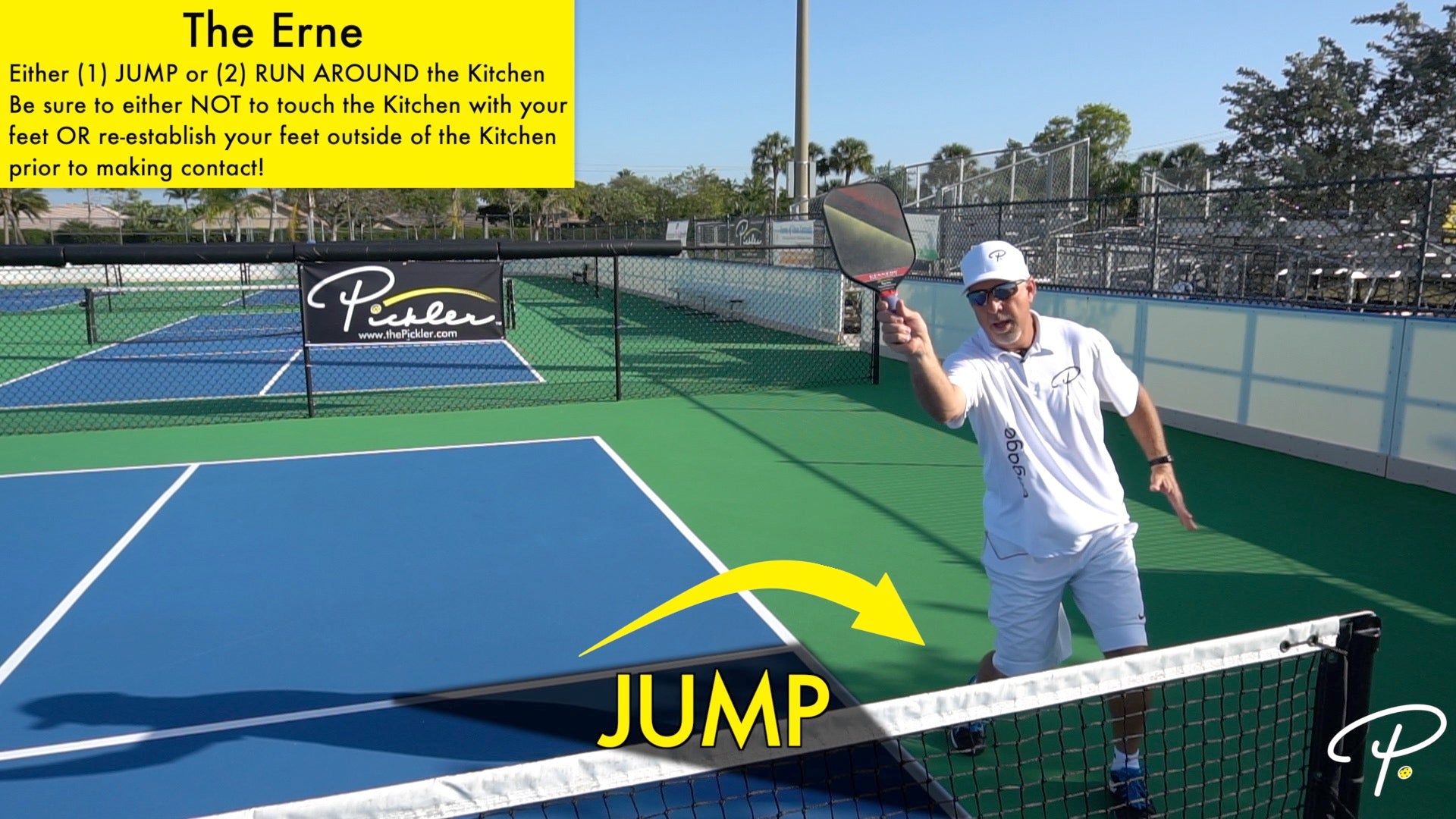
- You may jump over the corner. Crossing the air space is fine.
- You must not touch the kitchen or the kitchen line before or after the volley.
- You can start on the court. You can land out of bounds. Both are legal.
- Do not touch the net or the post. That is a fault.
If you ask what is an ernie in pickleball from a rules view, it is simple. Make contact in the air or while set outside the sideline. Then land outside the kitchen. Keep your balance. Hold your finish. No kitchen touch. No net touch.
When and Why to Use the Ernie
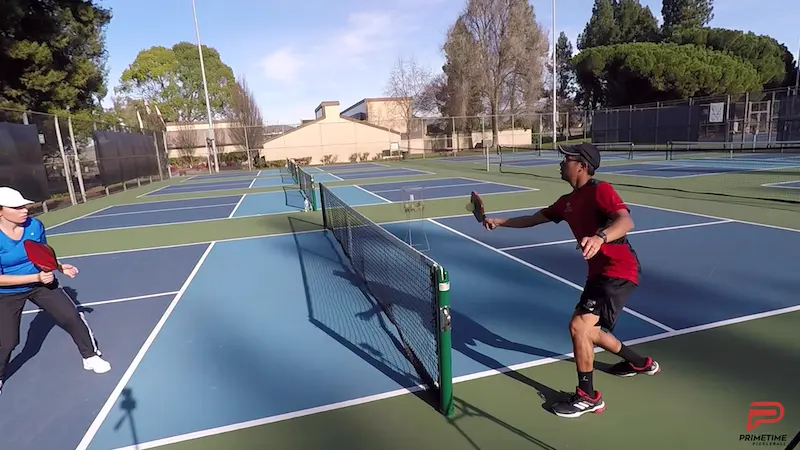
Use what is an ernie in pickleball when patterns are clear. The best time is when a player dinks down the line. Or when they look at the alley with an open face. You read the cue. You move fast. You take away space.
Great moments to attack:
- Your cross-court partner pins the ball wide. The line dink is likely.
- The opponent floats a high dink near the line.
- The striker is late on a dink and leans to the middle.
- You have teased the line twice. They bite on the third ball.
Why it is worth the risk:
- Free points from surprise.
- Weak blocks lead to high put-aways.
- It breaks their comfort. They will stop dinking the line.

How to Execute the Ernie Step by Step
To perform what is an ernie in pickleball, follow these steps. Keep it smooth. Keep it safe. Keep it silent until the last step.
- Read the cue
- Watch the paddle face. Open face near the line is your green light.
- Listen for a float. High dinks make life easy.
- Set your feet
- Keep your base light at the kitchen line.
- Angle your toes to the sideline. Hips ready to open.
- Move outside
- Shuffle once. Cross step toward the sideline.
- Plant outside the kitchen corner. Or load to jump.
- Contact clean
- Stay tall. Paddle up and in front.
- Hit through the ball. Aim deep to the open middle or feet.
- Land and recover
- Land outside the sideline. No kitchen touch.
- Split step fast. Get back to the line.
Two legal styles:
- Jump Ernie. Take off inside the court. Volley in the air. Land outside the sideline.
- Plant Ernie. Step outside the sideline first. Set your feet. Volley from a set stance.
Pro tip from my drills: keep your head still. If your eyes drop to the line, you often clip the net. Let your feet do the work. Let your hands stay soft.
Drills to Learn the Ernie
These drills build what is an ernie in pickleball skills fast. Start slow. Add speed as your feet and eyes sync.
Solo footwork warm-up:
- Place two cones at the kitchen corner and two steps outside the sideline.
- Shuffle to the corner, cross step outside, load, then shuffle back.
- Do 10 reps each side. Keep your head level.
Partner feed drill:
- Feeder stands at opposite kitchen.
- They dink cross-court twice, then send a soft line dink.
- You read, step outside, and volley to the open middle.
- Switch roles after 10 balls.
Live bait drill:
- Play dink-to-dink on your side.
- On a signal, your partner floats a line dink.
- You Ernie. Aim down at the feet. Reset and repeat.
Add pressure:
- Feeder varies height and speed.
- You must call “Go” before you move.
- This sets the habit of clear intent.
Common Mistakes and Fixes
Most faults on what is an ernie in pickleball come from hurry and reach. Fix the feet first. Then clean the contact.
Frequent errors:
- Touching the kitchen line. Fix: aim to land one full shoe outside the line.
- Swinging too hard. Fix: short swing, firm wrist, punch through.
- Moving too early. Fix: wait for the open face cue.
- Telegraphing the move. Fix: keep your shoulders square until you go.
- Hitting at the post. Fix: target the inner third of the court.
Coach tip: record five reps on your phone. Look at your first step. If it points to the net, you will drift in. Point it to the sideline. Your line will hold.

Strategy, Setups, and Counters
Set up what is an ernie in pickleball with patterns. Use shape, spin, and depth to force the line.
Smart setups:
- Roll a topspin dink that pulls wide. The line looks open.
- Add a soft middle dink first. Then go wide. They chase and rush.
- Fake a poach to the middle. Then spring to the sideline.
Best targets on the Ernie:
- The striker’s inside foot.
- The open middle gap.
- A hard dip to the backhand hip.
How rivals will counter:
- Cross-court speed-up to your vacated space.
- A lob over your line side.
- A last-second inside-out dink.
Beat their counters:
- Tell your partner to shade middle when you go.
- After the Ernie, split step at once.
- Mix in a fake. Show the move, then stay home.
Safety, Etiquette, and Gear Tips
Stay safe with what is an ernie in pickleball by guarding your joints. The move is quick. The landing can be sharp. Use good shoes and smart lines.
Safety and etiquette:
- Wear court shoes with solid lateral grip.
- Land soft. Bend knees. Keep your chest tall.
- Call “Mine” early to avoid clashes with your partner.
- Do not crowd the net post. Give space to prevent bumps.
Helpful gear notes:
- A lighter paddle helps quick hands.
- A tacky overgrip aids control on reach volleys.
- A knee sleeve can add comfort on hard courts.
Personal note: I once chased an Ernie too deep and hit the fence. Not fun. Now I mark a safe zone in warm-ups. I advise my players to do the same.

Frequently Asked Questions of what is an ernie in pickleball
Is an Ernie legal in pickleball?
Yes. It is legal if you do not touch the kitchen or its line before or after your volley. You may land outside the sideline and even jump over the kitchen corner.
What is the difference between an Ernie and an ATP?
An Ernie is a volley beside the kitchen that cuts off the line. An ATP, or Around The Post, sends the ball around the post after it clears outside the net.
Can I step into the kitchen after the volley on an Ernie?
No. If your momentum carries you into the kitchen after a volley, it is a fault. You must stay clear through the finish.
Do pros use the Ernie in doubles and singles?
Yes, more in doubles. Doubles has more line dinks to pick off. Singles Ernie chances are rare but can work on short balls.
What is the best time to try my first Ernie?
Try it when you see a slow, high line dink from a tired rival. Build it in drills first, then use it once or twice a game.
Where should I aim my Ernie volley?
Aim at the inside foot or the open middle gap. Keep the ball low and firm to force a pop-up or a miss.
How do I defend against an Ernie?
Hide your line dink and mix depth. Use a late cross-court dink, or lob when they cheat outside the sideline.
Conclusion
Now you can answer what is an ernie in pickleball with skill and proof. You know the rule cues, the footwork, the setups, and the fixes. You also know how to stay safe and how to counter it.
Pick one drill today and get ten clean reps on each side. Then try one Ernie in your next game. Want more guides like this? Subscribe, share this with a partner, and leave your Ernie wins in the comments.