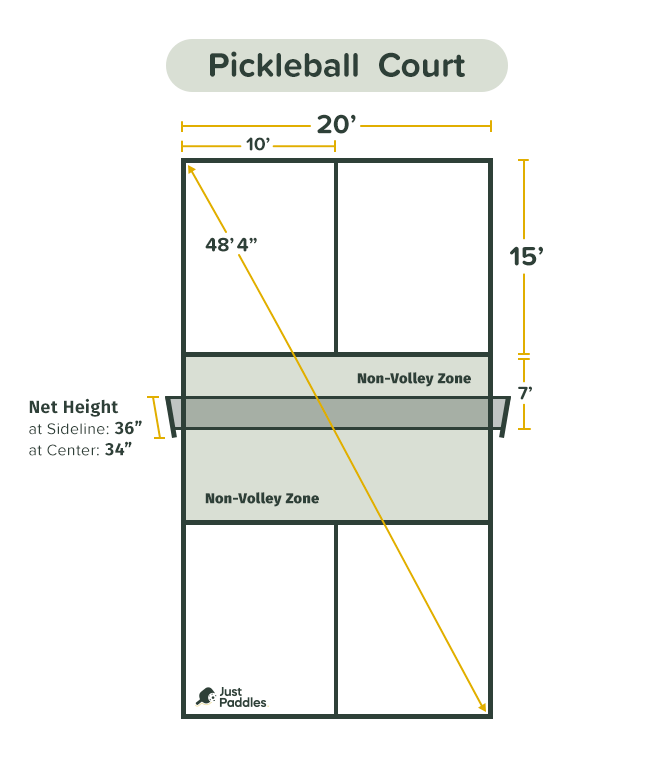
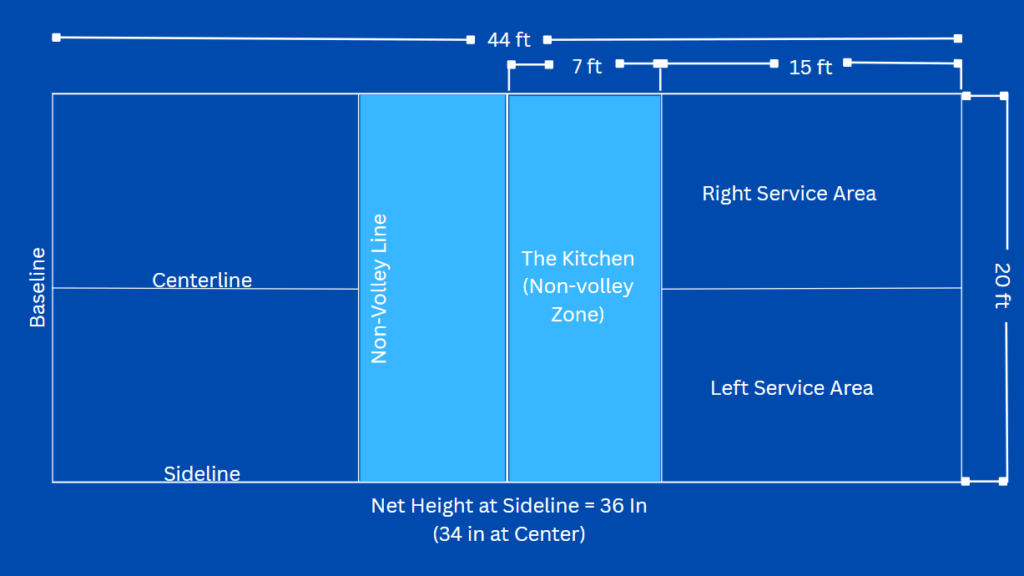
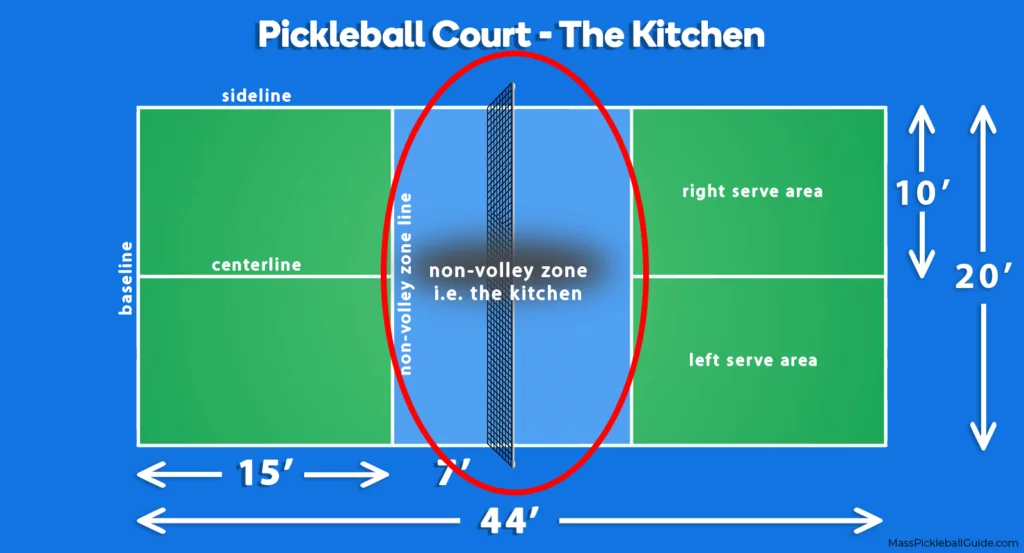
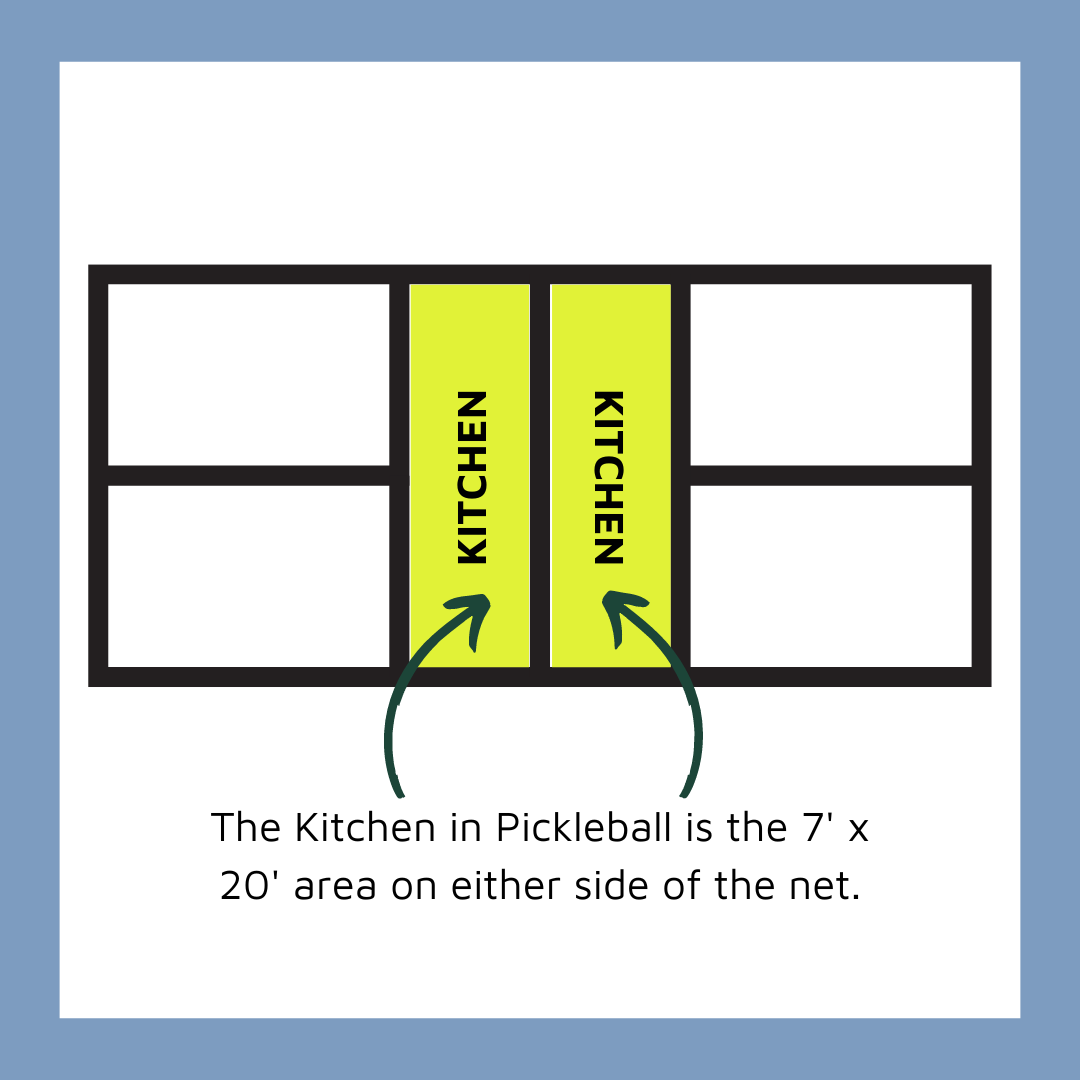
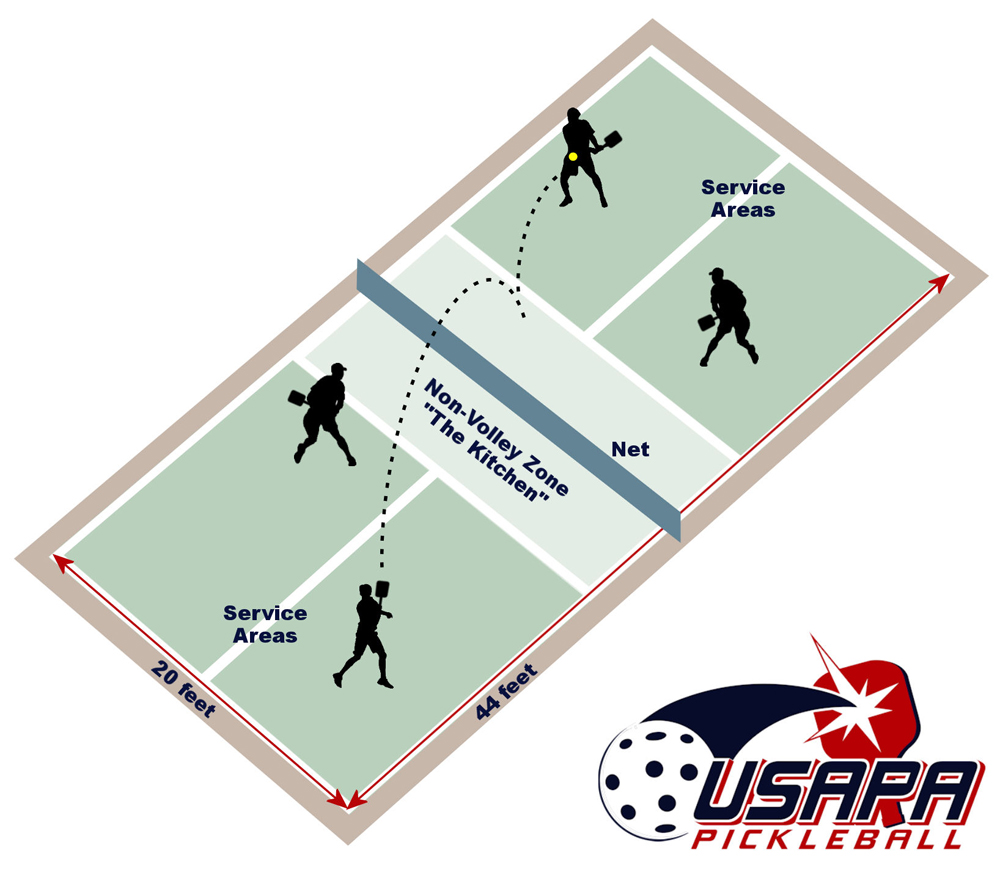
The kitchen in pickleball is the no-volley zone seven feet from the net.
If you want to level up fast, master the kitchen. I’ve taught hundreds of players to win more points by owning this space. In this guide, we’ll break down the kitchen pickleball rules, strategy, footwork, drills, and gear so you can play smarter and enjoy the soft game with confidence.

What Is the Kitchen in Pickleball?
The kitchen is the non-volley zone (NVZ). It runs seven feet from the net on both sides. The NVZ lines are part of the kitchen. If you touch them, you are in.
You cannot volley while in the kitchen. A volley is a ball you hit before it bounces. You can step into the kitchen to hit a ball that has bounced. Then you must step out before you volley again.
Why it matters: most points are won or lost near the NVZ. If you control this space, you control the rally. Many players search for the kitchen pickleball rules after a confusing foot fault. This guide will make it clear.

Official Kitchen Rules You Must Know
These rules are based on the official rulebook used in events. Learn them cold so you can play free and avoid faults.
- You cannot volley while any part of you touches the NVZ or its line.
- Momentum counts. If you volley and your forward motion takes you into the NVZ, it is a fault, even after the ball is dead.
- You may enter the NVZ to hit a ball that has bounced. You must exit before you volley again.
- Your paddle, hat, or anything on you cannot touch the NVZ during a volley.
- You can jump and volley over the NVZ if you start outside and land outside. Do not touch the NVZ or its line at any time.
- Both feet must be outside the NVZ to volley. Hovering over is fine; touching is not.
I remind new players to say this out loud during games: “Bounce in, bounce out; volley out.” It helps you follow the kitchen pickleball rules under stress.
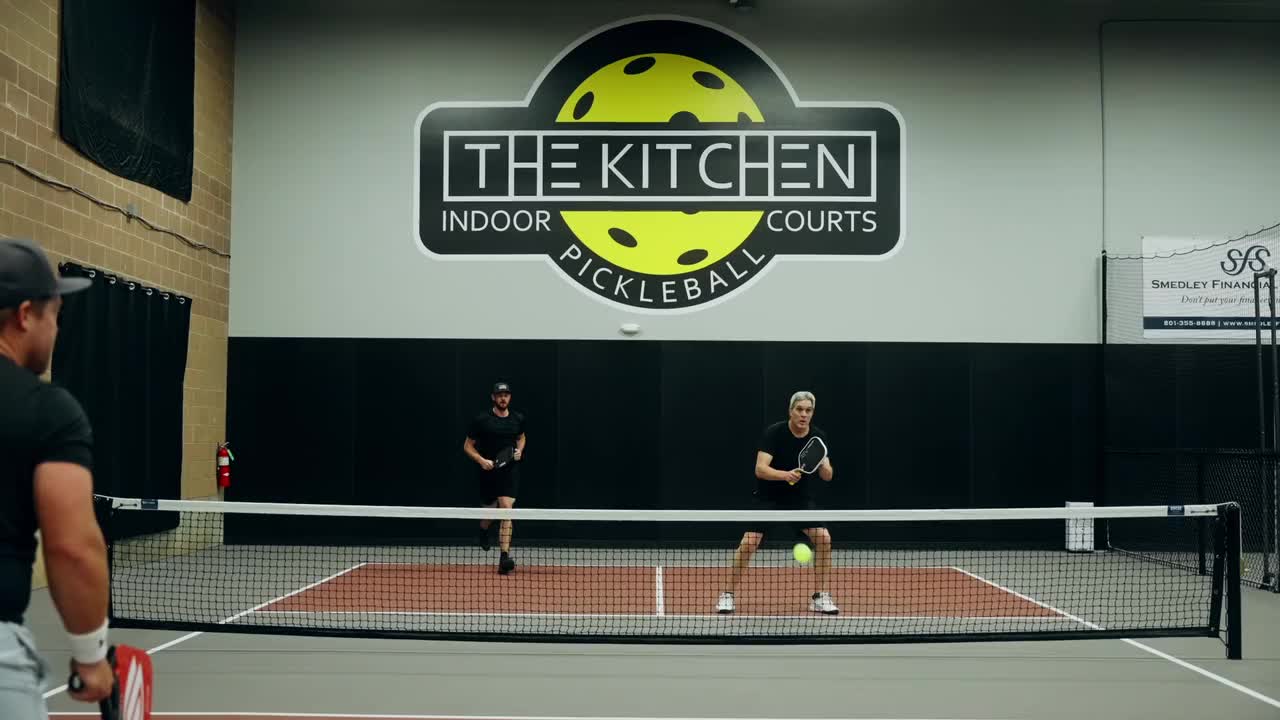
Strategy: Win the Soft Game at the Kitchen
The soft game is where rallies get smart. Use the kitchen to slow the ball, force errors, and then strike when it is high.
- Dink crosscourt more than down the line. You have more net and space to work with.
- Aim for their backhand. Most players miss more backhand dinks.
- Keep dinks low and unattackable. If it rises above the net, be ready to block.
- Third shot drop, then move. Hit a soft drop, join your partner at the NVZ, and build the point.
- Reset under pressure. If the ball is fast and low, block it back into the kitchen to reset the rally.
- Attack only on high balls. For high sits, use a quick flick to the body or open gap.
- Change pace. Mix in a push dink or a short angle to pull them wide.
When I coach the kitchen pickleball basics, I see one habit in winners: they think “patience first, power next.” That mindset saves points.
Footwork and Body Mechanics at the NVZ
Good hands start with good feet. Small steps keep you balanced and ready.
- Use split steps as your opponent hits. Land light and even on both feet.
- Keep the paddle up and in front, like holding a tray.
- Use a compact swing. Short backswings mean better control at the kitchen.
- Slide along the line. Do not cross your feet when you move side to side.
- Stay low at the hips. Bend at the knees, not the waist.
I train players to “park” their toes an inch behind the line. It prevents surprise foot faults while still letting them reach into the kitchen pickleball dinks with ease.
Drills to Master the Kitchen
Practice makes the NVZ feel simple. Here are drills I use with new and advanced players.
-
Wall dinks
- Stand 6–8 feet from a wall. Dink softly to a tape mark.
- Goal: 50 hits in a row without raising the ball above net height.
-
Crosscourt dink rally
- Partner up crosscourt. Keep the ball low and deep into the kitchen.
- Goal: 30 clean dinks each side, then add targets.
-
Reset blocks
- One player drives, the other blocks from the NVZ. Aim to drop the ball into the kitchen.
- Goal: 20 resets in, then switch roles.
-
Third shot drop ladder
- Start at baseline. Hit a drop, advance to mid-court, then to NVZ. Reset if you miss.
- Goal: 10 clean ladders per side.
-
Attack-and-freeze
- Practice flicking a high dink. Partner freezes the body and blocks back down into the kitchen.
- Goal: 15 clean attacks and blocks, then switch.
Track your makes. When I started logging reps, my miss rate fell fast. It turned the kitchen pickleball drills into a game I wanted to win.
Common Mistakes and How to Fix Them
Most errors at the NVZ come from speed, not skill. Slow down and use these fixes.
-
Standing on the line
- Fix: Set your toes an inch back. Say “space” before each serve.
-
Swinging too big on dinks
- Fix: Shorten your backswing. Think “push, not swing.”
-
Attacking low balls
- Fix: If it is below net height, reset it. Wait for your pitch.
-
Poor footwork under pressure
- Fix: Split step every hit. Count “one-two” as your cue to move.
-
Overreaching into the NVZ to volley
- Fix: Keep your weight back. Step in only after the bounce to obey the kitchen pickleball rule set.
These small tweaks can save five to ten points a game.

Gear and Court Setup Tips for the Kitchen
Your gear can help your soft game. Choose control, not just power.
-
Paddle
- Look for a textured face for spin and a medium weight for touch.
- A softer core helps with resets and dinks.
-
Grip and feel
- Use a comfortable grip size. Overgrips add tack and sweat control.
- Hold in a relaxed continental grip for fast changes.
-
Shoes
- Court shoes with good lateral support cut slips at the NVZ.
-
Balls
- Use the same model you play in events. Some balls bounce higher, which changes the kitchen pickleball feel.
-
Court lines
- Keep the NVZ line clean and bright. Faded lines cause foot faults.
Net height is 34 inches at the center. Check it before play if you want true reads on dinks and resets.

Etiquette, Safety, and the Mental Game
Respect the space and the people on it. The kitchen is close quarters.
- Call kitchen foot faults on yourself. It builds trust fast.
- Keep your paddle down after a point. No swings near faces.
- Use an inside voice at the NVZ. It helps you think and see.
On focus: breathe between points. I use a two-count inhale and a four-count exhale. It calms nerves so I can read the ball, trust my hands, and play the kitchen pickleball patterns I practiced.
Frequently Asked Questions of the kitchen pickleball
What is the kitchen in pickleball, exactly?
It is the non-volley zone that runs seven feet from the net on both sides. You cannot volley while touching it or its line.
Can I step into the kitchen after I hit a volley?
No. If your momentum carries you into the NVZ after a volley, it is a fault. Wait until you are fully out before you volley.
Is it legal to hit the ball in the air over the kitchen?
Yes, if you never touch the NVZ or its line before or after the hit. You must land outside the NVZ.
Can I stand in the kitchen and hit a ball?
Yes, but only after the ball bounces. Then step out before your next volley to meet the kitchen pickleball rules.
Why do players say “dink to win” at the NVZ?
Because soft shots force errors and set up attacks. At the kitchen, control beats power until the ball sits up.
What is the best drill to fix pop-ups at the NVZ?
Do wall dinks with a low target and a short backswing. Add reset blocks to learn soft hands under pace.
How often should I practice the kitchen pickleball drills?
Two to three short sessions a week is plenty. Ten focused minutes can change your touch in a month.
Conclusion
The kitchen is the heart of pickleball. Learn the rules, master soft hands, and build habits that hold up under pressure. With smart footwork, patient dinks, and clean resets, you will win more points and enjoy the game even more.
Pick one drill above and practice it this week. Track your reps, note your misses, and watch your kitchen pickleball skills grow. If this guide helped, share it with a partner, subscribe for more tips, or drop a question so I can help you next.