
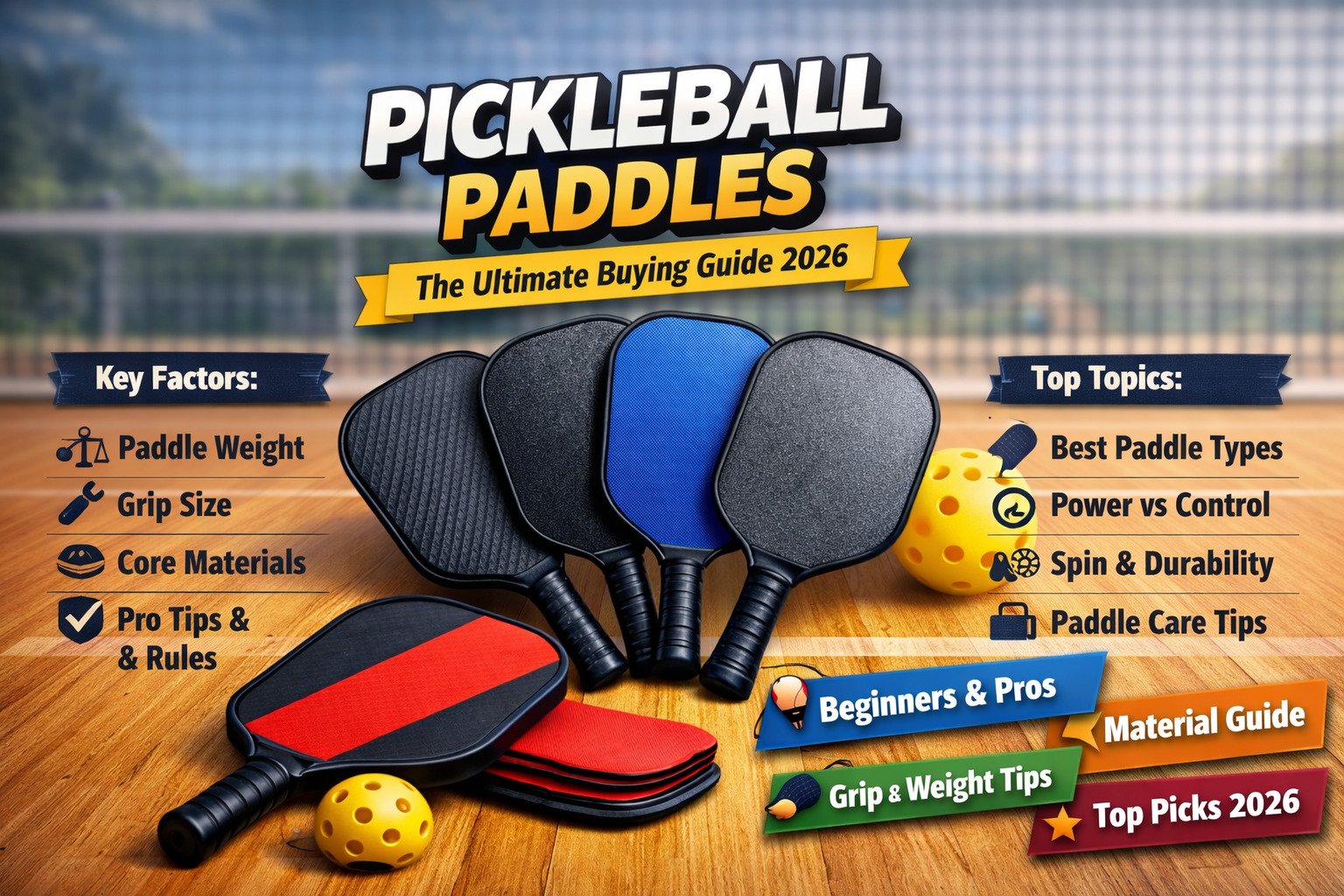
Look for a paddle's weight, grip size, core, and surface material to match your playing style and comfort level.
Stepping onto a pickleball court for the first time is exciting. The sounds, the fast-paced volleys, the friendly competition—it’s an amazing sport. But when you decide to buy your own paddle, the excitement can turn into confusion. With so many options, materials, and prices, it's easy to feel lost. I've been there, staring at a wall of paddles, completely unsure where to begin. This guide will simplify everything for you. We are going to break down exactly what to look for when buying a pickleball paddle, so you can choose with confidence and find the perfect partner for your game.
Paddle Weight: The Foundation of Your Game
The first and most important choice you'll make is the paddle's weight. It affects everything from your swing speed to your arm fatigue. Think of it like choosing between a lightweight tennis racket and a heavier one; each has a clear purpose. Paddles generally fall into three weight categories.
- Lightweight (Under 7.5 oz): These paddles are great for control and speed at the net. They allow for quick hand movements, making you a threat during fast volley exchanges. The downside is they lack power, so you'll need to generate more of your own force for deep shots.
- Midweight (7.5 oz to 8.4 oz): This is the sweet spot for most players, especially beginners. A midweight paddle offers a fantastic blend of power and control. It has enough mass to help you drive the ball but is still light enough to maneuver easily. When I was starting, I found a midweight paddle helped me develop my shots without tiring my arm out.
- Heavyweight (8.5 oz and up): If you want power, this is your category. A heavier paddle does a lot of the work for you on serves and groundstrokes. It’s also more stable, meaning it’s less likely to twist in your hand on off-center hits. However, the extra weight can be slow to move and might lead to elbow or shoulder strain if you're not used to it.
Deciding on weight is a huge part of what to look for when buying a pickleball paddle. If you are unsure, always start with a midweight paddle and adjust from there as your game evolves.
Grip Size: Your Connection to the Paddle
Your grip is your only connection to the paddle, so getting the size right is crucial. A grip that's too big or too small can lead to discomfort, loss of control, and even injuries like tennis elbow. Don't just guess on this one.
A simple way to measure is the finger test. Hold the paddle with your dominant hand. You should be able to slide the index finger of your other hand between your fingertips and the base of your palm. If there’s too much room, the grip is too big. If there’s no room at all, it’s too small.
A smaller grip allows for more wrist action, which can help with spin. A larger grip provides more stability and can ease pressure on your arm. If you find yourself between sizes, it's usually better to go with the smaller one. You can always add an overgrip to build it up. Finding the right feel is essential when considering what to look for when buying a pickleball paddle.
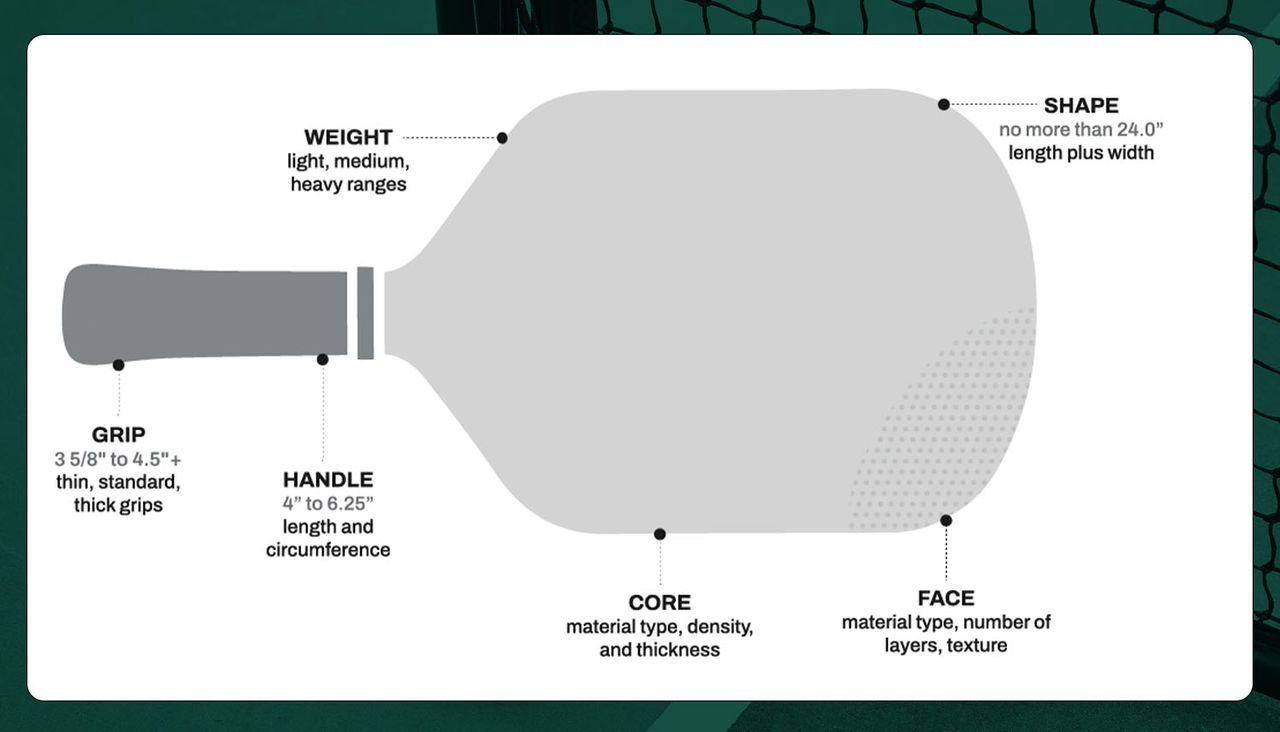
Core Materials: The Heart of the Paddle
The inside of your paddle, the core, determines how it feels and sounds. It acts as the engine, dictating the power and control you get from each shot. The technology has come a long way, but most cores are made from one of three materials.
Polymer (Polypropylene) Core
This is the most popular core material on the market today, and for good reason. Polymer cores are made of a plastic honeycomb structure that is relatively soft. This softness absorbs impact, giving you great control over the ball. It’s also the quietest core, which is a big plus in communities with noise restrictions. Most beginners and intermediate players will be very happy with a polymer core paddle.
Nomex Core
Nomex was the original material used in pickleball paddles. It is a much harder and denser honeycomb material. This hardness gives the paddle a lot of pop, meaning the ball comes off the face very quickly. Nomex paddles are loud and powerful. They are often favored by advanced players who can control the extra power and love the crisp feedback they provide.
Aluminum Core
You won't see as many aluminum cores these days. They offer excellent control but lack the power of polymer or Nomex. While they are lightweight, they are also more prone to denting if you hit them on the ground. They can be a good choice for touch players, but polymer has largely taken over as the preferred core for control.
Surface Material: Where the Ball Meets Its Match
The paddle's face, or surface material, is what makes contact with the ball. It influences your ability to generate spin and provides the overall feel of your shots. Understanding the face is another key piece of what to look for when buying a pickleball paddle.
Fiberglass (Composite)
Fiberglass is a powerful and popular surface material. It has a bit of flex to it, which acts like a trampoline for the ball. This "trampoline effect" gives you a lot of pop and power. If you are looking to add some extra pace to your shots without a huge swing, a fiberglass paddle is a great option.
Carbon Fiber
Carbon fiber is a very stiff and strong material. This stiffness results in a paddle that offers incredible control and touch. Instead of the ball "popping" off the face, it feels like you can hold it on the paddle a little longer, allowing you to direct your shots with precision. Many modern paddles now use raw carbon fiber, which has a textured surface to create maximum spin.
Graphite
Graphite surfaces are thin, light, and very strong. They provide a crisp, responsive feel at impact. Like carbon fiber, graphite is excellent for control and feel. A graphite paddle gives you a direct sense of where the ball is on the face, which helps with dinks and other touch shots around the net. It's a fantastic choice for players who value placement over power.
Paddle Shape: Finding Your Sweet Spot
Finally, let's talk about the shape of the paddle. The shape affects the size and location of the sweet spot—the area on the paddle that provides the best response. A larger sweet spot is more forgiving on mishits.
The most common shape is the standard, wide-body paddle. It’s almost square-like and offers the largest possible sweet spot. This makes it a perfect choice for beginners because it's very forgiving. You don’t have to hit the ball perfectly in the center to get a good shot.
Another popular option is the elongated shape. These paddles are longer and narrower than standard ones. This shape gives you extra reach, which is great for covering the court and hitting overheads. However, the sweet spot is smaller and usually located higher up on the face. Elongated paddles are often preferred by singles players or those with a tennis background who are used to a longer frame. Considering the shape and how it complements your game is a final check when you know what to look for when buying a pickleball paddle.

Frequently Asked Questions of what to look for when buying a pickleball paddle
What is the best paddle weight for a beginner?
A midweight paddle, typically between 7.5 and 8.4 ounces, is best for beginners. It provides a great balance of power and control without causing arm fatigue, making it easier to learn the game.
How much should I spend on my first pickleball paddle?
You can get a great quality beginner paddle for between $50 and $100. You don't need to spend a fortune on your first paddle, as your preferences will likely change as you play more.
Does the paddle material really make a difference?
Yes, the core and surface materials significantly impact a paddle's performance. A polymer core offers control, while a carbon fiber face enhances touch and spin, so the materials directly affect how the paddle plays.
How do I know if my grip size is correct?
Use the index finger test. When you grip the paddle, you should be able to comfortably slide the index finger of your opposite hand into the space between your palm and fingertips.
Are expensive pickleball paddles really better?
Expensive paddles often use advanced materials and construction for better performance, like more spin or a larger sweet spot. However, the "best" paddle is subjective and depends on what feels good to you and matches your playing style.
Conclusion
Choosing the right pickleball paddle doesn't have to be a complicated task. By focusing on the key factors—weight, grip size, core material, and surface—you can narrow down the options significantly. Remember that the perfect paddle for your friend might not be the perfect one for you. It's all about finding a combination that feels comfortable in your hand and complements your style of play.
Now that you know what to look for when buying a pickleball paddle, you're ready to make an informed choice. The best advice is to try a few different paddles if you can, perhaps by borrowing from friends at the court. Find the one that feels like a natural extension of your arm, and get out there and play. If you have any questions, feel free to drop them in the comments below