A standard pickleball court is 44 feet long by 20 feet wide for both singles and doubles play.
Getting the hang of pickleball starts with understanding your playground. As someone who has spent countless hours on the court, from hastily taped lines in a driveway to professionally surfaced courts, I can tell you that knowing the exact size of pickleball court dimensions is more than just trivia—it's fundamental to your strategy and enjoyment. This guide will walk you through every line, zone, and measurement you need to know. We’ll break down not just the "what" but the "why" behind the layout, ensuring you step onto the court with confidence, whether you're playing your first game or building your very own pickleball paradise.

The Official Pickleball Court Dimensions: A Detailed Breakdown
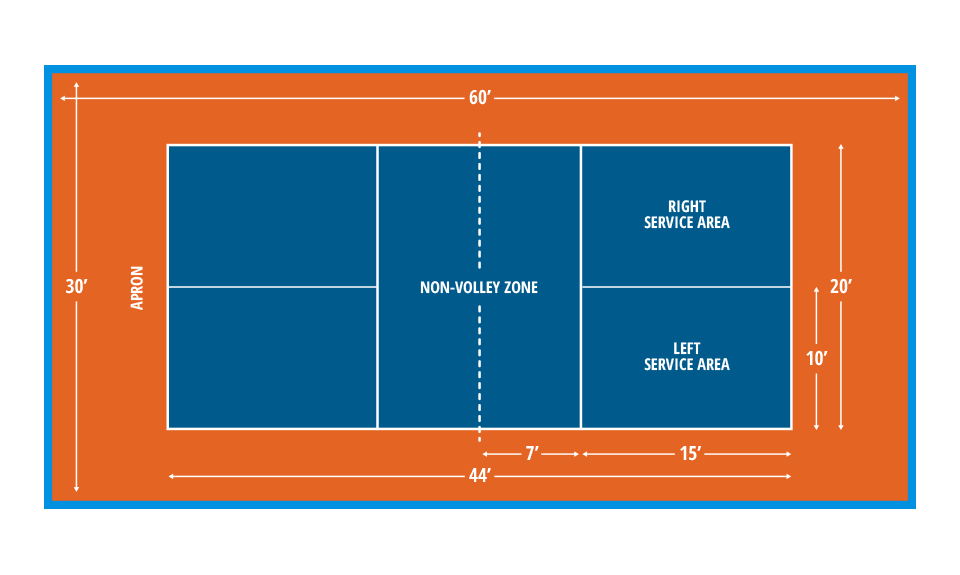
At its heart, a pickleball court is a simple rectangle. The official playing area, as defined by the USA Pickleball Association, measures 44 feet from baseline to baseline and 20 feet from sideline to sideline. These dimensions apply to the playable area inside the lines, creating a compact and action-packed space for the game.
One of the beautiful things about pickleball is its accessibility, and the court size is a perfect example. Unlike tennis, the size of pickleball court dimensions remains the same whether you're playing singles or doubles. This consistency makes it easy to switch between game types without needing a different court, fostering a more communal and flexible playing environment. It ensures the game's dynamics remain fast-paced and strategic for everyone.
Understanding the Lines and Zones
A pickleball court is more than just a box. It’s a grid of specific zones that dictate the rules of play. Understanding each part is key to mastering the game. I remember when I first started, the "kitchen" felt like a mythical, forbidden land. Let's demystify these areas so you can navigate them like a pro.
The Baselines and Sidelines
These are the simplest lines to understand. The two baselines mark the back of the court on either end (where you serve from), and the two sidelines mark the outer edges along the length of the court. If the ball lands outside of these lines during a rally, it's considered out of bounds. Simple as that.
The Non-Volley Zone (The Kitchen)
This is where the magic happens and where many new players get tripped up. The Non-Volley Zone, affectionately known as "the kitchen," is the 7-foot area on each side of the net. The kitchen line marks the edge of this zone, running parallel to the net. The total width of the kitchen is 20 feet, spanning from sideline to sideline.
The main rule here is straightforward: you cannot hit a volley (hitting the ball out of the air) while any part of your body is inside the kitchen. You have to let the ball bounce first. I learned this the hard way in my first tournament, losing a crucial point by stepping on the line during a volley. It's a mistake you only make once! This rule prevents players from smashing the ball at the net, encouraging the softer, more strategic "dink" shots that make pickleball so unique.
The Service Courts
Behind the kitchen, the court is divided into two equal halves by a center line. This creates the right and left service courts. Each service court is 10 feet wide and 15 feet long. When you serve, you must do so diagonally into the opposite service court. These boxes are your target, and landing your serve within them is the first step to starting a point correctly.

Net Height and Position
The pickleball net is a crucial piece of the puzzle, and its height directly impacts the game's flow. The official net height is 36 inches at the sidelines and droops slightly to 34 inches in the center. This slight dip is intentional and is maintained by a center strap.
Why the two-inch difference? It encourages rallies over the lower, central part of the net, leading to more dinking exchanges and strategic play. The net should extend 22 feet, which is slightly wider than the 20-foot court. This ensures it completely covers the sidelines and is properly tensioned by the posts, which should be positioned about one foot outside the sidelines.

Recommended Playing Area and Clearance Space
While the official size of pickleball court dimensions is 44 by 20 feet, that’s just the playing area. For a safe and enjoyable game, you need additional space around the court. This is known as the clearance or out-of-bounds area. I've played on courts with very little runoff space, and it's not only dangerous but also limiting for athletic, defensive plays.
The recommended total playing surface is 60 feet long by 30 feet wide. This provides a 5-foot clearance on the sides and an 8-foot clearance at the baselines. This extra room allows players to safely chase down lobs or angled shots without crashing into a fence or another court. If you are planning a backyard court, aiming for these dimensions will give you a much better and safer playing experience.

Converting a Tennis Court for Pickleball
One of the reasons for pickleball's explosive growth is how easily you can adapt other courts for play. A standard tennis court is a perfect candidate for conversion. Its dimensions are large enough to accommodate up to four standard pickleball courts, making it an efficient use of space for clubs and communities.
When converting a tennis court, you'll need to add new lines for the pickleball layout. You can use temporary tape for a quick setup or paint permanent lines for a dedicated space. The biggest adjustment is the net. A tennis net is 42 inches high at the posts and 36 inches in the center. To make it pickleball-ready, you can use straps to lower the center to 34 inches and adjust the height at the pickleball sidelines to 36 inches.

Frequently Asked Questions of size of pickleball court dimensions
Is a pickleball court the same size as a badminton court?
Yes, the overall dimensions of a pickleball court (20 feet by 44 feet) are identical to a doubles badminton court. However, the line markings, particularly the non-volley zone and service boxes, are different.
How much space do you need for a backyard pickleball court?
For a comfortable and safe playing experience, the recommended total area for a backyard court is 30 feet by 60 feet. This includes the 20-by-44-foot playing area plus adequate clearance space around the perimeter.
What is the most important line on a pickleball court?
Many players would argue the non-volley zone line, or kitchen line, is the most important. It dictates a fundamental rule of the game and is central to the strategy of dinking and close-to-the-net play.
Are the pickleball court dimensions the same for singles and doubles?
Yes, one of the great things about pickleball is that the court size is 20 feet by 44 feet for both singles and doubles. This makes it easy to switch between game formats without needing a different court setup.
Why is the pickleball kitchen 7 feet?
The 7-foot non-volley zone was designed to prevent players from standing at the net and smashing every shot. This distance encourages the soft, strategic dink shots that define the game and promotes longer, more engaging rallies.
Conclusion
Mastering the size of pickleball court dimensions is your first step toward becoming a more confident and strategic player. From the 44-by-20-foot playing area to the critical 7-foot kitchen, every line serves a purpose. Understanding this layout is essential whether you're learning the rules, improving your serves, or planning to build a court of your own.
Now that you're armed with this knowledge, it's time to put it into practice. Grab your paddle, head to a court, and notice how these dimensions influence every shot you make. If you're building a court, use these guidelines to create a perfect playing space. What are your experiences with different court layouts? Share your thoughts in the comments below