
An earnie in pickleball is a legal, aggressive volley hit by jumping over the non-volley zone line.
Have you ever been on the pickleball court and watched an opponent leap through the air, seemingly out of nowhere, to smash a ball you thought was a safe dink? That, my friend, was likely an "earnie." As a seasoned player and coach, I've seen this shot change the momentum of countless games. It's one of the most exciting and athletic plays in pickleball, but it requires precision, timing, and a solid understanding of the rules. If you're wondering what is an earnie in pickleball and how you can add this weapon to your arsenal, you've come to the right place. We're about to break down everything you need to know about this game-changing shot.
What is an Earnie in Pickleball? A Deeper Dive
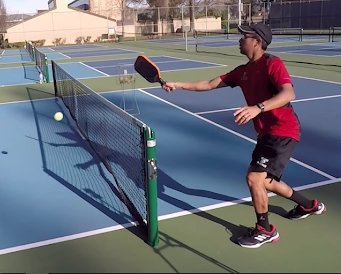
At its core, the earnie is an advanced shot that allows a player to legally hit a volley while positioned inside the non-volley zone (NVZ), or "kitchen." But wait, aren't you forbidden from volleying in the kitchen? Absolutely. The magic of the earnie lies in how you get there. The shot is executed by jumping from outside the kitchen, over the non-volley zone line, and striking the ball mid-air. The key is that your feet cannot touch the ground inside the kitchen until after you have hit the ball.
This dynamic move is typically performed near the sideline when an opponent hits a dink that is wide but still reachable. Instead of letting the ball bounce, you leap across the corner of the kitchen to cut it off and hit a powerful, unreturnable volley. The shot is named after professional pickleball player Earnie Perry, who popularized the move. He saw an opportunity to be more aggressive at the net and "earned" his way to the ball, creating one of the most thrilling shots in the sport. Knowing what is an earnie in pickleball is the first step; mastering it is the next.

The Rules of the Earnie: Staying Legal on the Court
Executing an earnie feels incredible, but doing it illegally will cost you the point. The rules surrounding this shot are very specific, and understanding them is non-negotiable. I've seen many players attempt an earnie only to commit a fault because they missed a small detail. Let's break down the three critical rules to ensure your earnie is always legal.
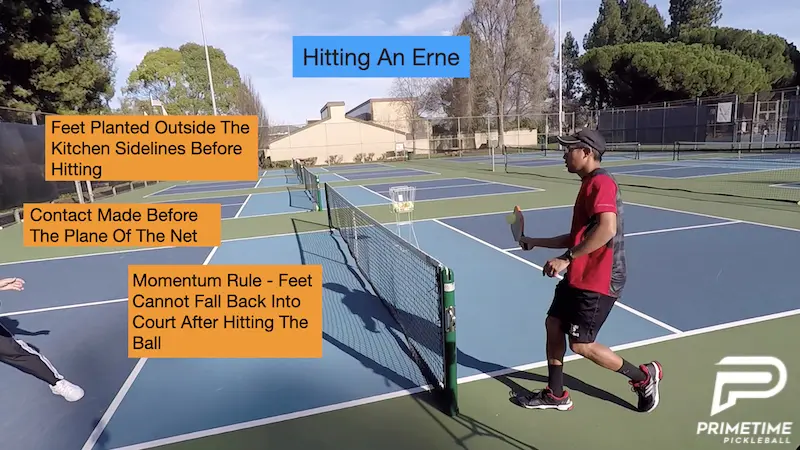
- The Jump: Your jump must originate from a position completely outside the non-volley zone. You cannot have a foot on the kitchen line when you begin your leap. Think of the area outside the kitchen as your launchpad.
- The Contact: You must make contact with the pickleball while you are in the air. This is what makes the shot a volley. If the ball bounces before you hit it, it's not an earnie.
- The Landing: This is where most faults happen. After striking the ball, you must land with both feet completely outside the non-volley zone. Your foot, your clothing, or even your momentum carrying you into the kitchen or onto the line before the ball is dead results in a fault.
It's a sequence of events that must be followed perfectly. Jump from outside, hit the ball in the air, and land back outside. Any deviation from this sequence results in a loss of the rally.

When and Why to Hit an Earnie
The earnie isn't a shot you should attempt on every dink. It's a high-risk, high-reward play that requires the perfect setup. Knowing when to pull the trigger is just as important as knowing how to execute it. The prime opportunity for an earnie arises when your opponent hits a cross-court dink that is drifting wide towards the sideline.
The goal is to catch your opponent off guard. They likely hit that wide dink thinking you are stuck behind the kitchen line and will have to let it bounce, giving them time to recover. By executing an earnie, you take that time away, intercepting the ball at a high point and hitting an aggressive volley down the line for a clean winner.
I remember the first time I successfully pulled off an earnie in a competitive match. My opponent had hit a wide dink, thinking I was out of the play. I saw the opening, took a quick step, and jumped across the corner of the kitchen to put the ball away. The look of surprise on their face was priceless! But I've also messed it up and landed in the kitchen, losing an easy point. It’s a humbling shot that teaches you the importance of patience and shot selection.

How to Execute the Perfect Earnie: A Step-by-Step Guide
Ready to start practicing? Breaking the earnie down into smaller steps can make it much more manageable. Don't try to be a hero on your first attempt; focus on the mechanics and footwork first.
- Recognize the Opportunity: The first step is developing the court awareness to see the earnie opportunity. Look for a dink from your opponent that is soft, traveling cross-court, and heading towards the sideline.
- Get in Position: As you see the shot developing, take a quick shuffle step toward the sideline, positioning your body just outside the non-volley zone. You need to be close enough to the kitchen line to make the leap.
- Launch Your Jump: Explode laterally, not forward. Your goal is to jump over the corner of the kitchen, not into it. Use your outside leg to push off powerfully.
- Make Clean Contact: As you jump, keep your paddle up and in front of you. Aim to make contact with the ball at the highest possible point. This will allow you to hit down on the ball, making it much harder for your opponent to return.
- Stick the Landing: This is the make-or-break moment. While in the air, focus on where you are going to land. Your entire body must land completely outside the non-volley zone. Bend your knees to absorb the impact and maintain your balance.
A great tip for beginners is to practice the footwork without a ball. Simply shadow the movement of jumping over the kitchen corner and landing safely. This will build the muscle memory you need when the real opportunity comes.
Common Mistakes to Avoid When Attempting an Earnie
As with any advanced shot, there are common pitfalls that can turn a potential winner into a frustrating fault. I've made all of these mistakes myself, and learning from them is part of the process. Being aware of them can help you fast-track your progress.
- Touching the Kitchen Line: This is by far the most common mistake. Players get so focused on hitting the ball that they forget about their landing. Always be mindful of the kitchen line and give yourself plenty of room.
- Choosing the Wrong Ball: Attempting an earnie on a ball that is too high, too fast, or too close to the middle of the court is a recipe for disaster. Be selective and only go for the soft, wide dinks.
- Jumping Too Early or Late: Timing is everything. If you jump too early, the ball may be out of reach. If you jump too late, you won't have time to get set for your landing. Watch the ball closely and time your jump to meet it at the ideal contact point.
- Losing Your Balance: A wild, uncontrolled jump often leads to a poor shot and an illegal landing. Focus on a balanced and athletic movement. A controlled earnie is always more effective than a reckless one.
A big mistake I used to make was getting too excited. I'd see any wide ball and just go for it, even if it wasn't the right setup. I learned to be more patient and selective, which made my earnie attempts much more successful and less risky.
Frequently Asked Questions about the Earnie
Is an earnie legal in pickleball?
Yes, an earnie is a completely legal shot in pickleball. The key is to follow the rules: you must jump from outside the non-volley zone, hit the ball in the air, and land completely outside the non-volley zone.
Why is it called an earnie?
The shot is named after professional pickleball player Earnie Perry. He was one of the first players to consistently and effectively use the move in high-level play, "earning" his way to an aggressive volley.
Can you do an earnie on your forehand and backhand?
Yes, you can execute an earnie on both your forehand and backhand sides. The mechanics are similar, though most players find it more natural on one side depending on their dominant hand and court position.
What is the difference between an earnie and a poach?
An earnie involves jumping over the kitchen to hit a ball on your side of the court. A poach is when you move across the center line into your partner's territory to intercept a ball intended for them.
Do beginners need to learn the earnie?
Beginners should focus on mastering the fundamentals like dinking, third-shot drops, and volleys first. The earnie is an advanced shot that should be added to your game once you have a solid foundation and good court awareness.
Conclusion
The earnie is more than just a flashy move; it's a strategic weapon that can punish a loose dink and end a rally decisively. Now that you have a deep understanding of what is an earnie in pickleball, from its rules and mechanics to the strategy behind it, you're equipped with the knowledge to start incorporating it into your game. Remember that patience and practice are key. Start with the footwork, be selective with your opportunities, and don't get discouraged by a few faults along the way.
Get out on the court, find a partner to drill with, and start practicing your launch and landing. Before you know it, you'll be the one leaving your opponents stunned with a perfectly executed earnie. Let us know in the comments below about your first successful earnie—we'd love to hear about it