
Yes, you can step into the kitchen anytime, but you cannot volley the ball while standing in it.
The pickleball "kitchen" is one of the most talked-about and misunderstood areas on the court. As a seasoned player and coach, I've seen countless games won and lost over simple kitchen faults. If you've ever found yourself hesitating at the edge of that seven-foot zone, unsure of the rules, you're in the right place. This guide will clear up all the confusion about when and why you can enter this critical area. We'll explore the rules, share strategies, and answer the big question: in pickleball can you ever step into the kitchen? By the end, you'll be moving around the court with confidence and a new level of strategic awareness.

What is the Kitchen in Pickleball?
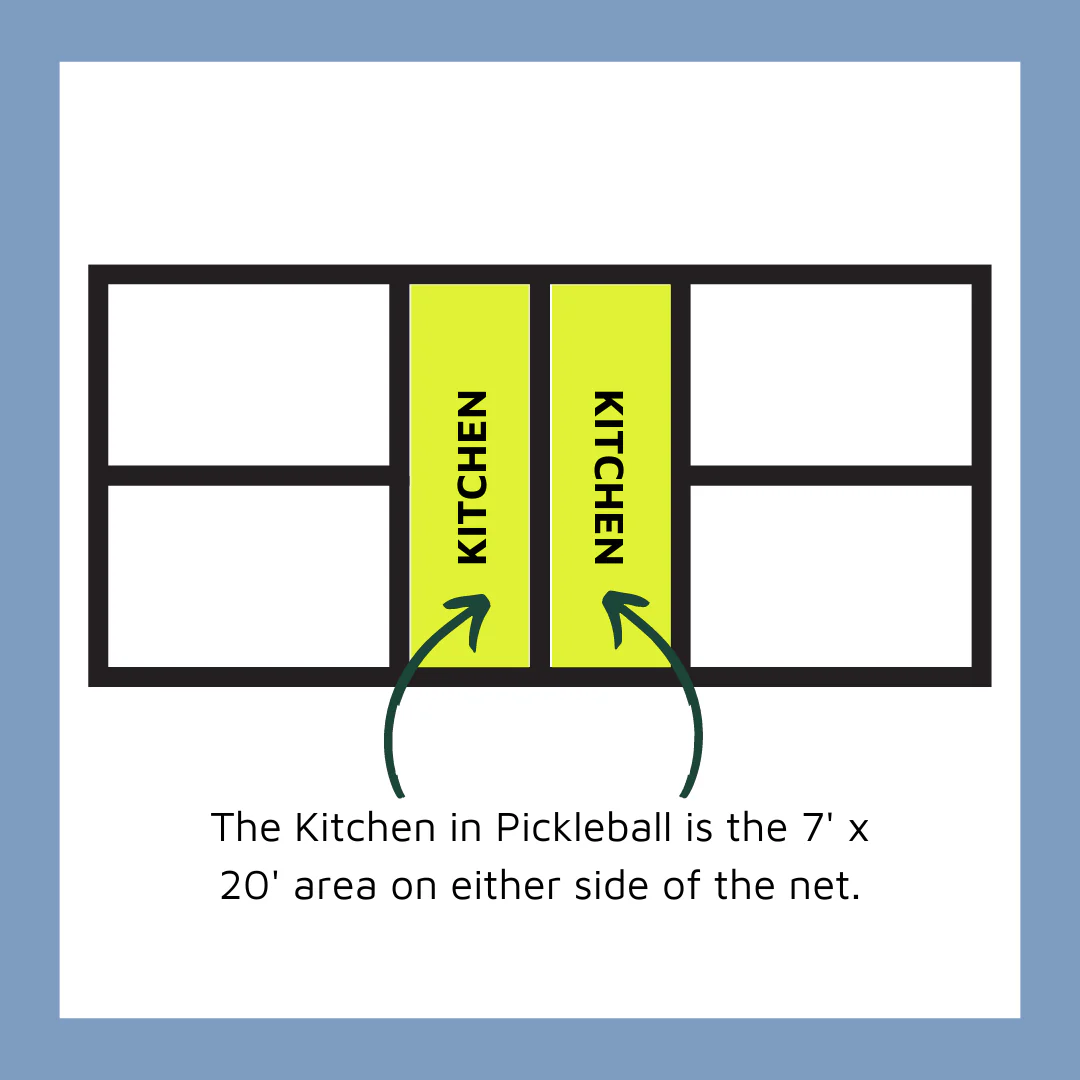
First things first, let's define what we're talking about. The "kitchen" is the unofficial, but widely used, term for the Non-Volley Zone (NVZ). This is the seven-foot area on each side of the net, extending from sideline to sideline. The lines themselves are considered part of the kitchen, so if your toe touches the line, you are officially in.
The primary purpose of the kitchen is to prevent players from standing at the net and smashing every ball. It promotes a more strategic game of dinks, drops, and carefully placed shots, which is what makes pickleball so unique and fun. I remember when I first started playing, I thought the kitchen was just a no-go zone. But once I understood its purpose was to encourage finesse over brute force, my entire approach to the game changed for the better.
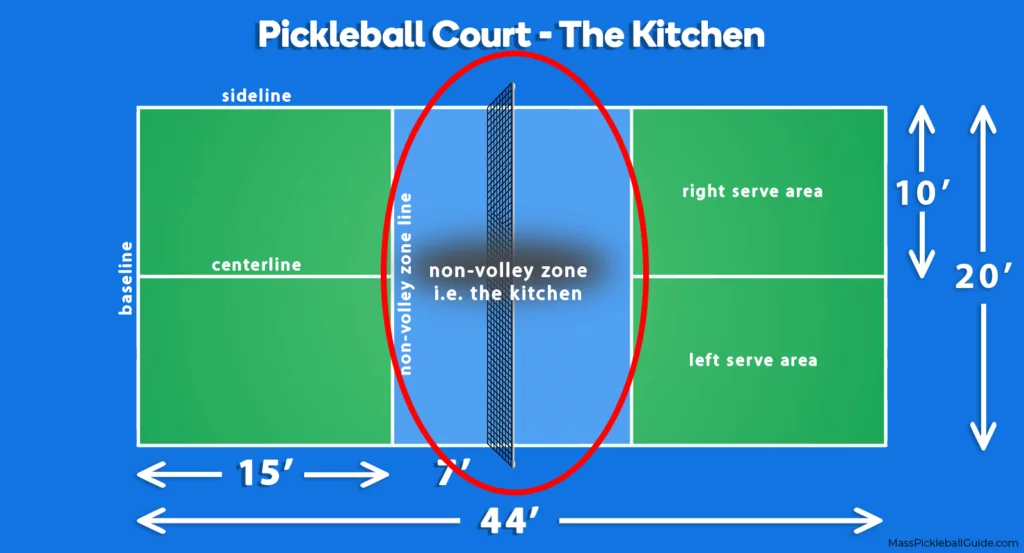
The Golden Rule: The Volley Rule Explained
The most important rule associated with the kitchen is the volley rule. A volley is when you hit the ball out of the air before it has a chance to bounce. The rule is simple yet strict: you cannot hit a volley while any part of your body is in the Non-Volley Zone. This includes not just your feet but also anything you are wearing or carrying, like your hat or paddle.
This rule also extends to your momentum. Let's say you hit a perfect volley just outside the kitchen line, but your forward motion causes you to stumble forward and step onto the kitchen line. That's a fault. I've seen this happen in competitive matches where a player makes a fantastic shot, only to lose the point because they couldn't control their momentum. It’s a tough lesson to learn, but it’s crucial for fair play.

So, When Can You Step into the Kitchen?
This brings us to the core of our topic. If volleying is forbidden, in pickleball can you ever step into the kitchen? The answer is a resounding yes. You are allowed to be in the kitchen in several situations, and knowing when is key to becoming a better player.
- To hit a ball that has bounced. This is the most common reason to enter the kitchen. Once the ball has bounced in the NVZ, it is completely legal to step inside to hit it. This is where the dink rallies happen. You can step in, get set, and return a soft shot over the net.
- When the ball is dead. If the rally is over (for example, the ball has bounced twice or gone out of bounds), you can walk through the kitchen without any penalty. Feel free to go in and retrieve the ball for the next serve.
- Any time you are not hitting a volley. You can stand in the kitchen, do a little dance, or just hang out there as long as you are not making contact with the ball before it bounces. While not strategically wise, it's perfectly legal. I sometimes step into the kitchen to change my position or get a better angle for a shot I know will bounce.
Understanding these permissions is liberating. The kitchen isn't a penalty box; it's a strategic zone that you can and should use to your advantage when the situation is right.
Common Kitchen Mistakes and How to Avoid Them
Even with a clear understanding of the rules, kitchen faults are common, especially for new and intermediate players. From my experience on the court, these are the most frequent mistakes I see.
- The Post-Volley Momentum Fault. As mentioned earlier, this is a heartbreaker. The best way to avoid it is to practice your footwork. When you move forward for a volley near the line, focus on staying balanced and stopping your momentum immediately after contact.
- Forgetting the Bounce. In a fast-paced rally, it's easy to get excited and hit a ball out of the air that was about to bounce in the kitchen. The key here is patience. Train your eyes to read the ball's trajectory. If it's dropping short, take a small step back and let it bounce.
- Touching the Line. Remember, the line is part of the kitchen. Many players think they are safe as long as their foot is not fully inside the zone, but even the tip of your shoe on the line during a volley is a fault. Always give yourself a few inches of buffer room.

Strategy: Using the Kitchen to Your Advantage
Once you've mastered the rules, you can start thinking about how to use the kitchen strategically. A smart player knows that this area isn't just about avoiding faults; it's about creating opportunities.
One of the best strategies is to hit dinks that force your opponent to move into their kitchen to retrieve a bounced ball. This can pull them out of position, opening up a different part of the court for your next shot. You can also use the kitchen to your advantage by executing an "Erne," an advanced shot where you run around the outside of the kitchen to legally hit a volley. While tricky, it shows just how dynamic play around the NVZ can be. The answer to "in pickleball can you ever step into the kitchen" isn't just about legality—it's about strategy.

Frequently Asked Questions of in pickleball can you ever step into the kitchen
Can your paddle cross the kitchen line on a volley?
Yes, your paddle can cross the plane of the kitchen line to hit a ball, as long as your feet or body do not enter the kitchen. The rule applies to your body, not your equipment.
What happens if your partner pushes you into the kitchen during a volley?
It is still a fault, even if it's not your fault. If you are pushed into the kitchen by your partner and you or your partner volleyed the ball, your team loses the rally.
Is it a fault if you fall into the kitchen after the ball is dead?
No, it is not a fault. Once the ball is out of play (for example, it has bounced twice), you can enter the kitchen for any reason without penalty.
Can you stand in the kitchen to return a serve?
No, you cannot. Both the server and receiver must be behind their respective baselines during the serve, and the receiver must let the ball bounce before returning it.
Does your shadow in the kitchen count as a fault?
No, your shadow does not count. A fault only occurs if a physical part of your body or something you are wearing touches the Non-Volley Zone during a volley.
Conclusion
Mastering the kitchen rules is a fundamental step toward becoming a skilled pickleball player. The question is not just "in pickleball can you ever step into the kitchen," but "how and when should you?" Remember, you can enter the kitchen any time the ball has bounced, allowing for strategic dinks and close-to-the-net play. The one absolute rule is to never volley the ball while standing in or on the kitchen line.
Now that you have a clear understanding, take this knowledge to the court. Practice your footwork around the kitchen line and focus on your shot selection. You'll not only avoid unnecessary faults but also start using the kitchen as a strategic tool to outsmart your opponents.
What's the trickiest kitchen rule you've had to learn? Share your experiences in the comments below