
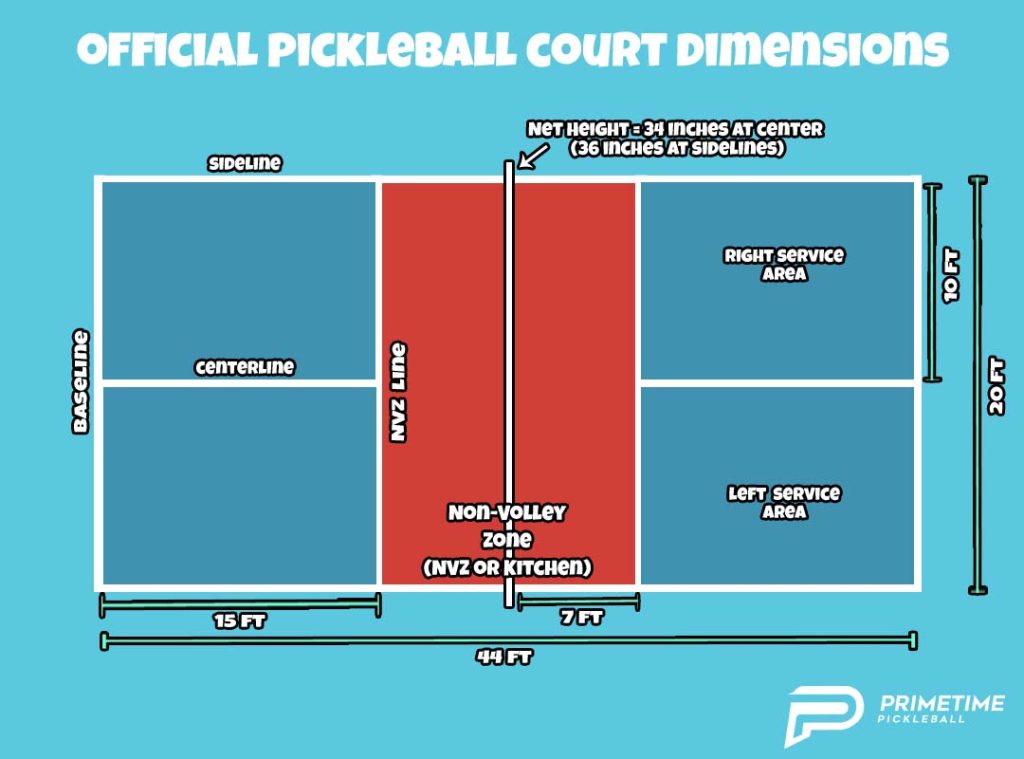
A standard pickleball court measures 44 feet long by 20 feet wide for both singles and doubles play.
Getting the measurements of a pickleball court right is the first step to a great game, whether you're a seasoned player or just setting up a net in your driveway for the first time. As someone who has spent countless hours on the court, both playing and helping others mark their own, I know that precise dimensions are non-negotiable. They define the flow of the game, from the serve to that final dink in the kitchen. This guide will walk you through every line, zone, and measurement you need to know, breaking down the official court layout into simple, easy-to-understand terms.
The Overall Dimensions of a Pickleball Court
At its core, a pickleball court is a simple rectangle. The total playing surface measures 20 feet wide and 44 feet long from baseline to baseline. This size is consistent for both singles and doubles matches, which makes it incredibly convenient—no need to adjust boundaries depending on how many people are playing.
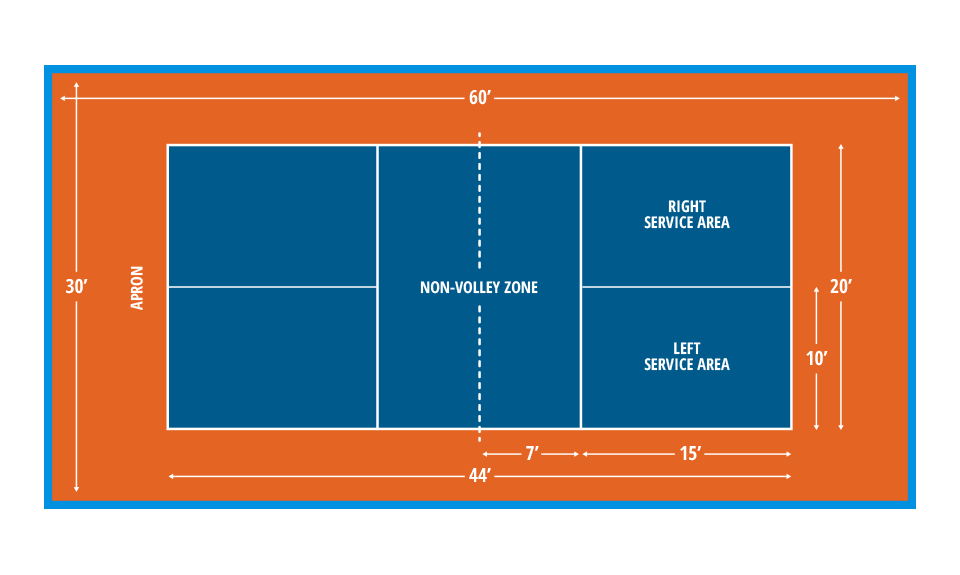
If the size feels familiar, it’s because a pickleball court shares the exact same dimensions as a doubles badminton court. This makes converting a badminton court into a pickleball court a relatively straightforward process. When planning your space, remember to account for the out-of-bounds area, also known as the clearance space. For comfortable play, it's recommended to have at least 5 feet of open space on the sides and 8-10 feet behind each baseline. This gives you room to chase down those lobs without running into a fence.
Breaking Down the Key Areas of the Court
Understanding the individual zones within the court is crucial for strategy and rules. Each line has a purpose, and knowing the measurements of a pickleball court means understanding what each section represents. Let's break it down piece by piece.
The Non-Volley Zone (The Kitchen)
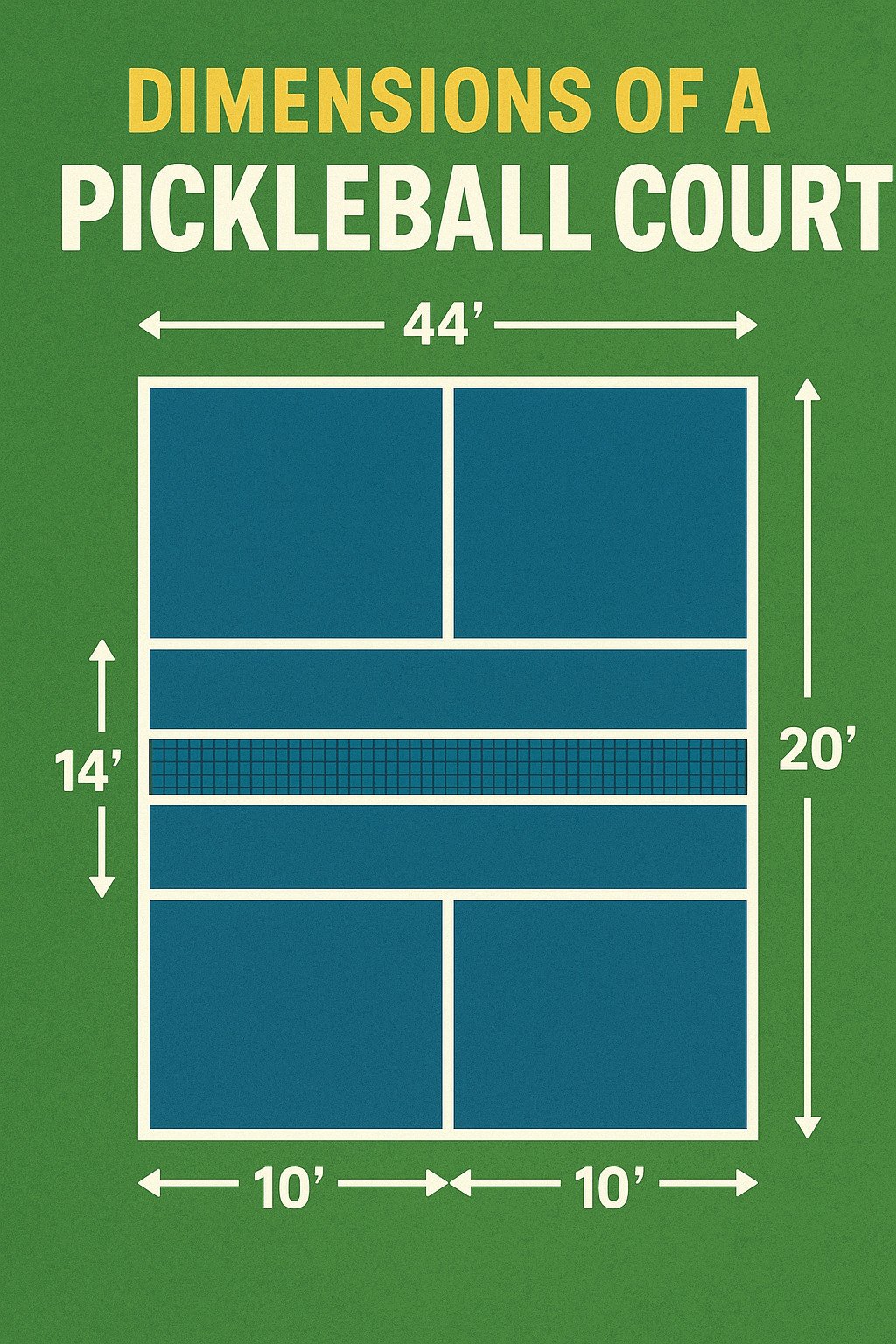
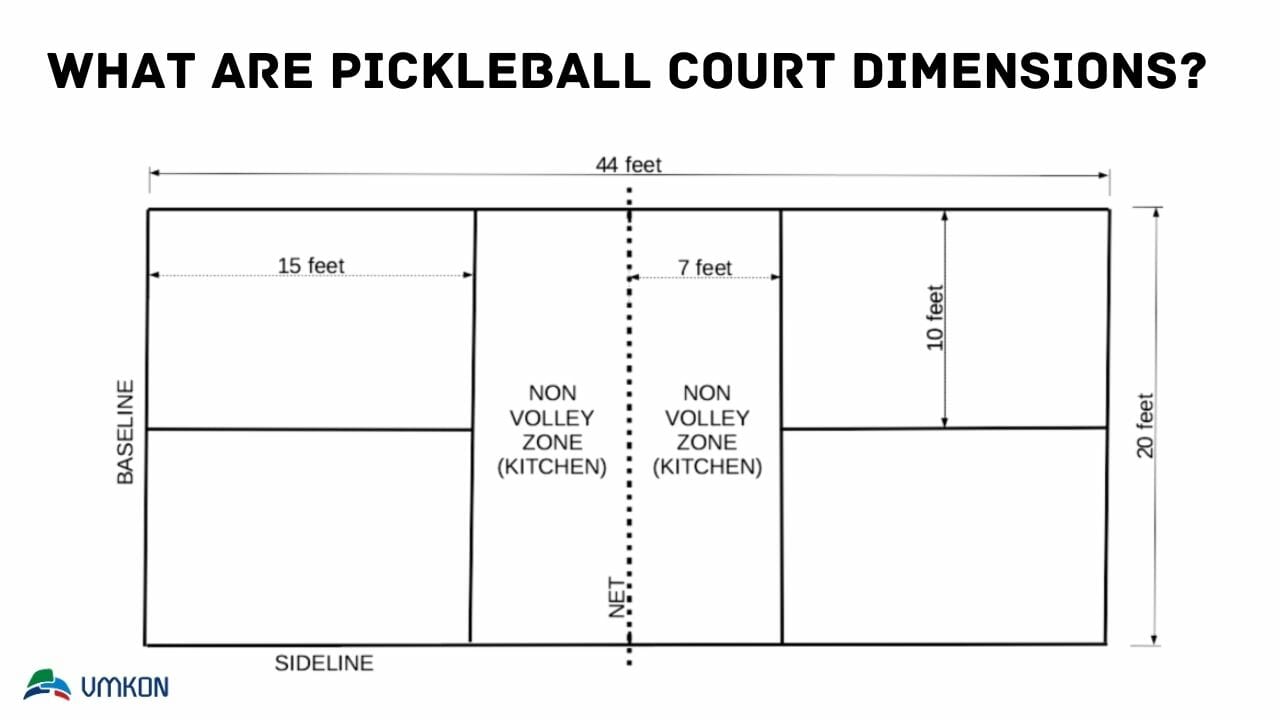
This is perhaps the most famous area in pickleball. The Non-Volley Zone, affectionately called "the kitchen," is the 7-foot area on either side of the net. This means the entire kitchen is 14 feet wide, stretching from one sideline to the other. The line marking its boundary is called the kitchen line.
The rule is simple: you cannot stand inside the kitchen to hit a volley (a shot hit out of the air). Your feet must be behind the kitchen line when you make contact. In my experience, this rule is what makes pickleball so unique. It prevents players from simply smashing every shot at the net and encourages the soft, strategic dink shots that define the game.
The Service Courts
Behind the kitchen, the court is divided into two equal halves, creating the service courts. Each service court is 10 feet wide and 15 feet long. These are the boxes you must serve into diagonally from your own service court. The serve must land within these boundaries, past the non-volley zone line, to be considered valid.
When I first started playing, I often forgot that the serve must clear the kitchen. It’s a common mistake for beginners. Thinking of the service court as a 10×15 foot box helps visualize the target area and improve your serving accuracy.
The Baselines and Sidelines
The baselines are the two lines at the very back of the court, running parallel to the net. They mark the 44-foot length of the court. The sidelines are the two lines that run along the sides, marking the 20-foot width. If a ball lands on any of these boundary lines during a rally, it is considered "in." The only exception is the serve, where a ball landing on the kitchen line is a fault. All lines on a pickleball court should be 2 inches wide.
The Centerline
The centerline is the line that divides the service courts into a right and left side. It runs from the kitchen line to the baseline. Its only purpose is to define the service court boundaries. Just like the other lines, the centerline is 2 inches wide and is considered part of both service courts it separates.
Pickleball Net Height and Dimensions
The net is another critical component with specific measurements. A pickleball net should be 36 inches high at the sidelines and droop slightly to 34 inches in the center. This slight sag is intentional and is part of the official rules.
I've played on courts where the net was too tight and high in the middle, and it completely changes the game. Those perfect dinks suddenly clip the tape. The 34-inch center height creates a sweet spot for cross-court dinks and resets. The net itself should be 22 feet long, extending 1 foot beyond the sideline on each side to ensure full coverage.

Setting Up Your Own Pickleball Court
Creating your own court can be a rewarding project. Whether you're making a temporary court with tape or planning a permanent installation, getting the measurements of a pickleball court correct is key.
Here are a few practical tips for setting up:
- Find a Flat Surface: Before you measure anything, ensure the surface is level and free of debris. A driveway, a quiet parking lot, or a tennis court are all great options.
- Orientation Matters: If possible, orient your court north-to-south. This prevents players on one side from having the sun directly in their eyes during sunrise or sunset. It’s a small detail that makes a big difference.
- Use a Quality Measuring Tape: A 50-foot or 100-foot tape measure is your best friend here. Double-check your measurements before marking any lines. A helpful trick is to measure the diagonals of the court; they should both be identical (approximately 48 feet, 4 inches) to ensure your corners are perfect 90-degree angles.
- Choose Your Marking Method: For a temporary court, chalk or painter's tape works well. For a more durable solution, you can buy pickleball court line kits. For a permanent court, professional line paint is the way to go.
In my experience setting up a DIY court, the most common mistake is not squaring the corners properly. Taking the extra minute to measure the diagonals will save you a lot of frustration later.
Frequently Asked Questions
Are pickleball court measurements the same as a tennis court?
No, a pickleball court is much smaller. A tennis court is 78 feet long by 36 feet wide for doubles, while a pickleball court is only 44 feet long by 20 feet wide. You can fit four pickleball courts into the space of one tennis court.
What is the total recommended space for a pickleball court?
While the playing area is 20 by 44 feet, the recommended total space including out-of-bounds clearance is 30 feet wide by 60 feet long. This provides enough room for players to move safely around the court.
Why is the kitchen 7 feet deep?
The 7-foot Non-Volley Zone was designed to prevent players from dominating the net with powerful smashes. It promotes the use of dinks and strategy, forcing players to engage in longer, more controlled rallies from further back.
Do singles and doubles use the same court size?
Yes, one of the great things about pickleball is its simplicity. The court dimensions of 20 feet by 44 feet remain the same for both singles and doubles play, so there is no need to adjust any lines.
How wide should the lines be on a pickleball court?
All lines marking the boundaries of a pickleball court should be 2 inches wide. It is important that the line measurements are taken from the outside of the lines.
Conclusion
Mastering the measurements of a pickleball court is fundamental to enjoying the game as it was meant to be played. From the 44-foot length to the 34-inch net height at the center, every dimension serves a purpose in creating the unique challenge and fun of pickleball. Knowing these details not only helps you play by the rules but also gives you a deeper appreciation for the game's strategy.
Now that you have the blueprint, it's time to take action. Grab a measuring tape and check your local court, or better yet, mark one out yourself and start playing.
Have any tips or questions about setting up your own court? Share them in the comments below