
The standard pickleball court size is 44 feet long by 20 feet wide, including all boundary lines. As someone who has played on countless courts, from hastily drawn chalk lines in a parking lot to professionally surfaced tournament grounds, I can tell you that getting the dimensions right is crucial. It’s the foundation of a fair and strategic game. This guide will walk you through every detail of the official pickleball court standard size, explaining not just the what, but the why behind every line, so you can play with confidence anywhere.
A Detailed Look at Pickleball Court Dimensions
Understanding the layout of a pickleball court is the first step to mastering the game. Unlike other racket sports with complex layouts, pickleball is refreshingly simple. The official pickleball court standard size creates a playing area that is compact, fast-paced, and full of strategic opportunities. Let's break down each component.
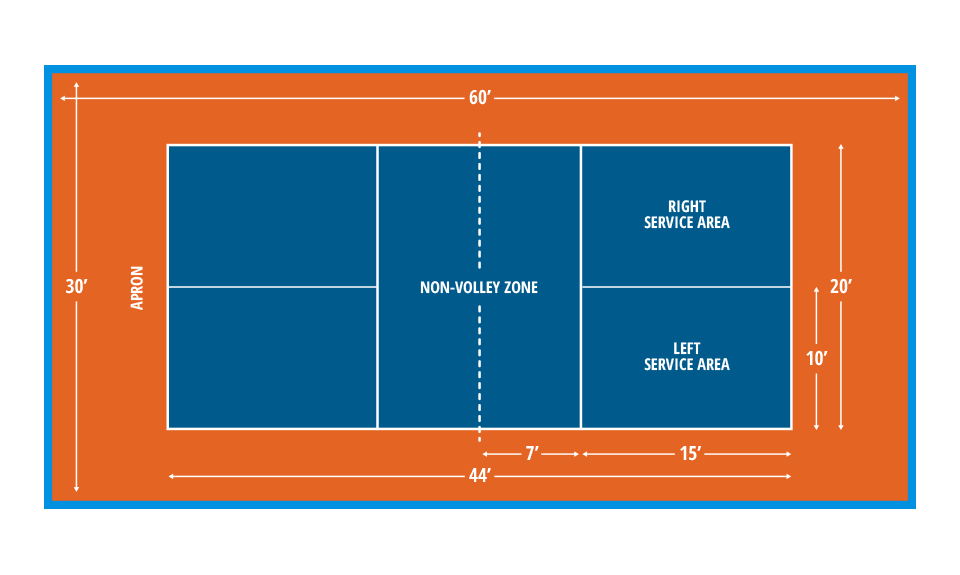
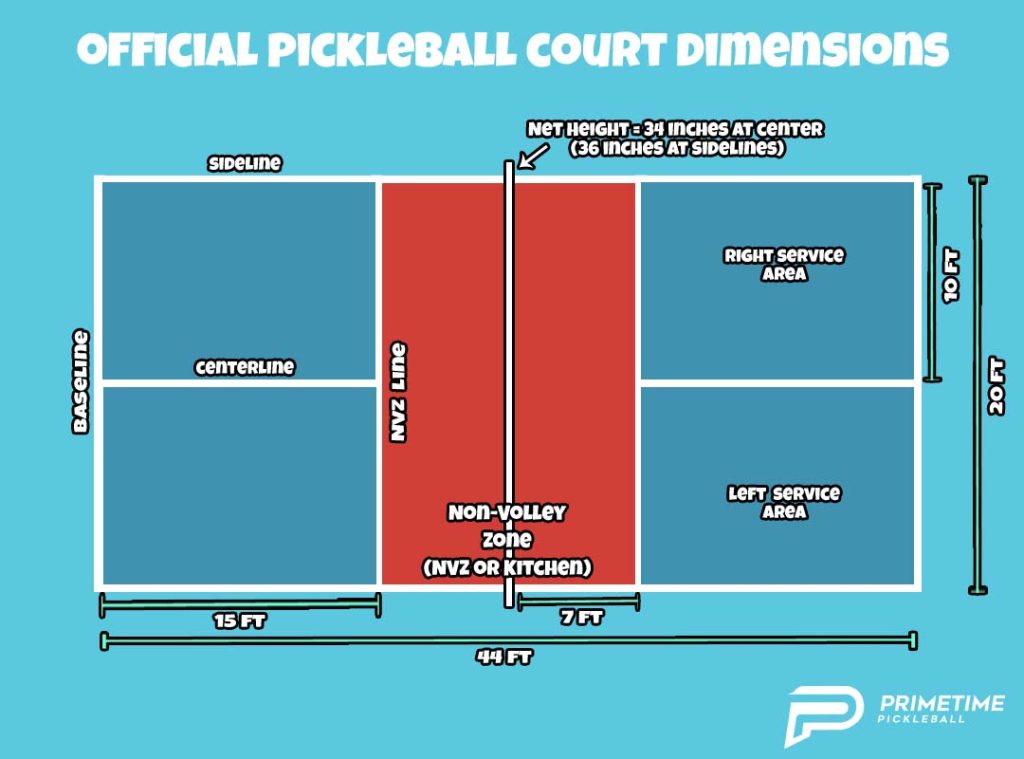
The court is a rectangle measuring 44 feet in length from baseline to baseline and 20 feet in width from sideline to sideline. These dimensions are for both singles and doubles play, which is one of the great simplicities of the game. The lines themselves are typically 2 inches wide and are considered part of the playable court area. If a ball touches any part of the line, it is in.
The Non-Volley Zone (The Kitchen)
The most iconic feature of a pickleball court is the Non-Volley Zone, affectionately known as "the kitchen." This is a seven-foot zone on each side of the net. The total width of the kitchen from one side to the other is 14 feet. You are not allowed to hit a volley (hitting the ball out of the air) while your feet are inside this zone.
From my experience, the kitchen is where most of the game's intricate strategy happens. It forces players to use soft shots like dinks and drops instead of relying on pure power. The Non-Volley Zone line is part of the zone, so if your foot touches the line during a volley, it is a fault. This single rule makes the game incredibly unique and fun.
Service Courts and Baselines
The area behind the kitchen is divided into two equal halves, creating the right and left service courts. Each service court measures 10 feet wide by 15 feet long. When you serve, you must do so from behind the baseline, which is the line at the very back of the court. The serve must land diagonally in the opponent's service court, beyond the non-volley zone line. The baseline and sideline markings define the outer limits of the pickleball court standard size.
Net Height Specifications
The net is another critical component with specific measurements. A pickleball net is 36 inches high at the sidelines and droops slightly to 34 inches in the center. This subtle dip in the middle creates an interesting dynamic, often encouraging players to aim shots toward the center where the net is lowest. This height is lower than a tennis net, which contributes to the fast-paced rallies and quick exchanges at the net.

Why the Official Pickleball Court Standard Size Matters
You might wonder if being off by a few inches really makes a difference. The answer is a resounding yes. Sticking to the official pickleball court standard size ensures the game is fair, consistent, and safe for everyone involved. It's the framework that makes the sport what it is.
Playing on a regulation court means your game will translate anywhere. Whether you are at your local park or a national tournament, the court will feel familiar. This consistency allows you to focus on your skills and strategy rather than adjusting to different court sizes. I once played a friendly match on a court where the kitchen was only five feet deep, and it completely changed the dynamic, making dink battles almost impossible.
The specific dimensions of the court directly influence game strategy. The seven-foot kitchen, for example, is perfectly sized to reward a well-executed third shot drop. A smaller or larger pickleball court standard size would fundamentally alter how the game is played. Adhering to the standard ensures that the skills you practice are the ones that will help you succeed in any competitive setting.

Setting Up Your Own Pickleball Court
Creating your own pickleball court is a rewarding project, whether it's a temporary setup in your driveway or a permanent addition to your backyard. The key is to start with the right amount of space. While the playing area is 44 by 20 feet, the recommended total area is at least 60 feet long by 30 feet wide. This extra space provides a safe runoff area and allows room for players to chase down shots that go out of bounds.
For surfaces, concrete or asphalt are the most common and durable options for permanent courts. Many players also use specialized acrylic sport surfaces that offer better cushion and consistent ball bounce. If you are setting up a temporary court, any flat, smooth surface will do. I have had great games on basketball courts and even large, empty parking lots.
Marking the lines is the final step. For a temporary court, you can use painter's tape, chalk, or a temporary line marking kit. For a permanent court, you'll want to use proper line paint for durability. A helpful tip I've learned is to use a chalk line to snap your straight lines first, then paint or tape over them for perfect results.

Adapting Other Courts for Pickleball
One of the reasons for pickleball's explosive growth is its adaptability. You don't always need a dedicated court to play. Many existing sport courts can be easily converted for a great game of pickleball, which is fantastic for communities looking to add the sport without a major investment.
A standard tennis court is large enough to fit four pickleball courts. You can set up temporary nets and use a different color of tape or paint for the pickleball lines to avoid confusion. This is a very common and efficient way for clubs and parks to accommodate both sports.
A doubles badminton court has the exact same dimensions as a pickleball court: 44 feet by 20 feet. This makes it an almost perfect fit. The only adjustments needed are lowering the net to the correct pickleball height and adding the non-volley zone lines seven feet from the net. Indoor gymnasiums with basketball or volleyball courts are also excellent venues for pickleball, with tape being the go-to for marking temporary lines.

Frequently Asked Questions of pickleball court standard size
What is the total space needed for a pickleball court?
The playing area is 44 feet long by 20 feet wide. However, for safety and comfortable play, a total recommended space of 60 feet by 30 feet is ideal to allow for out-of-bounds action.
Is a pickleball court the same size as a badminton court?
Yes, the outer dimensions for a doubles badminton court and a pickleball court are identical at 44 feet by 20 feet. The primary differences are the net height and the internal line markings, such as the non-volley zone.
How tall is a pickleball net?
A regulation pickleball net is 36 inches high at the posts on the sidelines. It is designed to have a slight sag in the middle, where the height should be 34 inches.
Can you play pickleball on a tennis court?
Absolutely. A single tennis court provides enough space to fit up to four standard pickleball courts. This makes converting a tennis court a popular and space-efficient option for clubs and parks.
Are the lines in or out in pickleball?
All boundary lines are considered in bounds in pickleball. The only exception is the non-volley zone line on a serve; if the ball lands on this line during the serve, it is a fault.
Conclusion
Mastering the pickleball court standard size is fundamental to enjoying the game as it was meant to be played. From the 44-by-20-foot perimeter to the crucial seven-foot kitchen, each measurement shapes the strategy and fun of this incredible sport. Whether you are playing on a dedicated court or a temporary setup, knowing these dimensions ensures a fair and consistent experience every time you step on the court.
Now that you're an expert on the official court layout, it's time to put that knowledge into action. Find a space, measure it out, and start playing. We'd love to hear about your experiences setting up your own court or any creative solutions you've found, so feel free to share your story in the comments below