
A pickleball court is 20 by 44 feet for play, with recommended side clearance of 10–15 feet.
I’ve measured, marked, and played on dozens of courts, so I know the ins and outs of pickleball court dimensions side by. This guide breaks down every number, layout option, and building tip you need. Read on to get clear, practical steps and avoid common mistakes when planning or comparing pickleball court dimensions side by side.

Standard Pickleball Court Dimensions
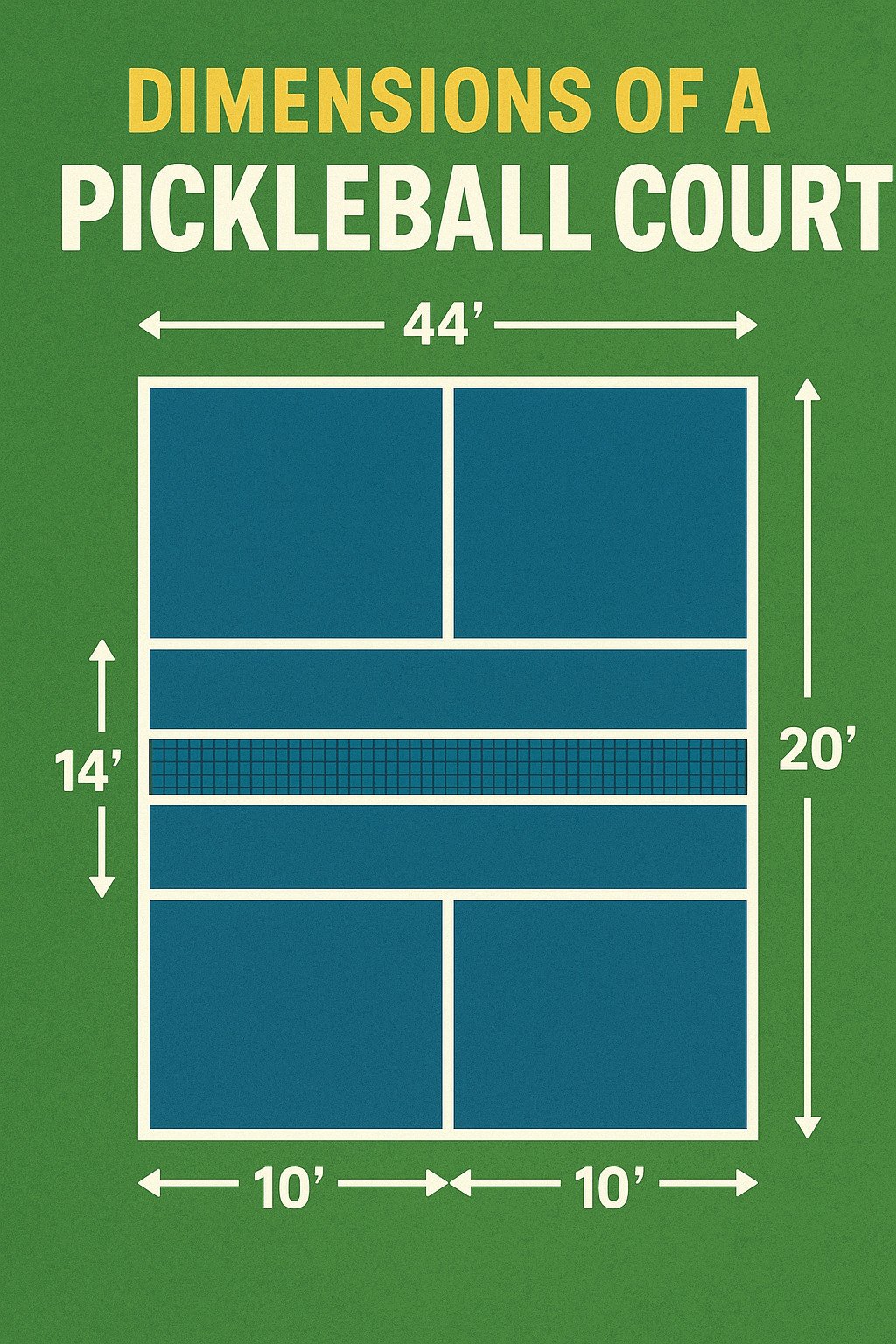
A regulation pickleball court is 20 by 44 feet. That size is used for both singles and doubles play. The 20-foot width and 44-foot length include the baseline and sidelines. The non-volley zone, often called the kitchen, is 7 feet from the net on each side. Net height is 36 inches at the sidelines and 34 inches at the center.
Pickleball court dimensions side by focus on play area first. Official rules reference 20 by 44 feet as the playing box. For practical use, add space for movement, seating, and safety. I always plan extra space beyond the court lines to protect players and spectators.
Side-by-Side Court Layouts and Space Requirements
Many facilities place courts side by side to save space. For two courts next to each other, plan for lateral clearance between sidelines. A common layout has a 10-foot gap between courts. That gap helps with player safety and ball retrieval.
Recommended overall footprint for side-by-side courts includes:
• Two courts side by side: 44 feet length by about 50–60 feet width including clearance.
• Three courts side by side: 44 feet length by about 80–95 feet width including walkway space.
• Court rows with walkways: allow 10–15 feet behind baselines for player run-off.
When planning pickleball court dimensions side by side, think about seating, shade, and access paths. I once planned three courts side by side and underestimated the exit paths. Lesson learned: add at least 3 feet per walkway.

Lines, Zones, and Measurements Explained
Court lines are part of the dimensions. All the lines are 2 inches wide. The baseline marks the back line. The sideline marks the side edge. The centerline runs from the non-volley zone to the baseline to divide service courts.
Key measurements to remember:
• Playing area: 20 by 44 feet.
• Non-volley zone depth: 7 feet from net to line.
• Service court dimension: 10 by 15 feet (each side contains two service boxes).
• Net posts: usually placed 22 feet apart to support the net across the 20-foot play width plus clearance.
Clear, simple markings keep games fair and safe. For people new to layout work, use a long tape measure and chalk or paint. I prefer measured chalk first so I can adjust before permanent paint.
Surface, Net Height, and Fencing Considerations
Surface choice affects player comfort and ball bounce. Common surfaces include asphalt, concrete, and modular sport tiles. Each needs proper base work and drainage. Soft surfaces reduce impact on joints but cost more.
Net height details tied to dimensions:
• 36 inches at sidelines and 34 inches at center.
• Net post height should match recommended tension standards.
• Use a reliable center strap to keep the net at 34 inches in the middle.
Fencing and wind screens matter for side-by-side setups. Fences should be high enough to contain balls, often 8–10 feet for outdoor courts. Wind can shift play; adding a windscreen helps. When I installed fencing for multiple courts side by side, a 10-foot fence cut lost balls and improved play flow.
Building Your Own Court: Step-by-Step
Step 1: Choose the location and check orientation. A north-south orientation reduces sun glare during play.
Step 2: Site prep and grading. Ensure a flat surface and good drainage.
Step 3: Lay the base and surfacing. Use compacted aggregate under asphalt or concrete.
Step 4: Mark lines and paint. Use the exact 20 by 44 feet measurements for play lines and 2-inch lines.
Step 5: Install net posts, nets, and accessories. Make sure net height follows specifications.
Step 6: Add fencing and lighting if needed. Plan wiring and poles away from play.
For side-by-side layouts, space courts so players don’t collide when chasing balls. I built a backyard court once with a strict 10-foot side buffer. That buffer made pickup and casual play far more relaxed.
Common Mistakes and Practical Tips
Mistake: Skimping on clearance. Players need room beyond the baseline and sidelines.
Tip: Add at least 10 feet behind baselines and 5–10 feet at the sides if possible.
Mistake: Poor orientation against the sun.
Tip: Aim for a north-south alignment for the court to cut glare.
Mistake: Using incorrect net height or uneven posts.
Tip: Check net height often with a tape measure and center strap.
Mistake: Not planning for drainage or surface cracks.
Tip: Invest in proper base layers and sealing to avoid long-term repairs.
From my experience, the most common regret is minimal side clearance. When counting pickleball court dimensions side by planning, always add extra room. Your future self will thank you.
Materials and Cost Estimates
Basic cost factors:
• Site prep and grading costs vary by land condition.
• Surface material costs: asphalt cheaper, modular tiles pricier but gentler.
• Fencing and lighting add to the budget.
• Net posts, nets, and paint are smaller line items.
Rough estimate ranges:
• Simple backyard court on compacted base: low to mid thousands.
• Professional outdoor court with lighting and fencing: mid to high five figures.
• Indoor court conversion or specialty surfacing: varies widely.
When comparing bids, ask for exact proposals that reference the 20 by 44 playing dimensions and the added clearance. That ensures apples-to-apples comparisons for side-by-side layouts and single courts.
Maintenance and Safety Best Practices
Daily upkeep keeps dimensions reliable. Sweep debris and check lines. Inspect net and posts for wear.
Seasonal tasks:
• Repaint lines as they fade.
• Seal or crack-fill asphalt surfaces.
• Check drainage and remove standing water.
Safety tips:
• Keep a clear 10-foot run-off behind baselines when possible.
• Maintain a tidy perimeter free of tripping hazards.
• Ensure fences are secure and gates latch.
I schedule quarterly checks. That schedule keeps courts safe and extends the life of surfaces and nets. Consistent care also preserves the exact pickleball court dimensions side by players expect.
Frequently Asked Questions of pickleball court dimensions side by
What is the official size of a pickleball court?
A regulation pickleball court measures 20 by 44 feet for both singles and doubles play. This includes baselines and sidelines but not extra clearance.
How much space do you need around a court when placing courts side by side?
Plan for at least 10 feet behind baselines and 10 feet between side-by-side courts for safe movement. More space improves comfort and reduces interruptions.
What is the depth of the non-volley zone?
The non-volley zone is 7 feet from the net on each side. This area is critical and must be marked clearly within the 20 by 44 foot play area.
How high should the net be for a standard court?
The net should be 36 inches at the sidelines and 34 inches at the center. A center strap helps keep the middle height accurate.
Can you play singles on a doubles court with the same dimensions?
Yes, singles uses the same 20 by 44 foot court as doubles. Singles players just use the same service and sideline markings within those dimensions.
Conclusion
Understanding pickleball court dimensions side by gives you the confidence to plan, build, and maintain great courts. Keep the core 20 by 44 feet in mind. Add clearance when you place courts side by side. Small details like net height and fence placement make big differences in play quality.
Take action: measure your space, sketch a layout using these dimensions, and get one small quote to compare. If you found this guide useful, leave a comment or subscribe for more practical tips on building and caring for courts.