The double bounce rule in pickleball means each side must let the ball bounce once after serve.
I’ve played and coached pickleball for years, and I can tell you the double bounce rule pickleball is simple but game-changing. This guide explains the rule, why it matters, how to use it in matches, drills to master it, and common mistakes I’ve seen on courts. Read on to get clear, practical advice you can use next time you play.

What is the double bounce rule pickleball?
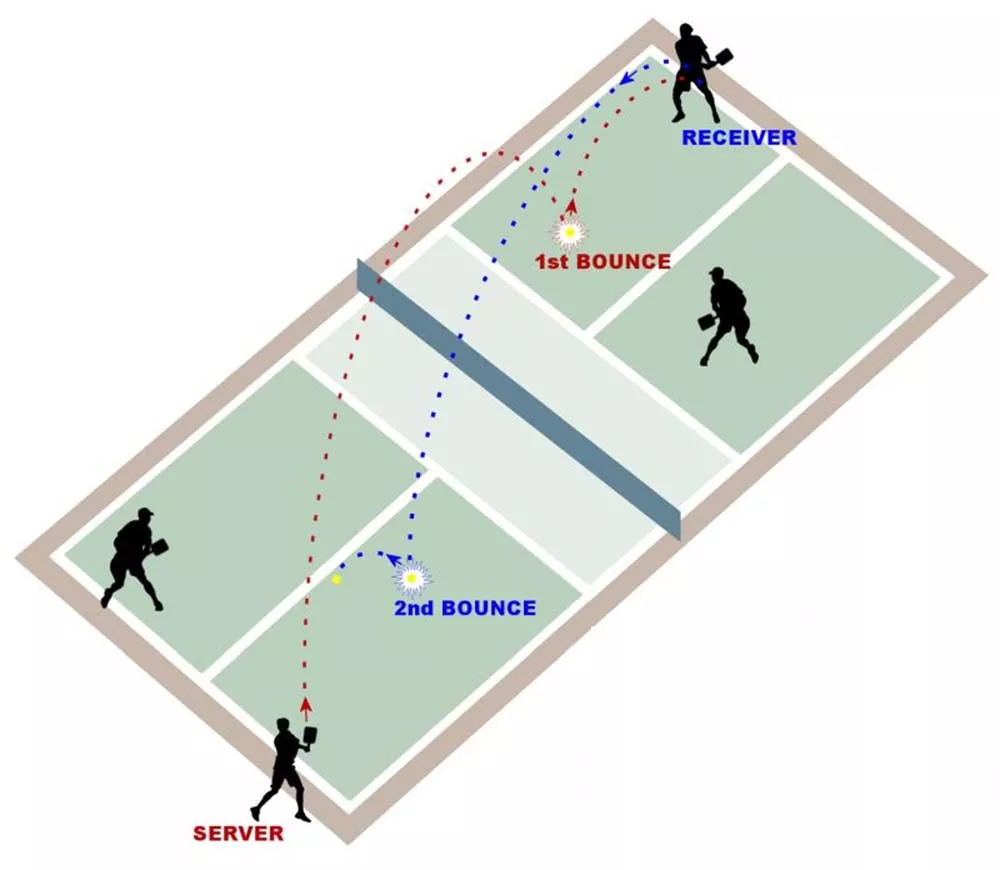
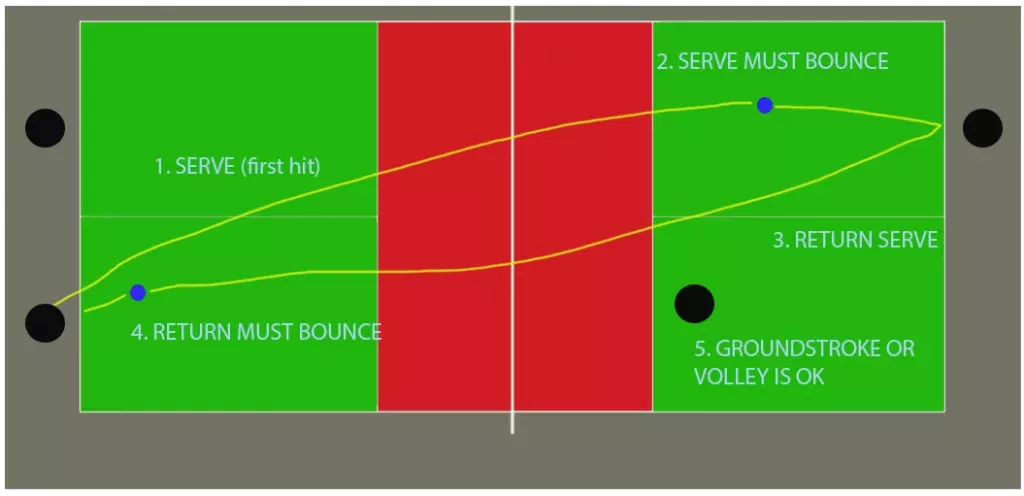
The double bounce rule pickleball requires that the ball bounce once on each side before players may volley. The receiving team must let the serve bounce. The serving team must let the return of serve bounce. After those two bounces, volleys and volleys at the non-volley zone are allowed.
This rule applies to every point. It prevents serve-and-smash play and makes rallies longer. As a result, strategy and placement become more important than raw power.

Why the double bounce rule pickleball matters
The double bounce rule pickleball levels the playing field for new players. It gives both teams a fair chance to reach the net and set up strategy.
This rule reduces quick points from serves and encourages rallies. It protects players at the non-volley zone and promotes safer play. In my experience, games feel more fun and tactical when everyone follows this rule.

How to apply the double bounce rule pickleball — step by step
- Serve and let it bounce.
- The receiving team must allow the served ball to bounce before returning.
- Return of serve and let it bounce.
- The serving team must let that return bounce before hitting again.
- After two bounces, ball is live for volleys.
- Players may volley or play off the bounce.
- Watch for violations.
- If a player volleys before the second bounce, it’s a fault.
Tip from my play: call "let it bounce" to remind beginners. Small cues help teams follow the rule and avoid arguments.

Common mistakes with the double bounce rule pickleball and how to avoid them
Players often rush to the net and volley too early. This causes faults and breaks momentum.
Mistake 1: Volleys before the second bounce.
- Teach teammates to hold position until both bounces happen.
Mistake 2: Misreading quick returns. - If the return is low and fast, take a step back and let it bounce.
Mistake 3: Forgetting the rule on casual courts. - Remind partners before the game starts to keep play consistent.
From coaching, I learned short drills fix these habits. Practice returning low balls and moving forward only after the second bounce.
Variations in casual play and tournaments
Casual play sometimes loosens the double bounce rule pickleball for fun. House rules may allow a volley sooner or ignore the second bounce. This can speed play but increases disputes.
Tournament play enforces the double bounce rule pickleball strictly. Referees and line calls keep it consistent. If you plan to play tournaments, practice strict rule adherence.

Training drills to master the double bounce rule pickleball
Drill 1: Serve-and-wait drill
- One player serves. Both teams must let the first two bounces happen. Focus on footwork and positioning.
Drill 2: Return control drill - The receiver practices low, deep returns. The server practices letting the return bounce and approaching safely.
Drill 3: Two-bounce pressure drill - Add a coach who calls faults when someone volleys early. This trains discipline under pressure.
I used these drills when I coached a local group. Within two sessions, players made fewer early-volley faults and won more points by controlling the third shot.
Strategy tips related to the double bounce rule pickleball
Use the rule to plan the third shot.
- After the two bounces, aim the third shot to force weak returns.
Stay patient and approach the net after the second bounce. - Move forward together as a team to control the non-volley zone.
Practice third-shot drops and deep drives. - These shots are safer and set up easier volleys.
A key lesson I learned is to value timing over speed. Waiting for the right moment often wins the point.

Equipment and court setup tips that help obey the rule
Choose a paddle that gives control for returns and drops.
- A mid-weight paddle helps you manage the ball after the bounce.
Wear shoes with good grip for fast stops and starts. - Stopping correctly helps you avoid early volleys.
Mark casual court rules before play. - Agree on whether the double bounce rule pickleball is enforced to avoid arguments.
These small details make it easier to follow the rule and play better.
Frequently Asked Questions of double bounce rule pickleball
What exactly counts as the two bounces in the double bounce rule pickleball?
The first bounce is the served ball on the receiver’s side. The second bounce is the receiver’s return on the server’s side. After both bounces, volleys are allowed.
Can the serving team volley the return of serve before it bounces?
No. The serving team must let the return of serve bounce once before volleying. Volleying before that is a fault.
Does the double bounce rule pickleball apply in mixed doubles and singles?
Yes. The rule applies to singles, doubles, and mixed doubles in both casual and competitive play. It’s universal across formats.
What happens if a ball bounces twice on the same side before the other side returns?
If the ball bounces twice on one side before the other side returns, the team on that side loses the point. Two bounces on one side is a fault.
Are there exceptions to the double bounce rule pickleball for beginner or casual play?
Some casual games use house rules and may relax enforcement. However, official and tournament play enforces the rule without exceptions.
Conclusion
Mastering the double bounce rule pickleball makes your game smarter, safer, and more fun. Use clear drills, simple strategies, and consistent reminders to avoid faults and win points. Try the drills and tips from this guide during your next practice session, and notice how your team control and communication improve. If this helped, share your experience or ask a question below to keep the discussion going.