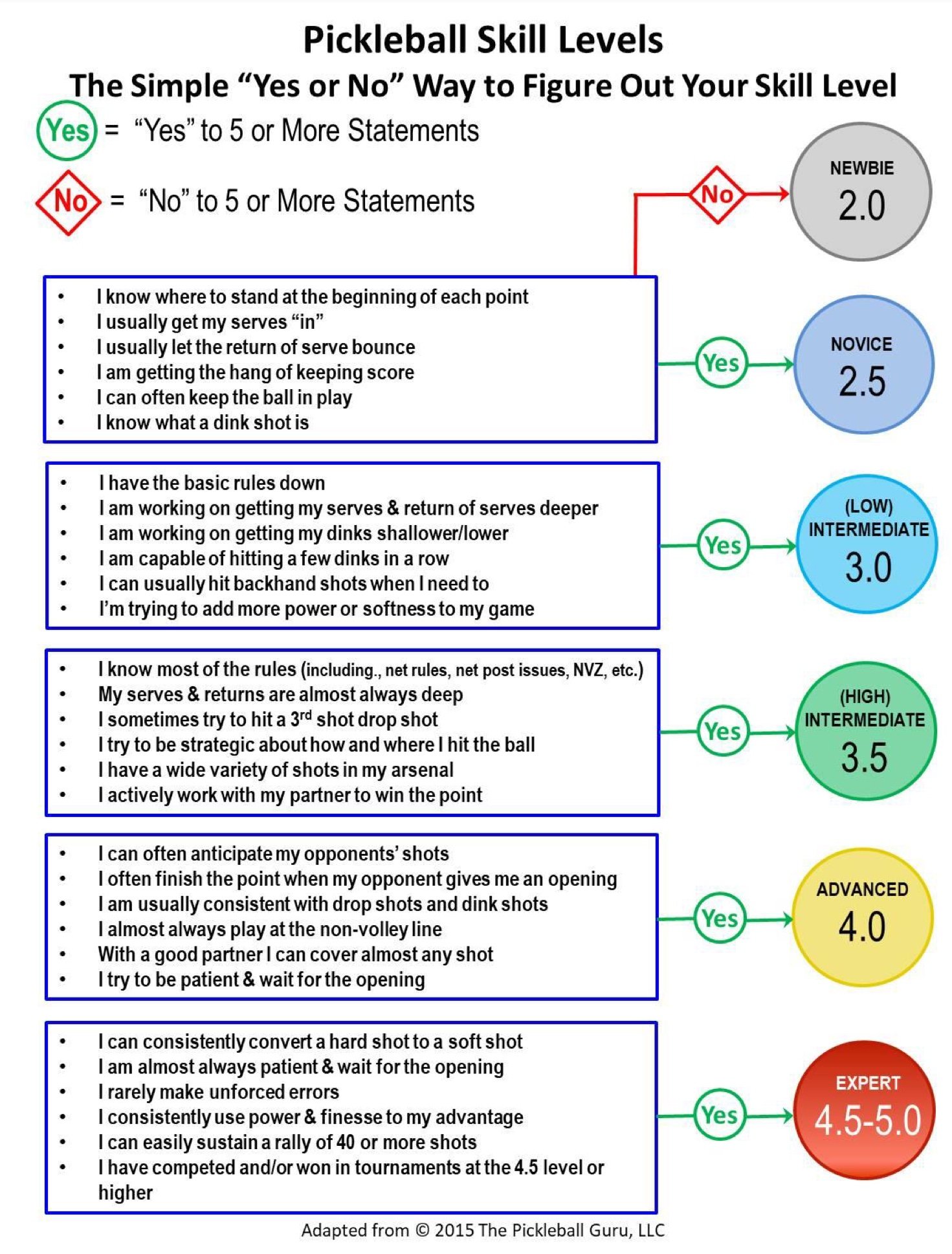
Compare your consistency, shot control, court sense, and strategy to standard pickleball skill levels.
I’ve played and taught pickleball for years, and I’ll walk you through how to self rate yourself in pickleball with clear steps, realistic benchmarks, and easy drills. This guide breaks down rating scales, shows you how to judge your own strengths and weaknesses, gives practical drills to test each skill, and explains how to use your self-rating to set goals and improve faster. Read on to make an honest, useful self-assessment and take control of your pickleball progress.
Why self-rating matters
Self-rating gives you direction. It turns vague goals into specific skills to build. When you know how to self rate yourself in pickleball, you can pick the right drills, avoid playing at the wrong level, and join groups that push you the right amount.
A good self-rating helps with match pairing, court time, and training focus. It also tracks progress over months. Being honest in your rating saves time and reduces frustration.

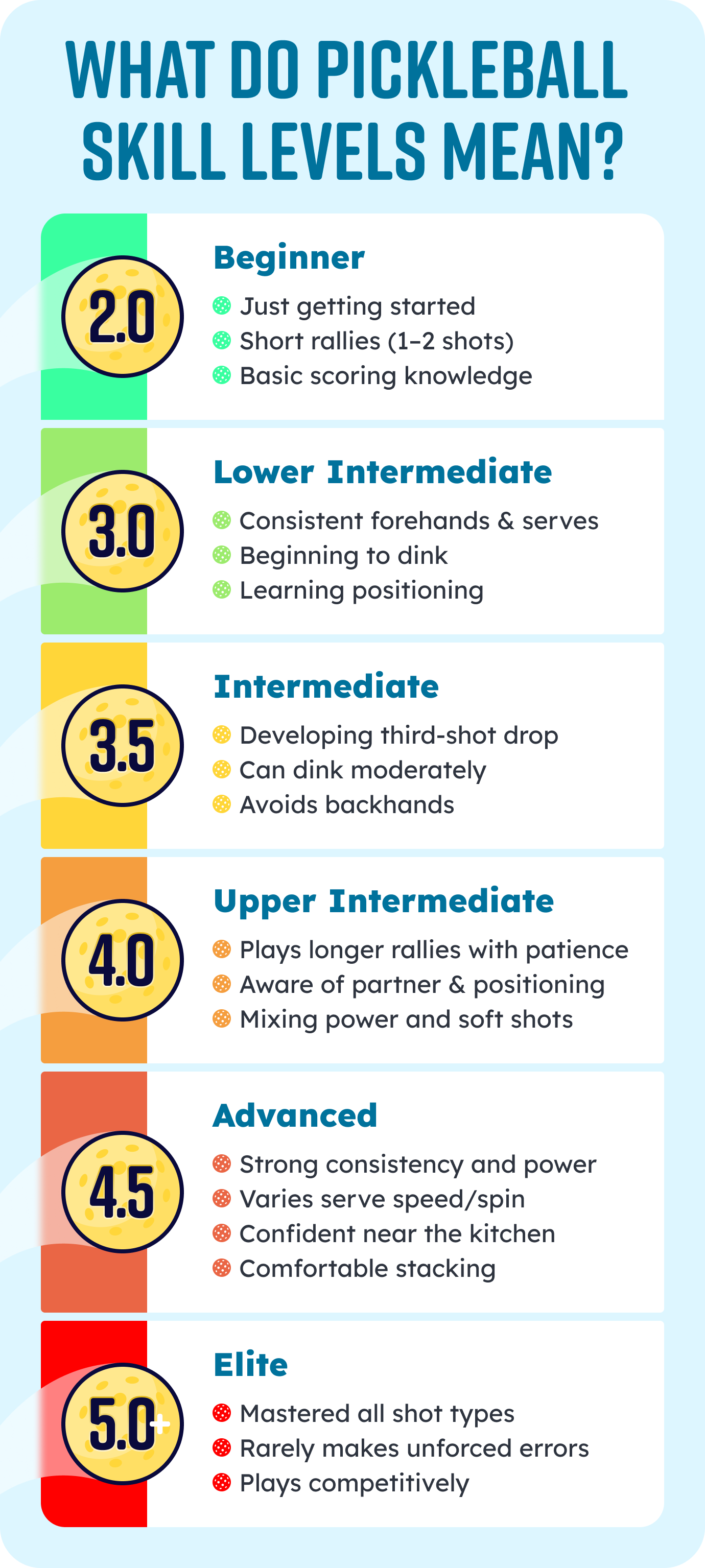
Pickleball rating scales explained
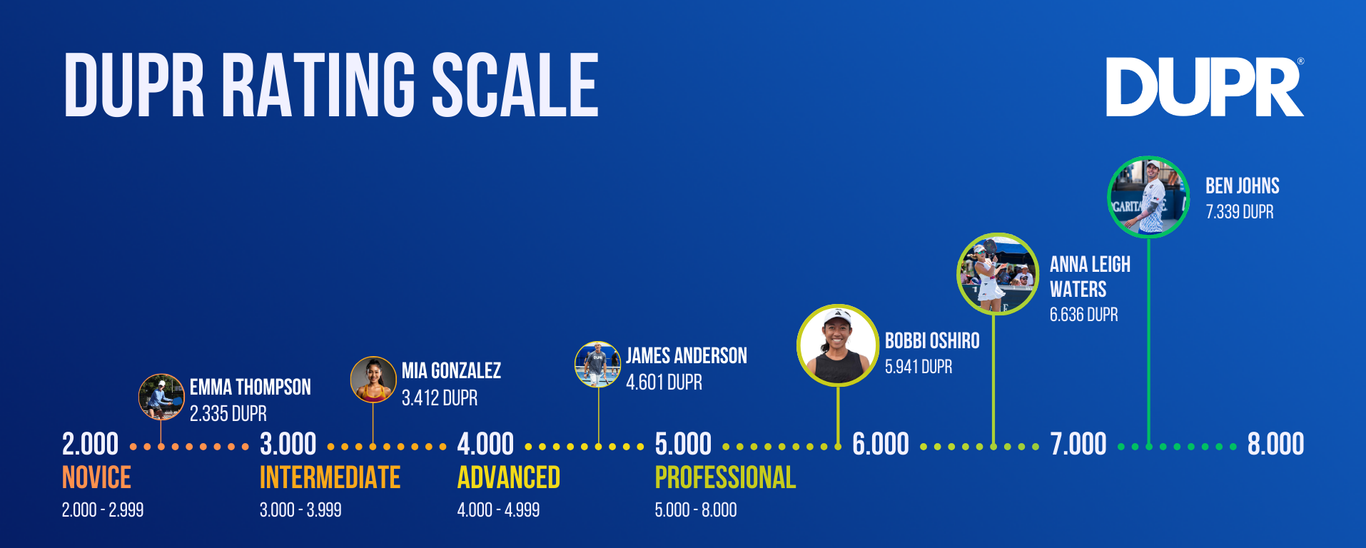
There are common scales used by players and leagues. Most community and national systems run from about 1.0 to 6.0. Lower numbers describe beginners and higher numbers show advanced players.
Key points of the scale:
- 1.0–2.0: Learning the rules, basic serve, and keeping casual rallies.
- 3.0: Consistent serves, returns, and some court positioning. Shots are often simple.
- 4.0: Reliable dinks, serves, and volleys. Good court sense and shot selection.
- 5.0–6.0: Advanced shot-making, spin, strategy, and consistent execution under pressure.
Knowing the scale helps when you ask how to self rate yourself in pickleball. Use these markers to compare your own play. Be honest about consistency, not just the number of flashy shots you can make.

Step-by-step guide: how to self rate yourself in pickleball
Follow these steps to create a fair rating. Keep the process simple and repeatable.
- Record short practice sessions
- Film 5–10 minutes of singles and doubles play. Watch for errors, footwork, and decision-making.
- Test core skills separately
- Serve: Can you get a legal serve in 9 out of 10 times?
- Return: Can you return most serves back into play under pressure?
- Dinks: Can you sustain a dink rally for 10 shots?
- Volleys: Can you make consistent, controlled volleys at the kitchen?
- Use a checklist and score yourself
- Score each skill 1–5. Total the scores and map to a scale. This makes how to self rate yourself in pickleball practical.
- Play with higher and lower rated players
- If higher-rated players consistently expose weaknesses, bump your self-rating down. If you handle higher-level play comfortably, move it up.
- Review and adjust monthly
- Ratings should change as you improve. Track results to keep your rating honest and useful.
Be strict on consistency. One great shot does not equal a higher rating. Focus on what you do most of the time.
Skill checklist and benchmarks
Use this checklist to compare yourself to standard skills. Score each item from 1 (rarely) to 5 (always).
Serve and return
- Serve accuracy and depth
- Serve variety and placement
- Return depth and control
Dinking and soft game
- Sustaining 10+ dinks without mistakes
* Using angles and depth in dinks - Resetting to baseline when needed
Volley and third-shot game
- Controlling volleys near the kitchen
- Executing a reliable third-shot drop or drive
- Moving quickly to stack or cover
Movement and positioning
- Ready stance and split-step
- Communicating and switching positions in doubles
- Recovery after each shot
Strategy and court sense
- Shot selection under pressure
- Reading opponents’ patterns
- Timing and anticipation
Map your total to a scale: 15–25 = 1.5–2.5, 26–40 = 3.0–3.5, 41–55 = 4.0–4.5, 56+ = 5.0+. This simple rubric helps you answer how to self rate yourself in pickleball with more confidence.

Drills to validate your rating
Use drills to test each skill. Short drills give clear data for how to self rate yourself in pickleball.
Serving drill
- Goal: 9/10 legal serves
- Drill: Serve to target zones for 50 serves and count accuracy.
Return drill
- Goal: 8/10 returns playable under pressure
- Drill: Partner serves deep to your backhand and forehand for 30 reps.
Dink endurance
- Goal: 10+ steady dinks
- Drill: Two players dink back and forth. Keep a count of continuous rallies.
Third-shot drill
- Goal: Successful third-shot drop 7/10 times
- Drill: Feed drives to the server. Practice drop to the kitchen line.
Volley control
- Goal: 85% consistency in short volleys
- Drill: Partner feeds at net. Work on placement and depth.
Track your results and average them. These data points make your self-rating honest and useful.

Common mistakes and how to avoid them
Many players overrate based on a few good days. That leads to poor match choices. I once moved up too fast and lost confidence. I learned to base ratings on consistency over weeks.
Other mistakes:
- Relying on ego instead of data.
- Ignoring doubles-specific skills when rating for doubles play.
- Letting one strong skill (like power) hide many weak skills (like control).
Avoid these by filming, testing, and getting feedback. Ask a trusted player for a second opinion. Use drills to confirm what you think you can do.

Using your self-rating to improve
A good rating becomes a plan. Once you know how to self rate yourself in pickleball, you can choose the right drills and partners.
Create a simple plan:
- Set a target rating and timeline.
- Pick one skill to focus on each week.
- Use drills that match your weak points.
- Play matches only slightly above your level to challenge yourself.
I recommend tracking one metric each week. For example, increase dink rally length or serve consistency by a small percent. Small wins add up fast.
Measuring progress and testing with match play
Weekly drills show practice gains. Match play shows real skill. Use both.
How to test:
- Play 3 matches a month against rated players.
- Record match stats: unforced errors, successful third-shot drops, dink errors.
- Compare to your drill results.
If you perform consistently better in practice than in matches, work on pressure drills and mental focus. This is key when you want to know how to self rate yourself in pickleball for competitive play.
Frequently Asked Questions of how to self rate yourself in pickleball
How often should I self rate myself in pickleball?
Reassess every 4–8 weeks. Use recent practice data and match results to adjust your rating.
Can I use the same rating for singles and doubles?
Not always. Many players have different strengths in singles versus doubles and should rate each separately.
What if I’m unsure between two levels?
Choose the lower level if you lack consistency. It’s easier to move up than to correct a rating that’s too high.
Are filmed sessions necessary to rate myself?
They help a lot. Filming removes bias and highlights patterns you may miss in real time.
How do I avoid bias when self-rating?
Use objective drills, score yourself numerically, and ask a neutral player for feedback. Track results over several sessions.
Conclusion
Self-rating is a practical tool. When you learn how to self rate yourself in pickleball, you gain clarity, set realistic goals, and accelerate improvement. Use short drills, honest scoring, filmed sessions, and regular match testing to keep your rating accurate. Start small: pick one skill to test this week and track it for a month. Share your results or questions below, subscribe for more tips, or try a short filmed drill today to get started.