
Picleball uses a solid paddle and plastic ball on a small court; paddle can mean padel or paddle tennis with different rules and courts.
I’ve played and coached court sports for years, so I know the confusion around the question what is the difference between picleball and paddle. This article breaks that question down clearly. I explain the gear, courts, rules, strategy, and who each sport fits best. Read on for tips, real-life lessons, and clear comparisons to help you choose or switch between these games.

Quick overview: core differences and definitions
Many people ask what is the difference between picleball and paddle because the names sound similar. To answer well, we first define both terms and how people use them.
-
Picleball
- A paddle sport played with a solid paddle and a perforated plastic ball.
- Court size is smaller than tennis and has a low net and non-volley zone.
- Scoring and serve rules are unique to the sport.
-
Paddle (two common uses)
- Padel (often called paddle in some regions): a doubles sport played in an enclosed court with glass and mesh walls. The ball can bounce off walls.
- Paddle tennis / platform tennis: an older variant closer to tennis but uses solid paddles and a smaller court. Rules and court features vary by version.
People asking what is the difference between picleball and paddle may mean picleball versus padel, or picleball versus paddle tennis. I’ll cover both and highlight gear, court, and play differences so you can spot the sport you mean.

Equipment differences: paddles, balls, and gear
Equipment drives much of how each game feels. Knowing the gear will answer a big part of what is the difference between picleball and paddle.
-
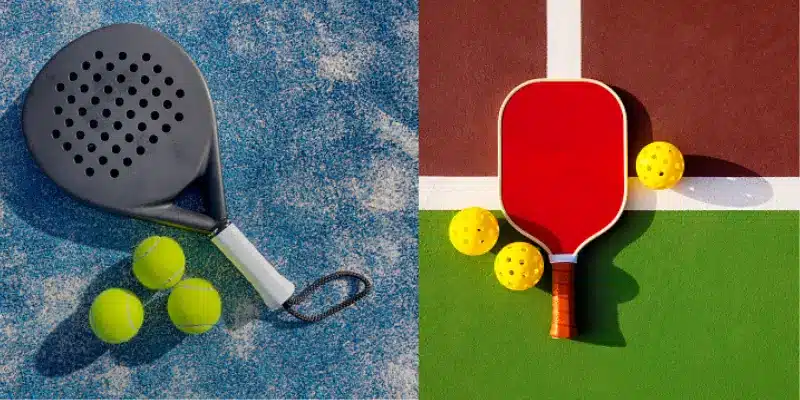
Paddles and rackets
- Picleball: solid composite or wooden paddle. Short handle, wide face, textured surface for spin.
- Padel: perforated composite racket, racket face with holes, short handle, similar to a paddle but built for wall play.
- Paddle tennis: solid paddle, often with holes, designed for quick volleys and control.
-
Balls
- Picleball: plastic ball with holes (like a wiffle ball), lower bounce and slower pace.
- Padel: uses a dampened tennis-style ball, livelier bounce than a picleball but less than full tennis.
- Paddle tennis: typically a rubberized tennis-like ball with slightly lower pressure.
-
Shoes and clothing
- Picleball: court shoes for lateral movement on hard or sport surfaces.
- Padel and paddle tennis: shoes with grip for quick starts, and sometimes soles suited for artificial turf or sand-filled courts.
Understanding these gear differences helps you pick the right equipment and improves play fast.
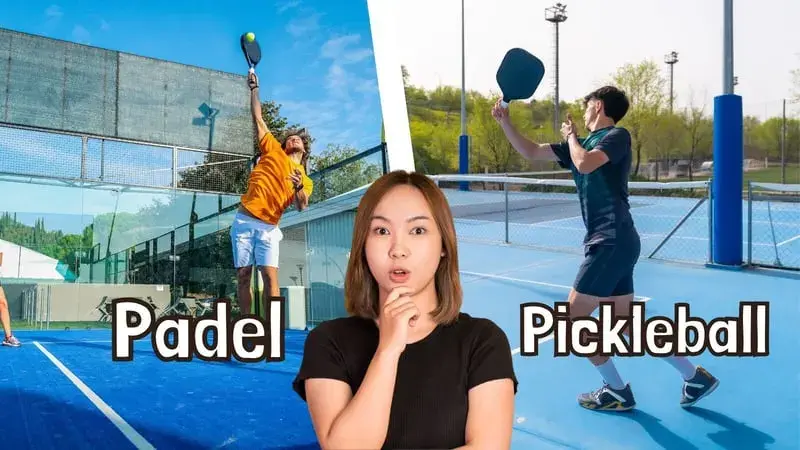
Court and layout: why space changes strategy
Court shape and size shape how the game is played. This is a central part of what is the difference between picleball and paddle.
-
Picleball court
- Dimensions: smaller (20 by 44 feet for doubles).
- Net: lower than a tennis net in the center.
- Non-volley zone: 7-foot “kitchen” on each side where volleys are restricted.
-
Padel court
- Dimensions: larger than a picleball court but smaller than tennis (about 20 by 10 meters).
- Walls: glass and mesh allow bank shots and wall volleys.
- Net: center net like tennis; walls make rallies longer and more strategic.
-
Paddle tennis / platform tennis court
- Varies by version. Often enclosed and smaller than tennis.
- Court surfaces and net heights change strategy.
Court differences explain much of what is the difference between picleball and paddle. Picleball favors quick net play and short angles. Padel rewards wall play and longer tactical rallies.
)
Rules and scoring: how matches differ
Rules give each sport its pace and flow. If you want to know what is the difference between picleball and paddle, the scoring and serve rules are key.
-
Serving
- Picleball: underhand serve, must clear the non-volley zone. Only one serve attempt.
- Padel: overhand and underhand serves allowed depending on rules; ball can hit walls after bounce.
- Paddle tennis: serve style varies by version, often underhand or modified overhand.
-
Scoring
- Picleball: point only on server side; typically plays to 11, win by 2.
- Padel: scoring like tennis (15, 30, 40, deuce) and usually best of sets.
- Paddle tennis: scoring systems vary; check local rules.
-
Play style
- Picleball: shorter rallies with emphasis on dinks and net control.
- Padel: longer rallies with wall use and baseline play mixed.
- Paddle tennis: fast net exchanges and low margin for error.
These rule differences answer the practical part of what is the difference between picleball and paddle and shape training choices.
Skills, strategy, and who should play which sport
Who thrives at each sport? Skill sets tell you what is the difference between picleball and paddle in terms of effort and style.
-
Picleball
- Skills: soft hands, control, quick reflexes, smart positioning.
- Strategy: control the kitchen, use dinks, quick poaches.
- Best for: players who like short court tactics and low-impact play. Great for older adults or newcomers.
-
Padel
- Skills: wall-awareness, angled shots, endurance.
- Strategy: build rallies using walls, move opponents with volumes of shots.
- Best for: players who like longer rallies and tactical play. Great for tennis players adapting to walls.
-
Paddle tennis
- Skills: fast volleys, crisp serves, quick footwork.
- Strategy: dominate the net, keep pace high.
- Best for: aggressive, fast-reacting players who like quick points.
Choosing between them comes down to your fitness, style, and what you enjoy practicing.

Buying gear and switching between sports: practical tips
If you play one and want to try the other, here are clear tips that reflect my experience and help clarify what is the difference between picleball and paddle when shopping and playing.
- Start simple
- Rent gear or borrow before buying. Feel the paddle weight and handle length.
- Match shoes to court
- Use lateral-support court shoes for picleball; check padel courts for grip needs.
- Adjust technique
- Move from picleball to padel slowly. Expect longer rallies and wall shots.
- Budget wisely
- Paddles and padel rackets vary widely in price. Buy mid-range for your first year.
- Take lessons
- A coach can correct serve mechanics and wall use fast.
From my coaching days, players who try both sports improve hand-eye coordination and tactical vision.

Personal experience and common mistakes
I teach both sports and have learned what trips new players up. These notes show a human side to what is the difference between picleball and paddle.
- Mistake: using the same swing for both sports
- Lesson: picleball needs short, compact swings. Padel uses more follow-through for wall shots.
- Mistake: ignoring court position
- Lesson: in picleball you must respect the kitchen. In padel, you must read wall angles.
- My tip: practice dinks for picleball and wall returns for padel for 15 minutes each session.
- My experience: players who cross-train gain better touch and shot variety.
These real tips cut learning time and help you enjoy play more quickly.

Frequently Asked Questions of what is the difference between picleball and paddle
What is the main difference between picleball and paddle?
The main difference is court and play style. Picleball uses a small court with a plastic ball and focus on dinks; paddle often means padel or paddle tennis which use walls or different balls and keep longer rallies.
Can I use a picleball paddle to play padel?
No. Picleball paddles are not designed for wall play or the tensions of padel balls. Each sport’s gear is tuned to its ball and court.
Which sport is easier on the joints: picleball or paddle?
Picleball tends to be easier on joints due to smaller court, lower running demand, and slower ball. Padel can require more quick movement and lunges.
Do scoring systems differ between picleball and paddle?
Yes. Picleball uses a simplified server-based scoring to 11 points, while padel follows tennis-style scoring and paddle tennis may vary by local rules.
Is padel the same as paddle tennis, and how does that relate to picleball?
Padel and paddle tennis are related but not identical. Both differ from picleball in ball type, court size, and wall usage, which leads to different tactics.
Conclusion
You can now answer what is the difference between picleball and paddle with confidence. Picleball centers on a small court, a plastic ball, and net play with dinks. Paddle (padel or paddle tennis) uses wall play or different balls and rewards long rallies and varied angles. Try both if you can. Play a few sessions, rent gear, and take a lesson to find which style fits you best. If you found this helpful, try a local drop-in, share your experience below, or subscribe for more tips and gear guides.