
Pickleball scoring explained: The server only scores; doubles use three-number calls (server, receiver, server side).
I’ve taught and played pickleball for years, and I’ll walk you through pickleball scoring explained in a clear, friendly way. This guide breaks down the rules, common mistakes, examples, and tips so you can keep score confidently in singles and doubles. Expect simple step-by-step examples, real-life tips from my matches, and easy rules to remember.

Basics of pickleball scoring explained
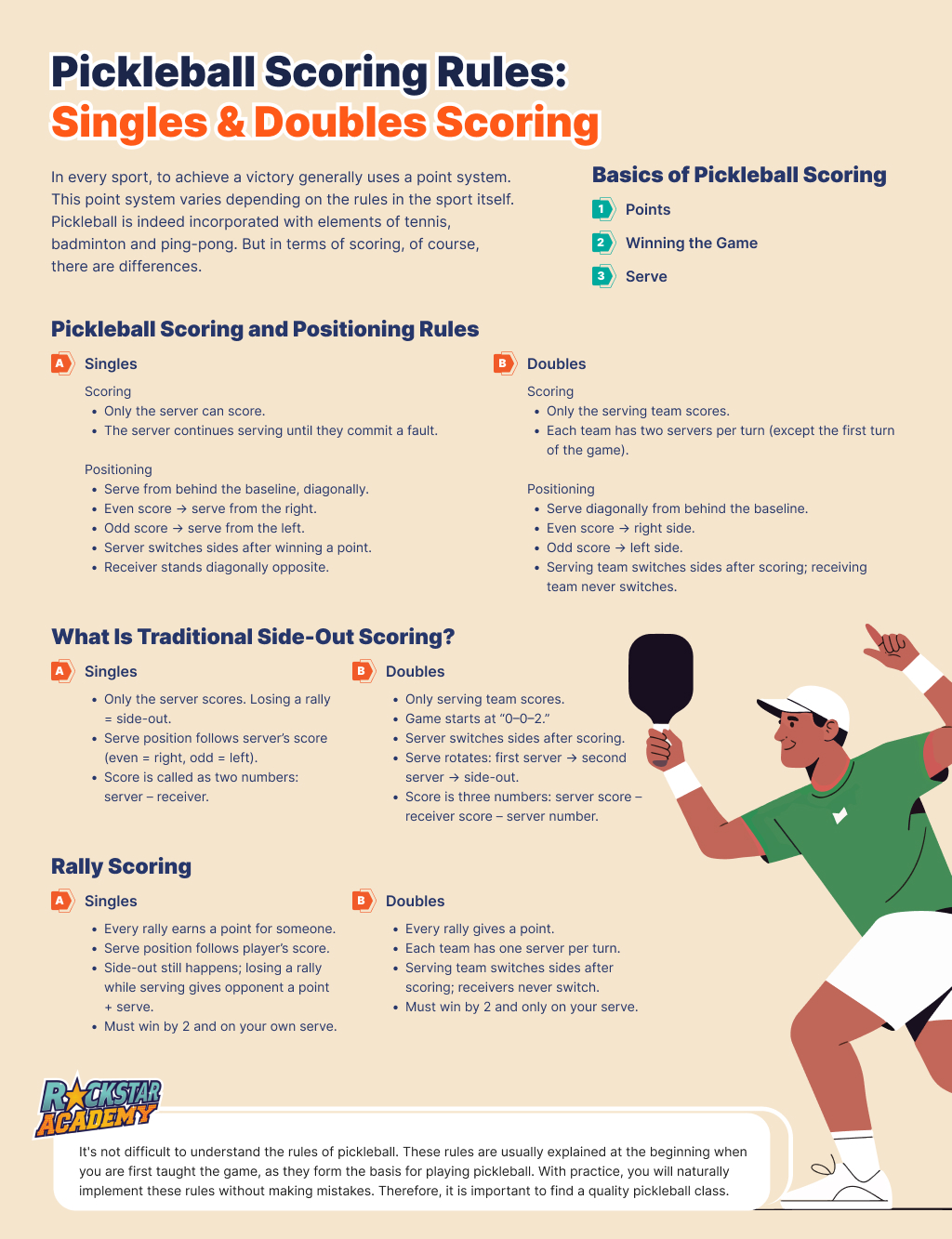
Pickleball scoring explained starts with one simple fact: only the serving side can earn points. In official play, games are usually played to 11 points and you must win by 2 points. Points are counted in whole numbers. A typical score call uses three numbers in doubles: the serving team’s score, the receiving team’s score, and which server is serving.
Key terms to remember:
- Point: A single score earned by the serving side.
- Side-out: When the serving team loses the serve and the opponent gains the right to serve.
- Game: Often first to 11, win by 2 for standard play.
Pickleball scoring explained can seem odd at first. But once you practice calling scores and tracking serves, it becomes second nature.
Scoring rules for singles vs doubles
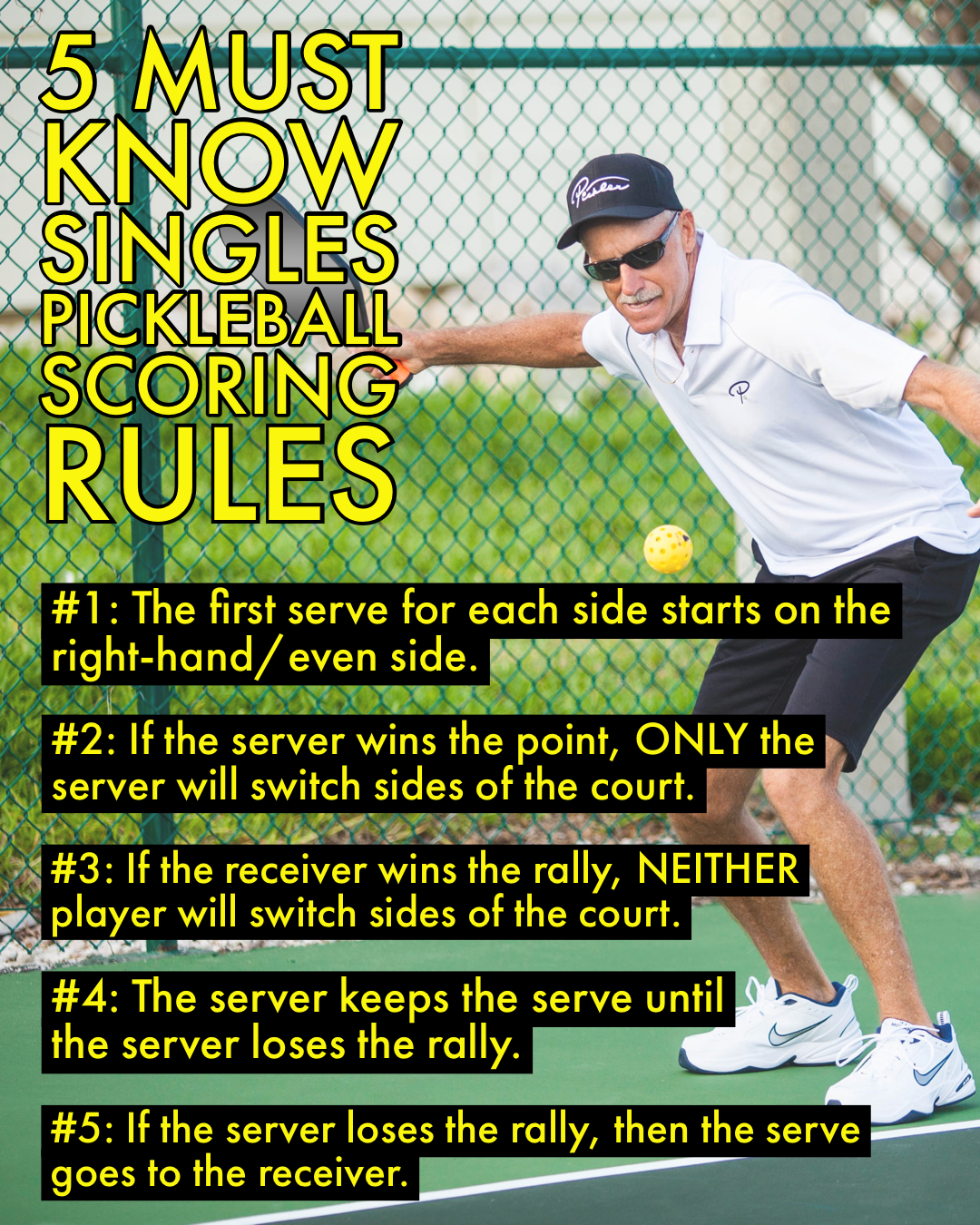
Singles scoring is simpler. When you serve and win the rally, you score a point and keep serving. If you lose the rally, your opponent gets the serve. You always call two numbers: server’s score and opponent’s score.
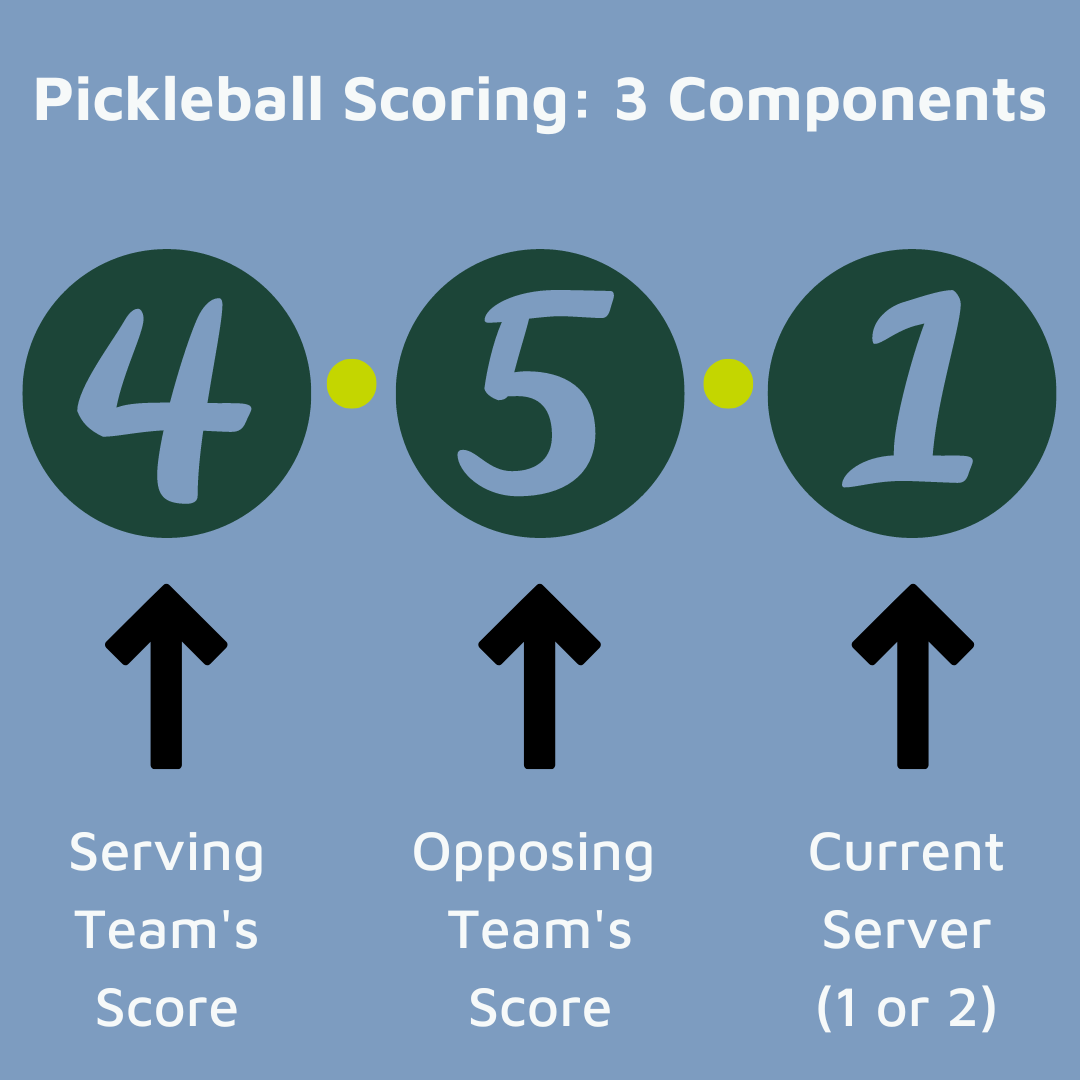
Doubles uses three-number calls. The numbers mean:
- First number: Serving team’s score.
- Second number: Receiving team’s score.
- Third number: Which server is serving (1 or 2).
At the start of a doubles game, only one player on the first serving team gets one service turn. After that, both players on each team serve in rotation. Pickleball scoring explained in doubles needs attention to who is the first or second server.
Understanding the serve, faults, and side-outs
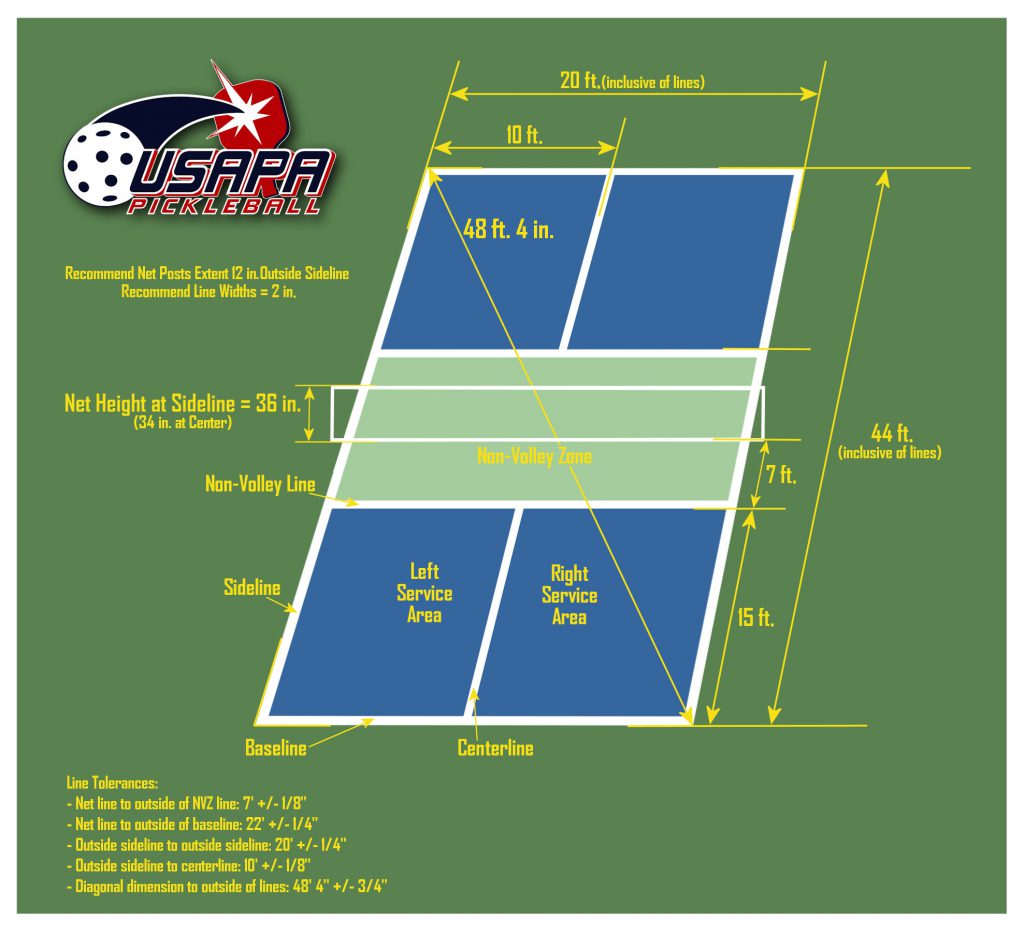
A legal serve must be underhand and struck below the waist. The server must keep one foot behind the baseline. The ball must clear the kitchen (non-volley zone) and land in the opposite diagonal court.
Common faults that stop play:
- Serve hit into the net or out of bounds.
- Ball volleyed in the kitchen.
- Ball bounces twice before return.
A fault by the serving side ends their turn to serve. In doubles, a fault by server one means server two now serves. If server two faults, the other team gains the serve. That is the side-out.
Pickleball scoring explained emphasizes that a point is only awarded after a fault by the receiving team when the serving team is active.
Common scoring mistakes and how to avoid them
New players often forget to include the server number in doubles. They also mix up which player serves after a side-out. Keep a simple habit: the server always says the score before each serve.
Practical tips I use:
- The server calls the score loudly each serve.
- The partner confirms the third number by tapping or nodding.
- Use a small scoreboard or chalkboard in casual play.
In my early matches I lost points by not calling “one” or “two” correctly. That taught me to slow down before each serve. Pickleball scoring explained becomes reliable once you build that small routine.

Scoring variations and house rules
Casual groups often use house rules. Some common variations include:
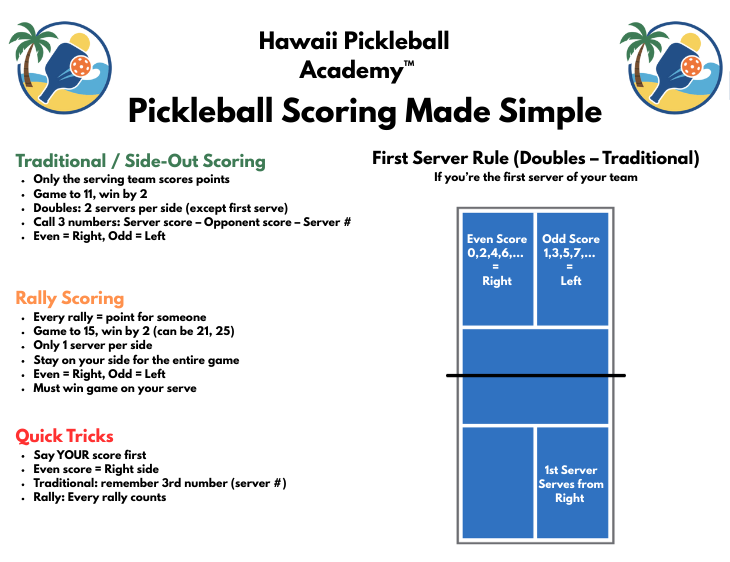
- Play to 15 or 21 instead of 11, still win by 2.
- Allow rally scoring where either side can score a point on any rally.
- Short games where you must win by 1 point.
Tournaments follow the official rules. If you play social games, always agree on scoring style before the first serve. I once played a match where rally scoring was used without warning; it changed strategy instantly. Clear pre-game agreement avoids that.
Keeping score like a pro: examples and verbal calls
Here are easy examples you can practice.
Example 1 — Doubles start:
- Score is 0-0, server is Player A on Team 1. Call: “0-0-1.”
- Team 1 wins: Call “1-0-1” since the first server continues if they score.
- Team 1 faults now: Call “1-0-2” when the second player serves.
- Second player faults: Side-out. New server calls “0-1-1.”
Example 2 — Singles:
- Start at 0-0. Server wins: “1-0.”
- Server loses: Opponent serves next and calls “1-1” once they score.
Pronunciation tips:
- Always say your team score first.
- Add the opponent score second.
- In doubles include the server number last.
Practice these patterns on the court. I drill them with new players for ten minutes before matches. It cuts confusion and speeds up play. Pickleball scoring explained feels much easier after a few practice volleys.
My personal lessons and mistakes to avoid
I’ll share a few honest lessons from my own play:
- Don’t rely on memory alone. Use a simple marker or app.
- Speak clearly before each serve. Silence leads to disputes.
- Learn the server rotation before you step on court.
One match I lost due to a missed server rotation. It cost us a point and morale. After that I started a quick tally method on my water bottle. Small rituals help. When teaching, I make students repeat score calls out loud. It builds confidence. Pickleball scoring explained is easier when you make clear habits.

Quick checklist before each match
Use this short list before you begin:
- Agree on game length and whether rally scoring is used.
- Confirm which side serves first.
- Decide who is server one and server two in doubles.
- Place a visual score marker or app where both teams can see it.
This saves time and prevents arguments later. I always ask these four questions before the first serve.

Frequently Asked Questions of pickleball scoring explained
What does the three-number score mean in doubles?
The three numbers mean serving team score, receiving team score, and which server is serving (1 or 2). It clarifies which player on the serving team is active.
Can the receiving team score during a rally?
Not under official rules. Only the serving side can score a point. Some groups use rally scoring as a house rule.
How many points to win a standard game?
Standard games go to 11 points, and you must win by 2 points. Tournament games sometimes play to 15 or 21.
What happens if the serve hits the net but lands in the court?
That is a fault. The serving side loses that serve and either the second server serves (doubles) or the opponent gains serve (singles).
Do both players serve in doubles?
Yes. After the first server faults, the partner serves until they fault. Then the other team gains the serve. This rotation is a core part of pickleball scoring explained.
Is rally scoring ever used in official play?
No, official pickleball uses side-out scoring. Rally scoring is used in some recreational formats to speed play.
Conclusion
Pickleball scoring explained becomes simple with a few clear habits. Remember: only the serving side earns points, doubles use a three-number call, and practice calling scores out loud. Start small: play a few practice games, use a visible score marker, and agree on rules before each match. Try these tips in your next session, share how it goes, and leave a comment or subscribe for more guides and drills.