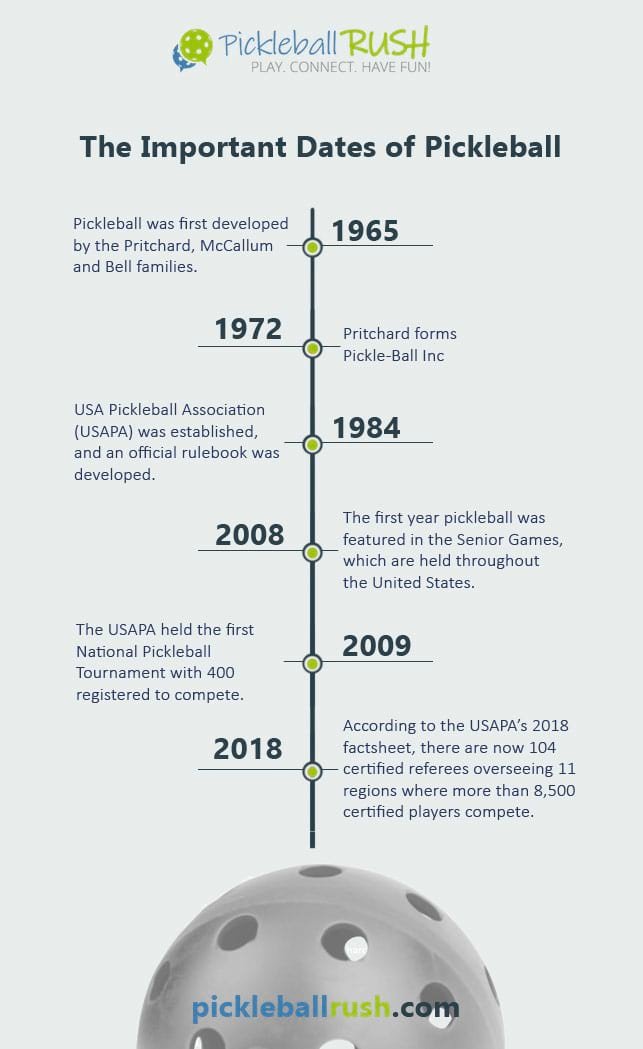
Joel Pritchard, Bill Bell, and Barney McCallum invented pickleball in 1965 on Bainbridge Island.
I’ve researched and played pickleball for years, and I’ll walk you through exactly who and when was pickleball invented, why it started, and how a backyard family game became a global sport. This article blends clear facts, firsthand insights, and practical tips so you can understand the full story and enjoy the game more.
The origins: who and when was pickleball invented
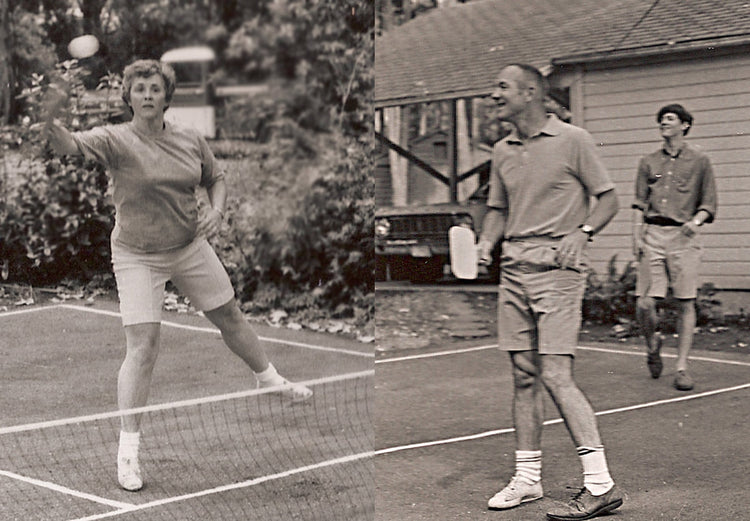
Pickleball began in 1965 when three friends created a game for their families. Joel Pritchard, a congressman, Bill Bell, a businessman, and Barney McCallum, a neighbor, set up a makeshift court on Bainbridge Island, Washington. They used a perforated plastic ball, wooden paddles, and a lowered badminton net. Within a short time, the rules were refined and the sport took shape.
The question who and when was pickleball invented has a clear answer: 1965 by Pritchard, Bell, and McCallum. Still, the origin story has small, friendly debates. One popular tale links the name to a family dog named Pickles. Another says the name came from the “pickle boat” in rowing. Both versions show how informal and social the game’s start really was.

Why and how they created the game
The founders wanted a family activity that everyone could play. They sought a game that was easy to learn and fun for kids and adults. They combined elements from badminton, tennis, and ping-pong. The equipment was simple and cheap, which helped the game spread quickly among neighbors.
Key reasons behind the invention:
- Family fun: The founders wanted a game that mixed skill with casual play.
- Accessibility: Small court and simple rules make it easy for older adults and kids.
- Social nature: It was made to bring neighbors and families together.
Explaining who and when was pickleball invented helps highlight that the sport was practical and social from day one. The clear, modest start explains why it found rapid acceptance.

Early rules, equipment, and evolution
The original paddles were wooden and the ball was molded plastic. Early rules borrowed from other racket sports but added unique touches. The kitchen (non-volley zone) and the two-bounce rule came early and shaped strategy.
Early equipment and rules:
- Paddles: Initially wooden; later evolved to composite materials.
- Ball: A perforated plastic ball, similar to a wiffle ball.
- Court: 20 by 44 feet, with a low net, ideal for small spaces.
- Signature rules: Non-volley zone and two-bounce requirement.
When you ask who and when was pickleball invented, remember that many early changes came from players testing what worked. As the sport grew, formal bodies refined rules and standardized equipment to make play consistent across communities.
How pickleball spread from a backyard to the world
After 1965, the game spread by word of mouth. Local clubs and community centers adopted it. Over decades, youth programs, senior centers, and parks added courts. Media coverage and organized tournaments accelerated growth in the 2000s and 2010s.
Factors that drove rapid spread:
- Ease of play: Low learning curve helped adoption.
- Cost: Low-cost gear and small courts lowered barriers.
- Community building: Clubs and social play made it stick in towns and cities.
- Organized play: Tournaments and leagues made it competitive and visible.
Understanding who and when was pickleball invented helps explain the grassroots spread. A simple idea, tested by friends, grew because it fit many needs at once.

My experience, lessons learned, and practical tips
I started playing pickleball in community centers. The game hooked me because it blends court sense and social fun. Coaching beginners taught me common mistakes and quick wins.
Practical tips I use and recommend:
- Learn the two-bounce rule first to avoid common faults.
- Practice dinking in the kitchen zone to control points.
- Use a lightweight paddle when starting to build technique.
- Play with a range of ages to learn varied styles and strategies.
Knowing who and when was pickleball invented adds context to your play. The founders wanted simple, fun play. Keep that spirit as you learn. I’ve seen new players improve fast by focusing on short rallies and consistent serves.

Equipment today vs. original gear
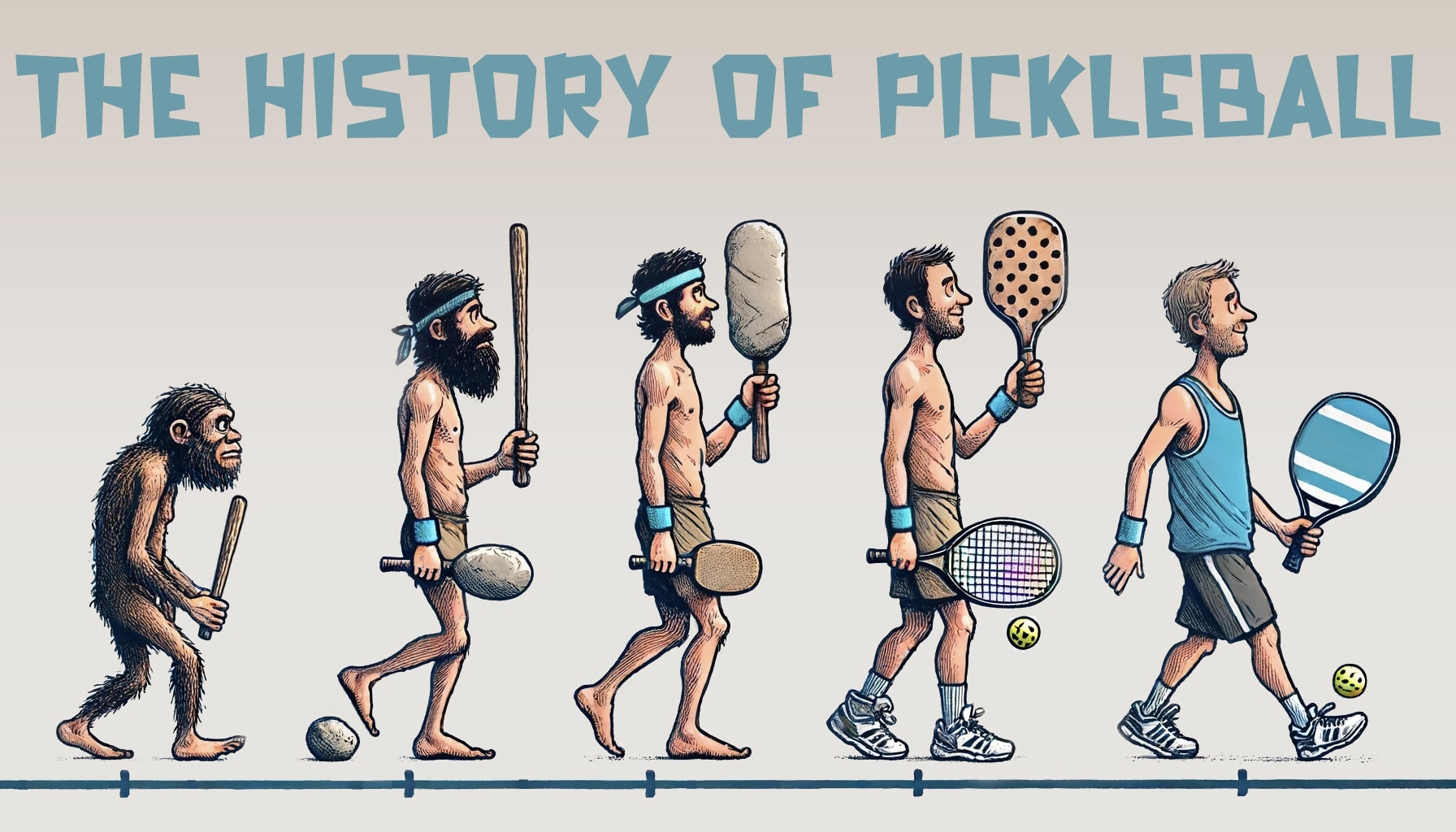
Today's paddles use lightweight composite materials and advanced cores. Balls come in indoor and outdoor types with different hole patterns. Court surfaces and net systems are standardized for safety and fairness.
Quick comparison:
- Then: Wooden paddles, one type of plastic ball, home courts.
- Now: Composite paddles, specialized balls, regulated court sizes.
- Benefit: Modern gear is more forgiving and consistent for players.
When you search who and when was pickleball invented, note that the sport’s roots keep its simple charm. Modern gear improves play but the core is still the same backyard invention.

What the origin story teaches us about sport design
The creation of pickleball shows how small ideas can become big movements. A simple need — a fun family game — led to rules that balanced skill and accessibility. The sport is a model for low-cost, high-social-value recreation.
Lessons to apply:
- Start simple: Basic rules can foster long-term growth.
- Design for inclusion: Games that invite all ages scale faster.
- Iterate: Early refinement of rules made pickleball durable.
If you reflect on who and when was pickleball invented, you’ll see a pattern useful in many designs: clear purpose, rapid testing, and social appeal.

Frequently Asked Questions of who and when was pickleball invented
Who invented pickleball?
Pickleball was invented by Joel Pritchard, Bill Bell, and Barney McCallum in 1965 on Bainbridge Island, Washington. They created it as a family game using simple equipment.
When exactly was pickleball invented?
The first games were played in the summer of 1965. That year marks the formal beginning of the sport and the early shaping of its rules.
Was pickleball named after a dog named Pickles?
There are two stories. One says the game was named after a dog named Pickles, while another links the name to a rowing term. Both stories are part of the game’s folklore.
How did the rules develop after the first game?
Players refined the rules through casual play, adding the non-volley zone and the two-bounce rule. Organized groups later standardized these rules for competition.
Why did pickleball spread so quickly?
Its low cost, small court size, easy learning curve, and social appeal helped it spread from backyards to community centers and then worldwide.
Conclusion
The story of who and when was pickleball invented is a neat reminder that the best ideas often start small. In 1965, three neighbors built a simple, inclusive game that would grow into a global sport. Use that lesson: keep things simple, test with friends, and focus on fun. If you’re curious, try a local court, join a beginner session, or share this story with friends—then play.
Thanks for reading—leave a comment with your own pickleball origin stories or questions, and consider subscribing for more sports history and practical tips.