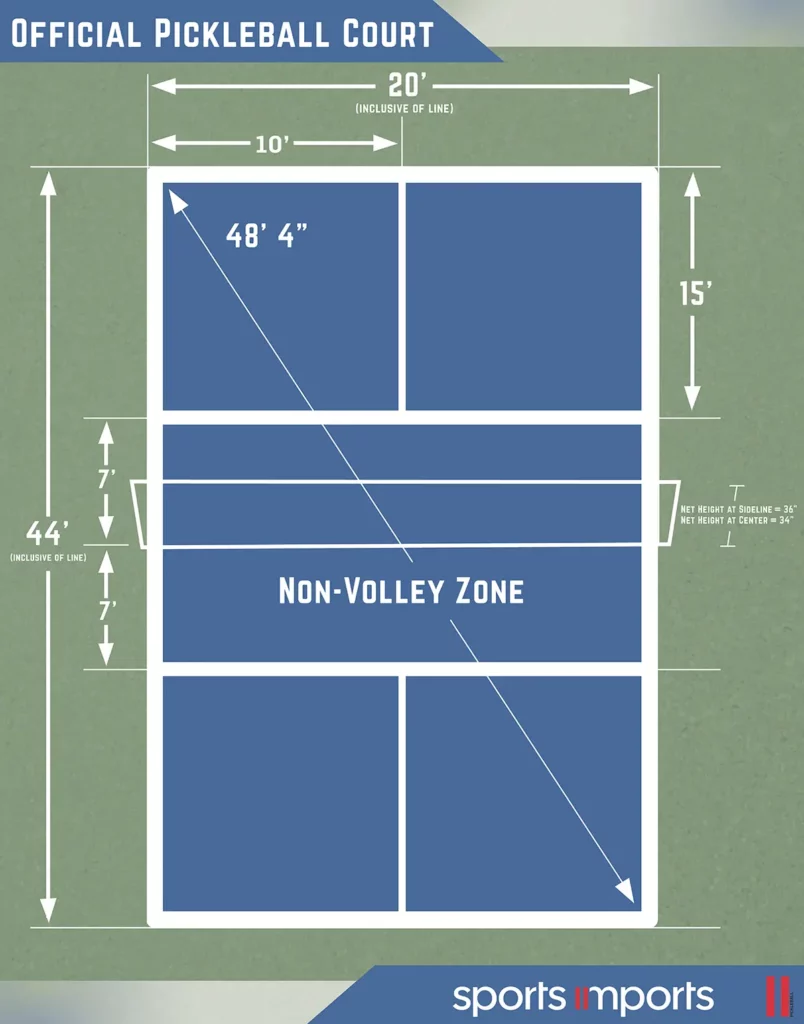
A standard pickleball court covers 880 sq ft; recommended playing footprint is 1,800–2,176 sq ft.
I’ve planned and played on dozens of courts, so I know how space changes the game. This guide explains pickleball court size area in sq ft with clear numbers, practical layout tips, and real-life advice. Read on to learn exact measurements, how to convert them, and smart planning steps for a backyard or club court.
Standard court dimensions and area
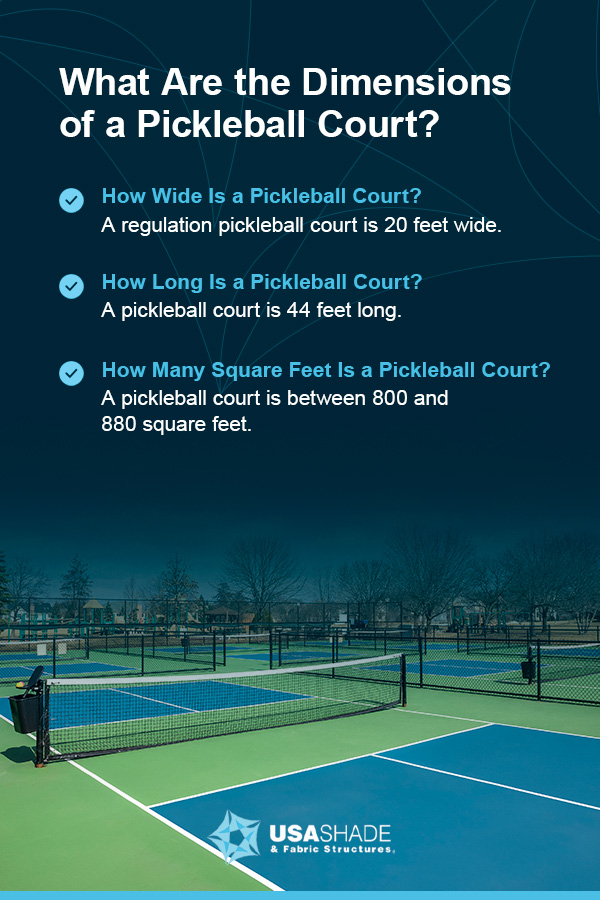
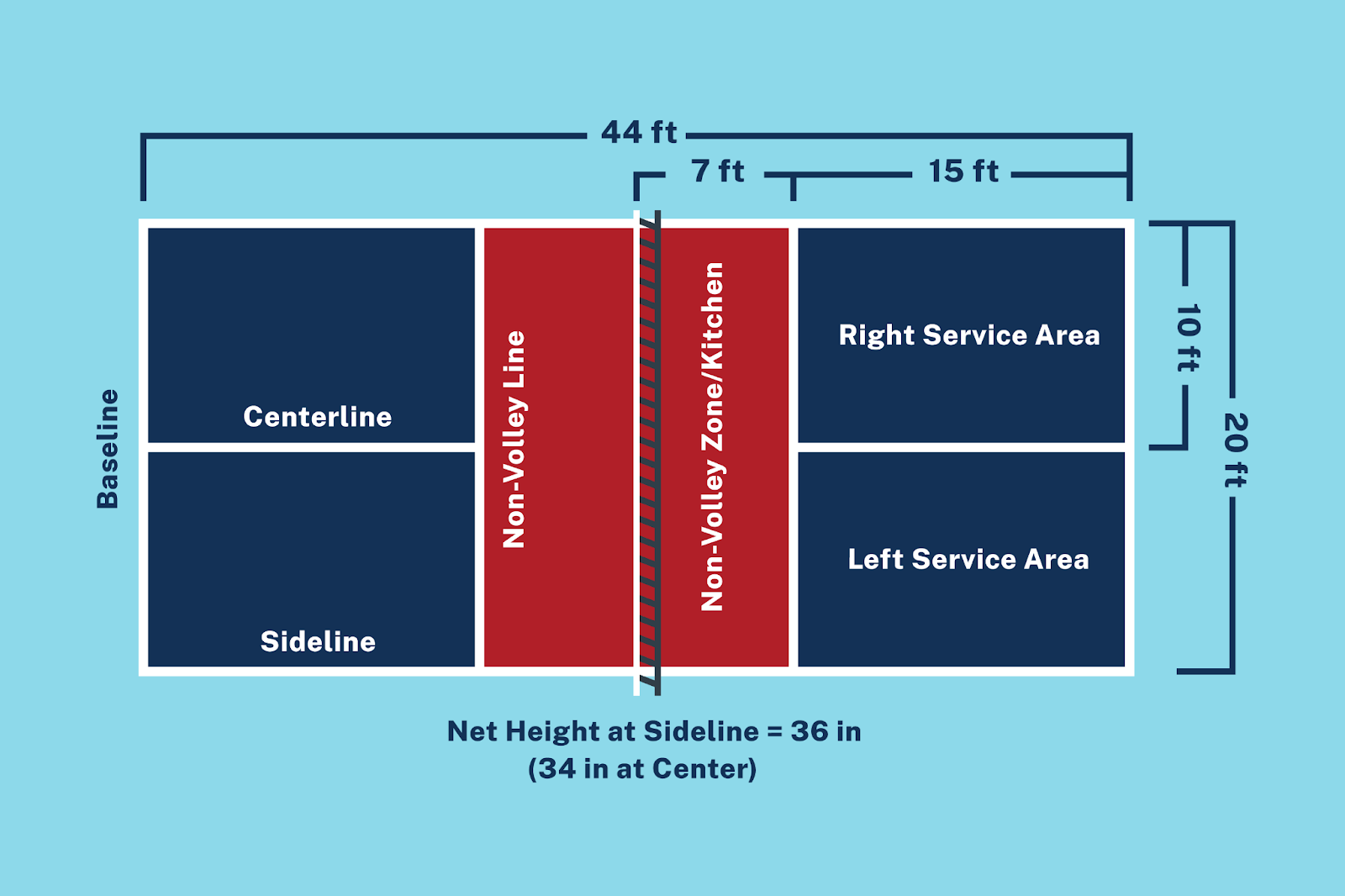
The official pickleball court measures 20 feet wide by 44 feet long. That gives a marked playing area of 20 x 44 = 880 sq ft. This 880 sq ft is the court lines area. It covers both singles and doubles play. Use 880 sq ft when you mean the painted court lines and net zone.

Recommended playable space and total footprint
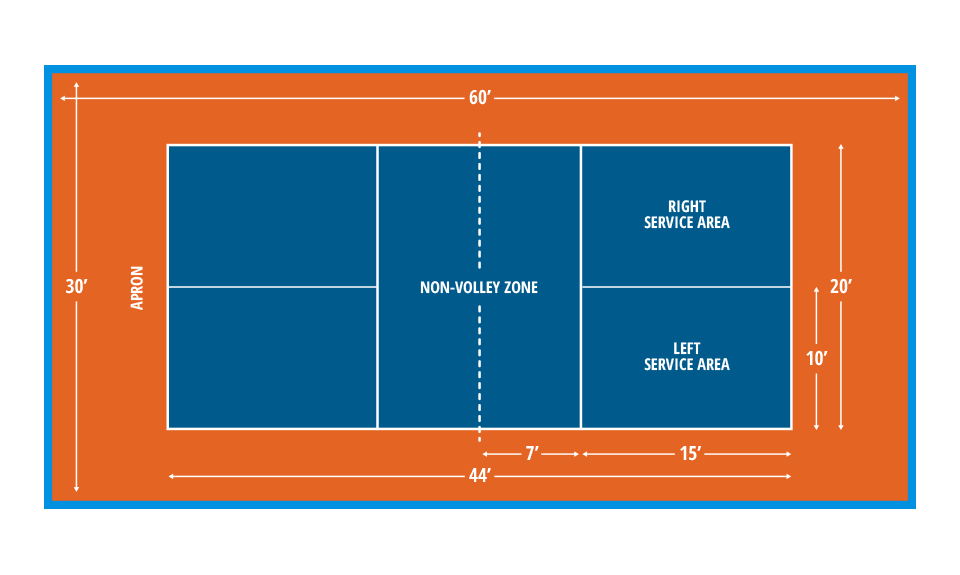
Marked lines are not the whole story. Players need room to move beyond the lines. A common minimum footprint is 30 feet by 60 feet. That equals 1,800 sq ft. Many clubs prefer 34 feet by 64 feet for better clearance. That equals 2,176 sq ft. Plan for at least 1,800 sq ft per court for casual play and up to 2,176 sq ft for tournament comfort. When discussing pickleball court size area in sq ft, include both the 880 sq ft court and the recommended footprint.

How to convert pickleball court size area in sq ft — simple examples
Here are easy examples for planning and math. Keep the math simple and repeatable.
- Single marked court area
- 20 ft x 44 ft = 880 sq ft.
- Minimum recommended footprint
- 30 ft x 60 ft = 1,800 sq ft.
- Comfortable tournament footprint
- 34 ft x 64 ft = 2,176 sq ft.
- Two side-by-side courts (compact)
- 1,800 sq ft x 2 = 3,600 sq ft total.
- Four courts in a block (with walkways)
- Plan 7,200–9,000 sq ft depending on spacing.
When you plan, always convert lengths to feet first. Multiply width by length to get square feet. When people ask about pickleball court size area in sq ft, these examples help them choose a layout.
Indoor vs outdoor considerations that change area needs
Indoor gyms can limit side clearance due to walls and pillars. Outdoor sites need space for fencing, light poles, and drainage. Add a fence buffer of 3–6 feet around edges for nets and balls. Lighting poles and electrical access may require extra spacing and routes. For reliable play, treat the pickleball court size area in sq ft as flexible. Increase the footprint if you have obstacles or expect heavy play.
Planning and building tips for your pickleball court size area in sq ft
Start with a clear goal. Decide if the court is for family fun or regular leagues. Here are practical steps I use:
- Measure the available land in feet before drawing a plan.
- Mark the 880 sq ft court first. Then add recommended clearance.
- Orient courts north-south if possible. This reduces sun glare.
- Allow for gutter and drainage slope of 1% where needed.
- Check local rules and permits. Some towns require setbacks.
Estimate cost per square foot for surfacing and play. Multiply the chosen footprint by your per-square-foot cost to get a budget. This keeps the pickleball court size area in sq ft tied to real costs and choices.

Common mistakes and lessons from building courts
I’ve seen several repeat mistakes. Learn from them so you don’t repeat them.
- Ignoring clearance needs leads to bad play and injuries.
- Skipping proper drainage causes costly repairs.
- Placing courts too close to trees creates constant debris.
- Underestimating lighting needs harms evening play.
When I built my first backyard court, I underestimated the 10-foot back clearance. We had to trim landscaping twice. Plan bigger than you think. Use the pickleball court size area in sq ft to avoid cramped play.
Materials, surface, and maintenance that affect usable area
Surface choice affects how the court feels and how much space you need for prep. Hard acrylic over concrete is common. Asphalt is cheaper but may need more maintenance. Turf or modular tiles are options for multi-use spaces. Add room for benches, scoreboards, and storage. These features change the usable pickleball court size area in sq ft and the player experience.
Cost estimates tied to square footage
Costs vary by material and region. Use these rough ranges per sq ft to estimate:
- Basic asphalt prep and paint: $2–$6 per sq ft.
- Acrylic surface over concrete: $6–$12 per sq ft.
- Premium surfacing and lighting: $12–$25+ per sq ft.
Multiply by your chosen footprint. For example, a 1,800 sq ft court at $8 per sq ft totals about $14,400. Budget for nets, posts, fencing, and permits separately. Keeping track of the pickleball court size area in sq ft helps you build realistic budgets.
Accessibility, safety, and regulations
Safety and access shape your final layout. Consider these items:
- ADA access paths and ramps where required.
- Fence heights 4–6 feet for recreational sites; higher for competition.
- Non-slip surfaces and clear sight lines for referees.
- Emergency access and lighting for night play.
Make sure codes and insurance guidelines accept your chosen pickleball court size area in sq ft. Consult local authorities early to avoid costly revisions.
Frequently Asked Questions of pickleball court size area in sq ft
What is the exact square footage of a standard pickleball court?
A standard, marked pickleball court is 20 feet by 44 feet. That equals 880 sq ft.
How much total space do I need for one safe court?
Plan for at least a 30 ft by 60 ft footprint for safe play. That footprint equals 1,800 sq ft.
Can I fit two courts in a typical backyard?
Many backyards can fit two courts if you have about 3,600 sq ft of clear space. Allow extra room for walkways and fencing.
Is 880 sq ft enough for recreational play?
880 sq ft is the official court area for play, but it is tight without extra clearance. For comfort and injury prevention, use a larger footprint than 880 sq ft.
How do I calculate cost from the court area in square feet?
Multiply your chosen footprint in sq ft by the cost per sq ft for surfacing. Then add fixed costs like nets, lighting, and fencing.
Do indoor courts need the same footprint as outdoor courts?
Indoor courts can be smaller in external buffers but need clearance from walls and dropped fixtures. Always measure inside obstructions before finalizing the footprint.
Conclusion
Knowing the pickleball court size area in sq ft helps you plan smartly. The marked court is 880 sq ft, but a real playing footprint should be at least 1,800 sq ft and up to 2,176 sq ft for tournament comfort. Use simple math, plan for clearance, and factor in materials and lighting. Start by measuring your site and choosing a footprint that fits your goals. If you’re ready, sketch your layout, get quotes, and start building. Share your plans or questions below and I’ll help you refine the pickleball court size area in sq ft for your space.