
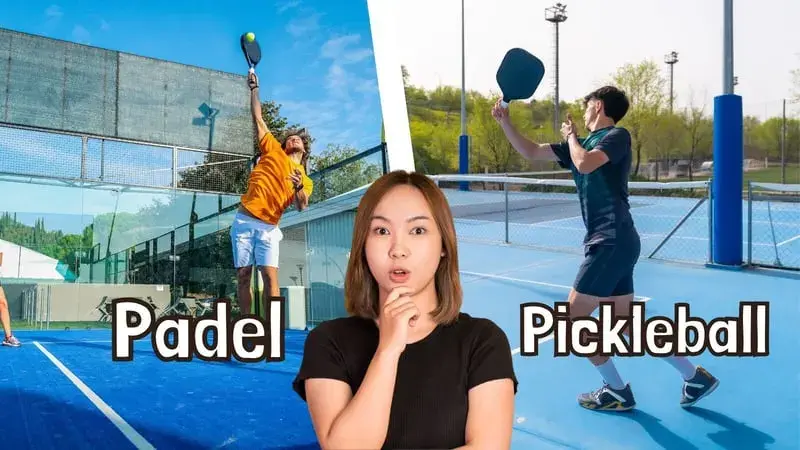
No, padel and pickleball are not the same; they are two completely distinct sports with different courts, rules, and equipment.
You’ve probably seen courts popping up everywhere, heard friends buzzing about a new paddle sport they’re obsessed with, and found yourself wondering, "are padel and pickleball the same thing?" As someone who has spent countless hours on both types of courts, I can tell you the confusion is understandable, but the experience of playing each is worlds apart. This guide will walk you through every key difference, from the court walls to the sound of the ball, so you can confidently know which game is which and decide which one you want to try first.
A Tale of Two Origins: Where Did They Come From?
Every great sport has a beginning, and the origin stories of padel and pickleball are as different as the games themselves. Understanding where they came from gives you a great first clue as to why they aren't the same. Padel feels a bit more like a European cousin to tennis, while pickleball has that classic, inventive American spirit.
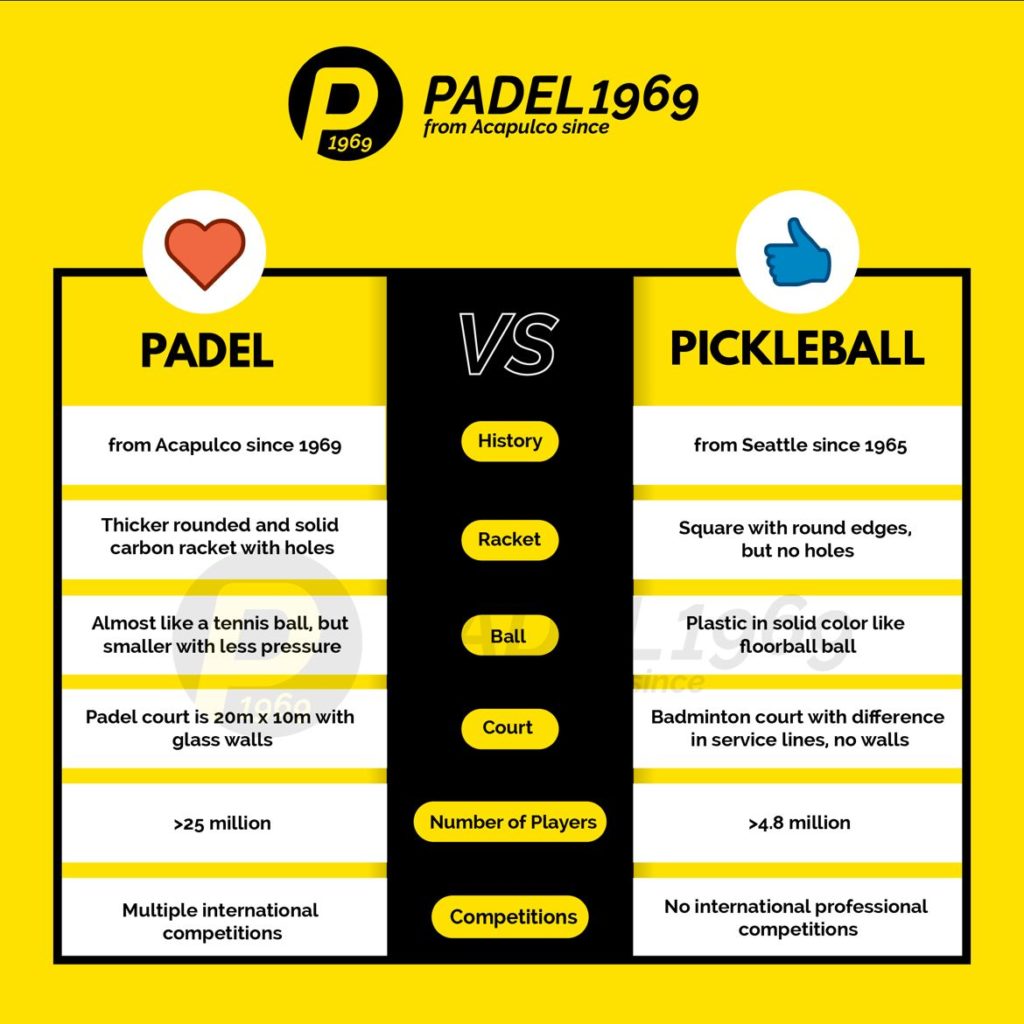
Padel was born in Acapulco, Mexico, in 1969. The story goes that Enrique Corcuera didn't have enough space for a full tennis court at his home, so he cleverly built a smaller court enclosed by walls. He and his friends started playing a modified version of tennis, using the walls to their advantage. This "wall ball" game quickly spread to Spain and Argentina, where it exploded in popularity and is now a massive sport.
Pickleball, on the other hand, was created in 1965 on Bainbridge Island, near Seattle, Washington. Three dads—Joel Pritchard, Bill Bell, and Barney McCallum—were trying to entertain their bored kids. They had a badminton court but no rackets, so they improvised with ping-pong paddles and a perforated plastic ball. The result was a fun, accessible game that the whole family could play, and its friendly, social nature has fueled its incredible growth across the United States.
The Court: Walls vs. Open Space
The most immediate and obvious difference between the two sports is the playing area. If you see glass walls, you’re looking at a padel court. This is probably the biggest reason why the answer to "are padel and pickleball the same" is a firm no. The court itself defines the strategy of the game.
A padel court is smaller than a tennis court, measuring 10 meters wide by 20 meters long. It is fully enclosed by walls, typically a combination of glass and metallic mesh. These walls are not just boundaries; they are an active part of the game. Like in squash, you can play the ball off the glass walls on your side after it bounces once on the ground. This adds a fascinating strategic layer, creating angles and shots that are impossible in other racket sports.
A pickleball court is the same size as a doubles badminton court, measuring 20 feet wide by 44 feet long. It has a net in the middle and features a unique 7-foot non-volley zone on each side of the net, famously called "the kitchen." You cannot hit the ball out of the air (a volley) while your feet are in the kitchen. This rule prevents players from smashing the ball at close range and encourages the softer, more strategic "dink" shots that make pickleball so unique. There are no walls in pickleball.

The Equipment: Paddles and Balls
While both sports use paddles instead of stringed rackets, the equipment is specifically designed for the unique demands of each game. Using one sport's gear for the other just wouldn't work well at all.
Paddles
-
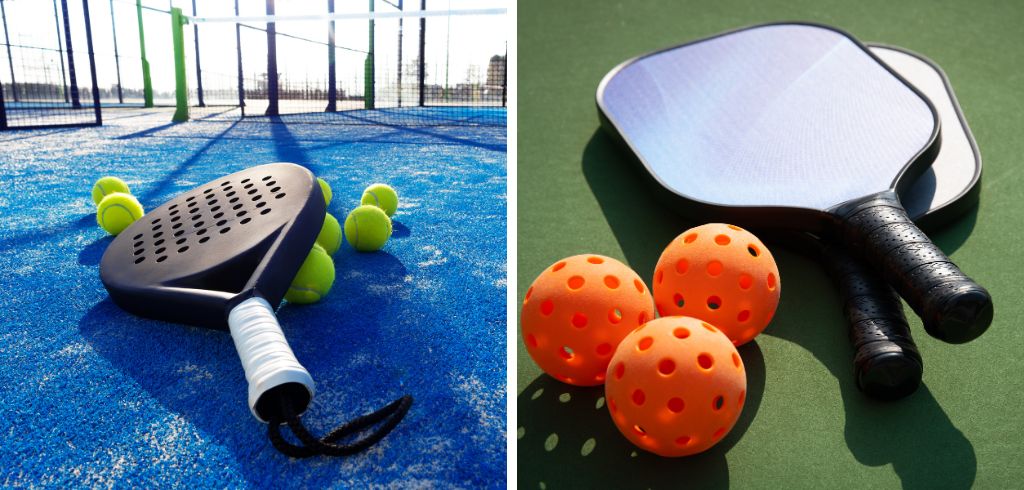
Padel paddles, or "palas," are solid and stringless. They are made from foam or rubber cores with a fiberglass or carbon fiber shell. They are thicker than pickleball paddles and have holes drilled into the hitting surface. I remember my first time holding one; it felt substantial and powerful. The holes are there to reduce air resistance and weight, allowing for faster swings.
-
Pickleball paddles are also solid but are thinner and lighter. They have a smooth surface with no holes and are typically made from a composite material, wood, or graphite. The focus is on control and touch, especially for those delicate shots at the kitchen line.
Balls
-
A padel ball looks just like a tennis ball but has slightly less internal pressure. This makes it a bit less bouncy, which is perfect for the smaller court and wall play. It allows for more controlled rallies without the ball flying out of the court on every powerful shot.
-
A pickleball is a lightweight, perforated plastic ball, similar to a wiffle ball but harder and more durable. Its design makes it fly slower through the air, leading to longer rallies and making the game more accessible for beginners. The distinct "pop" sound it makes when hit is one of the sport's defining characteristics.
)
The Rules: Serving, Scoring, and Gameplay
This is where the differences really come to life. The rules dictate the flow and strategy of each game, further proving that padel and pickleball are not the same sport. While both are social and easy to learn, their core mechanics are quite different.
Serving
In both sports, the serve must be hit underhand. However, the details vary.
-
In padel, you must let the ball bounce once behind the service line before hitting it below your waist level. The serve must then travel cross-court into the opponent's service box.
-
In pickleball, you hit the serve out of the air (a drop serve is also allowed now). You must hit it below your waist, and it must land diagonally in the opponent's service court, beyond the kitchen line.
Scoring
The scoring systems are from completely different worlds.
-
Padel uses the same scoring system as tennis: 15, 30, 40, and game. It’s familiar to anyone who has watched or played tennis, making it easy to pick up.
-
Pickleball has a unique scoring system. Games are typically played to 11 points, and you must win by 2. The most crucial rule is that you can only score a point when your team is serving. This can lead to exciting momentum swings and long, hard-fought games.
Gameplay Style
-
Padel is almost always played in doubles. The game is a fast-paced blend of tennis and squash. Using the walls defensively to return a hard-hit ball or offensively to create a tricky angle is the essence of padel strategy. It's about power, teamwork, and clever use of your environment.
-
Pickleball can be played as singles or doubles, but doubles is far more common. The game is often described as a mix of tennis, badminton, and ping-pong. Strategy revolves around the kitchen line, with players engaging in "dink" battles—soft, controlled shots that arc just over the net and land in the opponent's kitchen—to force an error or create an opening for a winning shot.

The Vibe: Social Scene and Athleticism
Beyond the rules and equipment, each sport has its own distinct culture and feel. When people ask "are padel and pickleball the same," they are often also asking about the experience of playing.
Padel has a very social, club-like atmosphere, especially in Europe and Latin America. Because it's a doubles game, communication and camaraderie are built right in. The pace can be incredibly fast and athletic at high levels, requiring quick reflexes and powerful smashes. It offers a fantastic workout that combines cardio with quick, explosive movements.
Pickleball is renowned for its welcoming and friendly community. It's incredibly easy for beginners to pick up, so people of all ages and fitness levels can be found on the courts playing together. While it can be a very high-level, athletic game, its lower-impact nature and smaller court make it accessible to a broader audience. The social aspect is a huge draw, with players often rotating partners and courts in a very casual, fun environment.
Frequently Asked Questions
Which is easier to learn, padel or pickleball?
Pickleball is generally considered easier for a complete beginner to learn. The smaller court, slower ball, and simple underhand serve allow new players to start having rallies almost immediately. Padel has a slightly steeper learning curve due to the wall-play dynamic.
Can I use a pickleball paddle for padel?
No, you cannot. A pickleball paddle is too light and not designed to handle the heavier padel ball, and its smooth surface would offer poor control. Likewise, a padel paddle is too heavy and powerful for the delicate shots required in pickleball.
Is padel more physically demanding than pickleball?
At a competitive level, both sports are physically demanding. However, padel generally requires more running and explosive movements due to the larger court and the need to react to balls coming off the walls. Pickleball can be less demanding on the joints, but high-level play involves a lot of quick lateral movements and squats.
Which sport is growing faster?
Both sports are experiencing explosive growth worldwide. Pickleball's growth has been particularly notable in the United States, while padel is one of the fastest-growing sports in Europe, the Middle East, and is now gaining significant traction in the US as well.
Are the court sizes similar?
No, the court dimensions are quite different. A padel court is 10 meters by 20 meters (about 33 feet by 66 feet), while a pickleball court is much smaller at 20 feet by 44 feet. The presence of walls in padel also makes the playing experience completely different.
Conclusion
So, are padel and pickleball the same? The answer is a clear and resounding no. They are two unique sports that share a few surface-level similarities but offer vastly different gameplay experiences. Padel is a dynamic, wall-bouncing game of power and angles, like tennis in an enclosure. Pickleball is a strategic game of touch and placement, centered around the unique kitchen line.
The best way to truly understand the difference is to experience them for yourself. I encourage you to find a local court and give both a try. You might discover a new passion, get a great workout, and meet some fantastic people along the way.
Have you played one or both? Share your experience in the comments below—I’d love to hear which one you prefer