
Pickleball is open-court with a plastic ball; padel uses walls and tennis-style balls.
If you’re curious about the difference between paddle and pickleball, you’re in the right place. I’ve taught beginners, tested gear side-by-side, and played in local leagues. This guide breaks down how each sport plays, what you need to start, and which one fits your style. Stick with me, and you’ll be ready to choose with confidence.

What “paddle” means here (padel vs paddle tennis vs platform tennis)
People say paddle to mean different sports. In most of the world, paddle means padel, the wall-based racquet sport that took off in Spain and Latin America. In parts of North America, paddle can also mean platform tennis or paddle tennis.
To keep things clear, this guide focuses on padel vs pickleball because that’s what most readers mean when they ask the difference between paddle and pickleball. I’ll note key platform tennis differences where helpful so you don’t get tripped up by the lingo.
The difference between paddle and pickleball at a glance
Both games are fun, social, and easy to start. But they feel very different on court. Here’s the quick map so you can spot the difference between paddle and pickleball fast.
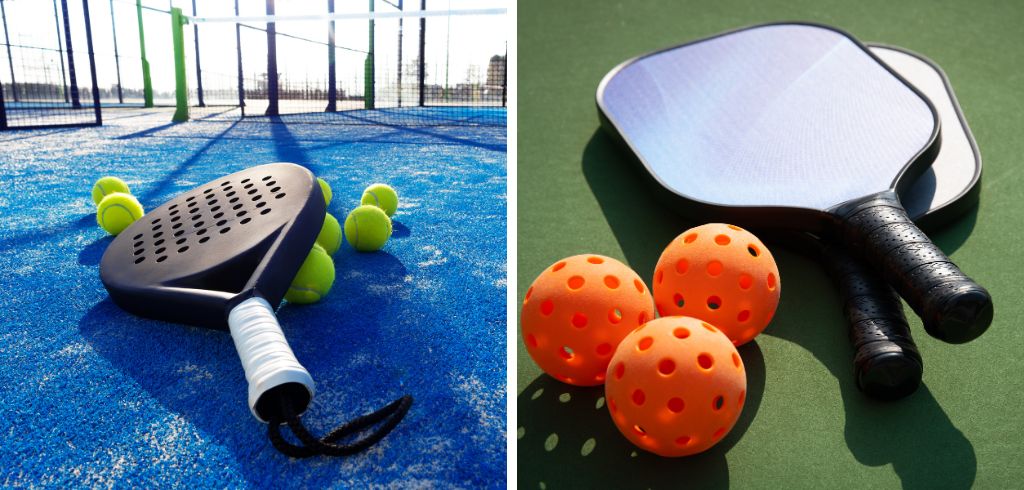
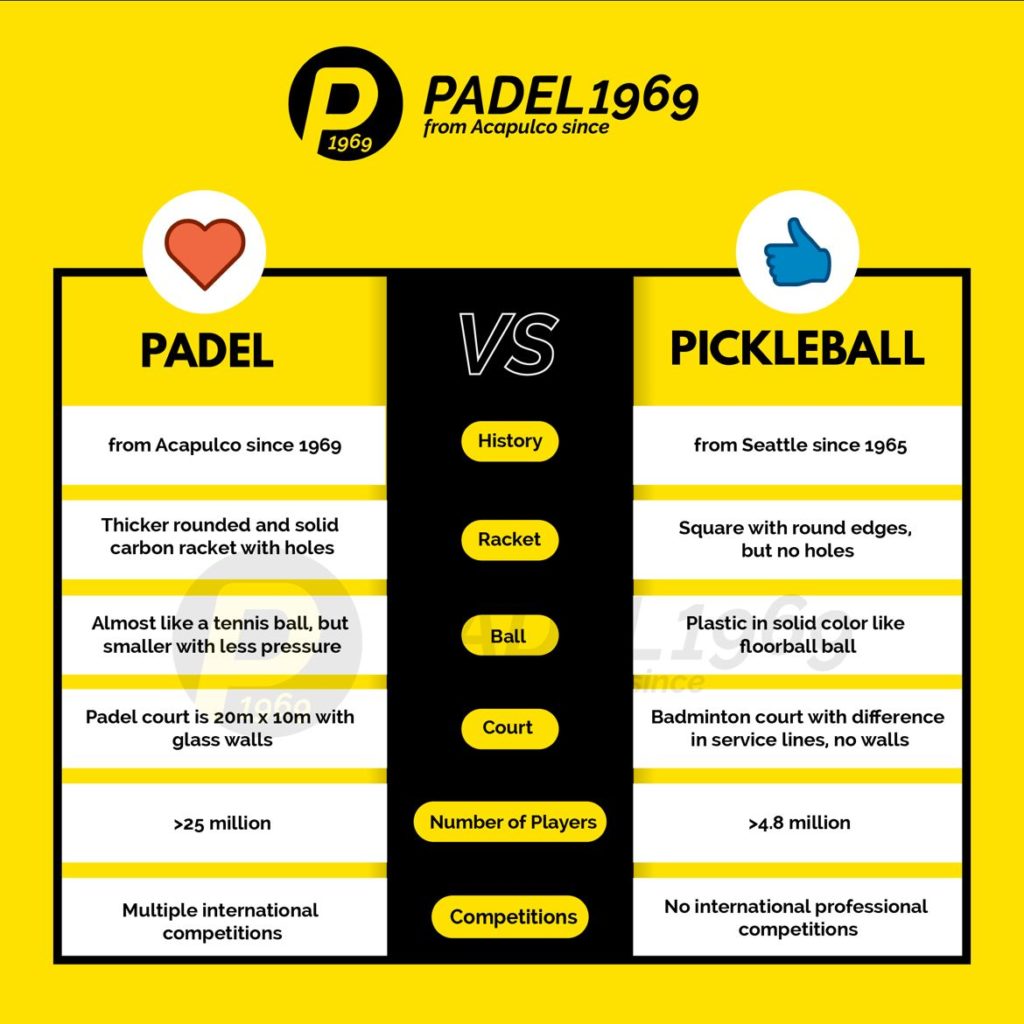
- Court style: Pickleball is open with no walls. Padel is enclosed with glass and mesh walls you can play off.
- Ball type: Pickleball uses a light plastic ball with holes. Padel uses a pressurized tennis-style ball with slightly lower pressure.
- Paddles: Pickleball paddles are flat and rigid composites. Padel racquets are thicker, shorter, and perforated.
- Core rules: Pickleball has a non-volley zone (the kitchen) and a two-bounce rule on serve/return. Padel uses tennis-like scoring and allows wall rebounds after the bounce.
- Flow: Pickleball points build at the kitchen with quick exchanges. Padel points loop with lobs, screens, and counterattacks off the glass.
If you want the shortest summary of the difference between paddle and pickleball: walls, balls, and tactics drive the contrast.
Gear and equipment compared
Paddles and racquets
- Pickleball: 15.5–16.5 in long, 7.5–8.5 oz, composite face (carbon, fiberglass), polymer core. Shape options affect power and control.
- Padel: Shorter, 360–390 g, foam or EVA core, carbon or fiberglass face, many are teardrop or diamond shaped for balance or power.
- Feel: Pickleball paddles give crisp, poppy contact. Padel racquets feel cushioned and reward clean center hits.
Balls
- Pickleball: Plastic ball with 26–40 holes. Outdoor balls are harder; indoor balls are softer and bounce higher.
- Padel: Pressurized felt ball, like a tennis ball but tuned for the smaller court and walls.
- Platform tennis note: Uses a depressurized sponge ball that grips the screens.
Shoes
- Pickleball: Court shoes with good lateral grip. Outdoor play favors durable outsoles.
- Padel: Clay or padel-specific tread to handle glass, mesh, and sandy surfaces on some courts.
Cost snapshot
- Entry pickleball setup: Paddle and two balls for a modest budget, with many solid options under typical mid-range prices.
- Entry padel setup: Racquets and balls cost a bit more on average. Court rentals can also be higher due to facilities.
Practical tip from the courts: If you’re torn, borrow club demo gear first. The feel of contact will tell you fast which sport suits you.

Courts, lines, and nets
Sizes and spaces
* Pickleball: 20 x 44 ft for doubles, net at 36 in sideline and 34 in center, with a 7 ft non-volley zone each side.
- Padel: 20 x 10 m (about 66 x 33 ft), enclosed by glass and mesh walls, net at 34.6 in in the center.
- Platform tennis note: Smaller elevated courts with wire screens that are in play.
How the court changes gameplay
- Pickleball’s kitchen and open court promote soft dinks, blocks, and net battles.
- Padel’s walls stretch points, add angles, and reward lobs and patience.
- Court access varies by city. Public pickleball courts are growing fast. Padel courts are expanding in cities but may be club-based.

Rules, scoring, and match flow
Serving
- Pickleball: Underhand serve. It must land cross-court beyond the kitchen. Two-bounce rule: serve and return must each bounce before volleys begin.
- Padel: Underhand serve below waist height. It must bounce in the service box and can hit the side glass after.
- Faults: In pickleball, feet in the kitchen on a volley is a fault. In padel, hitting the mesh directly on the serve is a fault.
Scoring
- Pickleball: Side-out scoring. Games to 11, win by 2. Only the serving team scores.
- Padel: Tennis scoring (15, 30, 40, game). Best of sets is common at clubs. Tie-breaks are used at 6–6.
Point patterns
- Pickleball: Build to the kitchen, then dink, speed-up, counter, reset. Fast hands win.
- Padel: Serve and volley, lob battles, use of walls, patient setups, then finish down the middle or into the corner.
These rule differences are the heart of the difference between paddle and pickleball. If you love cat-and-mouse net battles, pickleball shines. If you enjoy using space, spins, and walls, padel fits.
Play style and strategy
Tactics that win in pickleball
- Master the soft game. Dinks set up attacks.
- Learn third-shot drops or drives based on opponent position.
- Block first, counter second. Hold your ground at the kitchen.
Tactics that win in padel
- Lob often. Walls turn defense into offense.
- Aim middle to sow confusion. Use the glass to reset under pressure.
- Vary pace. Soft, then hard. Keep your court position tight as a team.
My experience: Players who switch between sports need a week or two to adjust. Padel players tend to over-lob in pickleball at first. Pickleball players hit too flat in padel until they learn to use the glass.

Fitness, learning curve, and injury notes
Learning curve
- Pickleball: Very quick start. A 60-minute intro clinic gets you rallying and having fun.
- Padel: Also beginner-friendly, but wall reads take time. Expect a few mishits until timing clicks.
- Platform tennis: Screens add a learning step, especially in cold weather.
Workload and injury
- Pickleball: Short sprints, quick reflexes, and lots of stops. Watch shoulder and elbow load from repeated volleys and serves.
- Padel: More lateral movement and rotation. The wall saves joints at times, but overheads and lunges add load to hips and back.
- Good practice: Warm up 10 minutes, use proper shoes, and progress paddle weight slowly to protect elbows.

Cost, access, and growth
Access
- Pickleball: Many public parks now have lined courts and open play. Low barrier to entry.
- Padel: Rapid growth in cities and at private clubs. New multi-court venues are opening in many regions.
- Your best bet: Search for beginner sessions or social nights. They are the fastest way in.
Typical costs
- Pickleball: Public play is often free or low-cost. Leagues and ladders are affordable.
- Padel: Court rental is common and can be higher. Split four ways in doubles, the price feels fair.
Trends
- Both sports are booming. The difference between paddle and pickleball in growth is more about region than interest. Pickleball leads in North America. Padel is surging in Europe, the Middle East, and Latin America.
Which one should you choose?
Pick pickleball if you want
- Fast kitchen battles and quick hands.
- Tons of local courts and drop-in play.
- An easy on-ramp with cheap starter gear.
Pick padel if you want
- Dynamic points with walls and angles.
- Tennis-like rallies with less court to cover.
- A social doubles game that rewards patience and teamwork.
Simple decision steps
- Try a beginner clinic in both within two weeks.
- Note what made you smile more: soft net duels or wall trick shots.
- Commit to four sessions in that sport. Skills grow fast with consistency.
If you still wonder about the difference between paddle and pickleball after trying both, let your local community decide. The sport with the friend group you click with will win.
Tips for getting started in either sport
Begin with the right gear
- Borrow before you buy. Test a control-focused and a power-focused option.
- Choose a midweight paddle or racquet to protect your arm.
Learn the key shots first
- Pickleball: Serve deep, return deep, third-shot drop, soft dinks, block.
- Padel: Consistent lob, bandeja (defensive overhead), forehand off the glass, deep volley.
Avoid early mistakes
- Pickleball: Don’t stand with heels on the kitchen line. Stay balanced and ready to reset.
- Padel: Don’t panic near the glass. Let the ball come to you, then swing smooth.
I’ve seen beginners improve fast by filming one drill per week. Seeing footwork and paddle face angle accelerates progress more than any tip I can write.
Frequently Asked Questions of difference between paddle and pickleball
Is paddle the same as padel?
In most countries, yes, people say paddle when they mean padel, the wall-based sport. In parts of North America, paddle can also refer to platform tennis.
What is the biggest difference between paddle and pickleball?
Walls versus open court. Padel uses walls and a tennis-style ball, while pickleball uses an open court and a plastic ball with holes.
Which is easier for beginners: paddle or pickleball?
Pickleball is often easier on day one due to simple court reads and quick rallies. Padel is also friendly, but learning to use the glass takes a bit more time.
Can I use a pickleball paddle to play padel?
No. Padel racquets are thicker, shorter, and built for wall play. Use the correct gear for safety, feel, and control.
Which sport is better for cardio?
Both offer good cardio in short bursts. Padel usually involves longer rallies and more lateral moves, while pickleball has faster exchanges near the net.
How does scoring differ between paddle and pickleball?
Pickleball uses side-out scoring to 11, win by 2. Padel uses tennis-style games and sets, with tie-breaks as needed.
Are the balls the same in paddle and pickleball?
No. Pickleball uses a hard plastic ball with holes. Padel uses a pressurized felt ball similar to a tennis ball.
Conclusion
The difference between paddle and pickleball comes down to court design, ball type, and how points build. Pickleball rewards quick hands and soft control at the kitchen. Padel rewards patient teamwork, smart lobs, and clever use of the glass.
Try both, notice which one makes you lose track of time, and lean into that. If this guide helped you understand the difference between paddle and pickleball, share it with a friend, sign up for a local beginner session, and drop your first-match questions in the comments.