
A standard pickleball court is 44 feet long by 20 feet wide, identical to a badminton court.
As a pickleball enthusiast who has spent countless hours on the court, I can tell you that understanding the game starts with understanding the space it's played on. It's more than just lines on the ground; every inch of that rectangle has a purpose that dictates strategy and movement. If you're ready to move beyond just hitting the ball and truly grasp the strategy of the game, this guide will walk you through the essential dimensions of a pickleball court, from the baseline to the all-important kitchen.
The Overall Court Dimensions: A Quick Overview
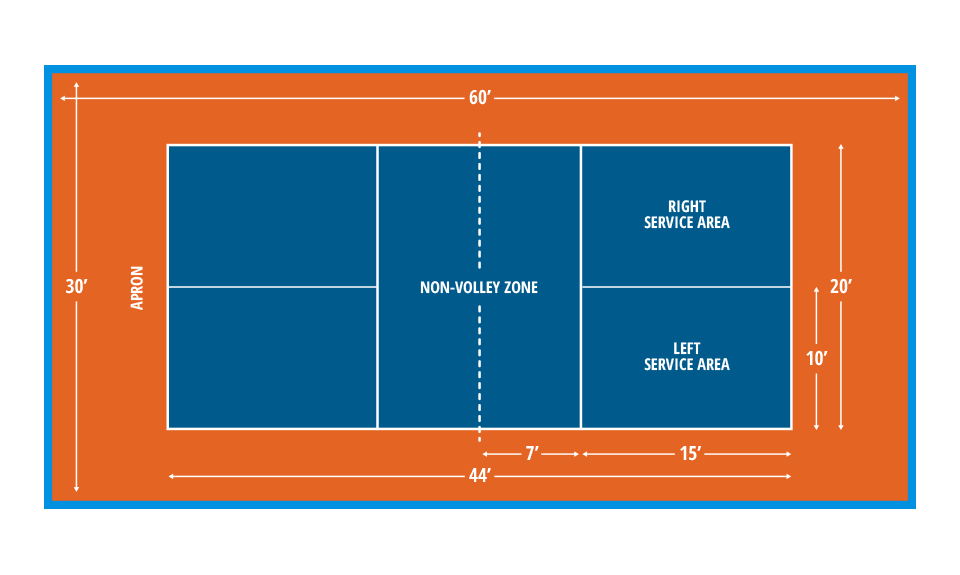
At its core, a pickleball court is a simple rectangle measuring 44 feet in length and 20 feet in width. These measurements include the outer boundary lines. One of the best things about the sport is that these exact dimensions of a pickleball court are used for both singles and doubles play, making it incredibly versatile and easy to switch between game types without any adjustments.
When I first marked out a temporary court in my driveway, I was amazed at how compact and accessible the space felt. Unlike a sprawling tennis court, pickleball feels intimate and fast-paced, largely thanks to its thoughtful design. This smaller footprint is a huge reason why the sport has grown so quickly—it can be set up in a wide variety of locations.
Breaking Down the Lines: Key Areas of the Court
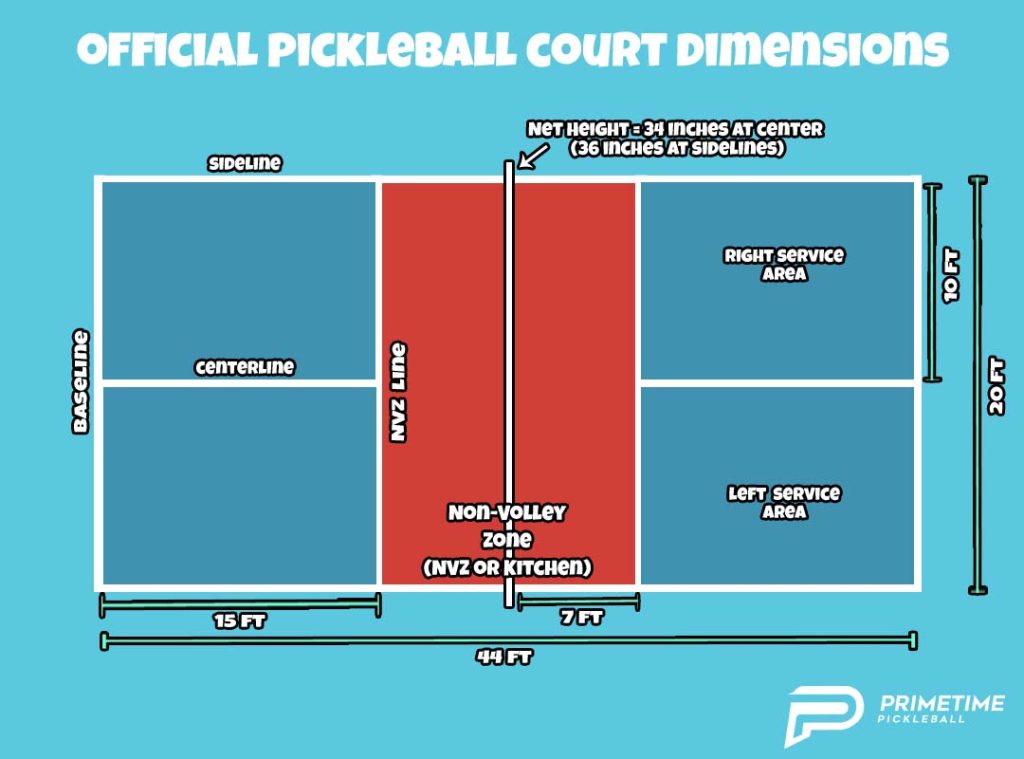
The lines on a pickleball court aren't just for decoration; they define the playing area and the rules of engagement. Let's break down each component.
The Baselines and Sidelines
The framework of the court is defined by its outer boundaries.
- The two lines at the very back of the court are the baselines. These run parallel to the net and mark the 20-foot width of the court.
- The lines running the 44-foot length of the court on either side are the sidelines.
All boundary lines are 2 inches wide, and if a ball touches any part of the line, it is considered in play. This is a crucial rule that can decide a point, so always play to the lines.
The Pickleball Net
The net is what separates you from your opponent, and its height is a critical detail. A regulation pickleball net should be 36 inches high at the posts (which are positioned just outside the sidelines) and should sag slightly to 34 inches in the center. I always make it a habit to check the net height before starting a match. That two-inch dip in the middle creates a strategic sweet spot for dinks and drops that can win you a game.
The Non-Volley Zone (The Kitchen): The Heart of the Game
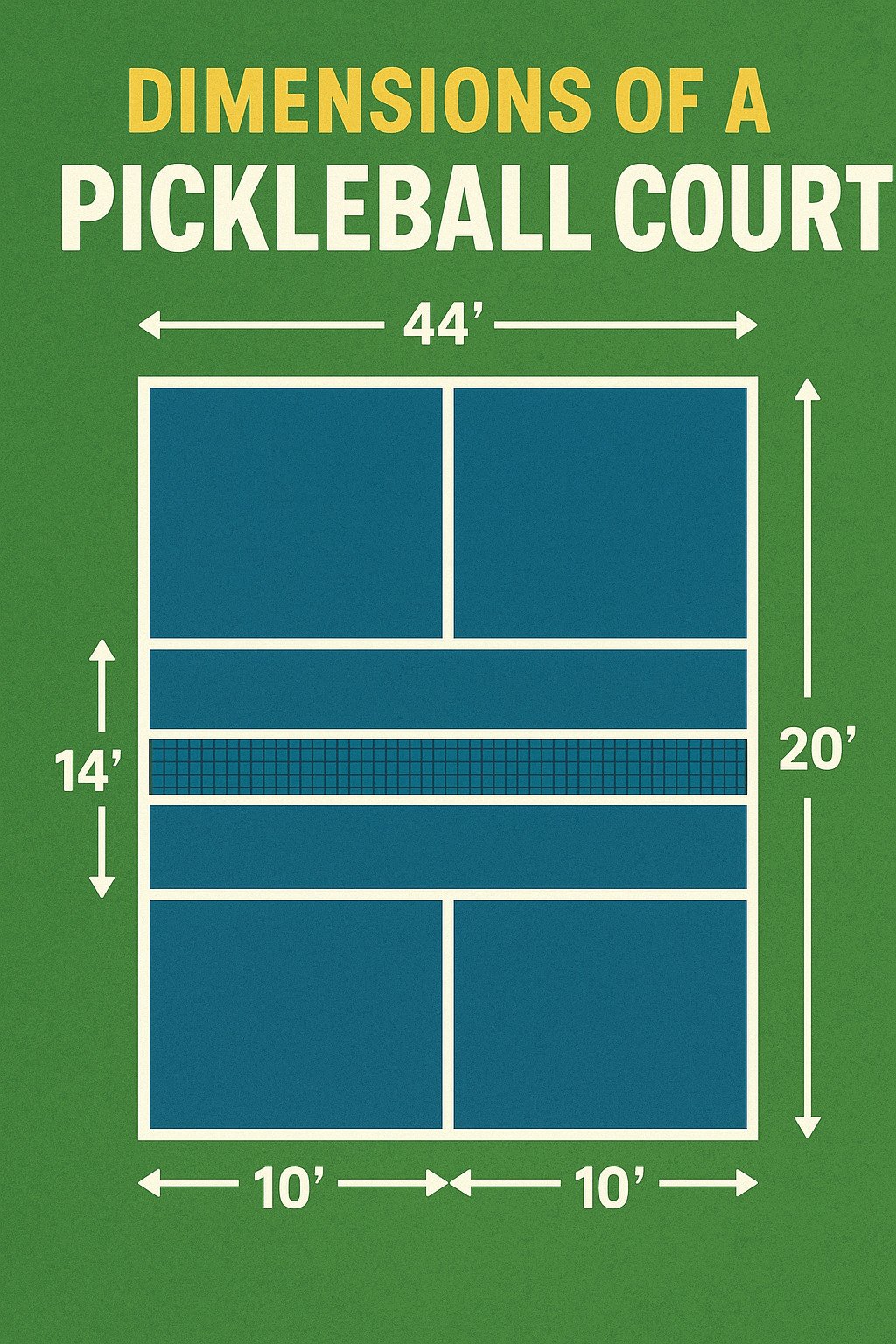
If there's one area that defines pickleball, it's the Non-Volley Zone, affectionately known as "the kitchen." This zone extends 7 feet from the net on both sides, creating a 14-foot buffer in the middle of the court. The line marking the edge of the kitchen is called the Non-Volley Line.
The most important rule associated with this area is simple: you cannot hit a volley (hitting the ball out of the air) while any part of your body is touching the kitchen. I learned this lesson the hard way in my early days, constantly committing foot faults. A friendly veteran finally explained that you can step into the kitchen to hit a ball that has already bounced, but you must re-establish your footing outside the zone before you can hit another volley. Understanding the kitchen is fundamental to mastering the soft game and dinking rallies that make pickleball so unique.
Understanding the Service Courts
Behind the kitchen, the court is divided into two equal boxes known as the service courts. The line that runs from the kitchen line to the baseline, dividing these two boxes, is the center line. Each service court measures 10 feet wide by 15 feet long.
When you serve, you must do so from behind the baseline and land the ball in the service court that is diagonally opposite you. The serve must clear the kitchen and land within the service court's lines to be considered valid. This specific area ensures serves are deep and prevents players from simply dropping the ball over the net to start a point.
Total Playing Area: How Much Space Do You Really Need?
While the official dimensions of a pickleball court are 44 feet by 20 feet, that’s just the in-bounds playing surface. To play safely and effectively, you need additional space around the court. This out-of-bounds area allows players to move freely, chase down lobs, and execute angled shots without running into a fence or wall.
The recommended total playing area for a single pickleball court is 60 feet in length and 30 feet in width. This provides a 5-foot buffer on each side and an 8-foot buffer behind each baseline. When I helped my local community center convert a tennis court, we found we could comfortably fit two pickleball courts in the space, showcasing just how efficient the sport's footprint is. If you're planning a permanent court, aiming for these larger dimensions is always the best practice.

Frequently Asked Questions about Pickleball Court Dimensions
Are pickleball and badminton courts the same size?
Yes, the playing dimensions of a pickleball court (44 feet by 20 feet) are identical to a standard badminton court. The primary difference is the net height, as a badminton net is significantly higher.
How high is a pickleball net?
A regulation pickleball net is 36 inches high at the sidelines and lowers to 34 inches in the center. This slight sag in the middle is an intentional part of the court's design.
Can you play pickleball on a tennis court?
Absolutely! A standard tennis court is large enough to fit up to four pickleball courts. You can easily set one up using temporary lines and a portable pickleball net.
What is the size of the non-volley zone (kitchen)?
The non-volley zone, or kitchen, extends 7 feet from the net on both sides of the court. This makes the total zone 14 feet long and 20 feet wide, spanning the entire width of the court.
Are the court dimensions the same for singles and doubles?
Yes, one of the best features of pickleball is that the dimensions of a pickleball court are exactly the same for both singles and doubles play. This makes it easy to switch between game types without any modifications.
Conclusion
Mastering the dimensions of a pickleball court is your first step toward becoming a more strategic and confident player. From the 44-by-20-foot playing area to the critical 7-foot kitchen, every line serves a purpose that shapes the flow of the game. Understanding this layout transforms you from someone who just hits the ball to someone who knows where to place it and why.
Now that you're armed with this knowledge, take it to the court. Notice how the kitchen forces you to play a softer game or how the service box dimensions influence your serve. The best way to learn is by doing, so grab your paddle and start playing with a new appreciation for the space you're in. What part of the court has been the trickiest for you to master? Share your experiences in the comments below