
DUPR is a dynamic rating that accurately measures a pickleball player's skill level using match results.
As a long-time pickleball player and enthusiast, I've seen the sport explode in popularity. With that growth came a common problem: how do you know how good you really are? Self-ratings are subjective, and local court rankings don't travel. This guide will demystify the dupr rating pickleball system, showing you why it’s become the gold standard for measuring skill and how you can use it to find better games and track your progress.

What Exactly is the DUPR Rating in Pickleball?
At its core, DUPR stands for Dynamic Universal Pickleball Rating. Think of it as a global passport for your pickleball skill. It’s a single, unified rating system for all players, regardless of their age, gender, skill level, or where they play. Whether you're in a competitive tournament or just hitting with friends at the local park, DUPR aims to provide the most accurate measure of your playing ability.
The system was designed to solve the age-old problem of inconsistent and subjective player ratings. Before DUPR, you might call yourself a 3.5 in your hometown, but that could mean something entirely different in another state. The dupr rating pickleball system creates a common language, so a 4.0 player in California is on the same level as a 4.0 player in Florida. It brings clarity and consistency to a rapidly growing sport.

How Does the DUPR Rating System Work?
The magic behind the DUPR system is its sophisticated algorithm. It’s not just about whether you win or lose; it’s about how you play. The system is designed to be dynamic, meaning your rating constantly adjusts based on new match data, providing a real-time reflection of your current skill.
The Algorithm's Magic
Every time you log a match, the DUPR algorithm gets to work. It analyzes three key factors to adjust your rating:
- Victory: Did you win or lose? This is the most basic component.
- Margin of Victory: Did you win decisively (e.g., 11-2) or was it a close match (e.g., 11-9)? A dominant win against a strong opponent will boost your rating more than a narrow victory.
- Opponent's Rating: The skill level of your opponents and partner matters immensely. Beating players with a higher dupr rating pickleball score will increase your rating more significantly than beating players rated lower than you.
I remember playing a match where my partner and I lost 9-11 to a team with much higher ratings. To my surprise, my DUPR rating actually went up slightly. The algorithm recognized that we performed better than expected against tough competition, which is a perfect example of how it looks beyond just the final outcome.
Connectivity and Self-Correction
DUPR thrives on "connectivity." This means the more diverse your opponents are, the more accurate your rating becomes. If you only play against the same four people, the system has limited data. But as you play against a wider network of players, the algorithm connects everyone's results, creating a more robust and reliable rating for the entire community.
The system is also self-correcting. One bad day on the court won't tank your rating forever. As you continue to play and log matches that are more typical of your skill level, your rating will stabilize and more accurately reflect your abilities. It rewards consistency over single, outlier performances.
The Rating Scale Explained
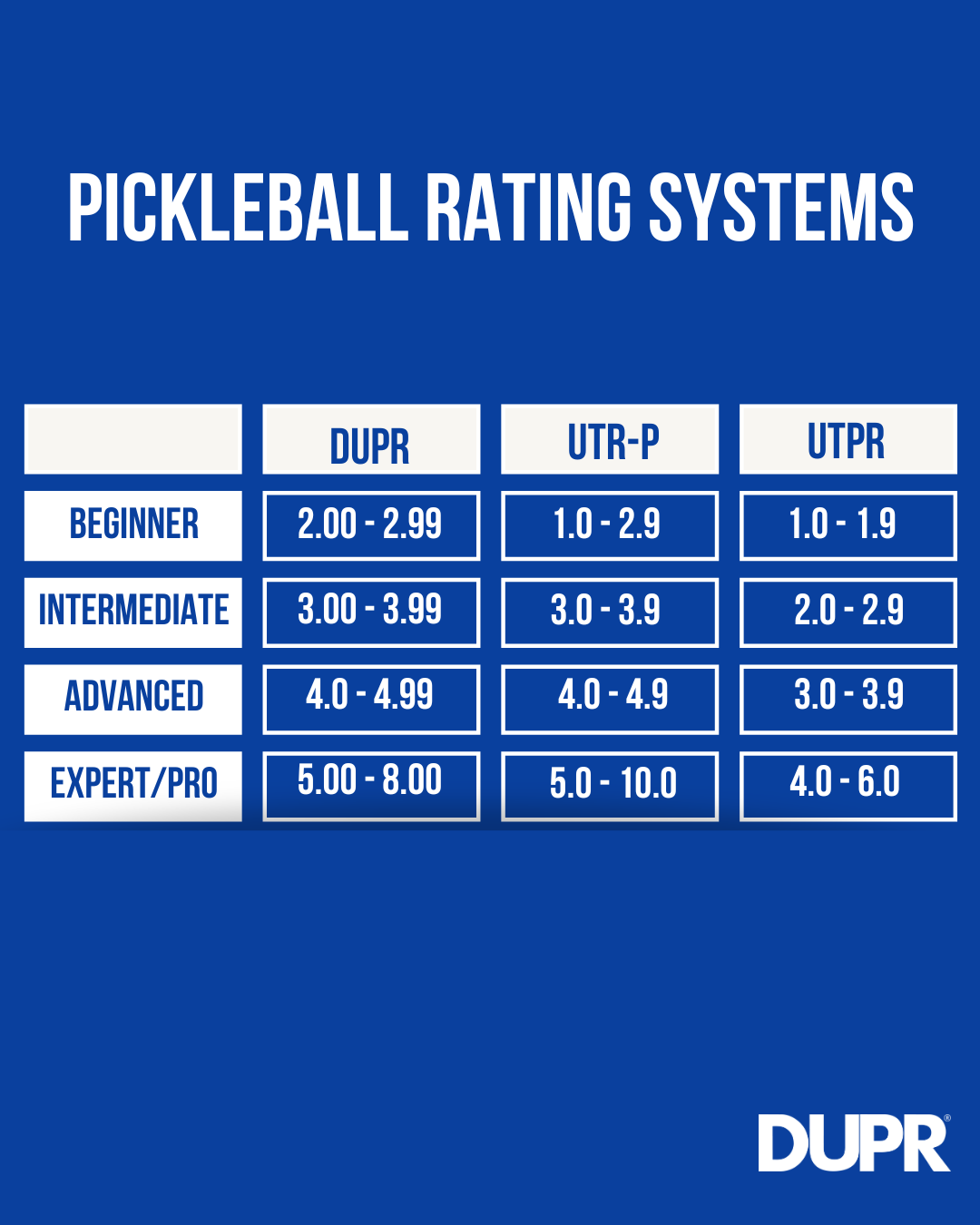
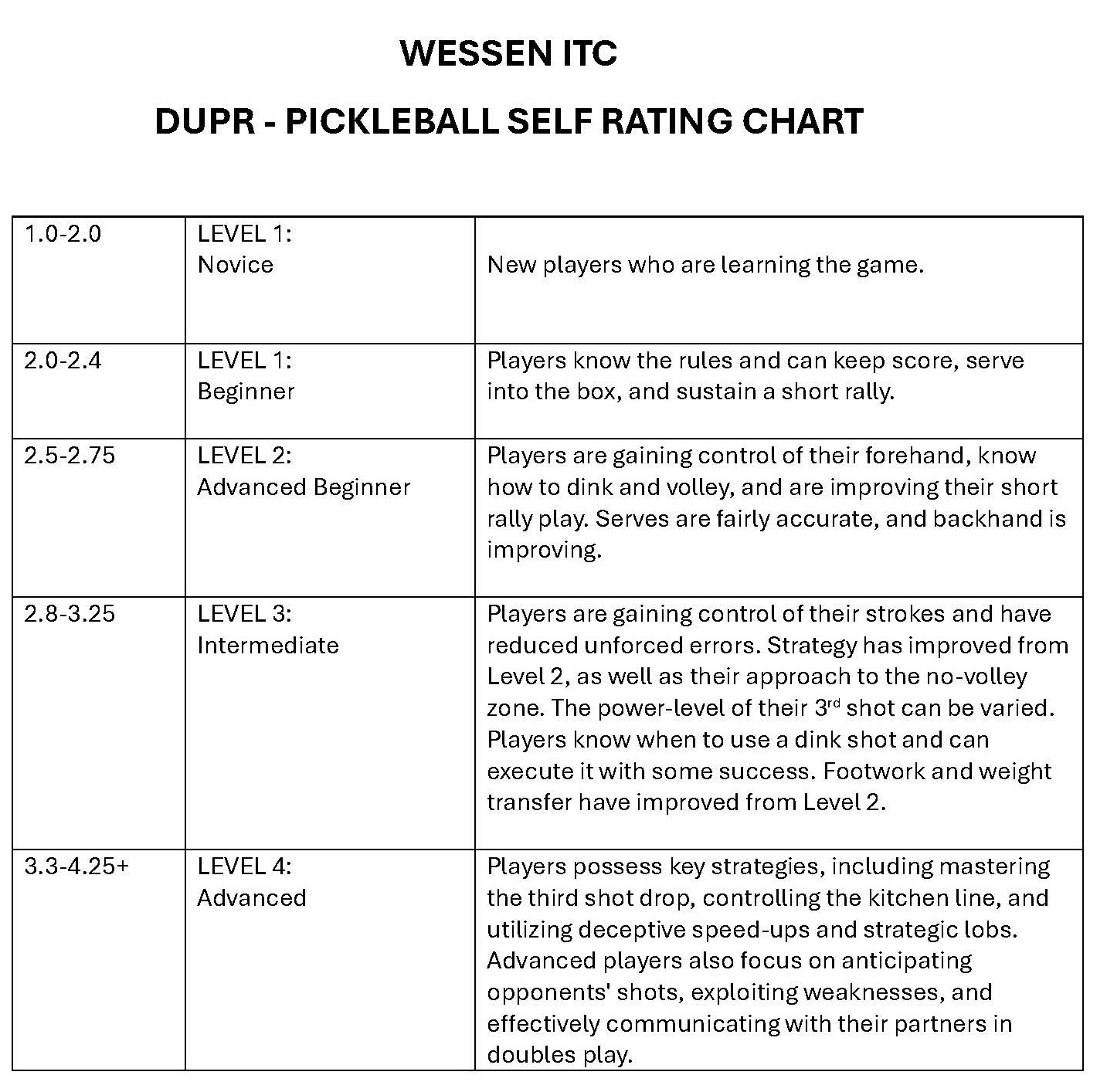
The DUPR scale typically runs from 2.0 to 8.0. Here is a general breakdown of what the numbers mean:
- 2.0 – 3.0: Beginner players who are learning the basic rules and strokes.
- 3.0 – 4.0: Intermediate players who can sustain rallies and are developing strategy.
- 4.0 – 5.0: Advanced players with consistent shots, good strategy, and experience in competitive play.
- 5.0 and above: Pro-level and elite players who compete at the highest levels.
This scale provides a clear path for improvement and helps you set realistic goals for your pickleball journey.
Why is the DUPR Rating Gaining So Much Popularity?
The rapid adoption of the dupr rating pickleball system isn't a coincidence. Players and organizers are embracing it because it offers tangible benefits that improve the overall pickleball experience for everyone involved.
Accuracy and Objectivity
The biggest advantage of DUPR is that it replaces subjective self-ratings with objective, data-driven analysis. There's no more guessing or awkward conversations about whether you're a 3.5 or a 4.0. Your rating is based purely on your performance on the court. This removes bias and provides a true benchmark of your skill. It’s a confidence booster when you see your hard work translate into a higher number.
Finding Competitive Matches
Have you ever shown up for open play only to find yourself in a completely one-sided game? DUPR helps solve this problem. When players know their rating, they can easily find others at a similar level. This leads to more competitive, fun, and engaging matches for everyone. Tournaments also use the dupr rating pickleball system to create balanced brackets, ensuring fair competition.
A Universal Language for Pickleball Skill
As someone who travels often, I love that my DUPR rating is recognized everywhere. I can drop in at a court in a new city, share my rating, and immediately find a suitable group to play with. It breaks down regional barriers and connects the global pickleball community. This universal standard is crucial for the continued growth and professionalization of the sport.

Getting Started with Your Own DUPR Rating
Getting your own dupr rating pickleball score is simple and free. It’s a great way to start tracking your progress and finding more competitive games. Here’s how to do it in a few easy steps.
- Create Your Account: Download the DUPR app on your smartphone or visit their website. Signing up is quick and only requires some basic information.
- Join a Club: Connect with your local pickleball club within the app. This makes it easier to find and log matches with players you already know.
- Log Your Matches: After a game, one player can enter the match details, including the players and the final score. Even recreational games count, so log everything.
- Validate the Score: All other players in the match will receive a notification to confirm the score. Once everyone validates it, the match is officially added to your record.
- Get Your Provisional Rating: After your first few matches, you'll receive a provisional rating. This rating will become more stable and accurate as you log more games, typically between 10 to 20 matches.
Remember to be consistent with logging your scores. The more data you provide the system, the more accurate your dupr rating pickleball will be.

Common Misconceptions About the DUPR Rating Pickleball System
With any new technology, myths and misunderstandings are bound to pop up. Let's clear the air on a few common misconceptions about the dupr rating pickleball system so you can use it with confidence.
One common myth is that DUPR is only for serious, tournament-level players. This couldn't be further from the truth. DUPR is designed for everyone, from the casual weekend player to the touring professional. Its primary goal is to help you find fair and fun matches, which is something every player wants.
Another concern I often hear is that one bad game will destroy a player's rating. While a loss does impact your rating, the algorithm is smart. It considers the context of the match, such as the strength of your opponents. A single unexpected loss won’t cause a dramatic drop, especially if your record is otherwise consistent. The system is built to reflect your overall ability, not just one off day.
Finally, some players feel their rating is stuck and will never improve. Your dupr rating pickleball score is a direct reflection of your performance. If you are actively working on your skills and winning against tougher opponents, your rating will absolutely go up. It’s a fantastic tool for tracking improvement and celebrating your progress on the court.
Frequently Asked Questions of dupr rating pickleball
How many games do I need to get a reliable DUPR rating?
You will get a provisional rating after just one match. However, your rating becomes much more reliable and stable after you have logged between 10 and 20 matches against a variety of opponents.
Can my DUPR rating go down?
Yes, your DUPR rating is dynamic and can go up or down after every match. Losing to lower-rated players or losing by a large margin will likely cause your rating to decrease.
What is the difference between DUPR and UTPR?
UTPR (now WPR or World Pickleball Rating) is primarily used for USA Pickleball sanctioned tournaments. The dupr rating pickleball system is more universal, including results from recreational play, leagues, and all types of tournaments.
Do I have to pay to use DUPR?
No, creating a DUPR account and logging your scores is completely free for all players. The platform is accessible to everyone in the pickleball community.
How often does my DUPR rating update?
Your rating updates automatically after each match is validated by all players involved. You can see the change almost instantly in your DUPR profile.
Conclusion
The dupr rating pickleball system is more than just a number; it’s a powerful tool that enhances the sport for everyone. It fosters fair competition, helps you track your personal growth, and connects you with a global community of players. By providing an accurate, objective measure of skill, DUPR ensures you spend more time enjoying challenging and rewarding games.
Don’t be intimidated by the numbers and algorithms. Embrace the DUPR system as your personal guide on your pickleball journey. Get out there, create your profile, start logging your matches, and discover a new level of engagement with the sport you love. What do you think your DUPR rating is? Share your thoughts or questions in the comments below