
A pickleball court is 20 by 44 feet, with a 34-inch net at center.
If you came here wondering how big is a pickleball court, you’re in the right place. I design, stripe, and coach on courts weekly, and small measurement mistakes can change how the game feels. This friendly guide breaks down how big is a pickleball court in exact numbers, why those numbers matter, and how to plan, build, or mark a court that plays true and safe.
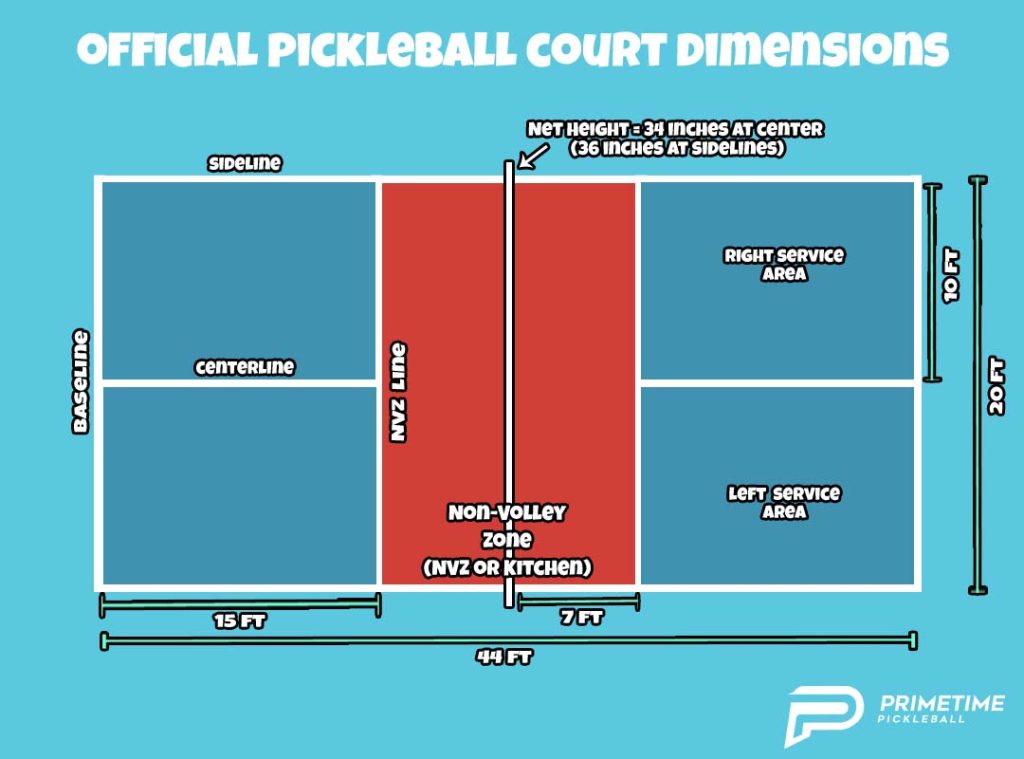
Official pickleball court dimensions
If you wonder how big is a pickleball court, the official size is 20 feet wide by 44 feet long. That is for both singles and doubles. The non-volley zone (the kitchen) is 7 feet deep on each side of the net.
Here are the core specs most facilities follow in the United States:
- Court size: 20 ft x 44 ft (6.10 m x 13.41 m)
- Net height: 36 in at the sidelines and 34 in at the center (0.914 m and 0.864 m)
- Non-volley zone: 7 ft from the net on both sides (2.13 m)
- Line width: 2 in (5 cm), lines are part of the court
- Net length and posts: net is about 21 ft 9 in long, with posts set about 22 ft apart
These measurements come from the sport’s governing bodies and match tournament play. When a park or school asks me how big is a pickleball court for official layouts, I give them these exact figures for accuracy and safety.
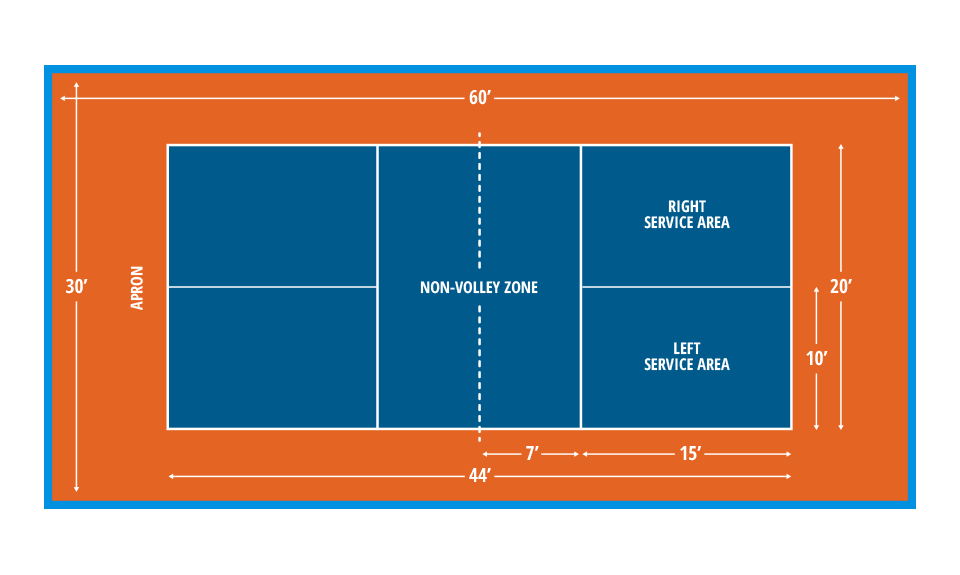
Court layout explained: zones and lines
To grasp how big is a pickleball court, map the zones first. The layout is simple but precise, and each line affects strategy.
Key areas you’ll use every rally:
- Baselines: the back lines that mark the 44-foot length
- Sidelines: the long sides that mark the 20-foot width
- Non-volley zone (kitchen): a 7-foot band from the net on each side; you cannot volley while touching it
- Centerline: divides left and right service courts, running from the kitchen line to the baseline
- Service courts: each is 10 ft wide by 15 ft long
A good mental model: think of the court as a badminton doubles court with a lower net. The dimensions are the same, but the net height and rules differ. When I teach beginners, I remind them that removing an inch from the kitchen can change dinks and volleys. That is why how big is a pickleball court must be measured with care, not guesswork.

Singles, doubles, and wheelchair play
Many ask how big is a pickleball court for doubles vs singles. The answer is simple: the same court size works for both. The strategy changes, not the dimensions.
For wheelchair pickleball, the court size stays the same. The rule set allows two bounces and has special provisions for the non-volley zone. The lines do not change.
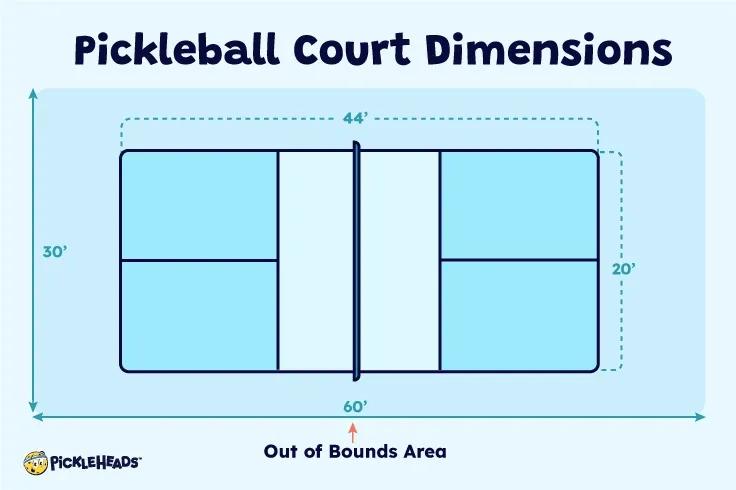
Indoor vs outdoor courts and total playing area
You may ask how big is a pickleball court indoors vs outdoors. The court lines and net are identical, but the total playing area differs. You need clear space around the rectangle so players can move and stay safe.
Typical space planning:
- Minimum playing area: 30 ft x 60 ft per court
- Preferred playing area: 34 ft x 64 ft per court
- Ceiling clearance: at least 18 ft; 20 ft or more plays better
- Lighting: 30–50 foot-candles for casual play; higher for competition
For indoor gyms, keep the court away from walls. For outdoor sites, aim for a north-south orientation to limit sun glare. When venues ask me how big is a pickleball court plus runoff, I recommend the preferred 34 by 64 feet so lobs and serves feel fair.
Space planning and safety runoff at home or a club
For a backyard, how big is a pickleball court guides your layout. The 20 by 44 rectangle is only part of the picture. Plan for safe runout and clean sight lines.
What to consider:
- Safe runout: at least 5 ft beyond sidelines and 8–10 ft beyond baselines
- Slope: gentle slope for drainage outdoors, about 1% or less
- Surface: asphalt or post-tension concrete with acrylic coating for grip
- Fencing: 10–12 ft fencing helps keep balls in
- Noise: softer balls and windscreens can help near homes
At home, I often chalk a trial court first. It’s a quick test to see how big is a pickleball court in your yard and if the space feels right before you invest.

Building or marking your own court: steps and mistakes to avoid
Before you mark lines, answer how big is a pickleball court and check runoff. Get the layout right the first time with a tape, chalk, and a centerline string.
Basic steps I use on new builds:
- Snap a true centerline for the full 44-foot length
- Mark baselines at 0 ft and 44 ft, 20 ft wide
- From the net line, measure 7 ft to mark each kitchen line
- Split the width into two 10 ft lanes with a centerline on each side
- Paint 2-inch lines with outdoor acrylic or use removable tape for temporary courts
- Install a net so it is 36 in at the posts and 34 in at the center
Common mistakes that ruin play:
- Kitchen too shallow or too deep; it must be 7 ft
- Posts set too close, which keeps the net from dropping to 34 in at center
- Lines thinner than 2 in, which makes calls hard
- Reusing a tennis net without a center strap, which leaves the net too high
- Skipping extra space; tight back courts increase trips and injuries
I keep a checklist in my bag for every install. It keeps the build calm and clear, even when the wind picks up.

Converting a tennis or badminton court
On a tennis court, how big is a pickleball court helps you decide how many fit. A standard tennis court area is about 60 by 120 ft, and you can fit two to four pickleball courts in that space with good runout.
Conversion tips:
- Two courts per tennis court feel roomy and quiet
- Four courts maximize space for programs and open play
- Use portable nets set to 36/34 in rather than a tennis net
- Align courts north-south when possible
- Use contrast colors for kitchen zones to aid calls
If you already have badminton lines indoors, the 20 by 44 footprint matches. You still need the lower net. That lower net is a key part of how big is a pickleball court in practice, not just on paper.

Equipment, materials, and line specs
Knowing how big is a pickleball court sets your net post spacing and line kit list. Pick gear built for weather and wear.
What I recommend for long life:
- Net: 21 ft 9 in length or more, 30–36 in deep, center strap included
- Posts: about 22 ft apart, sturdy anchors or wheeled bases for portable nets
- Coating: two to three coats of acrylic with silica sand for texture
- Paint: UV-stable acrylic line paint, 2 in wide masking
- Balls: outdoor balls for rough surfaces; indoor balls for wood floors
For multi-use gyms, choose removable floor tape that does not leave residue. Clean the surface before taping so edges bond well.
Cost, upkeep, and long-term value
Project budgets depend on how big is a pickleball court plus runoff. Costs vary with site prep, base work, and gear.
Typical ranges I see in bids:
- Portable net and tape lines: $200–$600
- Permanent lines on an existing slab: $300–$1,200
- New post-tension concrete slab with coating: $25,000–$45,000 per court
- Fencing and gates: $6,000–$15,000 per court
- Lighting: $8,000–$25,000 per court
Maintenance is simple. Keep the surface clean, check the net height weekly, and repaint lines when they fade. A clean, bright kitchen line helps close calls and keeps play friendly.
Practical examples: home, school, and club use
People often ask me how big is a pickleball court in real life settings. The answer shifts with the site, but the lines stay the same.
Three real-world snapshots:
- Backyard: one 20 x 44 court with 5 ft side runout and 8 ft baseline runout; chalk first, paint second
- School gym: lay tape over a badminton footprint and drop a portable net
- Club complex: eight dedicated courts on a 140 x 136 ft pad with a 34 x 64 ft footprint per court
Each case starts with the same numbers and ends with different amenities. That is the beauty of the sport. It scales well.
Tolerances, rules, and updates to watch
Standards evolve. Local parks sometimes allow small variances if space is tight. Tournament play follows the current rulebook from national bodies, so stay current.
Keep an eye on:
- Any updates to line width, net specs, or allowed materials
- Clarifications for wheelchair play and temporary courts
- Lighting and color guidance for broadcast or large events
When a city planner asks how big is a pickleball court for bids, I include a short appendix with the latest standards. It saves change orders later.
Frequently Asked Questions of how big is a pickleball court
Is the court the same size for singles and doubles?
Yes. Singles and doubles both use a 20 by 44 foot court. Only the tactics and footwork change.
How tall is a pickleball net supposed to be?
The net is 36 inches at the sidelines and 34 inches at the center. Use a center strap to set the dip correctly.
What is the size of the kitchen in pickleball?
The non-volley zone is 7 feet deep on each side of the net. The line itself counts as part of the kitchen.
How much space do I need around the court?
Aim for at least 30 by 60 feet of total space. The preferred area is 34 by 64 feet for safer play.
Can I put a pickleball court on my driveway?
Yes, if your driveway is long and flat. Chalk the 20 by 44 footprint and add safe runout behind the baselines.
Can I use a tennis net for pickleball?
It is not ideal. Tennis nets are too high in the center unless you add a center strap and adjust tension.
What are the service box dimensions?
Each service box is 10 feet wide and 15 feet long. They start at the kitchen line and extend to the baseline.
Conclusion
You now know exactly how big is a pickleball court and why each inch matters. The 20 by 44 foot footprint, the 7 foot kitchen, and the 34 inch net at center create the fast, friendly rallies we love.
Use this guide to plan your space, mark lines with confidence, and avoid common mistakes. Whether you chalk a driveway or build a full complex, start with the right numbers and you will get great play. Ready to keep learning? Subscribe for more how-tos, ask a question in the comments, or share photos of your new court.