
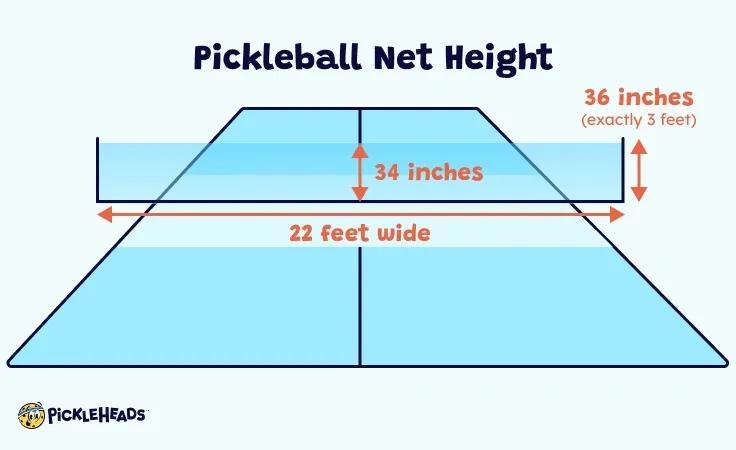
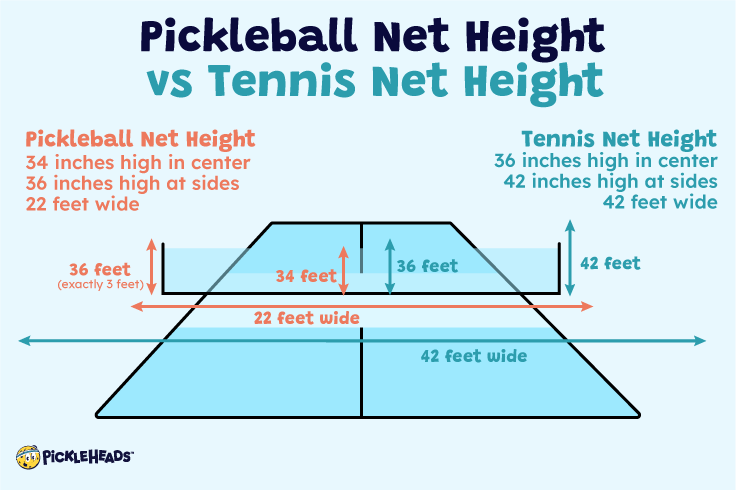
The official pickleball net height is 36 inches at the sidelines and 34 inches at the center.
I’ve played, coached, and set up dozens of courts, so I know exactly how high is the pickle ball net and why small differences matter. This guide breaks down the official rules, simple ways to measure and adjust your net, common mistakes to avoid, and practical tips from real court experience. Read on to master net height and improve your play.
Official Net Height and Rules
Pickleball rules set the net height at 36 inches at each sideline and 34 inches at the center. That difference creates the slight dip players see in the middle of the net. Knowing how high is the pickle ball net helps you set up courts to official standards and keep play fair.
Here are the official points to remember:
- Net height at sidelines: 36 inches measured from the playing surface to the top of the net.
- Net height at center: 34 inches measured at the midpoint between the posts.
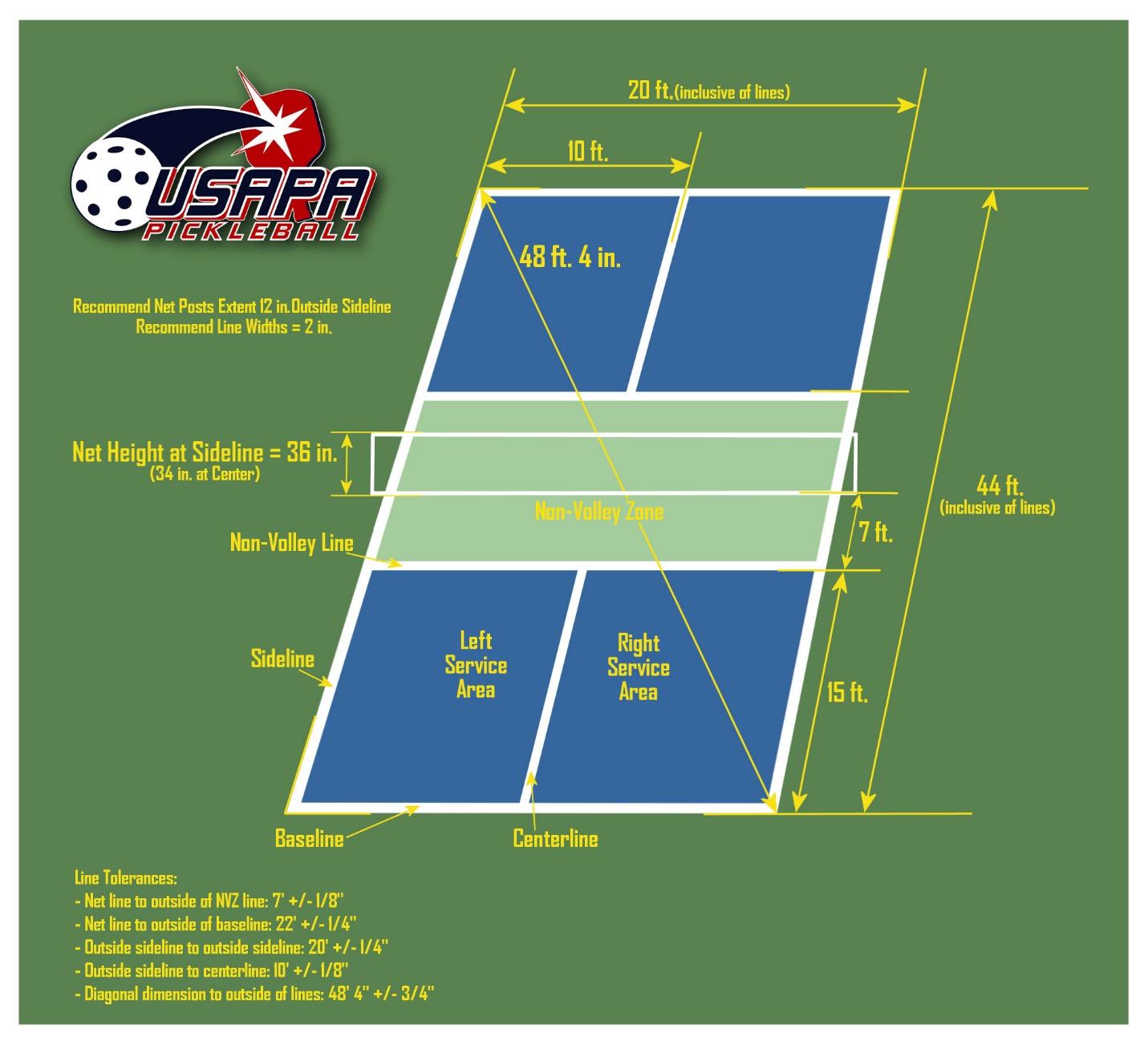
- Post placement: Posts usually sit 22 feet apart for a standard court, so measure from the playing surface straight up.
From experience, small changes of 1–2 inches change how players volley and dink. I always use a tape and a fixed center strap to keep the center at 34 inches. Proper setup avoids disputes and makes rallies predictable.

Why the Center Is Lower: Play and Physics
The 2-inch center drop is intentional. It prevents the net from being perfectly taut and encourages longer rallies. A slightly lower center makes lobs and passing shots more forgiving.
Understanding why the center is lower helps when you set the net. If your net is too tight, the center will be higher and shots will clip more often. If it sags too much, volleys can become easy winners. Balance is key for fair play and good practice sessions.

How to Measure and Adjust Net Height (Step-by-step)
Measuring is simple when you follow steps. I use the same routine every time I set a net.
Steps to measure and adjust:
- Place net posts at the correct distance and attach the net.
- Use a long measuring tape to check 36 inches at each sideline.
- Find the midpoint and measure straight up to confirm 34 inches.
- If center is high, loosen the top cable slightly or use a center strap to pull it down.
- If center is too low, tighten the cable or raise post anchors carefully.
Practical tips from my experience:
- Measure from the playing surface at the same time of day. Surface temperature can slightly change tension on portable nets.
- Use a rigid ruler or net gauge for quick checks during games.
- Carry a small strap or clamp in your gear bag for fast center adjustments.
Common Measurement Errors and How to Avoid Them
People often ask how high is the pickle ball net when it feels wrong. Here are frequent mistakes and fixes.
Common errors and fixes:
- Measuring on sloped courts: Ensure you measure perpendicular to the playing surface, not along the slope.
- Using soft tape measures: A flexible tape can bend; use a stiff ruler at the center for accuracy.
- Forgetting the center strap: Without it the center will sag unpredictably.
- Misplacing posts: Posts not set square can change the effective height at the sidelines.
I once played on a court where the sideline heights were 2 inches off. The fix was a quick re-zero of the posts and retighten. Small checks before matches save arguments and awkward volleys.

Equipment, Standards, and Buying Tips
Choosing the right net affects how easy it is to set the correct height. Not all nets are built equal.
What to look for:
- Sturdy top cable for consistent tension and easy adjustment.
- Center strap included or available separately for accurate center height.
- Weather-resistant materials if you play outdoors.
- Posts that lock securely and match standard post spacing.
Buying tips from my testing:
- Spend a bit more on a net with a strong cable and solid posts. It saves time.
- Portable nets are great for clubs and parks, but check that posts are heavy-duty.
- For home courts, a permanent post set with adjustable net hooks makes consistent setup easy.
How Net Height Affects Strategy and Drills
Net height changes how you practice and play. Knowing how high is the pickle ball net helps you design better drills.
Strategy and drills to try:
- Dinking practice: Use the official center height to simulate match conditions.
- Serve drills: Practice serving to clear a 34-inch center without hitting the top.
- Volley drills: Work on half-volley control with the sidelines set to 36 inches.
- Lobs and overheads: Train with a properly tensioned net so lobs clear the center reliably.
When I coached beginners, keeping the net at regulation height forced players to control trajectory. That control translates into fewer unforced errors in match play.

Maintenance and Seasonal Adjustments
Net height can shift over time. Regular checks keep the court consistent.
Maintenance checklist:
- Check tension and center strap weekly during heavy use.
- Inspect top cable for fray and replace if needed.
- Tighten or loosen tension with temperature changes; metal contracts when cold.
- Store portable nets properly to avoid warping.
I learned to check net height before every session. It takes two minutes and avoids interruptions. Consistent maintenance extends gear life and keeps play smooth.
Frequently Asked Questions of how high is the pickle ball net
What is the official height of a pickleball net?
The official height is 36 inches at the sidelines and 34 inches at the center. Those measurements are taken from the playing surface to the top of the net.
Do I measure net height at the court lines or posts?
Measure at the sidelines (near the posts) for the 36-inch mark and at the exact midpoint between posts for the 34-inch center. Use a straight vertical measurement.
How often should I check net height during play?
Check before every match or session and after any heavy play that may loosen the cable. Quick checks take under two minutes.
Can net height affect my serve or dink shots?
Yes. Slightly higher or lower nets change the margin for error on serves and dinks. Practicing at correct height helps muscle memory.
What's the easiest way to adjust the center if it's too high?
Use the center strap to pull the net down or slightly loosen the top cable for more sag. Small adjustments are best; change 0.5–1 inch and re-check.
How does weather affect net height?
Temperature changes can tighten or loosen metal cables, causing slight height changes. Check tension and re-adjust during hot or cold extremes.
Conclusion
Setting the net to the correct height—36 inches at the sidelines and 34 inches at the center—improves fairness, consistency, and play quality. Check your net before games, use a center strap, and perform quick maintenance to avoid surprises. Try the measuring steps and drills here to get comfortable with regulation height and see immediate improvement in control and strategy. Ready to make your court official-ready? Set your net, practice smart, and leave a comment about your setup or questions.