
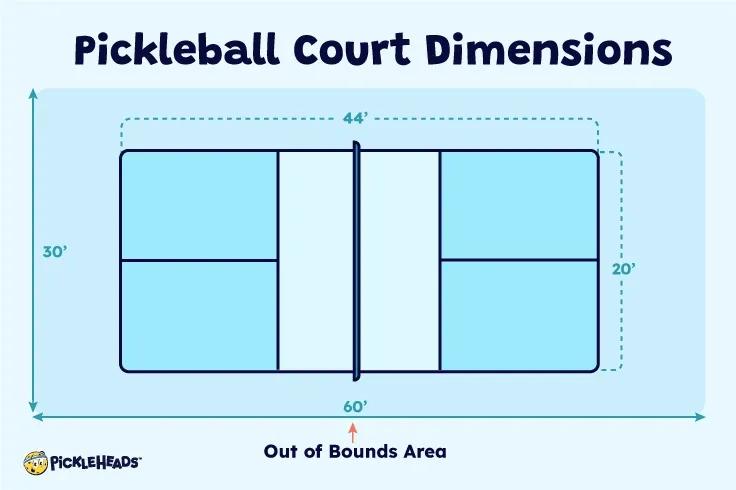
A standard pickleball court is 44 feet long and 20 feet wide for doubles play.
If you’ve ever wondered how long is a pickleball court and why the size matters, you’re in the right place. I’ve built and played on dozens of courts, coached new players, and measured public and private courts to know the details that matter most. In this guide you’ll get exact dimensions, layout tips, setup steps, and real-world advice so you can plan, measure, or play with confidence.
Standard dimensions and official measurements
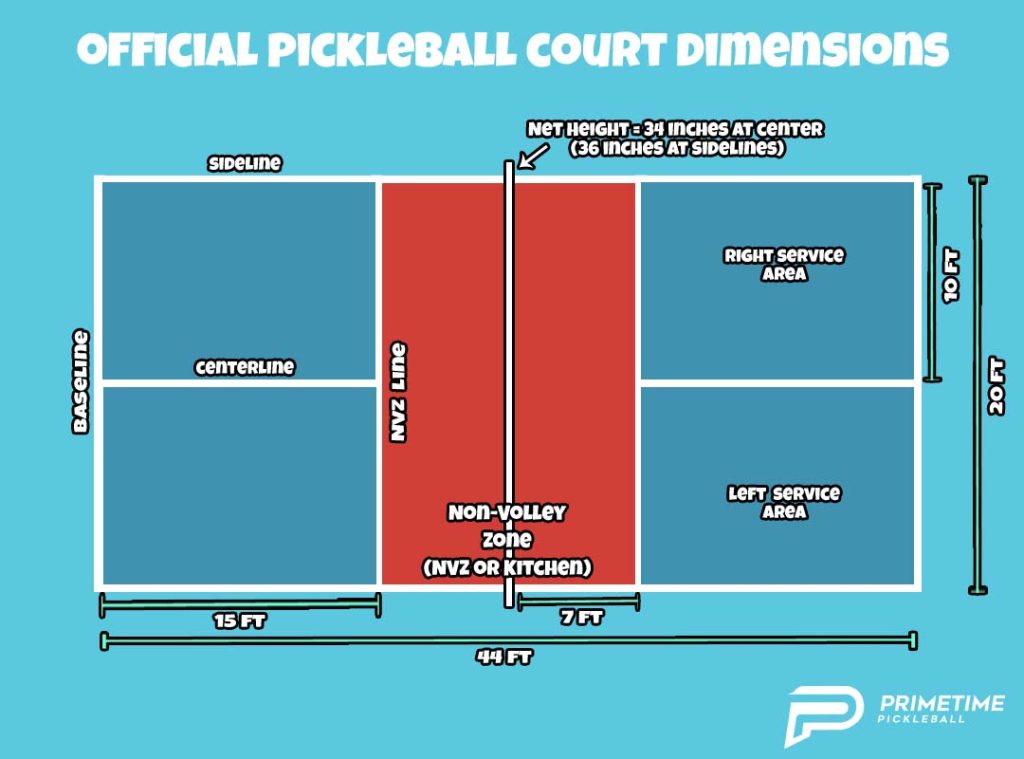
A regulation pickleball court measures 44 feet long and 20 feet wide for both singles and doubles play. The court size is the same whether you play singles or doubles. The net height at the center is 34 inches and 36 inches at the sidelines. These numbers define the playable area and the rules for serve and volley.
Key official measurements:
- Court length: 44 feet
- Court width: 20 feet
- Non-volley zone (kitchen) depth: 7 feet from the net on both sides
- Service court depth: 15 feet from the net to the baseline
- Net height: 36 inches at posts, 34 inches at center
Understanding how long is a pickleball court helps you plan space, pick surfacing, and position fencing or seating. These measurements are consistent across recreational and competitive play.
Court layout and key areas explained
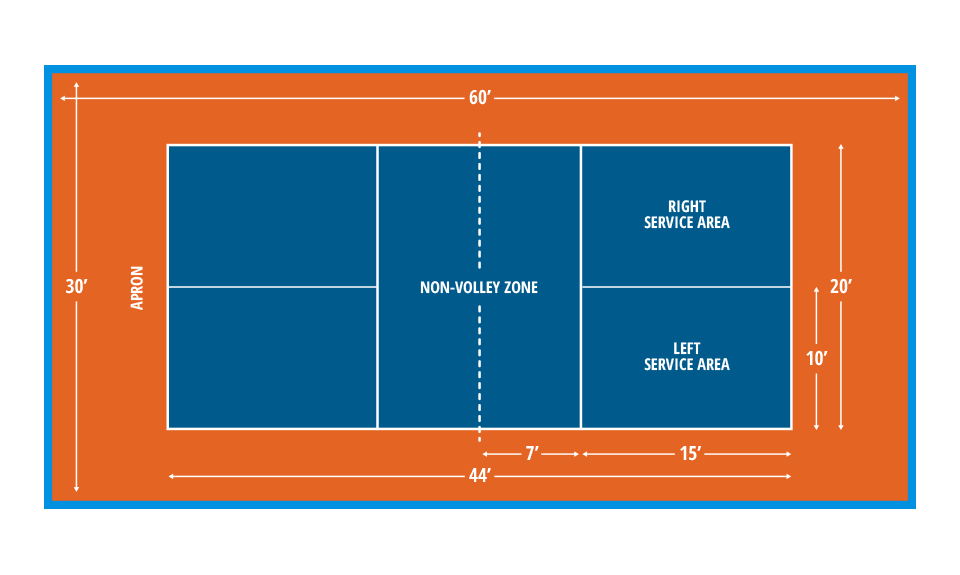
A standard layout divides the court into clear zones. The centerline splits the court for left and right service courts. The non-volley zone, or “kitchen,” is a critical area. Players can’t volley while standing in the kitchen.
Main zones:
- Baselines: Back boundary lines at each end of the 44-foot length.
- Sidelines: Boundaries on each side of the 20-foot width.
- Centerline: Splits the service area into left and right boxes.
- Kitchen (non-volley zone): 7 feet from the net on each side.
- Service areas: Each 10-foot wide by 15-foot deep area on either side of the net.
Knowing how long is a pickleball court and the size of the kitchen helps you teach safe play. In coaching, I emphasize positioning relative to the kitchen—most beginners misjudge it.
Measurements in feet and meters
If you prefer metric units, convert the official dimensions easily. Exact conversion helps when planning courts in areas that use meters.
Conversions:
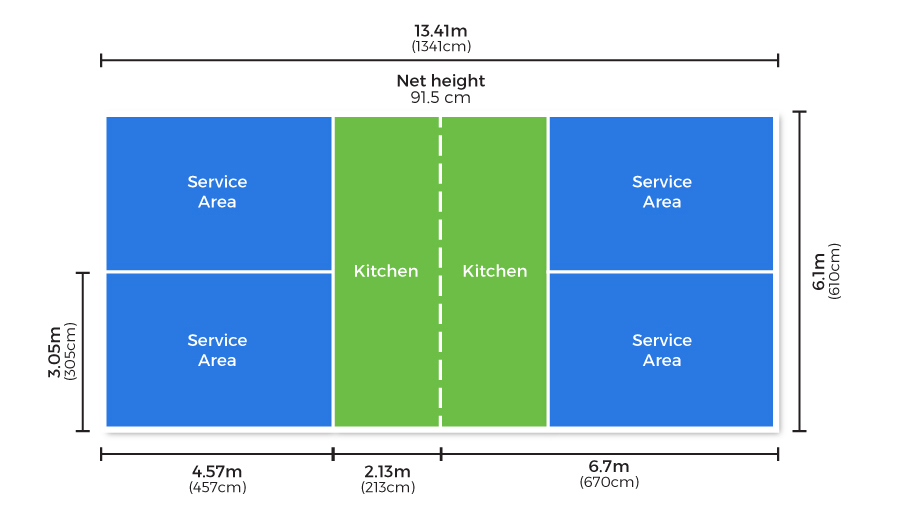
- Court length: 44 feet = 13.41 meters
- Court width: 20 feet = 6.10 meters
- Kitchen depth: 7 feet = 2.13 meters
- Service area depth: 15 feet = 4.57 meters
- Net height center: 34 inches = 0.86 meters
When you ask how long is a pickleball court in meters, remember to round sensibly for construction. I usually specify to the centimeter for precision during layout.

Indoor vs outdoor court differences
The dimensions for indoor and outdoor courts are the same. The main differences are surface, surroundings, and clearances. For outdoor courts, wind and sun matter. Indoor courts often need more vertical clearance for lobs.
Things to consider:
- Surface: Concrete, asphalt, or cushioned indoor flooring changes bounce and slide.
- Clearances: Allow at least 10 feet behind baselines and 5 feet on sidelines for casual play.
- Lighting: Indoor courts need even lighting; outdoor courts need sun and glare planning.
Understanding how long is a pickleball court doesn’t change by venue. But planning the surrounding area makes play safer and more fun. From my experience, a 10-foot runoff behind each baseline is a comfortable minimum for community courts.

How to measure and set up your own court
Setting up a court is straightforward if you follow the measurements. Measure twice, mark once, and use string lines for accuracy.
Step-by-step:
- Choose a flat area at least 60 feet by 30 feet to allow room for movement.
- Mark the baseline (44 feet apart) and the sidelines (20 feet apart).
- Find the midpoint of the baseline and mark the net line across the 20-foot width.
- Measure 7 feet from the net on both sides and mark the kitchens.
- Add the centerline in each service area from the net to the kitchen line.
I once set up a court on a school parking lot. Leaving extra space behind baselines saved many chased balls. If you plan to make a permanent court, invest in professional layout and surface prep.

Common mistakes and helpful tips
Beginners often misjudge space and net height. Here are quick tips to avoid common pitfalls.
Avoid these mistakes:
- Don’t assume a basketball court layout fits pickleball. It often does, but check measurements.
- Don’t skimp on clearances. Players need room to move behind baselines.
- Don’t forget net tension. A sagging net affects play and fairness.
Helpful tips:
- Use tape measure and chalk lines for temporary courts.
- Add padding to net posts for safety.
- Choose surface paint designed for sport courts to improve traction and durability.
Remember, knowing how long is a pickleball court is step one. Comfort, safety, and surface matter just as much in real play.
Frequently Asked Questions of how long is a pickleball court
What is the official length of a pickleball court?
A regulation pickleball court is 44 feet long from baseline to baseline. The width is 20 feet. Net height is 34 inches at the center.
Is the court size the same for singles and doubles?
Yes. The court measures 44 by 20 feet for both singles and doubles. Gameplay rules differ, but the physical court remains identical.
How big is the non-volley zone (kitchen)?
The kitchen is 7 feet deep on each side of the net. It stretches the full 20-foot width of the court. Players can’t volley while standing in that zone.
Do indoor and outdoor courts use the same measurements?
Yes, the measurements are the same indoors and outdoors. Differences are in surface, lighting, and clearances only.
How much space should I allow around the court?
Allow at least 10 feet behind baselines and 5 to 10 feet on each side for casual play. Competitive play may require more clearance for safety and spectator areas.
Conclusion
The answer to how long is a pickleball court is simple: 44 feet long and 20 feet wide, with a 7-foot kitchen and a 34-inch net center height. Knowing these facts helps you design, measure, and play better. Use the practical setup tips above and plan extra clearance for safety. Try laying out a temporary court with tape to get a feel for space before committing to a permanent build. If you found this useful, leave a comment about your court project or subscribe for more guides and tips.