To play pickleball doubles, you and a partner use paddles to hit a ball over a net, following specific serving and scoring rules.
Welcome to the exciting world of pickleball! I still remember my first doubles match—the confusion over the score, the awkward dance with my partner, and the pure joy of a well-placed dink. It can seem a little complicated at first, but I promise it's one of the easiest and most social sports to learn. As a seasoned player and coach, I've seen countless beginners transform into confident players. This guide is designed to give you that same confidence by breaking down exactly how to play pickleball doubles, from the basic rules to winning strategies, so you can step onto the court ready to play and have fun.
Understanding the Court and Equipment
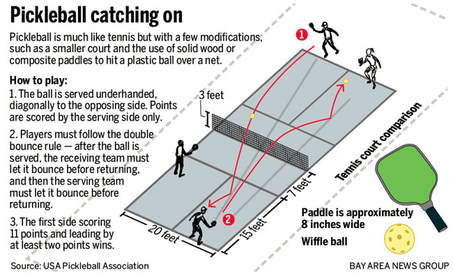
Before we dive into the rules, let's get familiar with your new playground. A pickleball court looks like a mini tennis court. It's divided by a net that is 36 inches high at the sidelines and 34 inches in the middle. Knowing the key areas is the first step in learning how to play pickleball doubles.
- The Non-Volley Zone (The Kitchen): This is the 7-foot area on both sides of the net. You cannot hit the ball out of the air (a volley) while standing in this zone. It's the most important area to understand for doubles strategy.
- The Service Boxes: These are the two boxes on each side behind the kitchen. When you serve, you must do so from behind the baseline and into the service box that is diagonal to you.
- The Baseline: This is the back line of the court where you stand to serve.
The equipment is simple. You'll need a pickleball paddle, which is larger than a ping-pong paddle but smaller than a tennis racket. You'll also need a pickleball, which is a plastic ball with holes, similar to a wiffle ball.
The Core Rules of Pickleball Doubles
Understanding the rules is essential to learning how to play pickleball doubles. While there are a few unique regulations, they become second nature after a few games. The main objective is to be the first team to score 11 points, winning by at least two.
Serving Sequence and Rules
Serving in doubles has a specific sequence. Don't worry, it's easier than it sounds.
- Starting the Game: To start, the server stands on the right side of the court (the "even" side) and serves diagonally to the opponent's right service box. The game always begins with the score "zero-zero-two." The "two" signifies that the starting team only gets one server for their first service turn.
- The Serve Motion: The serve must be made underhand. Your paddle must make contact with the ball below your waist.
- Server Rotation: If your team scores a point, you (the server) switch to the left side of the court and serve to the other opponent. You continue switching sides after each point scored. When your team loses the rally, the serve goes to your partner.
- Switching to the Other Team: Once your partner also loses the serve, the service passes to the other team. From this point on, both players on each team will get a chance to serve before the ball goes back to the other side.
Scoring in Doubles Explained
Scoring can be the trickiest part for newcomers. In doubles, the score is announced as three numbers before each serve. For example, "four-three-one."
- The first number is your team's score. (4)
- The second number is the opposing team's score. (3)
- The third number is the server number, either "one" or "two." (1)
This third number tells you if it's the first or second server on that team's service turn. Remembering this system is a huge part of understanding how to play pickleball doubles smoothly. You only score points when your team is serving.
The All-Important Double-Bounce Rule
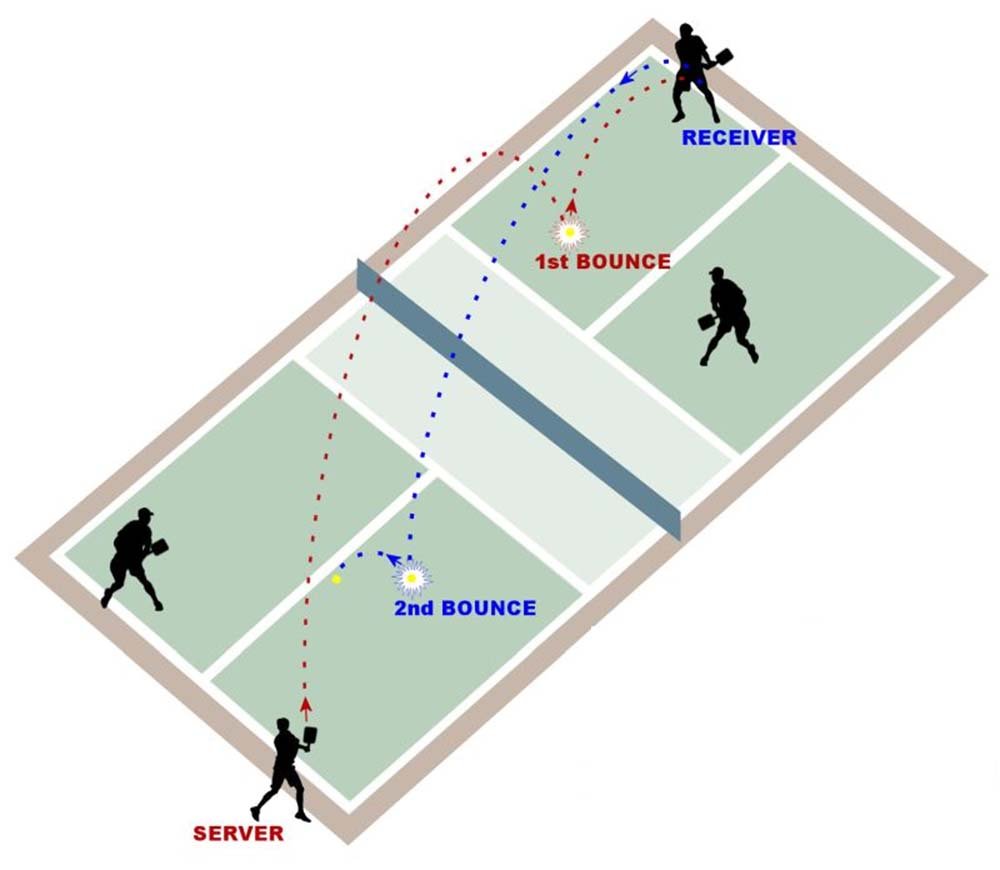
This rule is unique to pickleball. After the serve, the ball must bounce once on the receiving team's side before they can return it. Then, when the ball comes back to the serving team's side, it must also bounce once before they can hit it.
After these two bounces have occurred (one on each side), players are then free to volley the ball (hit it out of the air) or play it off the bounce. This rule prevents teams from rushing the net immediately after the serve and encourages longer, more strategic rallies.

Positioning and Strategy for Winning Doubles
Once you have the rules down, how to play pickleball doubles becomes a game of strategy and teamwork. Proper positioning and communication with your partner are what separate good teams from great ones.
Where to Stand on the Court
Your position on the court is dynamic and changes based on who is serving.
- Serving Team: When you or your partner are serving, you both should stand behind the baseline. After the return of serve bounces, you should aim to move up to the non-volley zone line together.
- Receiving Team: The player receiving the serve stands behind the baseline. Their partner, however, should start at the non-volley zone line. This puts them in an aggressive position, ready to react to the next shot.
Communication is Your Superpower
I can't tell you how many points my partner and I have won or lost simply because of communication. Constantly talking to your partner is crucial.
- Call "Mine!" or "Yours!" on balls hit down the middle. This avoids confusion and prevents both players from going for the same shot.
- Say "Switch!" if you get pulled out of position and need your partner to cover your side.
- Encourage each other! A simple "nice shot!" goes a long way in keeping morale high.
Master the Third Shot Drop
The "third shot" is the shot made by the serving team after the return of serve. Instead of hitting it hard, the best strategy is often a "third shot drop"—a soft shot that lands gently in the opponent's kitchen. This shot gives your team time to advance from the baseline to the non-volley zone, which is the most powerful position on the court. It took me months to get this shot right, but once I did, our entire game changed.

Frequently Asked Questions
What is the double-bounce rule?
The double-bounce rule requires the ball to bounce once on each side of the court after the serve. After the serve return, both teams can then choose to volley the ball or play it off the bounce.
Who serves first in a pickleball doubles game?
The team that starts the game is determined by a coin toss or rally. The player on the right side of the court serves first, and that team only gets one server for their initial service turn.
Can my partner and I switch sides?
You and your partner can switch sides of the court at any time except when one of you is serving. Many advanced teams use a strategy called "stacking" to position their strengths optimally during the game.
What happens if the ball hits the net on a serve?
If a serve hits the net and lands in the correct service box, it is called a "let" and the serve is replayed. There is no limit to the number of lets a server can have.
What is a "dink" in pickleball?
A dink is a soft shot hit from near the non-volley zone line that arcs just over the net and lands in the opponent's kitchen. It is a strategic shot used to force your opponents into making a mistake.
Conclusion
Mastering how to play pickleball doubles is a journey of learning the rules, developing strategy, and, most importantly, building chemistry with your partner. It all comes down to controlling the court by getting to the non-volley zone line, communicating clearly, and executing smart shots like the third shot drop and the dink. The blend of strategy and teamwork makes every game a unique and enjoyable experience.
Now that you have the knowledge, it's time to put it into practice. Grab a paddle, find a partner, and head to the courts. Don't be afraid to make mistakes—every player does. Focus on having fun, and let us know in the comments how your first game goes