
Only the serving team scores; call three numbers like 5-3-2 in doubles.
If you want to learn how to score pickleball the right way, you’re in the perfect spot. I teach new players every week, and I know the little details that confuse people. In this guide, I’ll show you how to score pickleball with clear steps, real examples, and tips I use on court. Keep reading to master the flow, avoid common mistakes, and play with confidence.

How to score pickleball: the basics
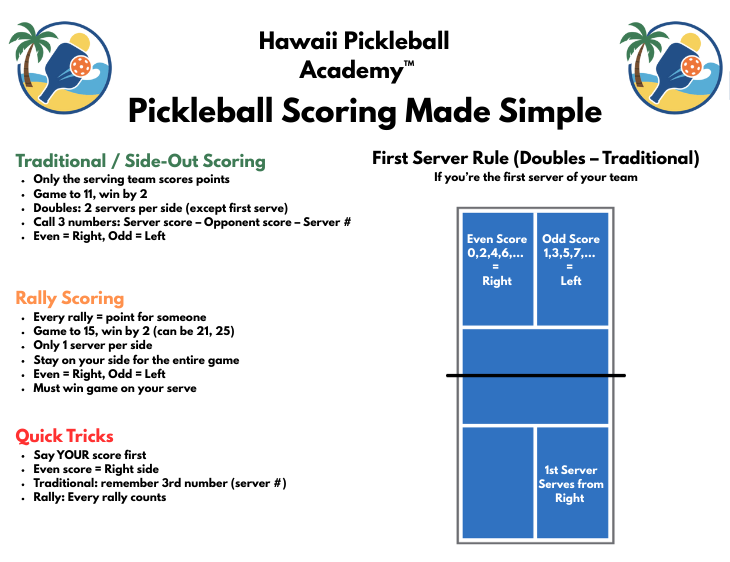
Pickleball uses side-out scoring in most leagues and clubs. That means only the serving team can earn a point. Games are usually to 11, win by 2. Some games go to 15 or 21 in tournaments.
In doubles, you call three numbers before each serve. The order is server’s team score, receiver’s team score, then the server number (1 or 2). In singles, you only say two numbers: server’s score first, receiver’s score second.
Two quick rules to track positions:
- If your team’s score is even, the correct server starts on the right.
- If your team’s score is odd, the correct server starts on the left.
This core system is how to score pickleball in most settings, and it’s the format you’ll see in the official rulebook.
The three-number score format explained (doubles)
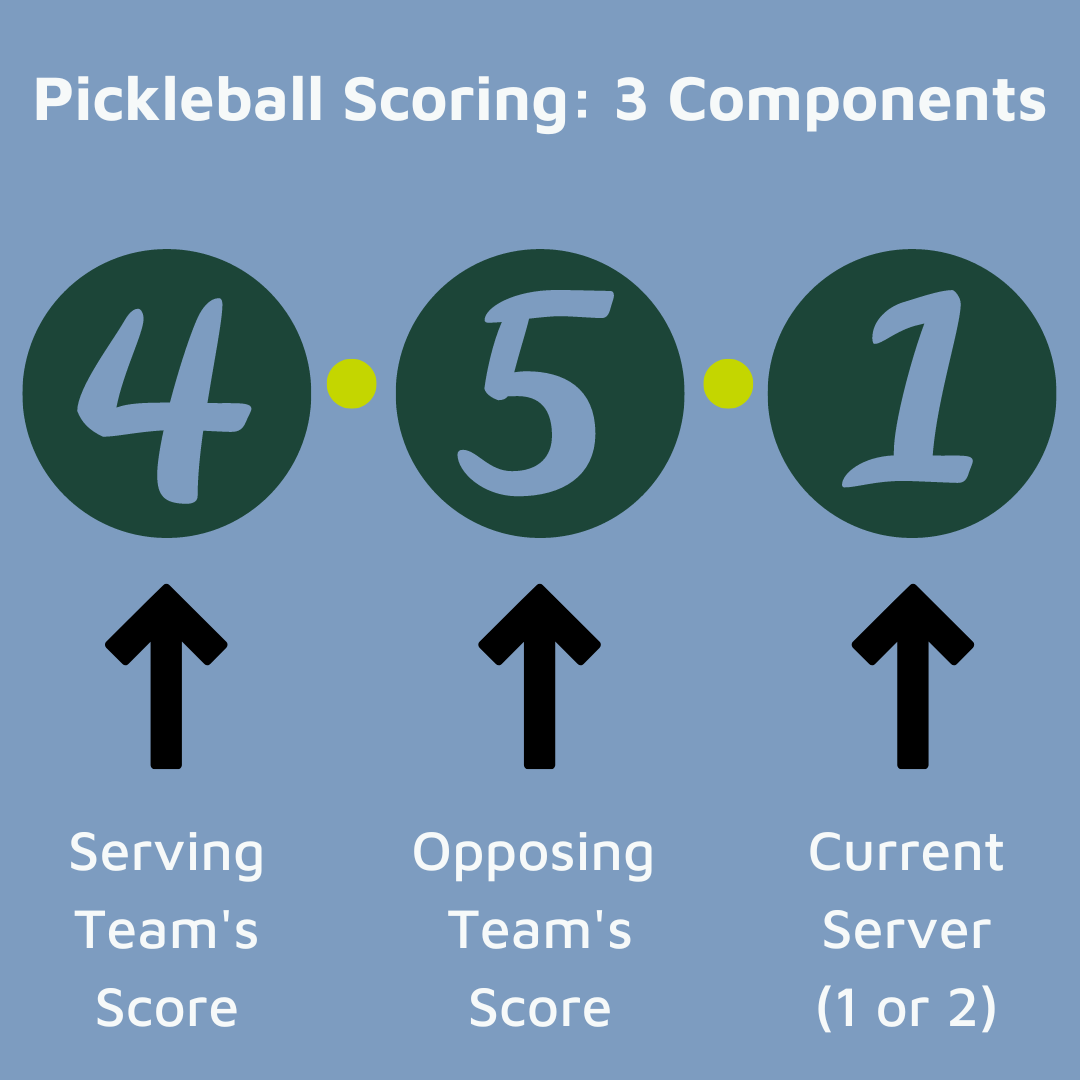
When you learn how to score pickleball in doubles, the third number is the key. Here’s what each number means when you say, for example, 6-4-1:
- 6 is the serving team’s score. Say this first.
- 4 is the receiving team’s score. Say this second.
- 1 is the server number for the current serving team. Say this third.
Server numbers reset when the other team wins the serve (a side-out). That new serving team begins with their Server 1 on the right if their score is even. Then they switch after each point they win.
Example rally chain:
- Call 2-1-1. You serve from the right. You win the rally. Score is now 3-1-1, and you switch sides with your partner.
- You serve again. Fault into the net. You remain the serving team, but now it’s 3-1-2 because it’s your partner’s turn to serve.
- Your partner serves. You lose the rally. Side-out. The other team now serves at 1-3-1 if their score is odd or even? Careful: their team score is 1, which is odd, so Server 1 should be on the left to start.
This simple pattern is the backbone of how to score pickleball in doubles.

Serving sequence and positioning in doubles
To master how to score pickleball, lock in the serve order and court spots:
- The serving player stands on the right when their team score is even.
- The serving player stands on the left when their team score is odd.
- After a point is won, the serving team switches sides. The receiving team does not switch.
- When the first server on a team loses a rally, the second server serves next. After the second server loses a rally, it’s a side-out.
Quick position check I teach beginners:
- Ask: Is our score even? If yes, the correct server should be on the right.
- Ask: Who served last for our team? If it was Server 1, then Server 2 is up, and vice versa.
This flow keeps rallies fair and makes how to score pickleball feel simple, not tricky.
Singles scoring and the small differences
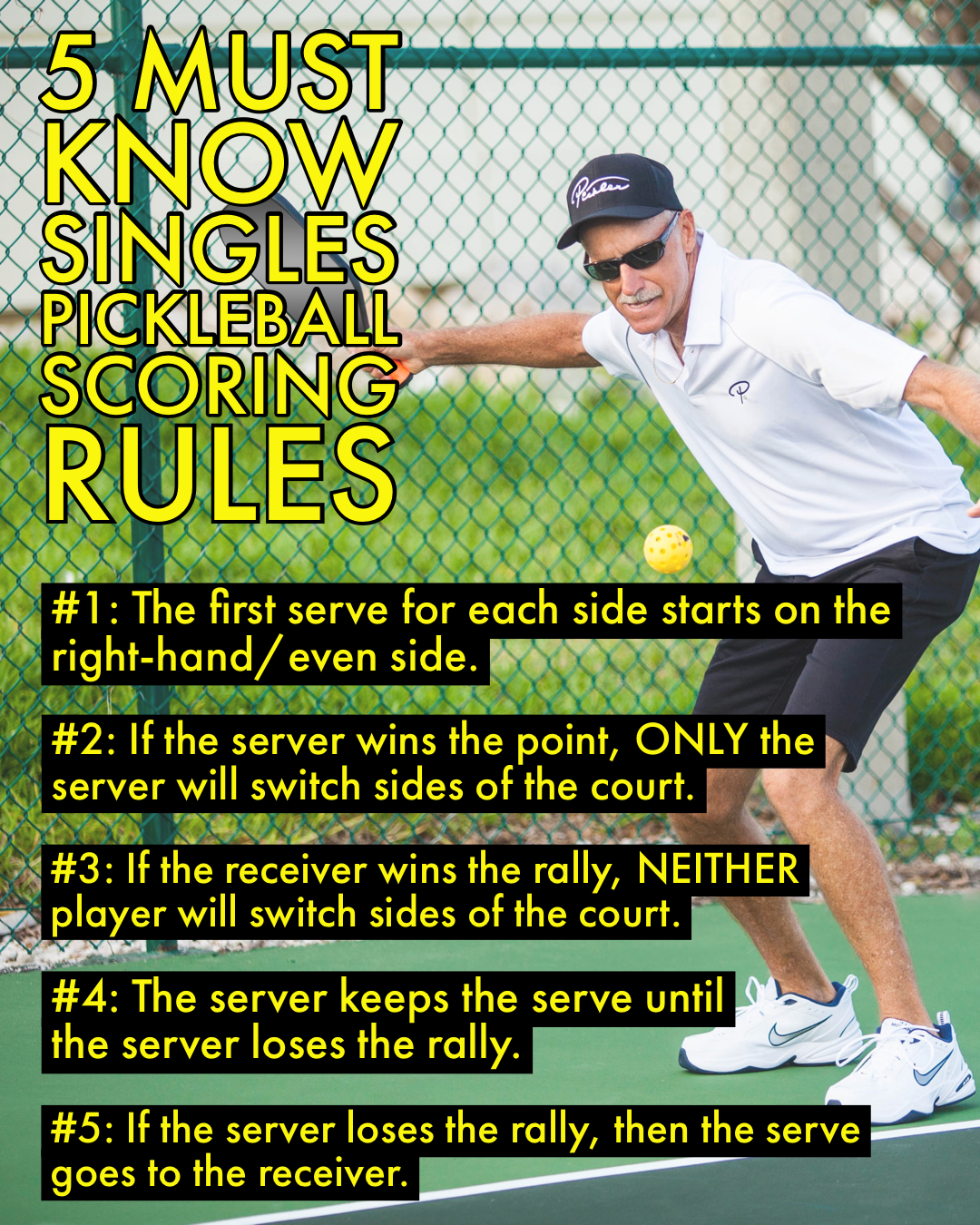
Singles removes the server number, so you call two numbers only:
- Server’s score first.
- Receiver’s score second.
Positions in singles still follow the even-right, odd-left rule:
- If your score is even, serve from the right.
- If your score is odd, serve from the left.
You still only score on your serve in standard play. For anyone learning how to score pickleball solo, singles is actually a great way to build the habit.

Why the game starts at 0-0-2
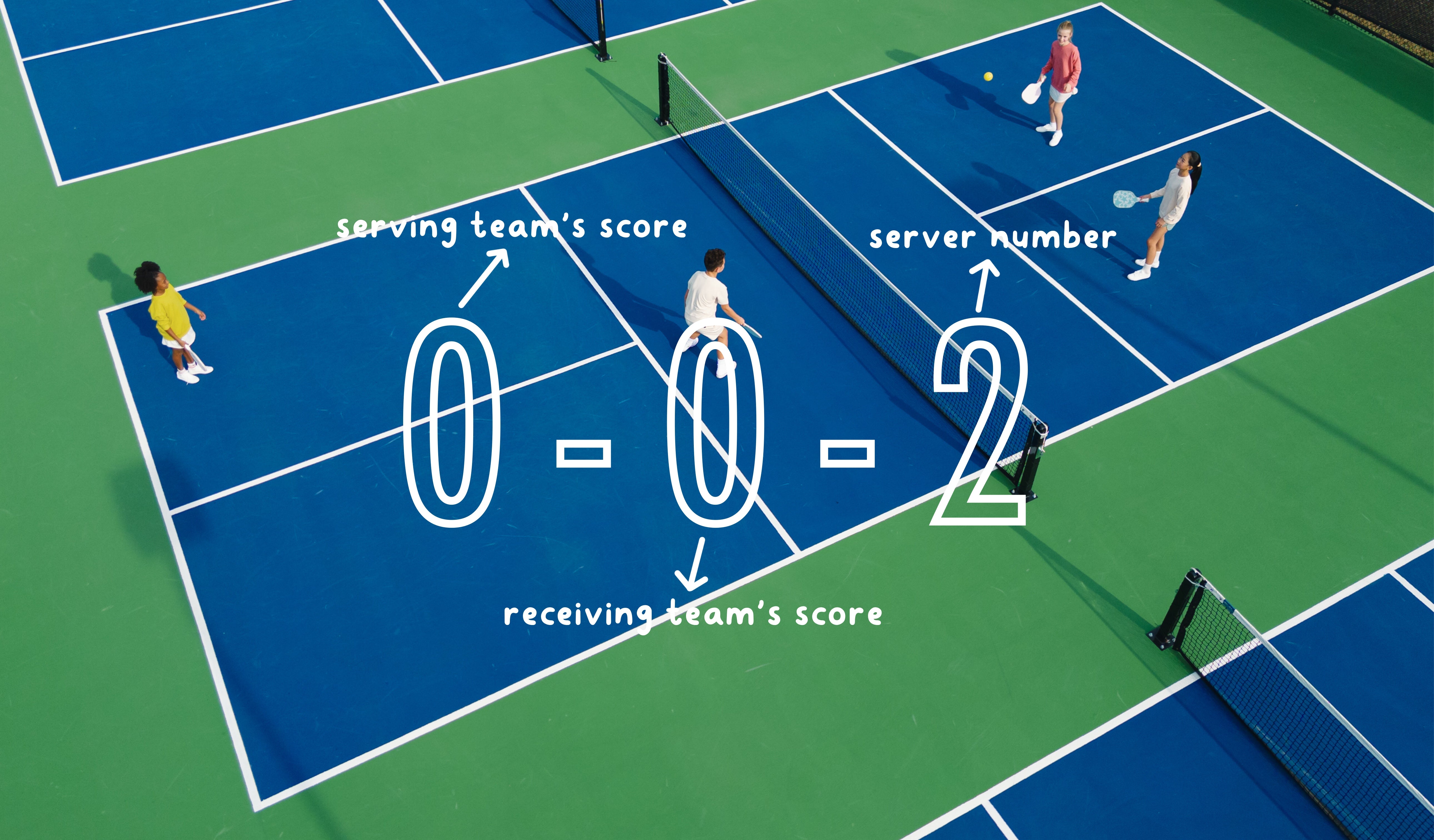
At the start of a doubles game, the score call is 0-0-2. That “2” is special. It means the first serving team only gets one server before a side-out. This evens the advantage of serving first.
Once the other team wins the serve, they start their turn at either 0-0-1 (if they haven’t scored yet) or with whatever their score is. From then on, every serving turn has two servers, just like normal.
If you drilled only one thing about how to score pickleball to help a new friend, teach them why we start at 0-0-2. It cuts confusion early.
When and how to call the score
Call the score before the serve. Your call should finish before you hit the ball. On ref’d courts, the referee calls it. In casual games, the server calls it. Speak loud and clear.
Best practices I use:
- Face your opponents and call the score.
- Wait for brief acknowledgment or stillness.
- Serve with a steady rhythm right after.
Sample calls in doubles:
- 5-3-1
- 10-9-2, game point
- 0-0-2 at the start
Sample calls in singles:
- 6-4
- 10-10, win by 2
This small habit keeps how to score pickleball clean and friendly for everyone.
How to win the game, game points, and tie-breakers
Most games are to 11, win by 2. That means if it’s 10-10, play continues until one team leads by two. Some formats use 15 or 21 for game length, still win by 2.
Game point tips:
- Say game point when serving at 10 or higher and up by 1.
- Stay calm. Focus on a serve you can make 95% of the time.
- Aim deep middle to limit angles.
Tie-break habits that help:
- Review positions before serving.
- Call the score with care.
- Stick to high-percentage shots.
These small edges help you apply how to score pickleball in tight moments without panic.

Common scoring mistakes and how to avoid them
I see these all the time when teaching how to score pickleball. Here’s how to fix them fast:
- Calling scores out of order. Always say server score, receiver score, then server number in doubles.
- Wrong server or wrong position. Use the even-right, odd-left rule as your compass.
- Forgetting to switch sides after a point. The serving team switches; the receiving team stays.
- Not resetting to Server 1 after a side-out. Each new serving team begins with Server 1.
- Not calling the score. Call it every time, before the serve.
- Thinking a let serve stops play. In current rules, let serves are live if they land in.
Quick fix I teach:
- Keep a tiny rubber band on your paddle throat. Move it from one side to the other after each point you win to remind yourself to switch sides. It’s a neat cue while you learn how to score pickleball with less effort.

Source: betterpickleball.com
Practice drills to master scoring flow
Use these simple drills to lock in how to score pickleball:
- Echo call drill. One player calls the score. Partner repeats it quietly. Serve only after the repeat. Do 20 reps.
- Position check drill. Pause before each serve. Both teams say “even-right” or “odd-left.” Then serve.
- Two-ball side-out drill. Each team gets two “chances” like server 1 and server 2. Lose a rally? Switch balls and partners. Practice the serving order.
- Shadow games. Play a short game to 5 using only score calls and footwork. No ball. Focus on serving order and switching sides.
Do these for 10 minutes a week. You’ll feel how to score pickleball become automatic.
Rally scoring notes (used in some events)
Some events use rally scoring, where the winner of every rally scores a point, no matter who served. Game length is often 15 or 21, win by 2. The score call is usually two numbers since the server number isn’t needed.
If your group chooses rally scoring:
- Announce it before the match.
- Keep the even-right, odd-left rule for the server’s position.
- Expect faster games and fewer side-outs.
This is not the standard for most local play, but knowing it rounds out your knowledge of how to score pickleball across formats.
Frequently Asked Questions of how to score pickleball
What does 0-0-2 mean in pickleball?
It’s the first serve of the game. The starting team only gets one server before a side-out, so the call ends with 2.
In doubles, why do I say three numbers?
Because you add the server number. Call server score, receiver score, then 1 or 2 to show which server is up.
Do I switch sides after every point?
Only the serving team switches sides after winning a point. The receiving team stays on their current sides.
Can a let serve be replayed?
No. If a serve clips the net and lands in the correct box, play continues under current rules.
What score do we play to?
Most games go to 11, win by 2. Some events use 15 or 21. Always confirm before you start.
How does singles scoring differ from doubles?
Singles uses two numbers only. You still score only on your serve in the standard format.
What if the wrong player serves?
It’s a fault if discovered during play. If the rally ended and the mistake is found after, corrections depend on timing and the rules in use.
Conclusion
You now know how to score pickleball with confidence: call the score in the right order, track server numbers, use even-right and odd-left to set positions, and remember only the serving team scores in standard play. Practice the quick drills, keep your calls clear, and you’ll keep every game smooth and fair.
Ready to level up? Try a game with a friend and focus only on clean score calls. Want more tips like this? Subscribe for weekly guides, or leave a comment with your tricky scenarios so I can help.