Serve underhand to the crosscourt box with feet behind the baseline, using a smooth upward swing.
If you want to master how to serve in pickleball, you’re in the right place. I coach new and advanced players, and I’ve seen small tweaks unlock big gains. In this guide, I’ll show you how to serve in pickleball step by step, explain the rules in plain English, and share field-tested tips that raise your confidence and your win rate.
Pickleball Serving Rules You Must Know
Before we dig into how to serve in pickleball, lock in the basics. You cannot serve well if you break a rule, even by accident.
- Serve diagonally to the crosscourt service box.
- Feet must be behind the baseline at contact. Do not touch the court, baseline, or the sideline extensions.
- Call the score before you start the serve motion.
- The ball must land beyond the non-volley zone (kitchen). Landing on the kitchen line is a fault. All other service lines are in.
- There is no let serve. If the ball clips the net and lands in, play on.
- Follow the two-bounce rule. After the serve and return, the ball must bounce once on each side before anyone volleys.
Two legal serve styles exist:
- Volley serve: Strike the ball out of the air. The swing must move up, contact is below your waist (at the navel), and the paddle head is below your wrist at contact. You may not add spin with your hand on the release.
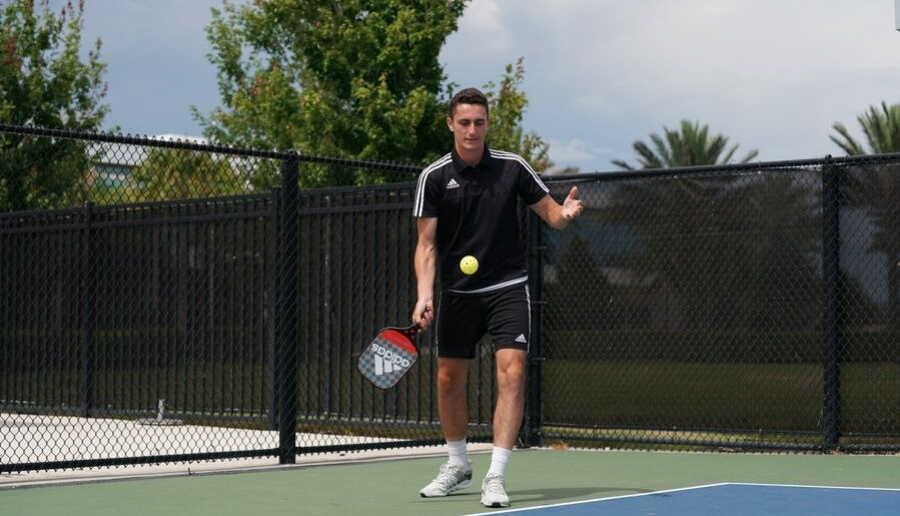
- Drop serve: Drop the ball from your hand (no toss or force), let it bounce, and hit. The volley-serve arm rules do not apply. You may add spin before the drop as long as you do not propel the ball.
Timing rules matter. You have 10 seconds to serve after the score call. According to current USA rules, at the start of a game only one player on the first serving team serves before a side out, which is why the first call is often 0-0-2.
Learning how to serve in pickleball starts with clean, legal habits. Build them now, and you avoid free points later.

Step-by-Step: How to Serve in Pickleball With Consistency
Use this simple routine. It keeps your mind clear and your body calm.
- Set your feet
- Stand behind the baseline.
- Front foot points to your target. Back foot is about shoulder width behind.
- Keep both feet still until you hit.
- Grip and paddle prep
- Use a relaxed continental grip, like you would hold a hammer.
- Keep the face slightly open for height and depth.
- Soft hands reduce mishits.
- Ball setup and release
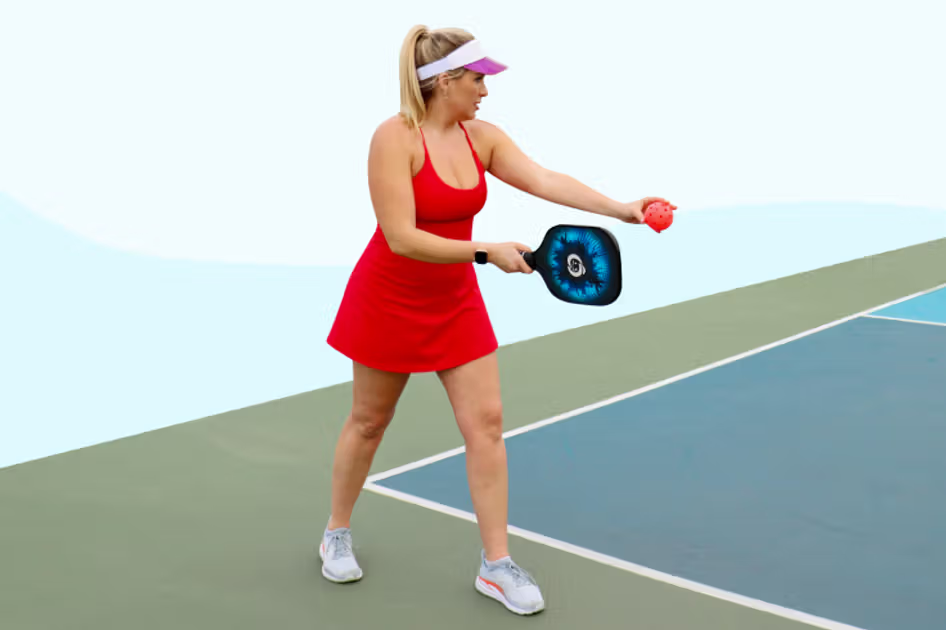
- For a volley serve, hold the ball out front at waist height and let it fall from your hand as you swing up to meet it.
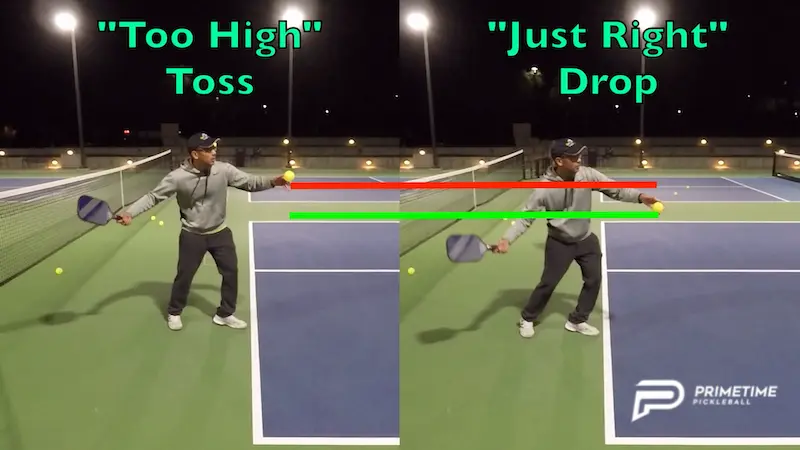
- For a drop serve, drop the ball from a natural height. Do not toss.
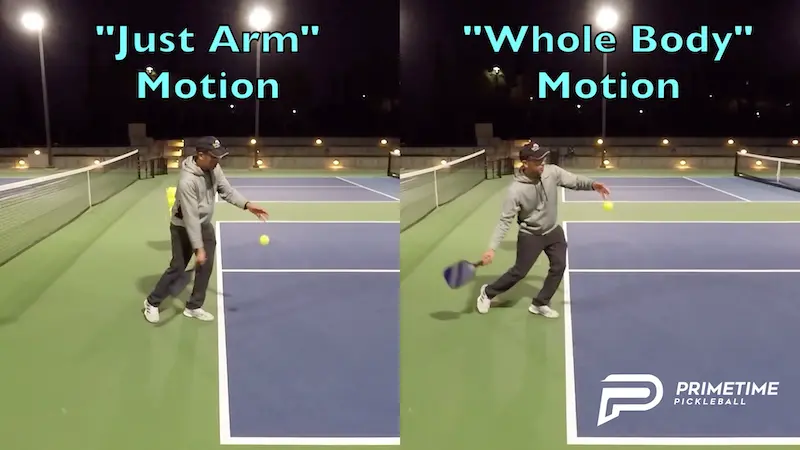
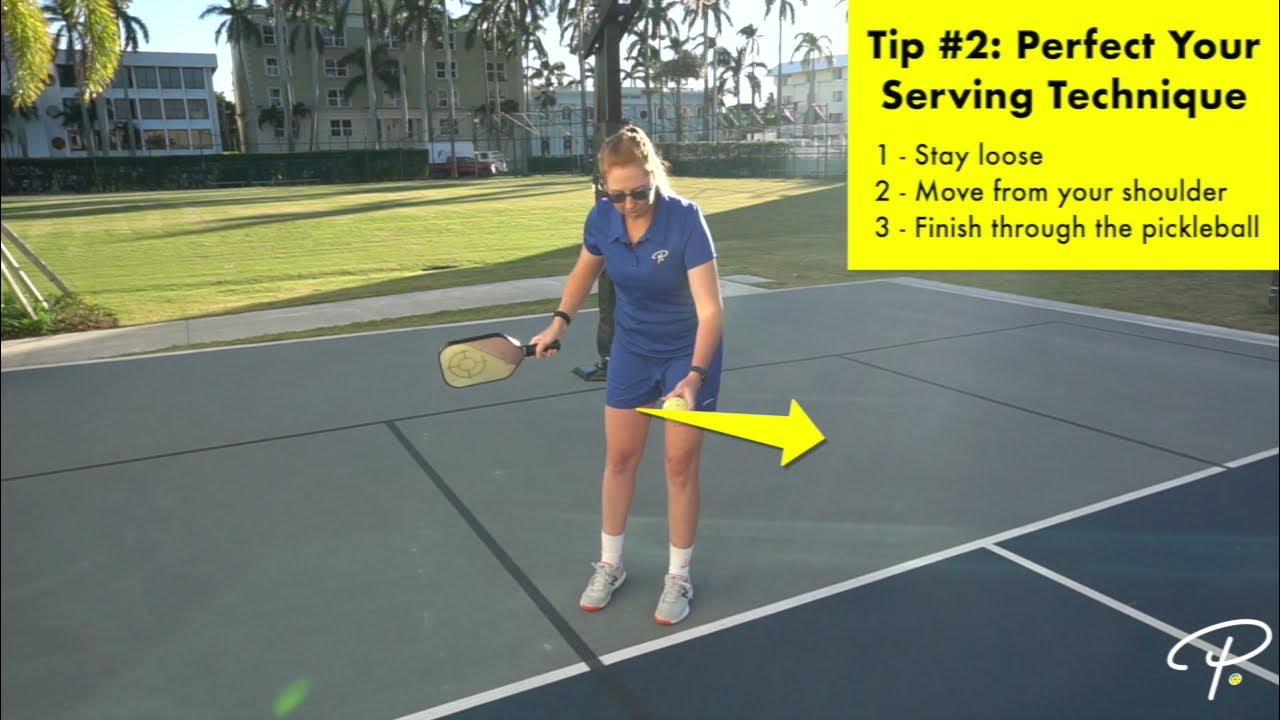
- Smooth upward swing
- Think of a gentle, rising brush. No chopping.
- Contact the ball in front of your front hip.
- Finish your swing toward your target.
- Aim and margins
- Aim three feet inside the sideline and deep. Deep serves push returns short.
- Pick one spot, breathe out during contact, and go.
- Simple mental cue
- Say “bounce-hit” in your head on drop serves or “ready-hit” on volley serves. It keeps rhythm tight.
When I teach how to serve in pickleball, this routine is day one. After two sessions, most players add 10–15 percent to their serve-in rate with this approach.
Serve Types: Volley Serve vs. Drop Serve
Both are legal. Pick one as your base, then add the other for match-ups.
Volley serve
- Best for pace and a lower contact point.
- Must move up, hit below the waist, and keep the paddle head below the wrist at contact.
- No pre-spin with the hand on the release.
- Great when you want a fast, flat ball deep to the backhand.
Drop serve
- Drop the ball, let it bounce, then hit.
- The upward-swing and contact-height rules do not apply here.
- You may add spin before the drop. Do not push the ball down.
- Ideal for control, height, and shape. Helps under pressure and on windy days.
My students who struggle with nerves often switch to the drop serve on big points. It keeps things simple and helps them focus on aim. That small change is a proven way to steady your game while learning how to serve in pickleball.
Placement, Strategy, and Patterns That Win Points
Depth first, then direction. Spin is the last layer. That order is key when learning how to serve in pickleball.
High-percentage targets
- Deep to the backhand: Most returns are weaker.
- Deep middle: Confuses partners in doubles.
- Body at the hip: Jams the returner and draws a pop-up.
Situational patterns
- Early in games: Two deep serves to each returner. Scout the weaker side.
- After a short return: Serve a little wider next time to stretch the court.
- Windy days: Use more shape. Aim higher with more margin.
Spin and speed
- Slice: Brush from high to low for a skid after the bounce. Great deep to backhand.
- Topspin: Low to high brush for dip into the box. Safer over the net on windy days.
- Pace: Add speed only if your depth stays strong.
Margin is your best friend. When I chased aces, I missed too much. When I pulled my aim in by a paddle width, my hold rate jumped. That is a small, smart tweak for anyone dialing in how to serve in pickleball.
Common Faults, Fixes, and Quick Drills
Common faults
- Foot on the line at contact. Fix: Place a towel behind the baseline and keep your toes behind it.
- Ball lands in the kitchen. Fix: Raise your contact point and aim three feet higher over the net.
- Tossing on a drop serve. Fix: Open your fingers and let the ball fall without push.
Quick drills
- 20-in-a-row: Serve 10 balls deep to each box without misses. If you miss, restart.
- Gate drill: Place two cones three feet inside the sideline. Serve through the gate.
- Box ladder: Aim to four corners in this order: deep middle, deep backhand, short wide, deep wide. Repeat.
Pressure drill
- Score to seven. You get one point for a made serve that pushes the returner back. Lose a point for a miss. This simulates match nerves and is great when you practice how to serve in pickleball alone.

Doubles and Singles Serving Rotation Explained
Doubles flow
- Start of game: Only one player on the first serving team gets to serve before a side out, which is why the call starts 0-0-2.
- Scoring call: Server score, receiver score, then server number (1 or 2).
- Position: When your team scores, the server switches sides. The score being even or odd tells you where the correct server should be.
- After a side out: The receiving team becomes the serving team. Both partners get a turn to serve in order.
Singles flow
- Serve from the right (even) when your score is even. Serve from the left (odd) when your score is odd.
- Switch sides after each point you win.
A quick check when you feel lost: Ask, “Is my score even?” If yes, and you began on the right, you should be on the right. This simple cue saves many points as you learn how to serve in pickleball the right way.
Gear and Setup for a Better Serve
Small gear changes can make a big difference in how to serve in pickleball with control.
Paddle traits
- Weight: 7.8–8.2 oz adds stability without fatiguing the arm.
- Face: A textured face helps with spin on drop serves.
- Shape: Elongated paddles add reach but may shrink the sweet spot.
Ball and courts
- Use the same ball brand you see in league play. Different balls bounce and fly differently.
- On slick courts, the drop serve gives more control and a higher launch.
Personal tips from coaching
- Use a light squeeze on the handle. A tight grip kills feel.
- Build a simple routine: bounce-bounce-breathe-serve. Keep it the same under pressure.
- Track your serve-in rate for each target. Data beats guesswork when you practice how to serve in pickleball.
Frequently Asked Questions of how to serve in pickleball
What is the legal way to serve in pickleball?
Use an underhand motion to the crosscourt box with feet behind the baseline. You can use a volley serve with upward motion and below-waist contact, or a drop serve after a bounce.
Can a serve hit the net and still be good?
Yes. There is no let serve in modern rules. If the ball clips the net and lands in the correct service box beyond the kitchen, it is live.
Is the kitchen line in or out on a serve?
Out. A serve that lands on the non-volley zone line is a fault. All other service lines are good.
Can I add spin with my hand on the serve?
Not on the volley serve release. You cannot impart spin with your hand there. On a drop serve, you may add spin before the drop as long as you do not propel the ball.
How many chances do I get to serve?
You get one serve attempt per rally. In doubles, each partner serves in turn after a side out, except at the very start of the game when only one person serves.
What is the best serve for beginners?
The drop serve. It is simple, repeatable, and great in wind. It helps you learn how to serve in pickleball with depth and control.
Do I have to wait after calling the score?
No, but you must call the full score before the serve motion. Then you have up to 10 seconds to serve.
Conclusion
Serving is the only shot you control from start to finish, so make it count. Nail the rules, use a simple routine, and favor depth with safe margins. Add the drop serve for control, the volley serve for pace, and target the backhand until they prove they can beat it. That is the fast track to mastering how to serve in pickleball.
Now it’s your turn. Pick one drill, set a goal of 20 deep serves in a row, and log your results. If this helped, subscribe for more guides, ask a question, or share your own serving tip in the comments.