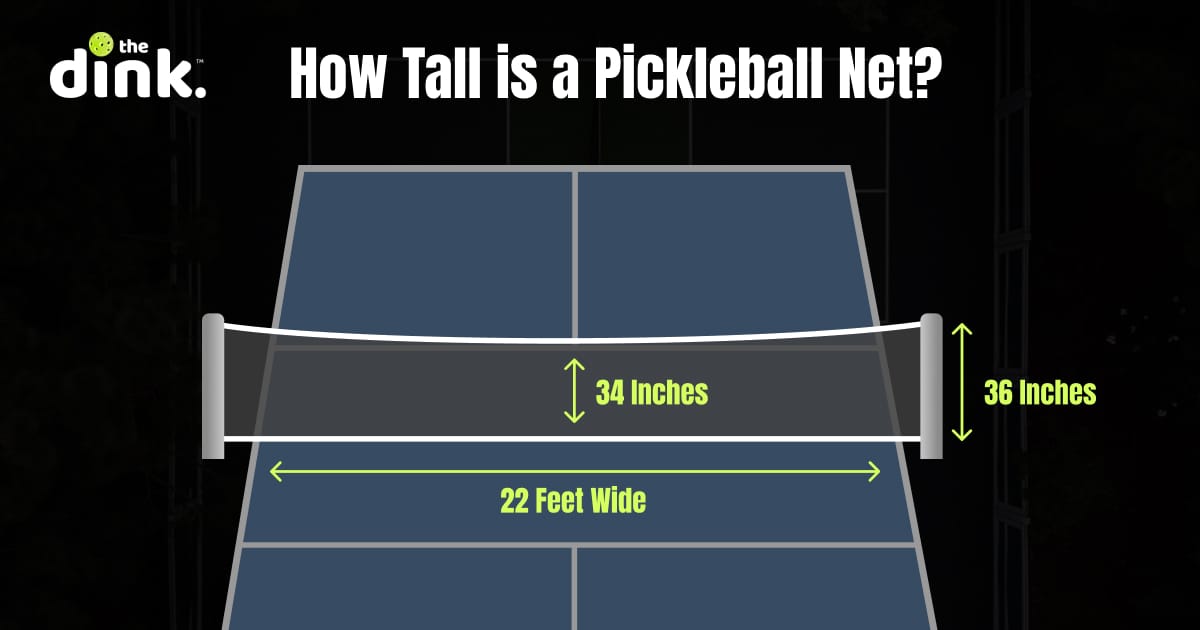
A pickleball net is 36 inches high at the sidelines and sags to 34 inches in the center. As a long-time pickleball player and coach, I've seen countless games won and lost over this seemingly minor detail. That two-inch drop in the middle isn't just a random rule; it's the secret ingredient that makes the game so strategic and fun. Getting the net height for pickleball right is fundamental, whether you're setting up a net in your driveway or competing in a tournament. In this guide, we'll dive deep into everything you need to know, from the official regulations to practical tips that will give you an edge on the court.
The Strategic Importance of the Two-Inch Drop
That subtle sag in the middle of the net is a defining feature of the sport. The official net height for pickleball is 36 inches at the posts and 34 inches at the center. This creates a lower "sweet spot" in the middle of the court, which directly influences game strategy. It encourages players to engage in dink rallies over the lowest part of the net, rewarding precision and patience over raw power.
From my experience, players who understand this nuance have a significant advantage. I remember a match where my opponent consistently aimed their cross-court dinks right over that 34-inch center mark. It forced me to move and react more, while their shots had a higher margin for error. The lower center makes aggressive drives down the middle riskier, as the ball has less clearance. This unique net height is a key reason why pickleball is a game of finesse and placement.
The design also makes the "third shot drop" a cornerstone of effective play. Hitting a soft, unattackable shot that lands in the opponent's non-volley zone is much easier over the 34-inch center than the 36-inch sidelines. Mastering your shots with the specific net height for pickleball in mind is crucial for advancing from a casual player to a competitive one.
Official Rules for Pickleball Net Height
To ensure fair play, the USA Pickleball Rulebook provides clear guidelines for net systems. It's not just about the height; it's about the entire setup. Understanding these official rules helps guarantee that you're playing the game as it was intended, whether you're on a permanent court or using a portable system.
Here are the key specifications you need to know:
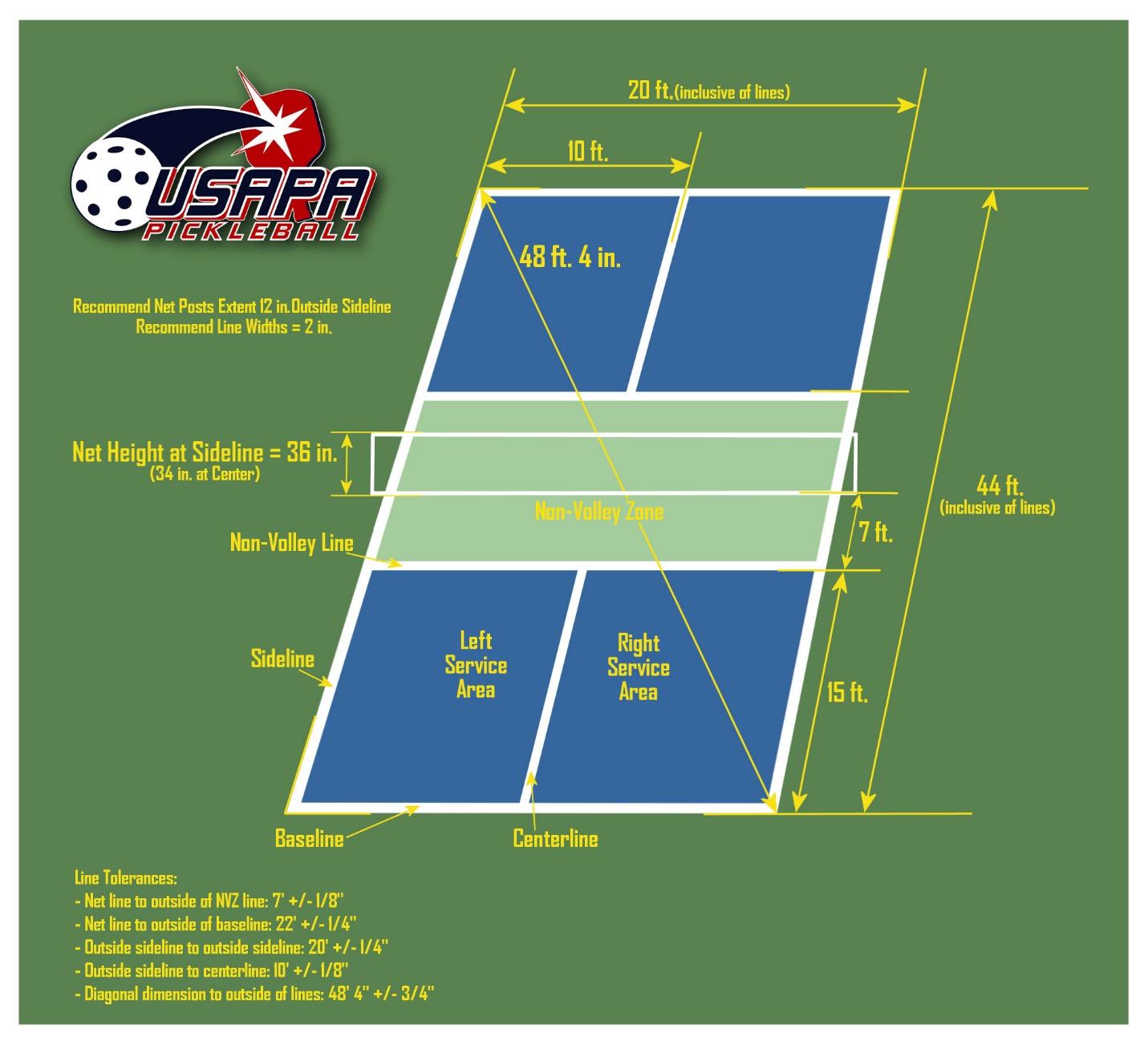
- The net should be 22 feet wide, extending across the entire court.
- The height at the sidelines must be 36 inches from the ground to the top of the net.
- The height at the exact center of the court must be 34 inches. A center strap is often used to help achieve and maintain this height.
- The net posts should be placed 22 feet apart, positioned just outside the court sidelines.
- The net itself should be made of a mesh material that won't allow a pickleball to pass through. The top should have a white cord or binding at least 2 inches wide.
Following these regulations ensures consistency from one court to another. When the net height for pickleball is correct, you can trust your muscle memory and focus entirely on your strategy and execution.

How to Properly Measure and Set Up Your Net
Setting up a pickleball net correctly is simple once you know the steps. An incorrect setup can throw off your entire game, so taking a minute to measure is always worth it. I keep a small tape measure in my pickleball bag for this very reason, as I've played on many courts where the net was sagging too low or pulled too tight.
Here is a simple process to ensure the net height for pickleball is perfect every time:
- Start at the sidelines. Use a measuring tape to measure the distance from the court surface to the top of the net, right next to the net post. Adjust the net tension until it measures exactly 36 inches. Do this for both sides.
- Move to the center of the court. Find the midpoint of the net, which should be 11 feet from each net post.
- Measure the height at the center. It should be 34 inches from the ground to the top of the net. If your net has a center strap, you can easily adjust it to achieve this height. If you have a portable net without a strap, you may need to adjust the overall tension to create the correct sag.
A common mistake is making the net too taut. People often think a tight net is better, but this eliminates the crucial two-inch drop in the middle. Always check these three points—both sidelines and the center—before you start playing. This simple habit ensures a fair and consistent playing experience.

Common Mistakes to Avoid with Net Height
Even with the best intentions, players and facility managers sometimes get the net height for pickleball wrong. Being able to spot these errors can save you from a frustrating game where shots just don't feel right. Over the years, I've seen a few recurring issues that are easy to fix once you know what to look for.
One of the most frequent problems is a "no-sag" net. This happens when the net is stretched too tightly across the posts, making it 36 inches high all the way across. This completely changes the game, making dinks and third-shot drops much more difficult. It effectively raises the bar for every shot, turning a game of touch into a power-focused battle.
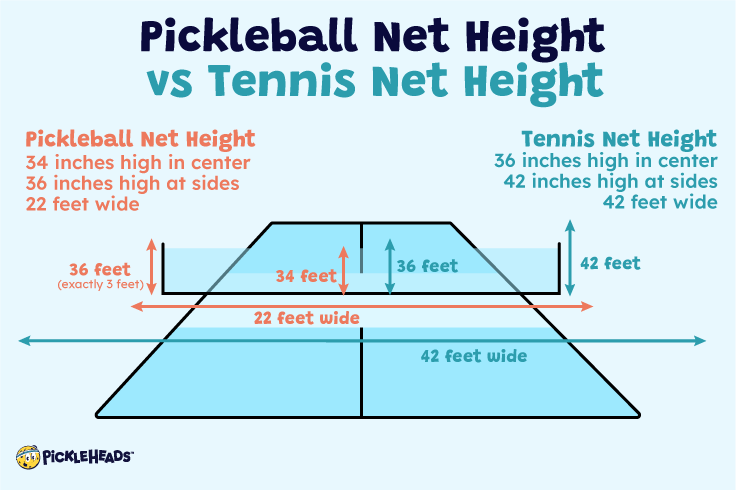
Another common mistake is an overly saggy net, where the center drops well below 34 inches. This makes the net less of a challenge and can lead to sloppy habits. Finally, watch out for nets on multi-purpose courts that are set to tennis height. A tennis net is 42 inches at the posts and 36 inches at the center—far too high for a proper pickleball game. Always take a moment to measure before you play.
Frequently Asked Questions of net height for pickleball
Is a pickleball net the same height as a tennis net?
No, they are different. A pickleball net is 36 inches high at the sidelines and 34 inches in the center, while a tennis net is higher, measuring 42 inches at the posts and 36 inches at the center.
What happens if the net is too high or too low?
If the net is too high, it makes dinking and drops much harder, favoring a power game. If it's too low, it reduces the challenge and can lead to longer, less strategic rallies.
How do I keep the center of the net at 34 inches?
Most permanent nets have a center strap that you can adjust to pull the net down to the correct 34-inch height. For portable nets, you adjust the overall tension on the side straps to create the proper sag.
Can I use a temporary net for official play?
Yes, many tournaments use high-quality portable net systems. As long as the portable net can be set to the official dimensions, including the correct net height for pickleball, it is acceptable for sanctioned play.
Does the net height for pickleball differ for singles and doubles?
No, the net height remains the same for both singles and doubles play. The dimensions of 36 inches at the posts and 34 inches at the center apply to all forms of the game.
Conclusion
Understanding the correct net height for pickleball is more than just a technicality; it's fundamental to the game's strategy and spirit. The 36-inch height at the sidelines and the 34-inch drop at the center are what create the dynamic dink rallies and strategic third-shot drops that we all love. Taking a moment to ensure your net is set up correctly guarantees a fair, consistent, and enjoyable experience for everyone on the court.
Next time you step onto the court, take out a measuring tape and check the net. You might be surprised at what you find. Encourage your local club or facility to maintain the proper height, and you'll help preserve the integrity of this fantastic sport. Now, go play with confidence, knowing exactly how high that net should be