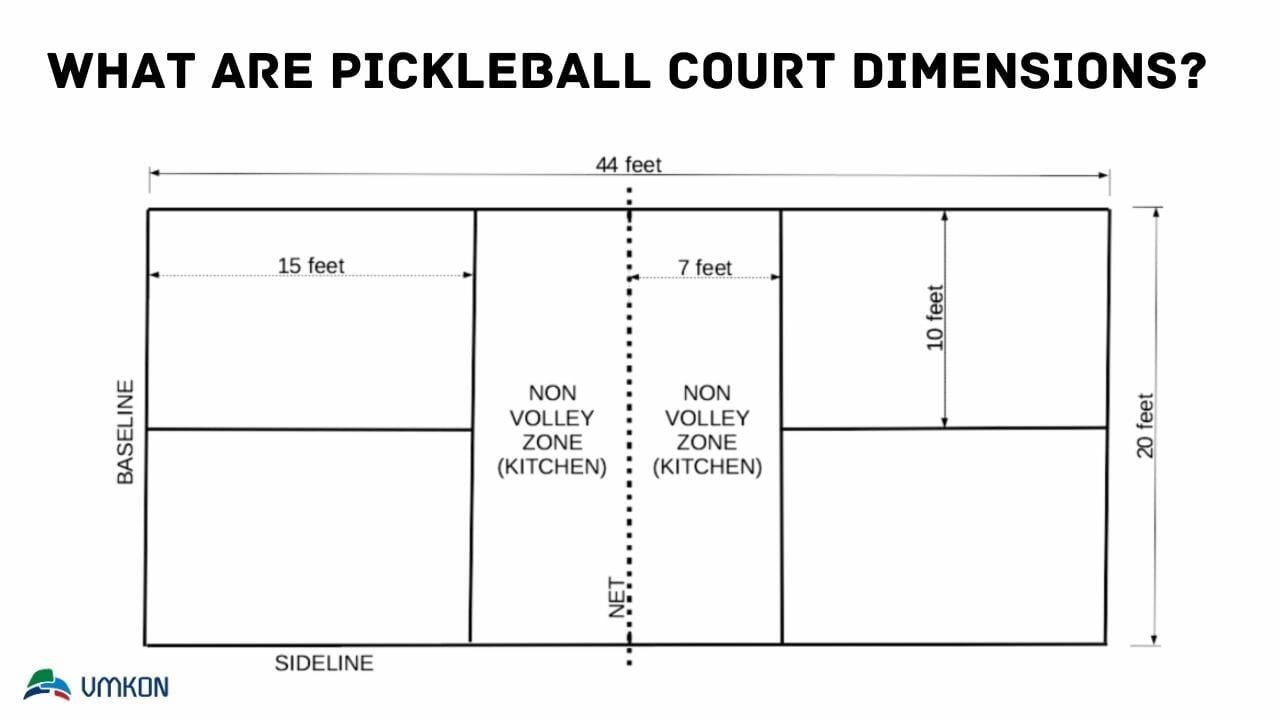
A standard pickle ball field size is 20 feet by 44 feet for singles or doubles play.
I’ve measured, set up, and played on dozens of courts, so I know how important the right pickle ball field size is for play, safety, and fun. This guide explains official dimensions, space recommendations, net height, line rules, building tips, and common mistakes so you can plan or mark a court with confidence. Read on to get clear, practical guidance backed by experience and easy-to-follow steps.
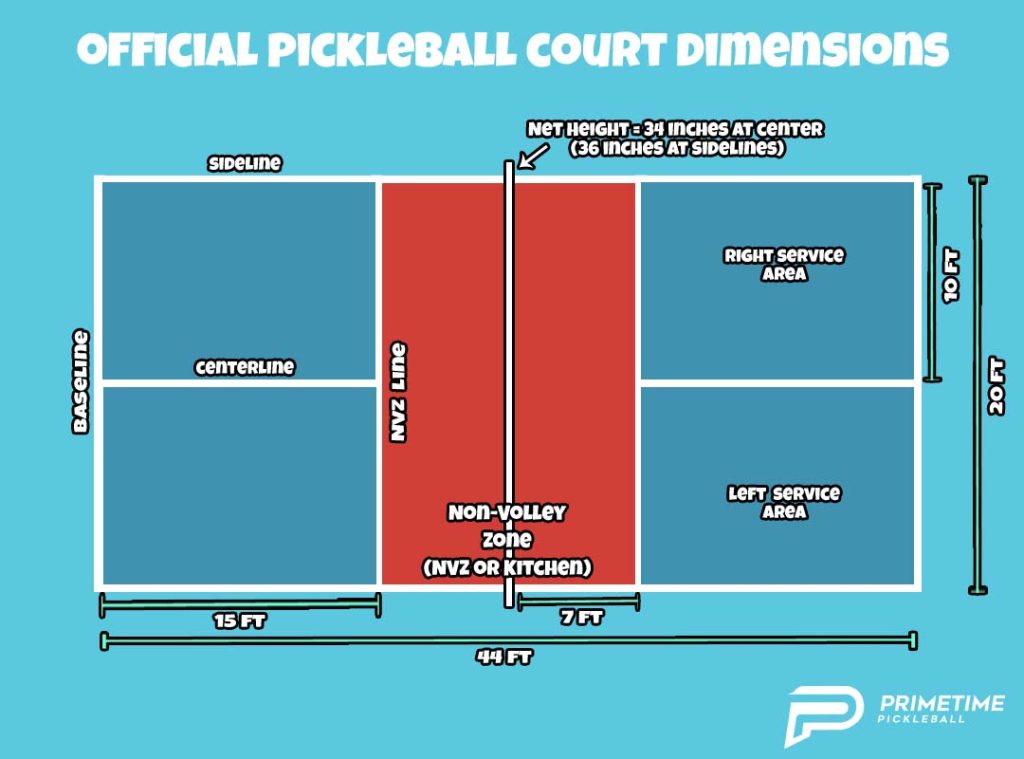
Official pickle ball field size and court layout
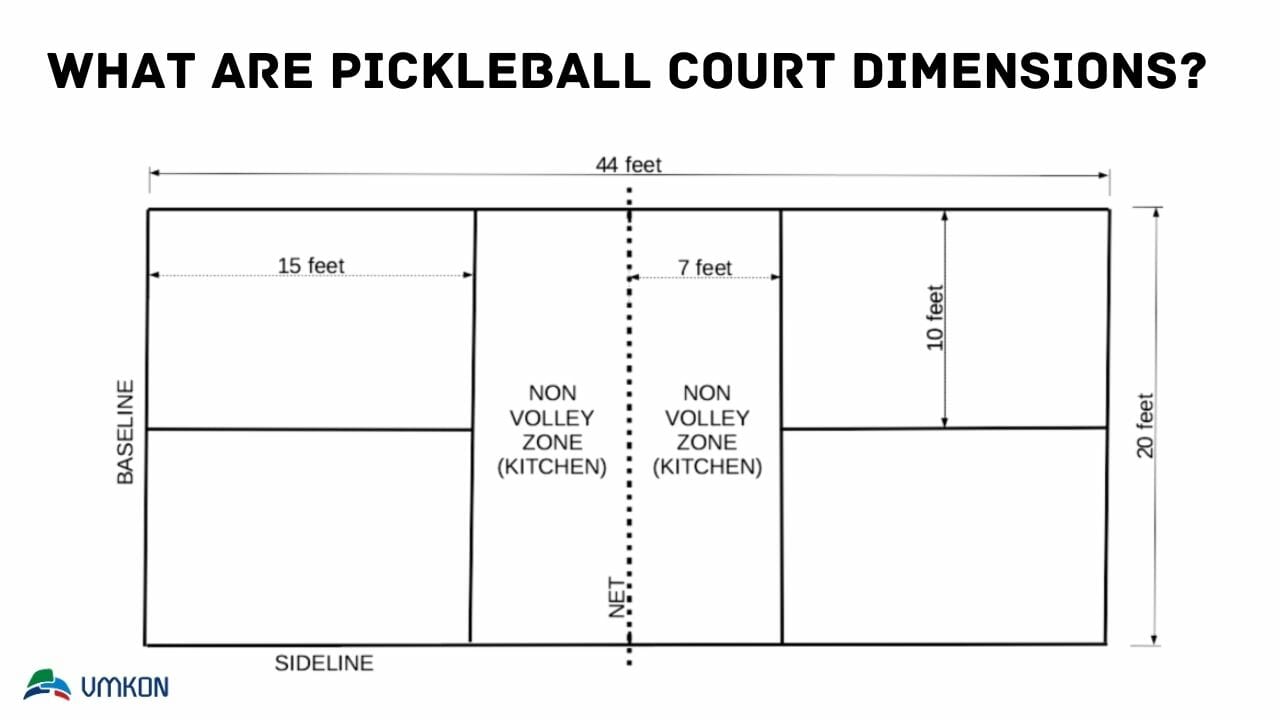
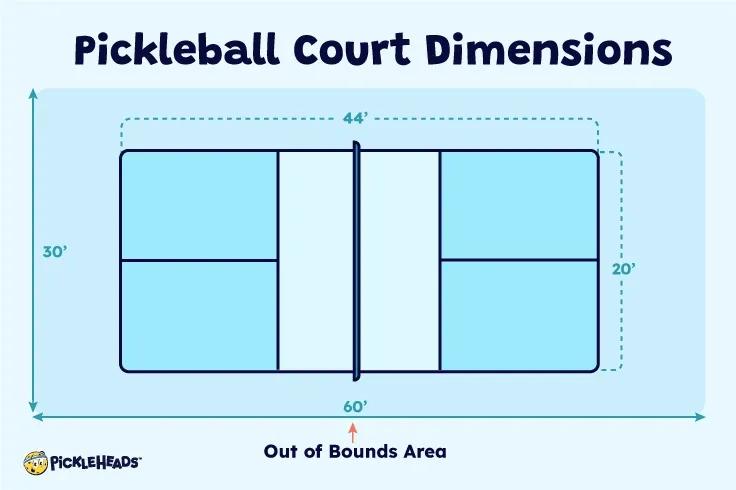
The official pickle ball field size for play is 20 feet wide and 44 feet long. This is the same for singles and doubles games.
Court lines are part of the playing area. The outer edges mark the playing boundaries. The net divides the court in half down the middle.
A few quick, precise numbers to remember:
- Court width: 20 feet.
- Court length: 44 feet.
- Non-volley zone depth: 7 feet from the net on each side.
- Service areas: Two on each side separated by the centerline.
I’ve chalked and taped many courts with these exact numbers. Using the correct pickle ball field size keeps play fair and reduces disputes about in/out calls.

Lines, zones, and markings explained
Understanding lines matters more than many players think. Each line has a purpose and a story behind it.
Key line rules and zones:
- Baselines: 44 feet apart. These mark the back boundary on each end.
- Sidelines: 20 feet apart. They mark the side boundaries.
- Non-volley zone: 7 feet from the net on both sides. No volleying while standing in this zone.
- Centerline: Splits the service area on each side into left and right service courts.
- Line width: Official lines are 2 inches wide. They are considered in play.
When I first played on a court with faded lines, the game felt slower and calls were messy. Fresh, bright lines improve the feel of the game and speed up honest line decisions.
Net height and equipment specifics
Net height influences play and strategy. The official pickle ball field size setup includes a precise net height.
Important net specs:
- Net height at sidelines: 36 inches.
- Net height at center: 34 inches.
- Net posts usually sit outside the court near the sideline.
Pick a solid, adjustable net and stable posts when you build a court. I recommend measuring the height in several spots after installation. A net slightly too high or low changes how players hit dinks and volleys.

Recommended surrounding space and clearances
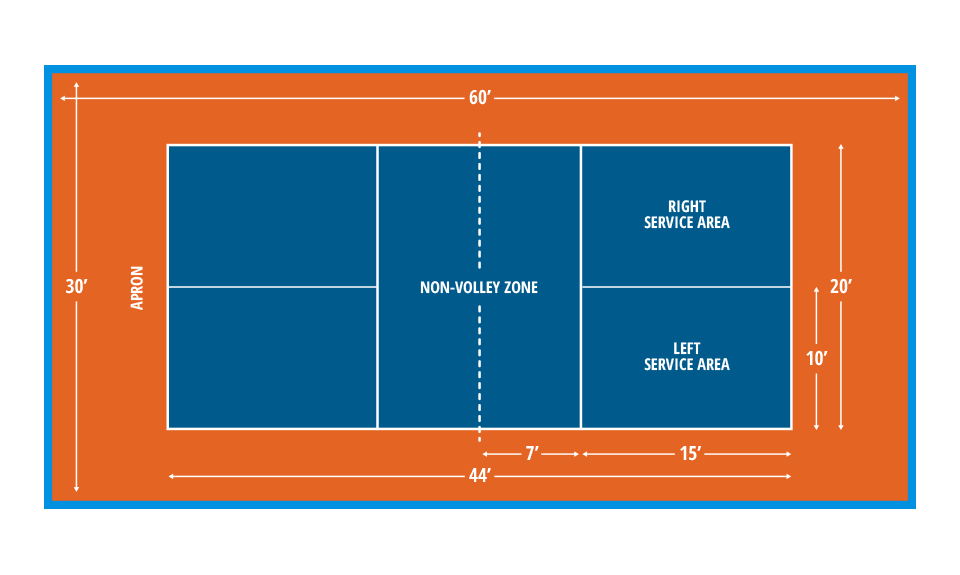
The 20×44 court is the painted play area. You also need open space around it for safe, comfortable play.
Recommended clearances:
- Minimum overall play area for casual courts: about 30 feet wide by 60 feet long.
- Comfortable tournament area: at least 30 feet by 60 feet, but many clubs aim for 34 feet by 64 feet.
- Ceiling height for indoor courts: at least 18 feet to avoid interference on lobs.
- Side clearances: aim for 6 to 10 feet on each side beyond sidelines.
- End clearances: aim for 10 to 14 feet behind baselines.
When I set up a backyard court, I learned the hard way that 6 feet behind a baseline is tight. Players ran into fences. If you can, give more room than the minimum.

Indoor versus outdoor surfaces and court materials
Surface affects traction, ball bounce, and injuries. The pickle ball field size stays the same, but the feel changes by surface.
Common surfaces and their traits:
- Acrylic over asphalt or concrete: durable, common for outdoor courts, medium bounce.
- Sport tiles: modular, good shock absorption, popular indoors and outdoors.
- Concrete: cheap base, can be hard on joints unless resurfaced.
- Wood (indoor gyms): smooth, fast, consistent bounce.
For outdoor courts, pick colors that contrast with the ball. I’ve resurfaced courts twice and found that acrylic coatings extend life and lower the noise of play.

How to build and mark a pickle ball court (step-by-step)
A clear plan saves time. Follow these steps for a clean setup that matches the official pickle ball field size.
Steps:
- Measure and mark a 20×44 foot rectangle for the court lines.
- Add the 7-foot non-volley zone from the net on both sides.
- Mark the centerline to split the service courts.
- Paint lines at 2 inches wide for all boundaries and zones.
- Install posts outside the sideline and set net to 36/34 inches.
- Check all measurements twice before final paint.
When I marked my first court, I used string lines and a chalk line for accuracy. A tape measure plus a helper makes this fast and precise.
Common mistakes and practical tips
Avoid small mistakes that ruin play. Here are common errors and how to fix them.
Mistakes to avoid:
- Under-sizing the total play area and crowding players.
- Painting lines too wide or too faint.
- Installing nets at wrong height.
- Using slick or uneven surface materials.
- Ignoring overhead clearance for indoor courts.
Practical tips I use:
- Use painter’s tape to mask lines before painting.
- Recheck the 20×44 feet measurements at diagonals for squareness.
- Choose 2-inch bright lines for visibility.
- Allow painted surfaces to cure fully before play.
Costs, maintenance, and upgrades
Budgeting helps you plan properly. Costs vary with scope and materials.
Typical costs and maintenance needs:
- Basic net and posts: low to moderate cost.
- Resurfacing an old court with acrylic: moderate expense.
- Full court build (base, surfacing, net): higher cost depending on site work.
- Maintenance: sweep often, repair cracks, repaint lines every few years.
I’ve seen community groups save by resurfacing rather than rebuilding. Regular small repairs prevent big bills later.
Frequently Asked Questions of pickle ball field size
What is the exact size of a pickle ball field size for standard play?
The official pickle ball field size is 20 feet wide by 44 feet long. This size applies to both singles and doubles play.
How far is the non-volley zone inside the pickle ball field size?
The non-volley zone extends 7 feet from the net on each side. Players cannot volley while standing inside this zone.
How high should the net be for a proper pickle ball field size setup?
Set the net at 36 inches at the sidelines and 34 inches at the center. Posts sit just outside the sideline to hold the net.
Do I need extra room around the 20×44 pickle ball field size?
Yes. Aim for at least 30×60 feet total area for casual play and more for tournaments. Extra room improves safety and comfort.
Are pickle ball field size lines a specific width?
Official lines are 2 inches wide. Clean, bright lines help players see boundaries clearly.
Can I use an existing tennis court for a pickle ball field size?
Yes. Tennis courts can be striped to fit pickle ball field size markings. Many clubs overlay multiple pickle ball courts on one tennis court.
Conclusion
The right pickle ball field size—20 by 44 feet—paired with correct lines, net height, and surrounding clearance makes play safer and more fun. Use the tips here to plan, paint, or build a court that performs well and lasts. Try marking a trial court with tape first, then paint when you feel confident. If you found this guide useful, leave a comment, share your court story, or subscribe for more practical court-building tips.