Indoor and outdoor pickleball ball types differ mainly by hole count, hardness, and court use.
I’ve played and tested dozens of pickleball ball types over several years, coaching new players and competing in local events. This guide breaks down every major pickleball ball types category, explains materials and construction, shares real-world tips, and helps you pick the best ball for your skill, surface, and weather.
Types of Pickleball Balls
There are a few core pickleball ball types players should know. Each type suits different courts, climates, and play styles. Below I describe the common categories and how they feel on the court.
Indoor balls
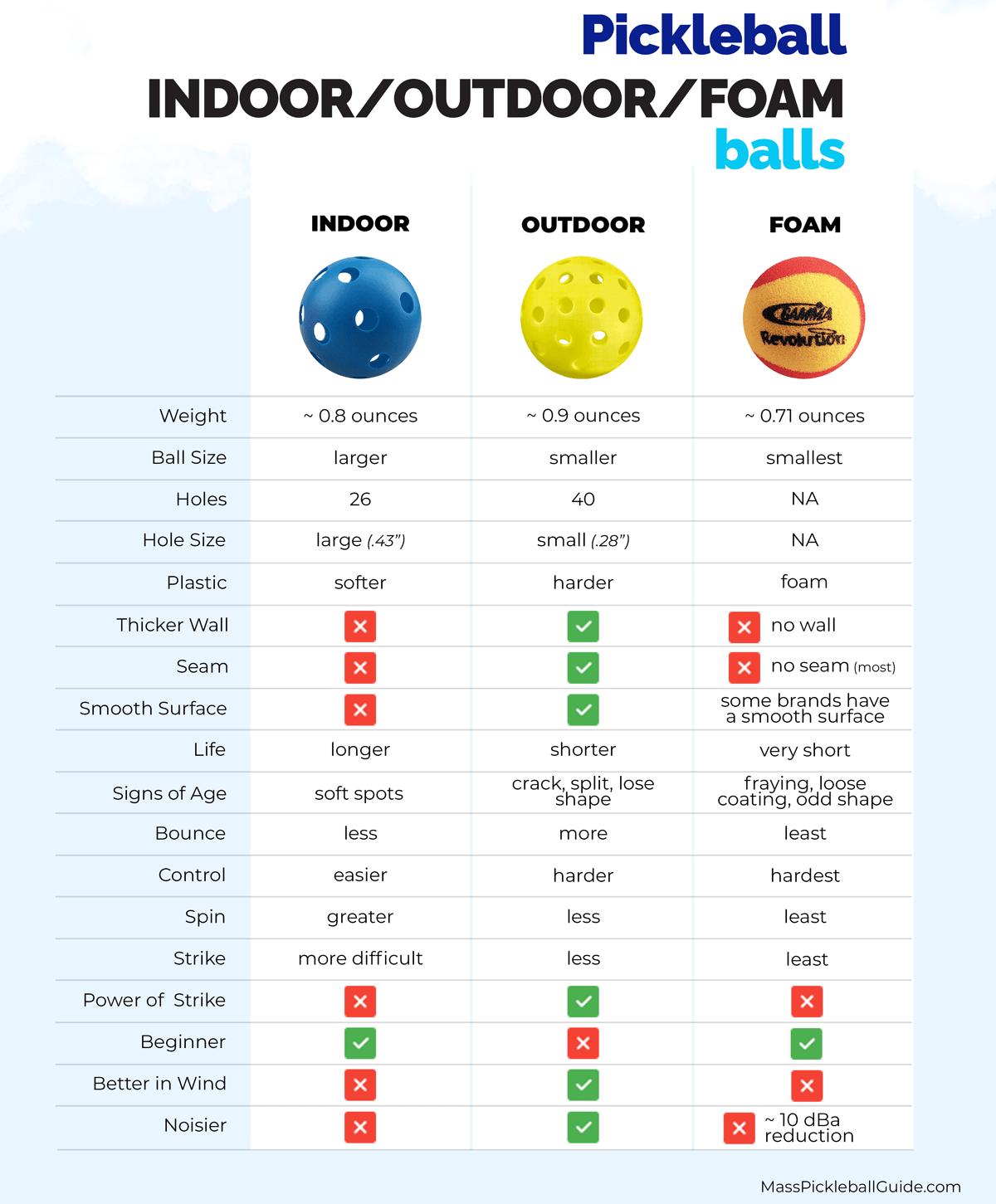
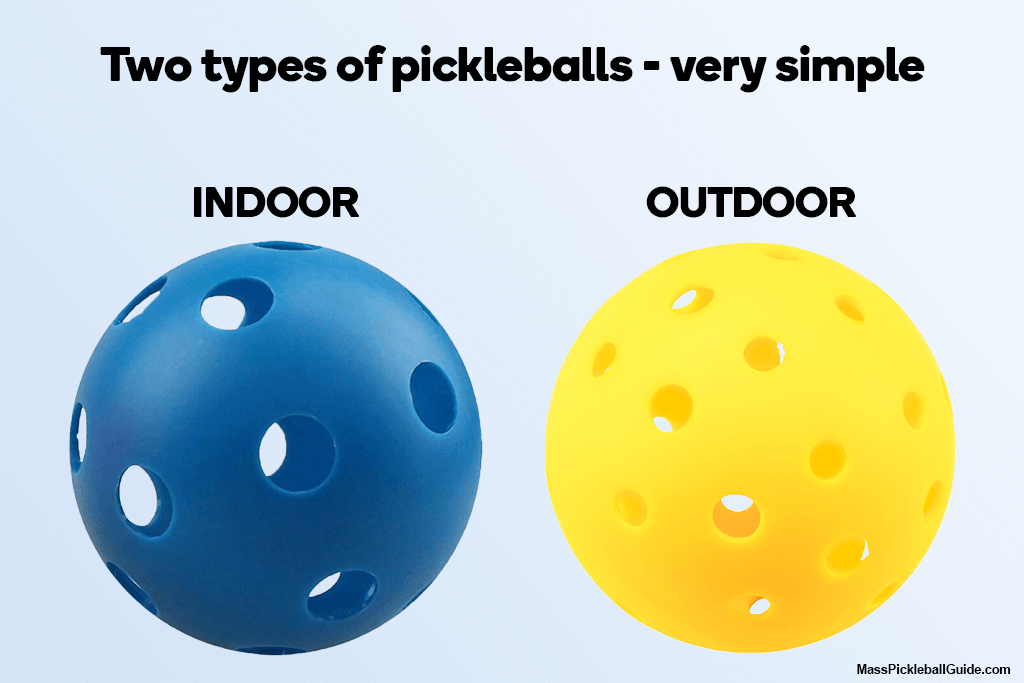
Indoor balls are softer and more responsive. They usually have larger holes and give a livelier bounce. Indoor pickleball ball types are ideal for gym floors and controlled settings.
Outdoor balls
Outdoor balls are firmer and built to last on rough surfaces. They usually have more and smaller holes to resist wind. Outdoor pickleball ball types are best for asphalt, concrete, and windy days.
Tournament or USAPA-approved balls
These balls meet official size, weight, and performance standards for tournament play. Many players favor approved pickleball ball types for consistent, predictable play. If you plan to compete, choose approved models.
Recreational and practice balls
Recreational balls may be softer, cheaper, or less consistent. Practice pickleball ball types are great for drills, large groups, and learning. They help save money while keeping play fun.
Specialty balls
Some pickleball ball types focus on durability, low bounce, or extra control. Others are designed for cold weather or windy conditions. Specialty balls fill niche needs for specific players.

Material and Construction
Most pickleball ball types are made from molded polymer plastics. The manufacturing method affects feel and longevity. Here are key construction details to watch.
- Hole count and pattern. Outdoor balls often have 40 smaller holes. Indoor balls commonly use 26 larger holes. Hole design changes aerodynamics and bounce.
- Seam vs seamless. Some pickleball ball types have seams from two-piece molds. Seamless balls aim to reduce cracking and improve consistency.
- Hardness and wall thickness. Thicker walls give durability but reduce feel. Softer walls offer more touch and control.
Knowing how a ball is made helps you predict its play and lifespan. I prefer seamless, mid-hardness balls for steady performance.
How to Choose the Right Ball
Choosing among pickleball ball types depends on a few clear factors. Match the ball to your surface, skill, weather, and budget.
- Court surface
- Indoor courts: pick indoor pickleball ball types for better control and less wear.
- Outdoor courts: pick outdoor pickleball ball types for durability and wind resistance.
- Skill level
- Beginners: choose durable, slower balls for longer rallies and easier learning.
- Advanced players: choose consistent, approved pickleball ball types for accurate shots and spin.
- Weather and wind
- Windy days: pick heavier or more holes to reduce drift among pickleball ball types.
- Cold: firmer balls may feel harder; test in conditions before a match.
- Budget and frequency
- Daily play: invest in high-durability pickleball ball types to save money long term.
- Casual play: lower-cost recreational balls will do fine.
From my experience, switching ball types to match weather and court improves consistency and reduces frustration.

Durability and Lifespan
Durability varies widely across pickleball ball types. Indoor balls wear faster on rough surfaces. Outdoor balls last longer but still break down.
- Lifespan estimates
- Outdoor recreational play: a few weeks to several months depending on frequency.
- Indoor organized play: indoor balls can last less time if played on rough courts.
- Signs of wear
- Cracks or split seams
- Misshapen roundness
- Bounce inconsistent or too soft
- Cost vs life trade-off
- Cheaper balls cost less but need frequent replacement.
- Higher-quality pickleball ball types may cost more upfront but save money over months of play.
I learned to rotate balls and retire any with cracks. That keeps play safe and fair.

Maintenance and Storage
Simple care extends the life of your pickleball ball types. Treat your balls right to get more consistent play.
- Store in a cool, dry place. Avoid direct sun and hot cars.
- Keep them clean. Wipe off grit and sweat to reduce surface wear.
- Rotate balls. Use sets in rotation to even out wear.
- Inspect before play. Remove cracked or misshapen balls to prevent injury and inconsistent rallies.
These small habits lengthened my favorite balls’ useful life by weeks.
Common Myths and Mistakes
There are myths around pickleball ball types that can lead to bad choices. Here are a few to avoid.
- Myth: All pickleball ball types are the same. Reality: Construction and hole design change play a lot.
- Myth: More expensive always means better. Reality: Price helps but match the ball to your need.
- Mistake: Using indoor balls outdoors. This speeds wear and worsens play.
- Mistake: Ignoring wind. Picking the wrong pickleball ball types for wind leads to poor rallies.
Recognizing these helps you pick wisely and enjoy the game more.
Frequently Asked Questions of pickleball ball types
What is the difference between indoor and outdoor pickleball ball types?
Indoor balls are softer with larger holes and give a livelier bounce. Outdoor balls are firmer, have smaller holes, and are made to resist wind and rough courts.
Are all pickleball ball types tournament-legal?
No. Tournament-legal pickleball ball types meet specific size, weight, and bounce standards. Always check league rules before buying.
How long do pickleball ball types usually last?
Lifespan depends on use and surface. Outdoor practice balls last weeks to months; higher-quality tournament balls can last longer with rotation and care.
Can I use outdoor pickleball ball types indoors?
You can, but outdoor pickleball ball types may be louder and feel harder on gym floors. They also wear gym floors differently than indoor balls.
How should I store my pickleball ball types?
Store balls in a cool, dry place away from direct sun and heat. Rotate sets and clean them occasionally to extend life.
Do hole counts really matter among pickleball ball types?
Yes. Hole count and size affect aerodynamics and bounce. Different hole patterns change how the ball handles wind and spin.
Conclusion
Pickleball ball types matter. Choosing the right type—indoor, outdoor, tournament, or practice—improves play, lowers costs, and reduces frustration. Use court type, skill level, weather, and budget to guide your choice. Try a few options, rotate sets, and store balls properly to find what feels best.
Take action: test one new pickleball ball types at your next session, note the feel, and share your experience in the comments or with your local club.