Indoor balls are softer with fewer, larger holes; outdoor balls are harder with more, smaller holes.
If you play on both gym floors and blacktop, this guide on pickleball balls indoor vs outdoor will save you time, money, and frustration. I have coached league and rec players for years, and I have tested dozens of models in real games and drills. Below, I break down how construction, bounce, spin, and durability change between indoor and outdoor balls, when to switch, and how to pick the right ball for your court and climate.
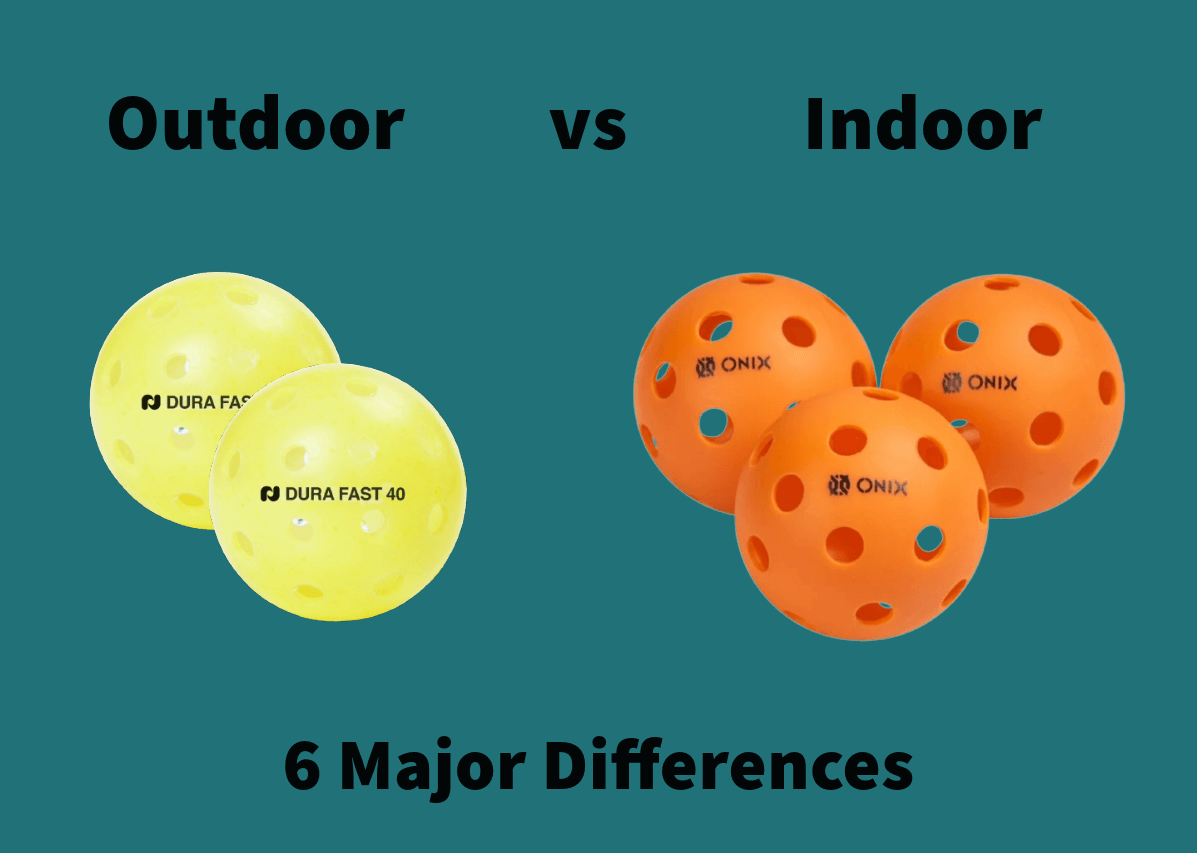
Indoor vs outdoor at a glance
Pickleball balls indoor vs outdoor differ in more than hole counts. They feel different off the paddle. They move in the air in very different ways.
Key differences you will notice fast:
- Hole pattern. Indoor balls use about 26 big holes. Outdoor balls use about 40 small holes.
- Hardness. Indoor balls are softer and easier on the hand. Outdoor balls are harder and faster.
- Durability. Indoor balls last longer. Outdoor balls crack sooner, especially in cold weather.
- Wind. Indoor balls drift less in the gym. Outdoor balls resist wind better due to smaller holes.
- Sound. Indoor balls sound lower and softer. Outdoor balls are louder and sharper.
- Control. Indoor balls grab the paddle and sit on the strings a touch longer. Outdoor balls pop off faster.
Why this matters in real play:
- Dinks and resets feel softer indoors. Drives and volleys feel hotter outdoors.
- Spin bites more with indoor balls at lower speed. Outdoor balls hold a line better at pace.
- Footwork and timing shift. Many players swing too hard when they switch courts.
If you coach, teach, or switch sites often, bookmark this guide to pickleball balls indoor vs outdoor. It will help you pick a ball that matches the day, the court, and your goals.
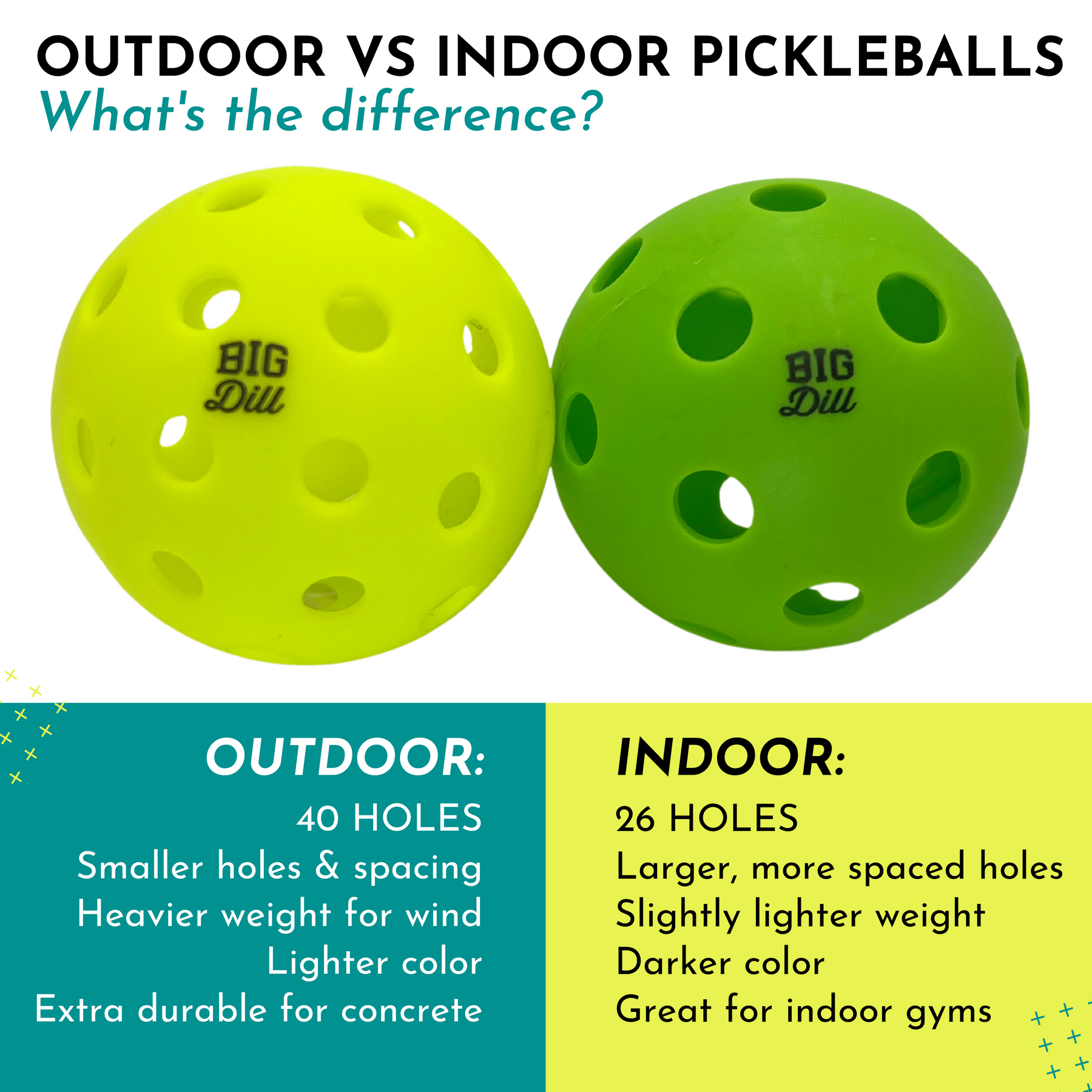
How pickleball balls are built
The shell and hole pattern set the tone. Most balls use a hard plastic like PE or PP. The seam can be a single-piece mold or a welded two-piece. Seam quality affects roundness and crack risk.
Standards to know, based on USA Pickleball guidance:
- Diameter. About 2.87 to 2.97 inches.
- Weight. About 0.78 to 0.935 ounces.
- Bounce. About 30 to 34 inches when dropped from a set height on a test plate.
- Holes. Between 26 and 40 round holes, with size and pattern consistent.
Typical designs you will see:
- Indoor. 26 larger holes, softer shell, more grab on wood or tile. Great for control and rallies.
- Outdoor. 40 smaller holes, harder shell, truer flight in wind on concrete or asphalt. Great for speed and pace.
- Hybrid. Some brands blend hole sizes or hardness. These can help mixed sites or covered courts.
From my own bin tests, single-piece molded outdoor balls hold roundness better, but they can crack across the seam line in cold air. Indoor balls dent and spring back more often than they crack.
Keep the phrase pickleball balls indoor vs outdoor in mind as you shop. The build tells you how it will feel before your first serve.
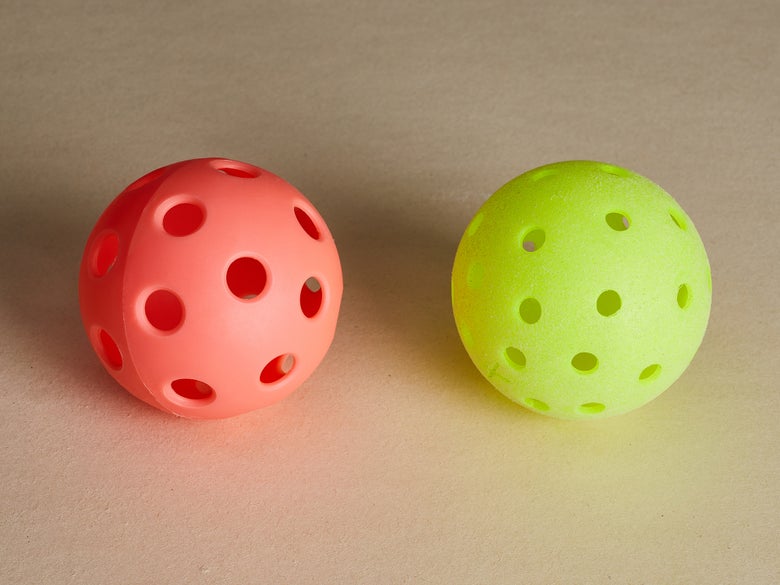
Performance differences you feel on court
You can read specs all day. What matters is how it plays. Here is how pickleball balls indoor vs outdoor show up in rallies.
Ball speed and pop:
- Outdoor balls jump off the paddle. You get free pace, less dwell time.
- Indoor balls feel cushioned. You add your own speed.
Spin and control:
- Indoor balls take spin well at low to mid speed. Topspin dips sooner.
- Outdoor balls shine at drive speed. They hold the aim line better into wind.
Bounce and skid:
- On a gym floor, indoor balls bounce clean and true. Less skid, more grip.
- On asphalt, outdoor balls stay predictable and do not float.
Comfort and feel:
- Indoor balls are gentle on hands and joints. Good for long rec days.
- Outdoor balls are firmer and louder. Good for match play and power practice.
From league nights, my students often miss wide when they switch from indoor to outdoor. The fix is simple. Soften the grip a notch, shorten your swing, and aim smaller targets until your brain adapts.
Mastering pickleball balls indoor vs outdoor is about timing, not talent. Give yourself five minutes of soft dinks, then drives, then volleys. Your touch will come back fast.

What the standards and testing tell us
Sanctioned balls must pass size, weight, bounce, and hardness tests. Independent lab checks and referee checks confirm this. The main theme is stable flight and fair bounce.
Trends you can trust:
- Outdoor balls trend harder on the Shore D scale. Harder shells boost speed and cut wind wobble.
- Indoor balls trend softer with larger perforations. Softer shells boost feel and reduce sound.
- Roundness is critical. A slightly out-of-round ball wobbles and dies on the bounce.
- Cold lowers impact strength. Outdoor balls crack faster near freezing temperatures.
My practical test rig is simple. I drop balls from a set height, note bounce, then feed 100 machine hits at drive pace. Indoor balls scuff but keep shape. Outdoor balls that are too brittle fail at the seam line. Approved lists help, but your court temp matters more.
If you only remember one thing about pickleball balls indoor vs outdoor, remember this: match the ball hardness and hole size to your surface and weather first. Brand comes second.

Choosing the right ball for your court and climate
Use this quick path to pick the best ball today.
Court surface:
- Wood or tile gym. Pick indoor balls with 26 large holes.
- Concrete or asphalt. Pick outdoor balls with 40 small holes.
- Covered or shaded courts with little wind. Either can work. Test both.
Temperature:
- Hot days above 85°F. Outdoor balls can get soft. Choose firmer outdoor models.
- Cold days below 50°F. Outdoor balls can crack. Warm them in your bag and rotate often.
- Stable indoor temps. Most indoor balls play the same all year.
Player level and goals:
- Beginners. Indoor balls help control and longer rallies.
- Power hitters. Outdoor balls reward pace and serve pressure.
- Mixed groups. Try a hybrid ball or set days for each style.
If your club hosts both formats, stock both types. Put clear labels on buckets. Your players will feel the respect. It also helps coaches plan drills around pickleball balls indoor vs outdoor.

Care, storage, and lifespan
Treat balls well and they last longer. This keeps play fair and saves money.
Smart habits:
- Store in a cool, dry bag. Avoid hot trunks and freezing sheds.
- Rotate balls every few games. Spread the wear.
- Warm outdoor balls in your pocket on cold days before first serve.
- Retire any ball that wobbles, has a crack, or sounds dull.
Typical lifespan:
- Indoor balls. Weeks to months of rec play, thanks to softer shells and kinder floors.
- Outdoor balls. Several sessions to a few weeks, shorter in cold or on rough courts.
I mark dates on a few test balls with a fine pen. It shows real use time. This simple trick taught me when to order new stock. It also made our comparisons of pickleball balls indoor vs outdoor much clearer.

Rules, sanctions, and tournament picks
If you play leagues or tournaments, check the approved ball list. Most events name a model in the flyer. This ensures fair bounce, color, and visibility.
What to check:
- USA Pickleball approved status for the model and color.
- Ball color for your background. Neon or optic yellow shows well outdoors.
- Replacement policy. Many events swap balls each match or after cracks.
- Temperature notes from the director. Cold days often shift the chosen ball.
Bring a sleeve of the event ball to practice a week ahead. This single step makes pickleball balls indoor vs outdoor changes feel easy on game day.

Safety, noise, and community
Hard impacts add noise. Outdoor balls are sharper and louder. This matters on neighborhood courts.
Simple steps:
- Use indoor balls for clinics near homes when allowed.
- Choose quieter paddles and softer balls at early hours.
- Set a pace rule for warmups. Soft hands, soft sound.
Hand and elbow comfort:
- If your arm is sore, try an indoor ball for drills, even outside on calm days.
- Shorten warmup drives with outdoor balls to protect joints in cold air.
Pickleball balls indoor vs outdoor are not only about speed and spin. They are also about being a good neighbor and staying healthy for the long run.

Budget and buying guide
You do not have to overspend. Think in bulk and match the ball to the season.
Smart buys:
- Bulk sleeves for club tubs save money per ball.
- Indoor balls often cost a bit less and last longer per dollar.
- Outdoor balls cost a bit more and break faster in cold. Plan for extras in winter.
- Keep a small box of practice-only balls for drills and feeding.
Typical price range:
- Indoor balls. About $1.50 to $2.50 each in bulk.
- Outdoor balls. About $2.00 to $3.50 each in bulk.
If your crew plays both formats, split your order. Half indoor, half outdoor. Label bins. This keeps your plan for pickleball balls indoor vs outdoor clear all season.
Drills and practice tips for each ball
Use the ball type to shape your training. You will learn faster.
Indoor-focused drills:
- Soft dinks to kitchen targets. Feel the longer dwell.
- Topspin roll from midcourt. Note early dip.
- Third-shot drop ladders. Aim small and smooth.
Outdoor-focused drills:
- Serve plus first ball drive. Train timing with faster pop.
- Block volleys at the kitchen. Short punch, quiet wrist.
- Wind reads. Crosscourt lobs and high drops on breezy days.
Bonus habit:
- When you switch formats, do two minutes of no-miss dinks, two minutes of controlled volleys, then ten serve and returns. This small reset makes pickleball balls indoor vs outdoor switches feel natural.
Frequently Asked Questions of pickleball balls indoor vs outdoor
How many holes are in indoor vs outdoor pickleball balls?
Indoor balls usually have 26 larger holes. Outdoor balls usually have 40 smaller holes for better flight in wind.
Are indoor balls approved for outdoor tournaments?
Most outdoor events require a named outdoor ball from the approved list. Always check the event page and bring a sleeve to practice.
Why do outdoor balls crack more in winter?
Cold air makes hard plastic brittle. Outdoor balls take higher impact on rough courts, so seams fail sooner in low temps.
Can I use outdoor balls indoors?
You can, but they feel faster and louder. Many gyms prefer indoor balls for control, safety, and sound.
Which ball is better for beginners?
Indoor balls are friendlier for touch and longer rallies. They help new players build soft hands and clean contact.
Do different colors matter?
Yes. Bright yellow or neon helps visibility outdoors. In darker gyms, a lighter or neon color can stand out against walls.
How often should clubs replace balls?
Rotate balls each session and retire any that wobble or crack. Many clubs plan on new outdoor balls every few weeks and indoor balls every few months.
Conclusion
Pick the ball to match the court, weather, and your goals. Indoor balls give feel and control. Outdoor balls give speed and stable flight. When you plan your gear around pickleball balls indoor vs outdoor, you play better and protect your arm.
Test two or three models, take quick notes, and build a small rotation by season. Your touch will improve, your matches will feel fair, and your budget will thank you. Ready to level up? Try the drills above this week, share your results with your group, and subscribe for more practical gear guides.