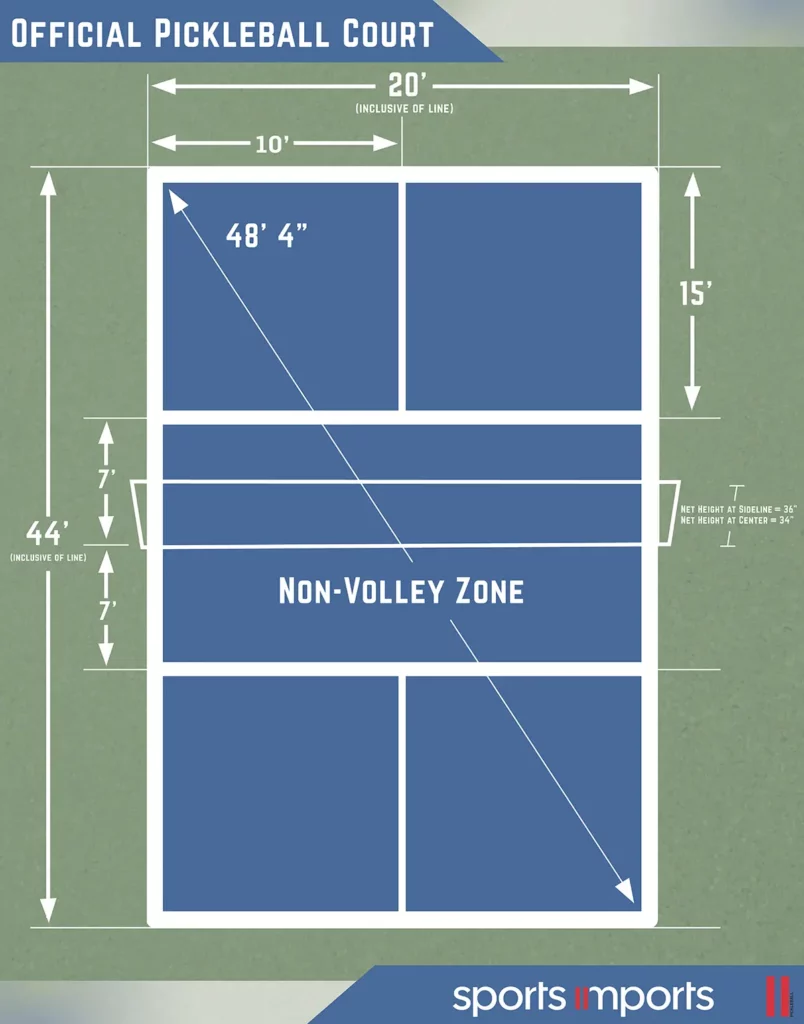
A standard pickleball court measures 44 feet long by 20 feet wide for both singles and doubles play.
As a long-time pickleball player and enthusiast, I've seen firsthand how a properly measured court can make or break a game. Getting the pickleball court size dimensions right isn't just about following rules; it's about ensuring fair play, safety, and the strategic flow that makes this sport so addictive. Whether you're a new player trying to understand the lines, a homeowner dreaming of a backyard court, or an organizer setting up for a local tournament, this guide will walk you through every inch of the official pickleball court size dimensions, so you can play with confidence and precision.
The Core Pickleball Court Size Dimensions: A Breakdown
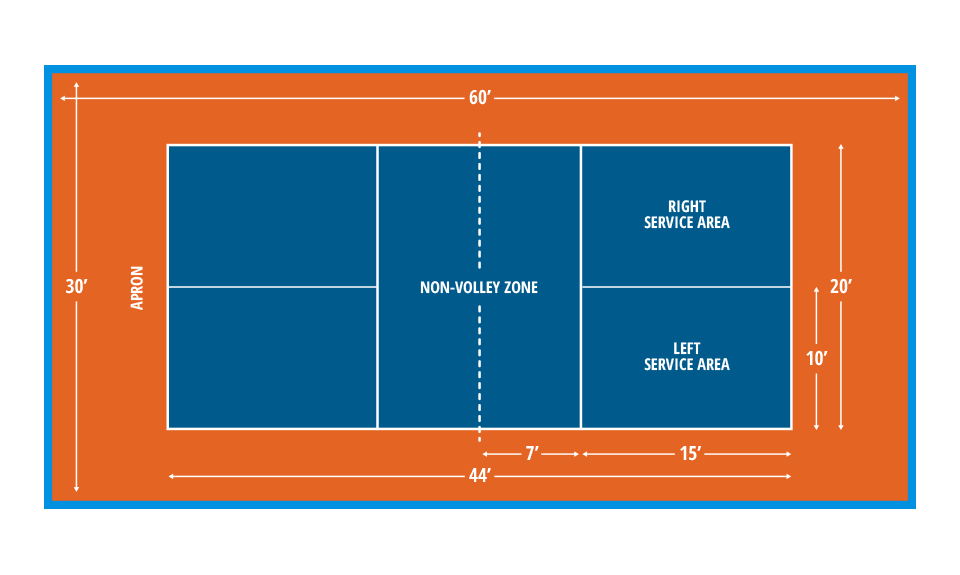
At its heart, a pickleball court is a simple rectangle. The total playing surface, from baseline to baseline and sideline to sideline, is exactly 44 feet long and 20 feet wide. This universal size is used for both singles and doubles matches, which is one of the things that makes the game so accessible. Unlike tennis, you don't need a larger court to accommodate more players.
One of the first things I learned, which is crucial for every player, is that all lines on the court are considered "in." If a ball lands on any part of the baseline, sideline, or service court line during a rally, it is a valid shot. This simple rule can be the difference between winning and losing a tight point, so always play to the lines.

Deconstructing the Zones: Lines and Areas Explained
Understanding the main rectangle is just the start. The magic of pickleball happens within the various zones and lines that divide the court. Each area has a specific purpose that dictates strategy and movement, making the pickleball court size dimensions vital to gameplay.
The Non-Volley Zone (The Kitchen)
The most iconic part of a pickleball court is the non-volley zone, affectionately known as "the kitchen." This area extends 7 feet from the net on both sides of the court and runs the full 20-foot width. The rule is simple: you cannot hit a volley (hitting the ball out of the air) while any part of your body is in the kitchen or touching the kitchen line.
From my experience, mastering play around the kitchen is a game-changer. The 7-foot dimension creates a fascinating dynamic, forcing players to use soft "dink" shots and strategic placement rather than relying on pure power. Remember, the line itself is part of the kitchen, so if your toe touches it during a volley, it's a fault.
The Service Courts
Behind the kitchen, the rest of the court is divided into two equal service courts. Each service court measures 10 feet wide and 15 feet long. These are the boxes where you must land your serve to begin a point. The court is split down the middle by the centerline, creating the right (even) and left (odd) service courts.
When you're serving, you must stand behind the baseline and hit the ball diagonally into the opposite service court. The serve must clear the non-volley zone, meaning it has to land in that 10×15 foot box. A serve that lands in the kitchen is a fault.
Baselines, Sidelines, and Centerline
The boundary lines are straightforward but essential. The two 20-foot lines at each end of the court are the baselines, and the two 44-foot lines on the sides are the sidelines. The centerline divides the playing area between the non-volley zone and the baseline, creating the two service courts. All of these lines are typically 2 inches wide and are considered in-bounds.

Getting the Net Height Just Right
A common mistake I see when people set up temporary courts is getting the net height wrong. This small detail dramatically affects the game's pace and the types of shots you can make. The official pickleball court size dimensions for the net are very specific.
The net should be 36 inches high at the sidelines and droop slightly to 34 inches in the center. This slight sag in the middle is intentional and is usually maintained by a center strap. The net posts themselves should be placed just outside the sidelines, ensuring the full 20-foot width of the court is playable. A net that is too high makes dinking and drops shots incredibly difficult, while a net that is too low encourages aggressive, hard-hitting drives, changing the entire feel of the game.

Planning Your Space: Total Recommended Playing Area
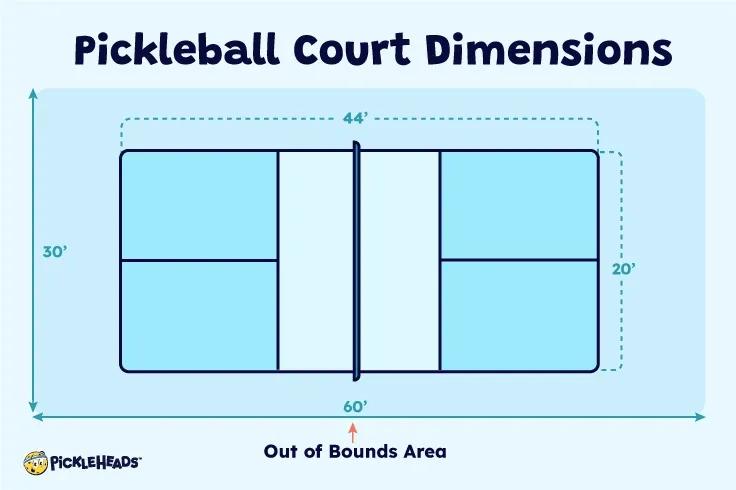
While the court itself is 44 feet by 20 feet, that’s not the only space you need. You must account for the out-of-bounds area, often called the runoff. This extra space is critical for player safety and allows for more athletic plays, like chasing down a lob or executing a shot from outside the court boundaries.
For a recreational backyard court, the minimum recommended total playing area is 30 feet wide by 60 feet long. However, for a better playing experience, especially for competitive matches, a total size of 34 feet by 64 feet is ideal. I once played in a tournament on a court with very little runoff space, and it was a real challenge. You felt cramped, and aggressive shots near the baseline were risky because you had nowhere to go. Having that extra buffer zone makes a huge difference in how freely and safely you can play.

Converting a Tennis Court for Pickleball
One of the reasons for pickleball's explosive growth is its adaptability. A standard tennis court is a perfect canvas for pickleball courts. Because the pickleball court size dimensions are so compact, you can fit up to four pickleball courts within the space of one tennis court, including the necessary out-of-bounds area.
If you're setting up on a shared court, you can use temporary lines made of tape or chalk. Many community centers paint permanent pickleball lines in a different color over their tennis courts to accommodate both sports. This multi-use approach is a fantastic way to introduce pickleball to more people without needing to build entirely new facilities from scratch.
Frequently Asked Questions about pickleball court size dimensions
Are pickleball court dimensions the same for singles and doubles?
Yes, the pickleball court size dimensions are identical for both singles and doubles play. The court is always 44 feet long and 20 feet wide, which makes it easy to switch between game types without any adjustments.
How big is the kitchen in pickleball?
The non-volley zone, or "kitchen," extends 7 feet from the net on both sides. It spans the entire 20-foot width of the court, creating a 14-foot by 20-foot zone in total where volleys are not permitted.
What is the total area needed for a pickleball court?
While the playing court is 44×20 feet, the recommended total space for a single court is at least 30×60 feet. This provides a safe out-of-bounds area for players to move around without risk of injury.
How tall is a pickleball net?
A pickleball net is 36 inches high at the sidelines and sags to 34 inches in the middle. This two-inch drop in the center is a key feature of a regulation pickleball court.
Are the lines in or out in pickleball?
In pickleball, all lines are considered in-bounds. If a ball lands on any part of a boundary line during a rally, it is a good shot and play continues.
Conclusion
Mastering the pickleball court size dimensions is your first step toward mastering the game. From the 44×20 foot playing area to the critical 7-foot kitchen and the precise 34-inch center net height, each measurement shapes the strategy and fun of every point. Understanding these details will not only improve your game but also deepen your appreciation for the thoughtful design of the sport.
Now that you have the blueprint, go out and measure your local court or try setting up your own. You’ll be surprised how much more confident you feel when you know every line and zone like the back of your hand. What are your experiences with different court layouts? Share your stories or questions in the comments below