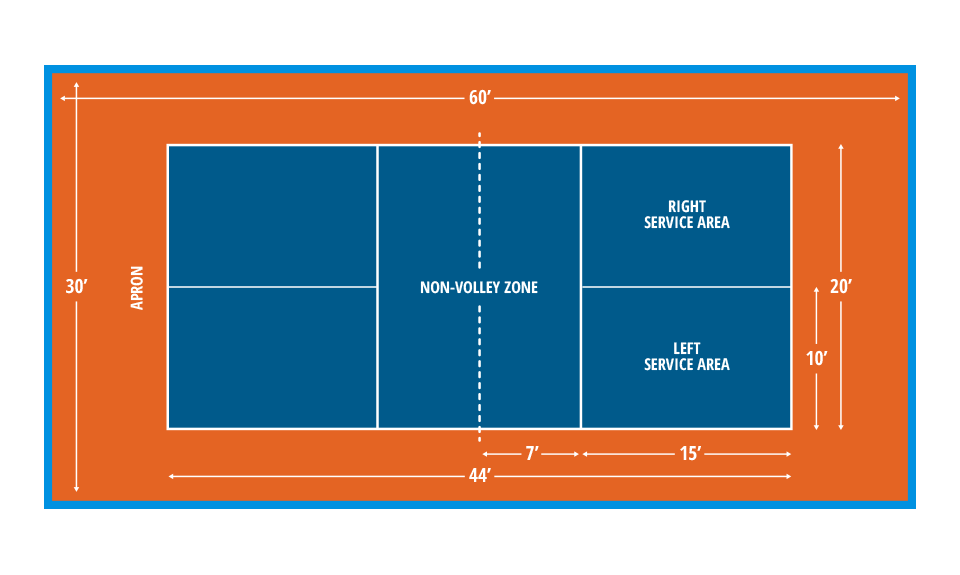
A regulation pickleball court measures 20 feet wide by 44 feet long for play, with a recommended surrounding area of about 30 by 60 feet.
As someone who has marked, played on, and helped build several courts, I know how crucial precise measurements are. This guide covers the pickleball court size in feet from official dimensions to practical building tips. I’ll explain the lines, net height, clearance, and common mistakes in plain language. You’ll get exact feet measurements you can use to plan a backyard court or check a facility. Read on for a clear, practical, and trustworthy breakdown you can act on today.

Official pickleball court size in feet
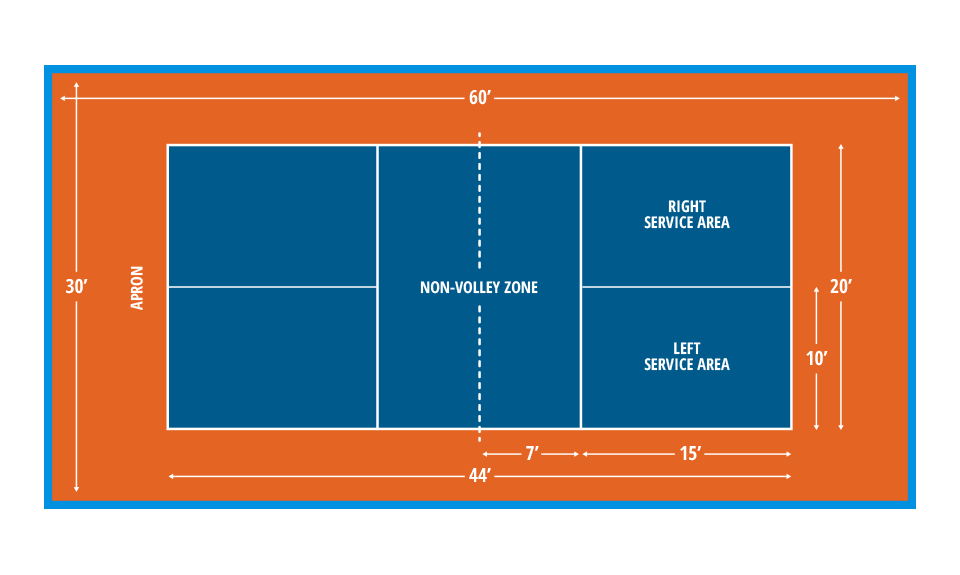
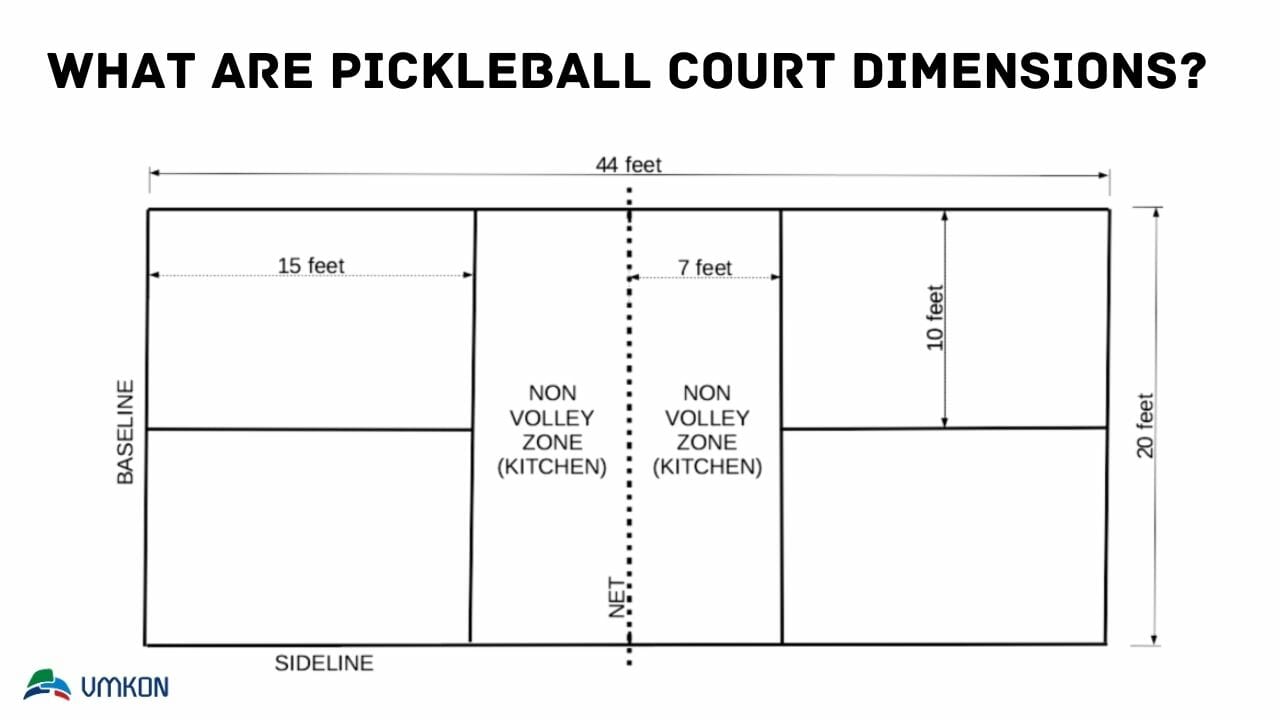
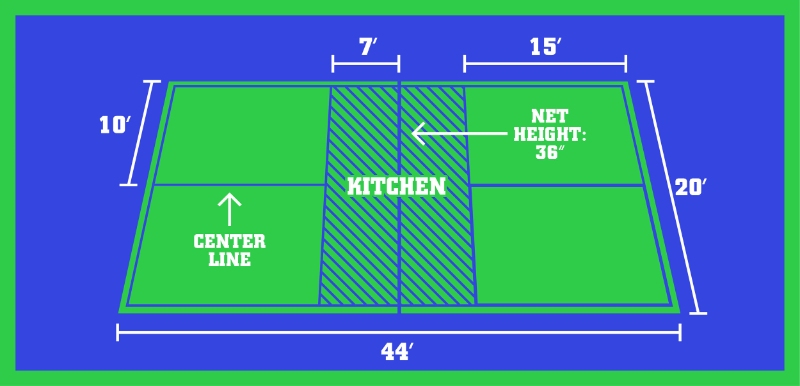
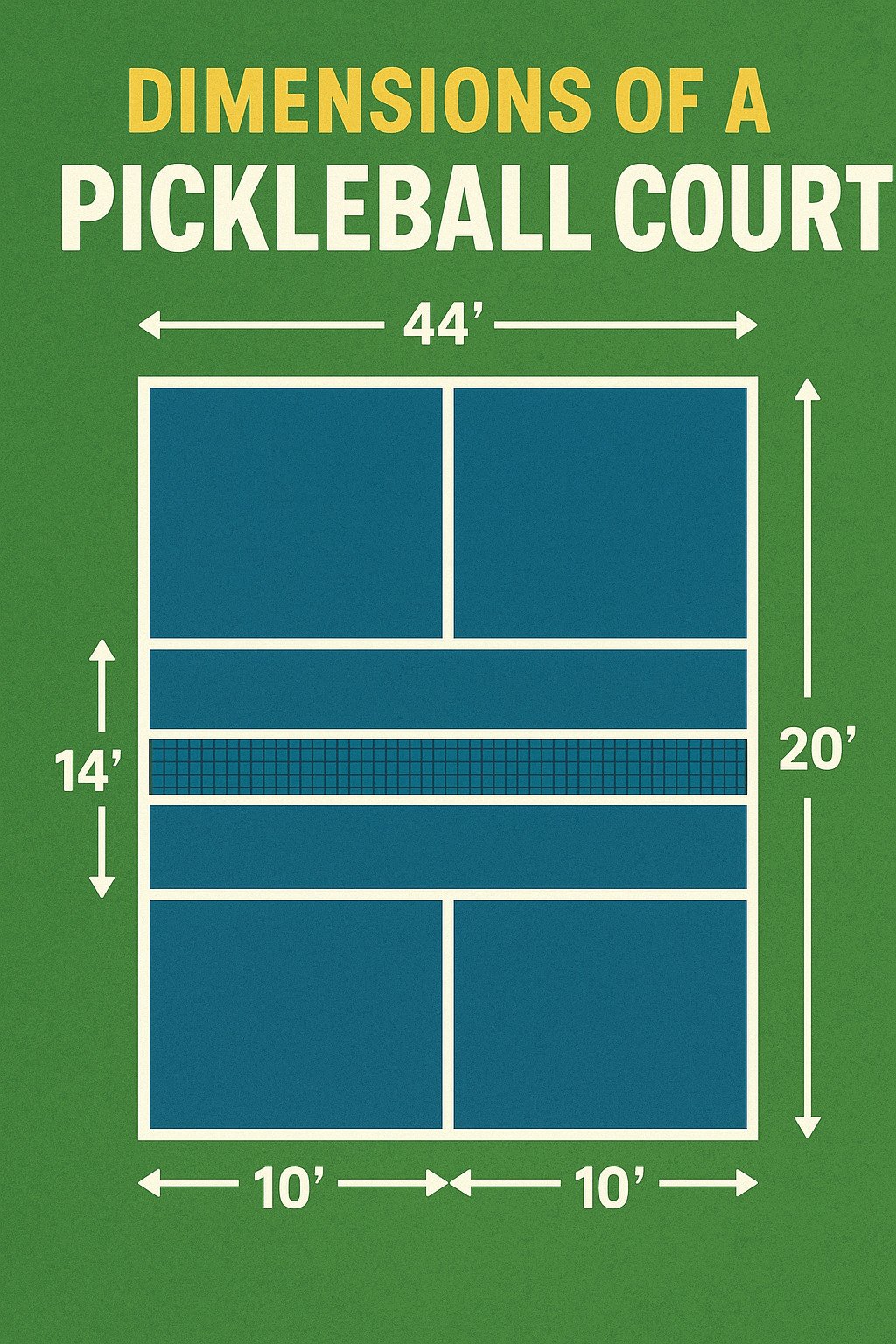
A standard pickleball playing area is 20 feet wide and 44 feet long. This 20 by 44 feet area is the official court where gameplay happens for both singles and doubles. The non-volley zone, often called the kitchen, extends 7 feet from the net on each side. Service boxes are each 10 feet wide and 15 feet long because the court width is split in half and the distance from the non-volley line to the baseline is 15 feet.
The phrase pickleball court size in feet is important when ordering nets, lining up paint stencils, or buying court covers. Use exact feet when you measure, because small errors change how the court plays. I’ve taped off many courts using these exact feet measurements, and following them avoids disputes and odd bounces.
Court markings and line measurements in feet
Line placement matters as much as the court dimensions. Here are the key line measurements in feet:
- Court width: 20 feet across between sidelines.
- Court length: 44 feet from baseline to baseline.
- Non-volley zone depth: 7 feet from the net on each side.
- Service box dimensions: 10 feet wide by 15 feet deep.
- Centerline: divides the two service boxes from the non-volley line to the baseline.
- Recommended line width: 2 inches for visibility and consistency.
When marking a court, measure in feet from baseline and sidelines to keep the pickleball court size in feet consistent. I recommend using chalk or removable tape for initial layout in feet before painting. This saves time and paint if adjustments are needed.
Recommended playing area and clearance in feet
The official playing area is 20 by 44 feet, but players need room to move. For recreational play, allow a minimum of 30 feet wide by 60 feet long. For tournament play and generous player movement, 34 feet wide by 64 feet long is ideal. These clearances include space behind baselines and beside sidelines for safe movement and spectator areas.
Clearance in feet should consider ceiling height too. Indoor courts need at least 18 to 20 feet of clear overhead space to avoid interference with high lobs. Outdoors, leave room for fencing and walking paths. From my experience, a 30 by 60 feet minimum works well for casual courts and backyard installs.

Net height and equipment dimensions in feet
The net is a central part of court setup. Net height rules in feet and inches:
- Net height at the center: 34 inches (about 2.83 feet).
- Net height at the sidelines: 36 inches (3 feet).
- Net post spacing: typical net posts are set 22 feet apart to allow net attachment beyond the 20-foot court width.
When you measure net height in feet, use a reliable tape and a level. Net posts placed at 22 feet let the net hang correctly across the 20-foot court. I once set posts too close and had to move them. Correct placement in feet fixed bounce and net tension instantly.
Building a pickleball court at home — layout and steps in feet
If you plan a DIY court, use these feet-based steps:
- Mark the playing area: stake the four corners at 20 by 44 feet.
- Add clearance: mark the outer playing area to your preferred size, e.g., 30 by 60 feet.
- Excavate and compact a stable base across your chosen feet dimensions.
- Pour a smooth surface: asphalt or concrete sized to your full clearance in feet.
- Paint lines: use the court lines measured in feet—2-inch line widths are standard.
- Install posts and net: set posts about 22 feet apart and adjust net to the correct feet/inch height.
- Fence and lighting: consider 10-foot fences and pole spacing that suits your total feet area.
I built a backyard court using these steps and a 30 by 60 feet footprint. Allowing extra feet behind baselines made rallies feel less cramped and reduced ball damage to fences. Small planning errors in feet often cost time and money, so measure twice and mark in feet.
Common mistakes and tips when measuring in feet
Common measurement mistakes are easy to avoid:
- Forgetting the extra feet of clearance behind baselines and beside sidelines.
- Measuring to the outside of lines instead of to the inside; this changes effective play area.
- Using incorrect net post spacing; posts usually sit outside the 20-foot court, around 22 feet apart.
- Neglecting overhead clearance in feet; indoor courts need high ceilings.
- Ignoring slope and drainage across the court’s feet dimensions.
A tip from my experience: always mock up the full clearance using rope or tape measured in feet before heavy construction. Walking the space in feet gives a better sense of playability than plans alone.

Cost and space estimates based on size in feet
Costs vary by materials and region, but these feet-based estimates help planning:
- Small backyard (30 by 60 feet) DIY resurfacing and paint: $3,000 to $10,000.
- Mid-range installation (34 by 64 feet) with professional surfacing: $10,000 to $25,000.
- Full tournament-grade court with lighting and fencing in feet-accurate layout: $25,000+.
These estimates assume the court surface area in feet includes the clearance zone. I’ve seen costs double if drainage or landscaping adjustments were needed across the full feet footprint. Always budget for an extra 10–20 percent for unexpected site-specific work in feet.

Frequently Asked Questions of pickleball court size in feet
What are the official pickleball court size in feet for gameplay?
The official playing court is 20 feet wide by 44 feet long for singles and doubles. These feet are the marked lines that define legal play.
How big should the surrounding area be in feet?
A minimum recommended clear area is 30 feet by 60 feet, while tournament play often uses about 34 feet by 64 feet. These feet include space for player movement and safety.
How deep is the non-volley zone in feet?
The non-volley zone, or kitchen, is 7 feet deep on each side of the net. That measurement in feet extends from the net toward each baseline.
What is the net height in feet?
Net height is 36 inches (3 feet) at the sidelines and 34 inches (about 2.83 feet) at the center. Measure carefully in feet and inches for accuracy.
How wide are the service boxes in feet?
Each service box is 10 feet wide because the court is 20 feet across and the centerline splits it evenly. The service box depth is 15 feet measured from the non-volley line to the baseline.
Conclusion
Knowing the pickleball court size in feet simplifies planning, building, and playing. Use the 20 by 44 feet official court as your baseline, then add at least a 30 by 60 feet clear area for comfortable play. Measure carefully, plan for drainage and overhead space, and allow a small budget cushion for site surprises. If you’re ready to build, start by staking the feet on the ground and walk the space to ensure it feels right. Share your plans or questions below, subscribe for more court-building tips, or leave a comment about your favorite court dimensions.