
Pickleball is a smaller, slower, more accessible game with major differences in court size, equipment, and scoring.
As someone who has spent countless hours on both tennis and pickleball courts, I've seen the confusion firsthand when players cross over. While they might look similar from a distance, the nuances between these two racket sports are vast. Understanding the key pickleball differences from tennis is the first step to truly appreciating what makes each game unique and mastering the court, no matter which one you choose. This guide breaks down everything you need to know, from the court and equipment to the rules and strategy that set them apart.

The Court: A Tale of Two Sizes
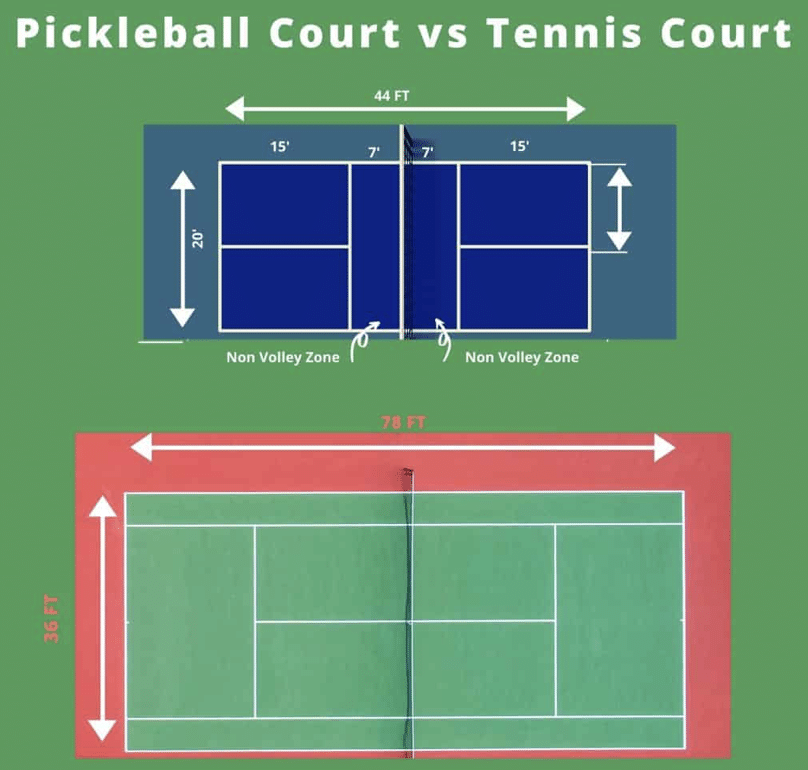
The most immediate and obvious difference you'll notice is the playing area. A pickleball court is significantly smaller, measuring 44 feet long by 20 feet wide. This is the same size as a badminton court, making it much more compact and manageable than a standard tennis court, which spans a massive 78 feet long by 36 feet wide for doubles.
This smaller footprint is a game-changer. It means less ground to cover, reducing the amount of sprinting and making the game less physically demanding. One of the most unique features of the pickleball court is the 7-foot non-volley zone on either side of the net, affectionately known as "the kitchen." This area introduces a strategic element completely absent in tennis, which we'll dive into later. The smaller scale is a core reason why pickleball is so inviting for all ages and fitness levels.

Equipment Showdown: Paddles vs. Rackets, Balls vs. Balls
The tools of the trade in pickleball and tennis are fundamentally different, and this directly impacts how the games are played. Grasping these equipment differences is crucial for understanding the overall feel of each sport.
Paddles vs. Rackets
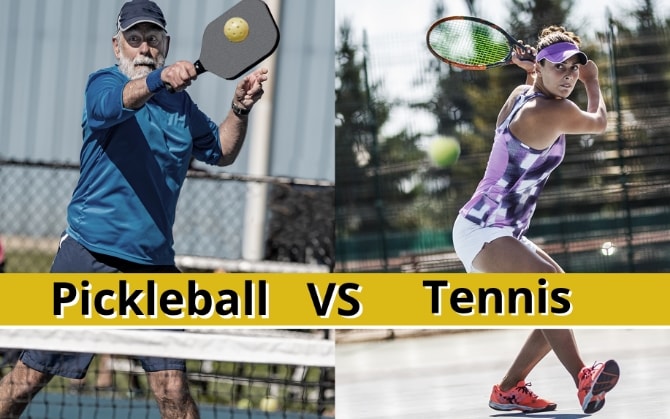
In pickleball, you use a solid paddle made from composite materials like graphite or fiberglass. It's much smaller and lighter than a tennis racket, which features a large head with interwoven strings. I remember my first time holding a pickleball paddle; it felt more like an extension of my hand, offering incredible control for soft, precise shots. A tennis racket, by contrast, is designed to generate immense power and spin, acting like a catapult for the ball.
The Ball
The ball itself tells a huge part of the story. A pickleball is a lightweight, perforated plastic ball with holes, similar to a wiffle ball. A tennis ball is a pressurized rubber core covered in felt. The pickleball travels much slower and has a significantly lower bounce. This slower pace is what makes for the long, exciting rallies that pickleball is famous for. It gives players more time to react and get into position, making it far more beginner-friendly.
Rules of the Game: Scoring, Serves, and the Kitchen
Beyond the court and gear, the rules governing play create completely different strategic landscapes. The pickleball differences from tennis are most pronounced when you look at how points are scored, how a rally begins, and the unique restrictions near the net.
Scoring System
Pickleball scoring is simple and straightforward. Games are typically played to 11 points, and you must win by 2. Crucially, you can only score a point when your team is serving. This is known as "side-out scoring." Tennis, on the other hand, uses a more complex system of points (15, 30, 40) leading to games, sets, and matches. For new players, pickleball's scoring is much easier to track.
The Serve
The serve in pickleball is performed with an underhand motion, and its purpose is simply to get the point started. It's not an offensive weapon like the powerful overhand serves you see in tennis. Additionally, pickleball has a "two-bounce rule." This means after the serve, the receiving team must let the ball bounce once before returning it, and the serving team must also let that return bounce once before hitting it. This rule prevents teams from rushing the net immediately and helps extend rallies.
The Non-Volley Zone (The Kitchen)
This is perhaps the most defining rule in pickleball. The 7-foot zone on each side of the net is called the non-volley zone, or "the kitchen." Players are not allowed to hit a volley (hitting the ball out of the air) while their feet are inside this zone. I learned this the hard way when I first started, instinctively stepping forward to smash a high ball, only to have my partner yell, "You're in the kitchen!" This rule encourages a soft, strategic game of "dinks"—short, low shots that land in the opponent's kitchen—and prevents the game from being dominated by power at the net.
Gameplay and Strategy: Finesse Over Power
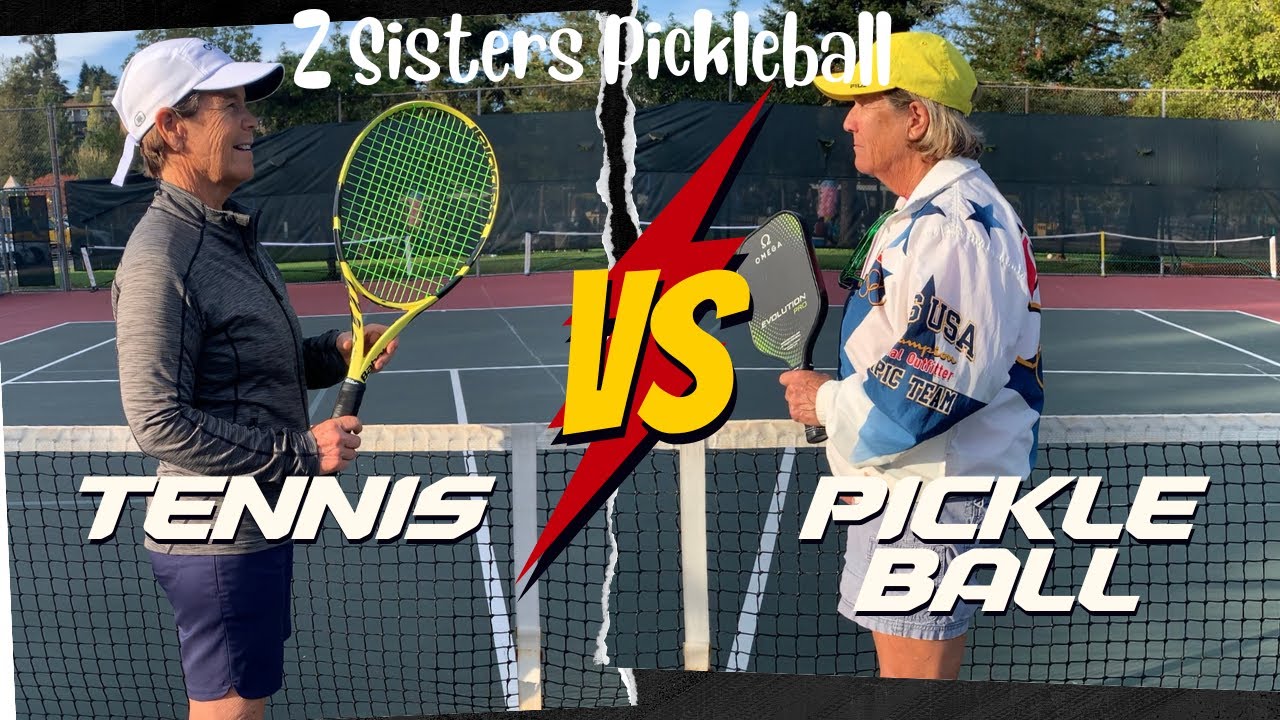
The culmination of a smaller court, slower ball, and unique rules like the kitchen creates a game that prioritizes strategy over raw power. While tennis often involves powerful baseline rallies and aggressive net play, pickleball is frequently described as chess on a court. The emphasis is on shot placement, patience, and waiting for the right moment to attack.
The heart of pickleball strategy often revolves around the "dink rally," where players exchange soft shots back and forth over the net until one player makes a mistake or hits a ball high enough to be attacked. This contrasts sharply with tennis, where overpowering an opponent with speed and spin is a common tactic. The shorter distance between players on a pickleball court also fosters a more social and conversational atmosphere during play.
Accessibility and Learning Curve: Why Pickleball is Exploding
One of the biggest pickleball differences from tennis is its remarkable accessibility. The learning curve for pickleball is much gentler. I've seen brand-new players have fun, sustainable rallies within their first 30 minutes on a court, a feat that is much harder to achieve in tennis.
The smaller court means less running, and the underhand serve is easy for anyone to learn. The lightweight paddle and slower ball reduce the strain on the joints and muscles, making it a fantastic sport for people of all ages, from young kids to seniors. It’s a common sight to see three generations of a family all playing and laughing together on the same court, which perfectly captures the inclusive spirit of the sport. This low barrier to entry is a primary driver behind pickleball's explosive growth in popularity.

Frequently Asked Questions of pickleball differences from tennis
Can I use my tennis skills in pickleball?
Absolutely! Skills like hand-eye coordination, footwork, and shot anticipation transfer well from tennis. However, you will need to adjust to the shorter swings, the underhand serve, and the strategy of the soft game.
Is pickleball easier on the body than tennis?
Yes, generally pickleball is considered less physically demanding. The smaller court requires less running, and the lightweight equipment puts less strain on your shoulders, elbows, and knees.
What is the biggest rule difference between pickleball and tennis?
The non-volley zone, or "the kitchen," is arguably the biggest rule difference. This rule, which prohibits volleying inside the 7-foot zone next to the net, fundamentally changes the strategy of the game.
Why is the pickleball court so much smaller?
The court was designed to be small enough to fit in a typical backyard. This compact size makes the game more accessible and less physically taxing, contributing to its broad appeal.
Do I need special shoes for pickleball?
While you can start with any athletic shoes, court shoes are highly recommended. They provide better lateral support for the quick side-to-side movements common in pickleball and have non-marking soles to protect the court surface.
Conclusion
While both sports are played with a net and a ball, the pickleball differences from tennis are what give each its unique charm. Pickleball thrives on accessibility, strategy, and social connection, offering a gentler learning curve and a game focused on finesse. Tennis is a sport of power, athleticism, and tradition, demanding more physical exertion and technical skill.
Neither sport is better than the other; they simply offer different experiences. The best way to understand the difference is to experience it for yourself. So grab a paddle, find a court, and discover the fun and strategy that has made pickleball the fastest-growing sport in the country.
What are your thoughts on these two great sports? Share your favorite pickleball or tennis memory in the comments below