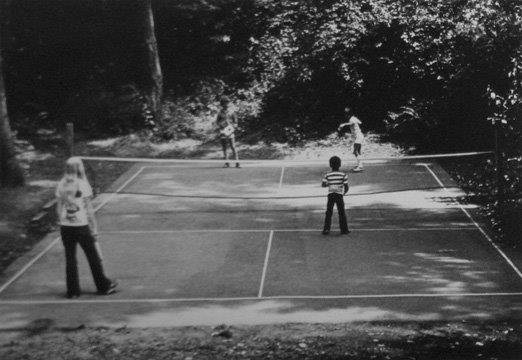
Pickleball was invented in 1965 on Bainbridge Island, Washington, by three dads to cure their kids' summer boredom.
Ever wonder how that oddly named sport with the funny-sounding ball came to be? As someone who has spent countless hours on the court and delved deep into the sport's history, I can tell you the story is as charming and unique as the game itself. The tale of the pickleball origins is more than just a historical footnote; it's a lesson in creativity, family, and the simple joy of play. Join me as we explore the fascinating journey of how a makeshift backyard game grew into a global sensation.
A Summer Afternoon and a Stroke of Genius
The story of the pickleball origins begins on a lazy summer day in 1965 on Bainbridge Island, a short ferry ride from Seattle. Joel Pritchard, then a Washington State Congressman, returned home from a game of golf to find his family thoroughly bored. Looking for a way to entertain them, he and his friends, Bill Bell and Barney McCallum, decided to make use of an old badminton court on the property.
There was just one problem: they couldn't find a full set of badminton rackets or a shuttlecock. Instead of giving up, they improvised. They grabbed some table tennis paddles and a perforated plastic ball, lowered the badminton net to 36 inches, and started hitting the ball back and forth. In that moment of simple, creative problem-solving, the very first game of pickleball was played. The initial rules were born from that first afternoon, establishing the foundation for the sport we love today.
The game's simplicity was its magic. It was easy for anyone, regardless of age or athletic ability, to pick up and play. This accessibility is a core reason why the sport, from its very pickleball origins, was destined for popularity. It was a game designed for family fun, not intense competition.

Crafting the Rules and Equipment
As the friends and their families played more, the game started to evolve. They quickly realized that players could dominate by standing at the net and smashing the ball. To preserve the game's fun, back-and-forth nature, they invented the non-volley zone, an area seven feet from the net now affectionately known as "the kitchen." This simple rule was a game-changer, encouraging strategic dinks and drops over pure power.
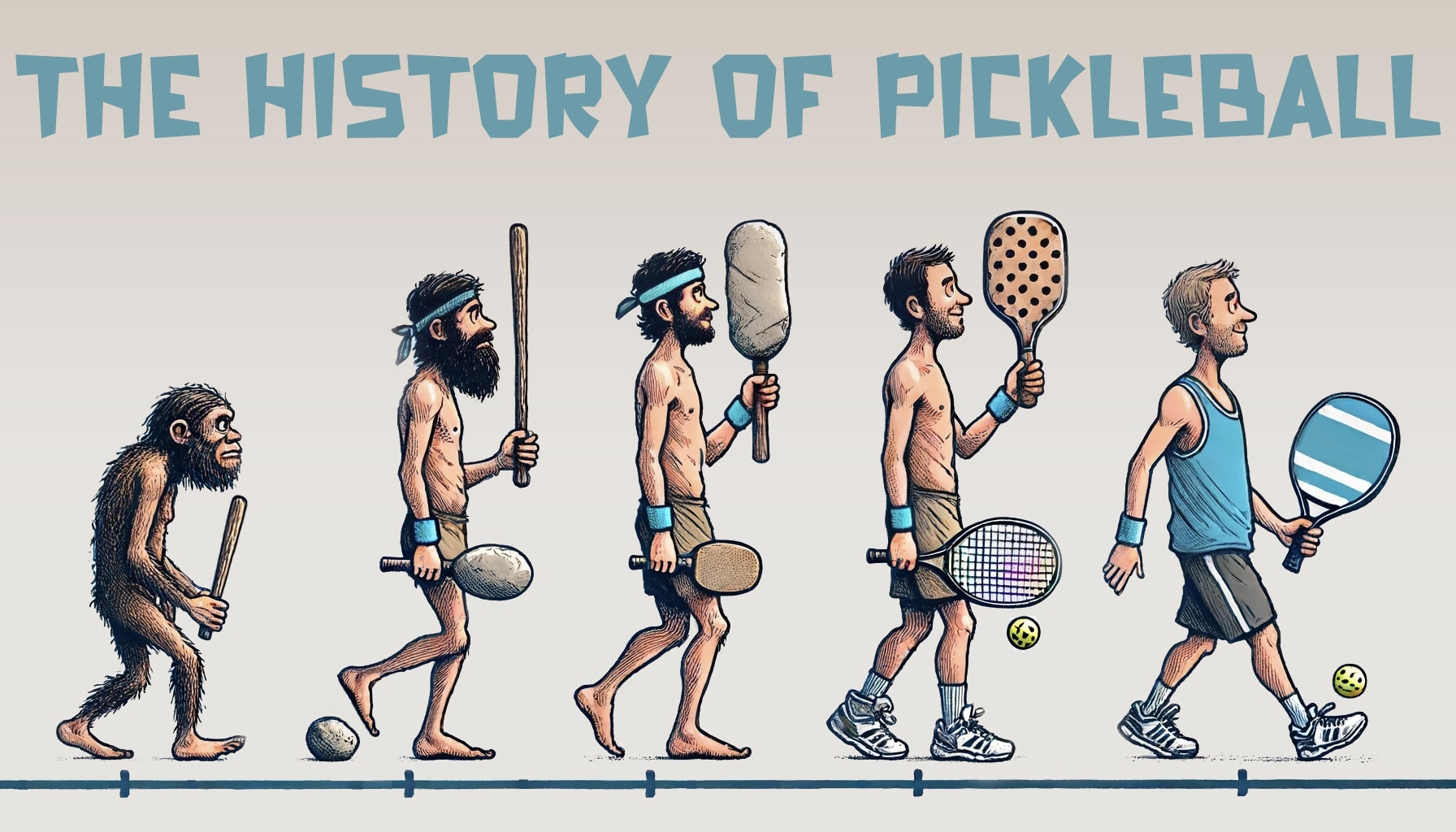
The equipment evolved too. The flimsy table tennis paddles weren't durable enough for regular play. Barney McCallum, who had a workshop at home, began experimenting with different designs, creating the first dedicated pickleball paddles from plywood. These early paddles, known as "M2" paddles, were a far cry from today's advanced composite designs, but they were a crucial step in the pickleball origins story.
I remember my first time playing with a simple wooden paddle. It felt basic, but it connected me to the sport's history. It’s a reminder that you don’t need fancy gear to enjoy the game, a principle that dates back to the very beginning. The official rules were slowly formalized, ensuring the game could be shared and played consistently by others.

What's in a Name? The Pickle Boat Legend
One of the most frequently asked questions about the pickleball origins is where its quirky name came from. For years, two competing stories have circulated, and both add a layer of charm to the sport's history.
The most widely accepted version comes from Joan Pritchard, Joel’s wife. She said the name was inspired by the "pickle boat" in crew rowing. The pickle boat is the last boat to finish a race, typically filled with a motley crew of leftover rowers from other teams. Since pickleball was created by combining elements from different sports like badminton, tennis, and table tennis, she felt "pickle ball" was a fitting name.
The other, more whimsical story involves the McCallum family's dog, Pickles. They claimed the dog loved to chase the stray plastic balls and run off with them, and so the game was named in his honor. While the story of Pickles the dog is endearing, the "pickle boat" explanation is the one officially recognized by USA Pickleball. Regardless of which tale you prefer, the name perfectly captures the fun and slightly eccentric spirit of the game.
From Backyard Game to National Phenomenon
Pickleball didn’t stay a backyard secret for long. The founders' enthusiasm was contagious, and they introduced the game to friends and neighbors. In 1967, the first permanent, dedicated pickleball court was built in the backyard of Bob O’Brian, a friend and neighbor of the Pritchards. This marked a significant milestone in the pickleball origins, signaling its transition from a temporary pastime to a legitimate sport.
To protect the game and manage its growth, Pickle-Ball, Inc. was formed in 1967. The sport’s popularity spread organically, particularly in the Pacific Northwest. It later found a passionate following in retirement communities in states like Arizona and Florida, where its low-impact nature and social aspect made it a perfect fit for active seniors.
The creation of the USA Pickleball Association (USAPA) in 1984 was instrumental in standardizing the rules and promoting the sport on a national level. From a simple solution to summer boredom, the game has exploded into one of the fastest-growing sports in the world. Seeing courts pop up in local parks where tennis courts used to be is a testament to the incredible journey that started on that one summer afternoon.

Frequently Asked Questions of pickleball origins
Why was pickleball invented?
Pickleball was invented as a spontaneous solution to entertain the bored children of its founders, Joel Pritchard, Bill Bell, and Barney McCallum. They used equipment they had on hand to create a fun, accessible game for the whole family.
Who are the founders of pickleball?
The three founders of pickleball are Joel Pritchard, a former U.S. Congressman, and his two friends, Bill Bell and Barney McCallum. They created the game together on Bainbridge Island, Washington, in the summer of 1965.
Where does the name pickleball come from?
The official story is that the name comes from the "pickle boat" in crew, which is a boat made up of leftover rowers. This reflects how the game was a mix of different sports. A popular myth suggests it was named after a family dog named Pickles.
When was the first pickleball court built?
The first permanent pickleball court was constructed in 1967 in the backyard of Bob O'Brian, a neighbor of co-founder Joel Pritchard. Before this, the game was played on existing badminton courts or other temporary surfaces.
How has pickleball changed since its creation?
While the core rules remain similar, pickleball has evolved significantly with the introduction of lightweight composite paddles and standardized balls. It has also grown from a backyard game into a professionally organized sport with international tournaments and millions of players.
Conclusion
The story of pickleball's beginnings is a powerful reminder that great things can come from simple ideas. What started as a way to solve a common family problem—summer boredom—has blossomed into a sport that brings joy, community, and friendly competition to millions of people around the world. From the makeshift paddles to the creation of the non-volley zone, every element of the game’s history is rooted in fun and ingenuity.
The next time you step onto the court, take a moment to appreciate the humble and creative pickleball origins. Think of the three friends on Bainbridge Island who just wanted to have a good time with their families. That spirit is still at the heart of every dink, drive, and drop shot today.
What part of the pickleball story do you find most interesting? Share your thoughts in the comments below or check out our other articles to learn more about this amazing sport