Only the serving team scores; games go to 11 and you must win by 2.
If you’ve ever felt lost calling 7-6-1 or wondered why a game starts at 0-0-2, you’re not alone. I’ve taught dozens of new and league players, and I’ll walk you through pickleball scoring with clear steps, real match examples, and pro tips. By the end, you’ll call the score with confidence, avoid costly faults, and use pickleball scoring to win more points.
The basics of pickleball scoring
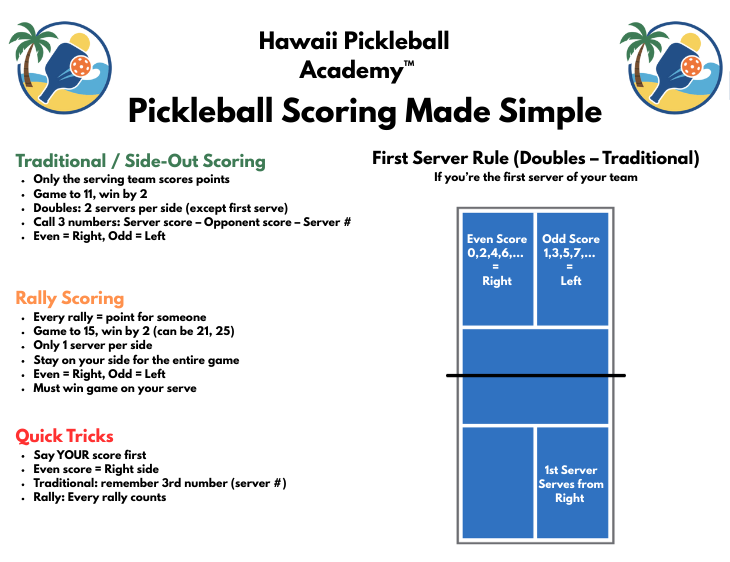
Pickleball scoring follows side-out scoring. Only the serving team can score. Most games go to 11, win by 2. Tournament games may go to 15 or 21, win by 2.
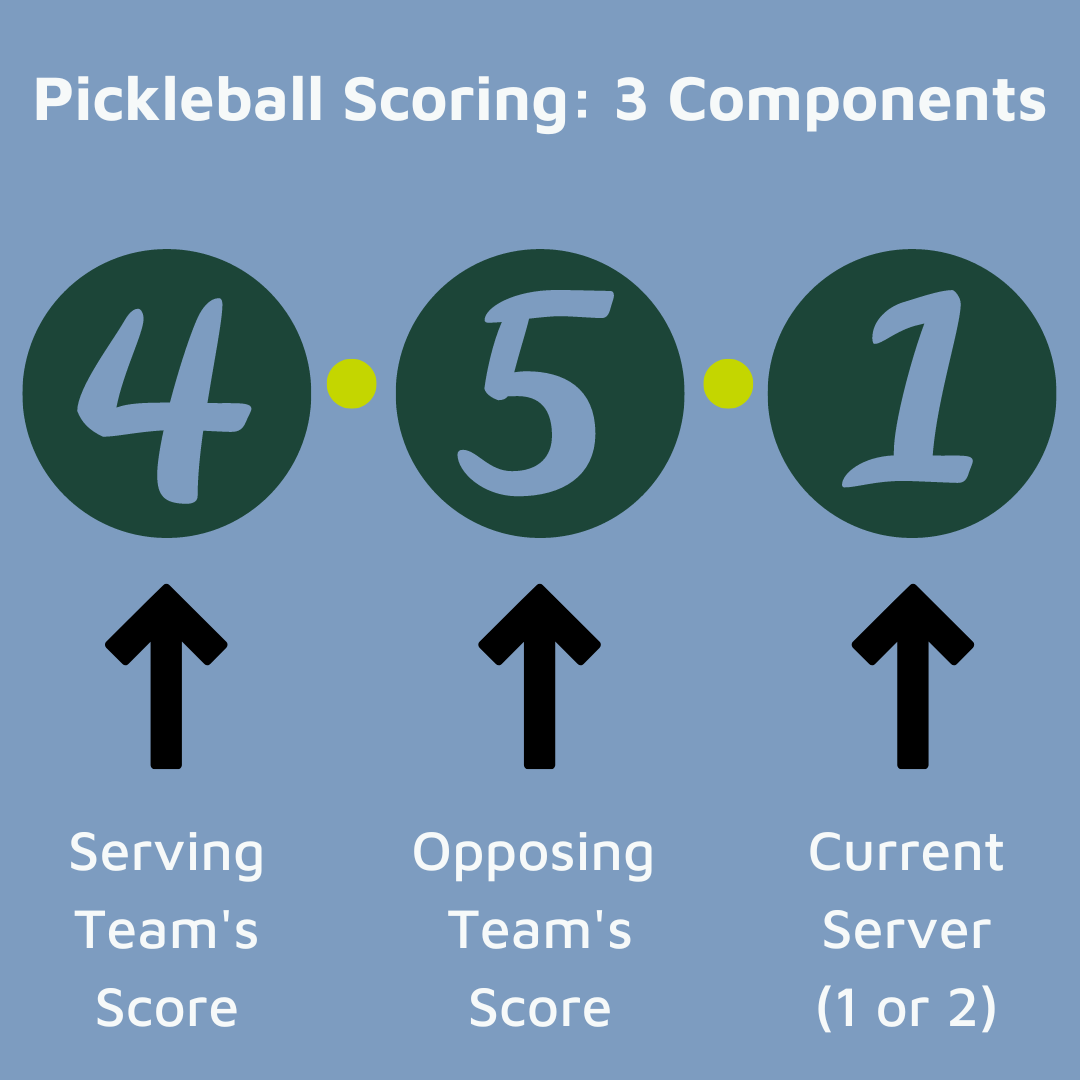
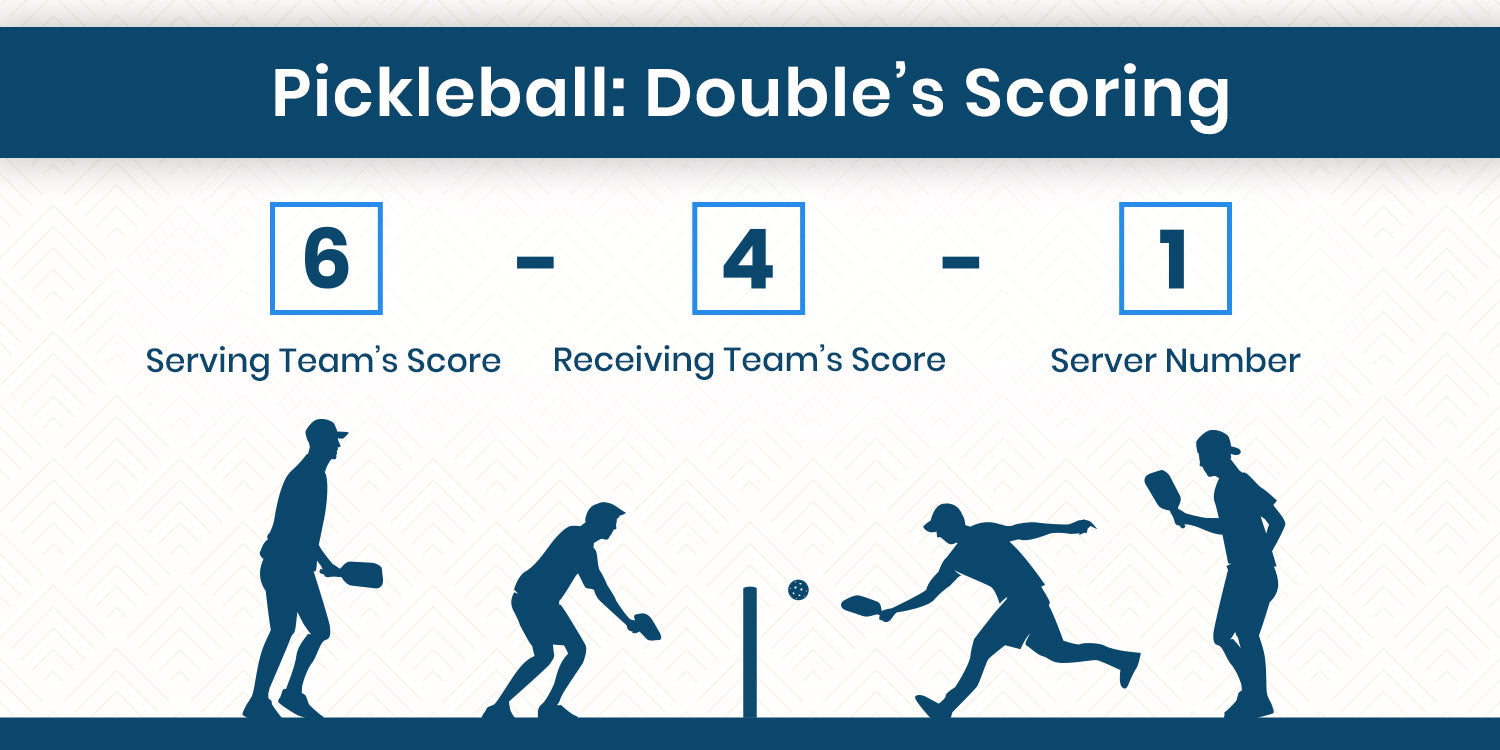
In doubles, you call three numbers: serving team score, receiving team score, server number. Example: 7-4-1. In singles, you call two numbers: server score, receiver score.
Key rules that affect scoring:
- Each side gets up to two serves per turn, one for each partner, except the very first turn of the game which starts at 0-0-2.
- The serve must land in the diagonal service box and not on the non-volley zone line.
- The two-bounce rule applies: the serve must bounce, and the return must bounce before anyone volleys.
- There are no service lets. If the serve hits the net and lands in, it is live.
Quick example of pickleball scoring:
- You serve at 3-2-1 from the right. You win the rally. Score is 4-2-1, and you switch sides.
- You serve again from the left. You lose the rally. Server 2 now serves from the right at 4-2-2.
- Server 2 loses a rally. Side-out. The other team now serves at 2-4-1.
Pickleball scoring looks tricky at first, but it follows a clear rhythm once you see it in play.

Doubles pickleball scoring, step by step
Doubles uses a three-number score call: server score, receiver score, server 1 or 2. The server number resets every side-out. The player on the right when the team gets the serve becomes server 1.
How a turn works:
- Start of game: 0-0-2. Only one server serves on the first turn to reduce first-serve advantage.
- After that, each side’s serve has two chances. Server 1 serves until a fault. Then Server 2 serves. After a second fault, it’s a side-out.
- When the serving team scores a point, those two players switch right and left courts. When they lose a rally, the players do not switch.
A simple rally walk-through:
- Your team wins the side-out at 5-6. The player on the right is server 1. Call 5-6-1 and serve.
- You win the rally. Now it’s 6-6-1. You switch sides with your partner and serve again.
- You fault. Now 6-6-2. Your partner, standing on the right, serves.
- You lose that rally. Side-out at 6-6. They get the ball and call 6-6-1.
Two memory tips I teach in clinics:
- Even score, serve from the right. Odd score, serve from the left.
- Server numbers change only when your team gets the ball back. They are positions, not people for the whole game.
Mistakes to avoid:
- Calling only two numbers in doubles. Always include the server number.
- Forgetting to switch sides after you score. If you scored, you switch.
- Serving before saying the full score. You must call the full score first.
That last one has cost me points in league matches. Slow down, breathe, call it loud and clear. That alone cleans up half of all scoring mess-ups.

Singles pickleball scoring made simple
Singles uses two numbers: server score, receiver score. Only the server scores in traditional pickleball scoring.
Movement and sides:
- If your score is even, serve from the right.
- If your score is odd, serve from the left.
Quick example:
- You start serving at 0-0. Even is right. Serve from the right.
- You win the rally. Score is 1-0. Now odd is left. Serve from the left.
- You lose the rally. Side-out. Your opponent serves at 0-1 from their right.
Singles is very clean. Track even and odd to keep your court position in check.
Serve, side-outs, and the double-bounce rule
Your serve is the launch pad of pickleball scoring. A clean serve sets the tone. A sloppy one gives away free points.
Serve basics:
- Serve underhand, contact below the waist, with an upward arc.
- Serve crosscourt into the service box beyond the non-volley zone line.
- Lines are in, but the non-volley zone line is out on the serve.
Two-bounce rule:
- The serve must bounce before the returner hits it.
- The return must bounce before the server or partner hits it.
- After those two bounces, volleys are allowed outside the kitchen.
Side-outs:
- When the serving team makes a fault, the serve moves to the next server or to the other team if both servers have faulted.
- Faults include long serves, serves into the net, serves that land on the kitchen line, foot faults, hitting the ball before it bounces on return, and hitting the wrong receiver.
Keep rallies clean and you will earn more servers and more chances to score.

Score calling and court positioning
Clear calls speed up the game and reduce disputes. Good calls also help you track positions.
How to call in doubles:
- Say server score, receiver score, then server number.
- Example: 8-6-2. Then serve.
How to call in singles:
- Say server score, then receiver score. Example: 9-7.
Positioning tips that help pickleball scoring:
- Look at the server’s score. Even means serving from the right. Odd means from the left.
- After your team scores, switch sides. After a fault, do not switch.
- If you ever feel lost, reset by matching the even/odd rule. It fixes many mix-ups.
If a wrong score is called:
- Any player may stop play to ask for a correction before the return is hit.
- If play continues, the rally stands. So speak up quickly and politely.
One more note on timing:
- The full score must be called before the serve is struck. Serving too early is a fault.
Source: com.br
Rally scoring in pickleball: when and how to use it
Traditional pickleball scoring is side-out only. But rally scoring is used in some leagues and events. In rally scoring, every rally gives a point to someone, no matter who served.
Common rally scoring formats I’ve seen:
- To 21, win by 2. Some groups use a freeze near game point. Often, you must win on your serve at 20 or higher.
- Side change at 11 in outdoor play to balance wind and sun.
- Two-serve rotations still apply in doubles, but points are earned by either side.
Pros:
- Faster games with steady point growth.
- Easier to track points for new players.
Cons:
- You lose the strategic reward of holding serve.
- Momentum swings are sharper, so comebacks can be tougher.
If you use rally scoring, agree on the format and freeze rules before you start. Keep calling the score out loud. Clarity beats confusion.

Strategy tips shaped by pickleball scoring
Pickleball scoring rewards steady servers and strong returns. Use that to your advantage.
On serve:
- Go for high-percentage serves with depth. Avoid double faults.
- Aim third shots to neutralize. A soft drop to the kitchen buys you time.
On return:
- Hit deep returns to push servers back. It reduces their third-shot options.
- Target the weaker player in doubles, especially when server 2 is up.
Managing pressure:
- At 9-9, cut risks. Force your opponents to hit one more ball.
- Use time between points to reset. Call the score clear and slow. Regain tempo.
From years of league play, I’ve learned this: with pickleball scoring, the team that gives fewer free points wins most matches. Make that your edge.
Practice drills to master pickleball scoring
You can practice pickleball scoring just like dinks and drops. These drills make it stick.
On-court scoring reps:
- Call-and-serve drill. One player leads all score calls for 10 minutes. Switch roles. Focus on volume and clarity.
- Even-odd walk. Start at 0, serve from the right on evens and left on odds. Say it out loud.
- Side-out challenge. Start every rally as server 2 at 8-8. Work on holding serve to 11, win by 2.
Pressure games:
- Freeze mode. At 9-9, only the serving team can score. Great for end-game focus.
- One-ball serve. You lose the rally, side-out. Builds third-shot discipline fast.
Tools:
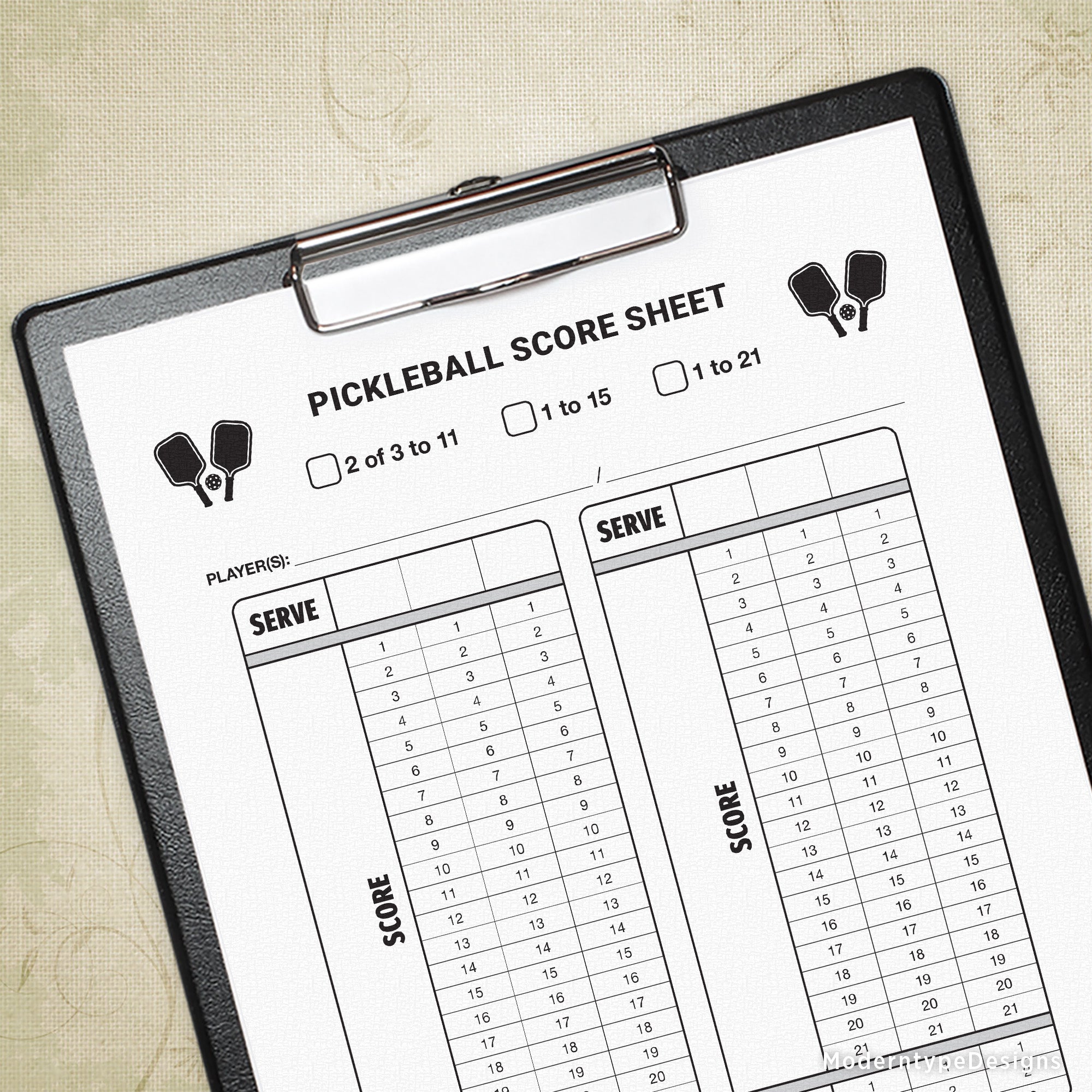
- Use a simple wrist counter, a scorekeeper app, or a small whiteboard fence clip. These help in rec play and drills.

Source: betterpickleball.com
Tools, cues, and common rule updates
A few small habits make pickleball scoring smooth and fair.
Useful cues:
- First serve, first word. Always call the score before you toss or swing.
- Even-right, odd-left. Say it in your head every serve.
- Switch on score. If you scored, trade sides with your partner.
Helpful tools:
- Portable net-side scoreboard clips.
- Referee or a volunteer caller in round robins.
- Phone apps with large fonts for shared tracking.
Rule notes to trust:
- The official rulebook still uses side-out scoring as the base.
- No service lets. If a serve clips the net and lands in, play on.
- Wording gets refined year to year, but the core of pickleball scoring stays the same.
Check the latest rulebook before tournaments. Local leagues may add house rules, so confirm formats at check-in.
Frequently Asked Questions of pickleball scoring
What is the standard pickleball score to win?
Most games go to 11, win by 2. Tournaments may use 15 or 21, still win by 2.
Why does a game start at 0-0-2 in doubles?
It reduces the first-serve advantage. Only one serve is allowed on the opening turn before the ball goes to the other team.
How do I know if I should serve from the right or left?
If your team’s score is even, serve from the right. If it’s odd, serve from the left.
Can you score on defense in traditional pickleball scoring?
No. Only the serving team scores. If you win a rally while receiving, you get the serve, not a point.
Are let serves still a thing in pickleball?
No. There are no service lets. If the serve hits the net and lands in the correct box, the ball is live.
What happens if the wrong score is called?
Stop play immediately and request a correction before the return is hit. If play continues, the rally stands.
How do you call the score in doubles and singles?
Doubles uses three numbers: server score, receiver score, server 1 or 2. Singles uses two numbers: server score, receiver score.
Conclusion
Pickleball scoring becomes easy with a few anchors: only servers score, even-right and odd-left, and switch sides only when you score. Use clear calls, avoid free points, and let the format shape your tactics. The more you practice score calling, the more calm and clutch you will feel at 9-9.
Try one drill this week, teach a friend the 0-0-2 rule, and own the end game. Want more tips on rules and strategy? Subscribe for new guides, or ask a question in the comments so I can help you solve it on court.