
A regulation pickleball is 2.87–2.97 inches wide and weighs 0.78–0.935 ounces.
If you are shopping or setting up a court, knowing the exact pickleball size matters. I coach newcomers and test gear weekly, and I’ve seen small size gaps change spin, bounce, and fun. This guide breaks down pickleball size for the ball, paddle, court, and net. Read on to make quick, confident choices that match your play and meet the rules.

What “pickleball size” covers
Pickleball size is not only the ball. It is a complete set of sizes that define fair play. The ball, the paddle, the court, and the net all have set rules.
These sizes work together. A small tweak can change how a point plays out. Once you learn each pickleball size, you pick better gear and avoid bad buys.
When I coach, size knowledge fixes many problems fast. Most control issues start with a ball or paddle that is out of spec.
Official pickleball ball size and specs
A legal ball must follow these rules from the official rulebook. These numbers keep games fair across clubs and events.
- Diameter: 2.87 to 2.97 inches
- Weight: 0.78 to 0.935 ounces
- Bounce: 30 to 34 inches from a 78-inch drop on a hard surface
- Holes: 26 to 40, machined and clean
- Color: One solid color that is easy to see
I carry a small caliper in my bag. I often check diameter when a ball feels odd. Heat can swell a ball, which changes bounce and spin. That is why pickleball size checks matter on hot days.
If your ball falls outside those specs, it is not legal. You can still drill with it, but do not use it in league play.

Indoor vs outdoor pickleballs and hole count
Indoor and outdoor balls share the same pickleball size rules for diameter and weight. The key difference is hole count and hole size.
- Indoor balls: Often 26 larger holes, softer feel, more control
- Outdoor balls: Often 40 smaller holes, harder shell, more wind stability
In wind, a 40-hole ball tracks straighter. Indoors, a 26-hole ball grips the floor and rides the paddle longer. I switch balls when I move from gym wood to rough asphalt. It keeps my timing and depth stable.
Pick a ball by the surface first. Then check that its pickleball ball size stays within the legal range.

Paddle size, length, and grip fit
Paddle rules put hard caps on size. If you play events, these numbers matter.
- Max length: 17 inches
- Total length plus width: 24 inches or less
- Thickness: No set limit, but weight and feel change
- Surface: Texture rules apply to reduce unfair spin tricks
Grip size is a common pain point. Most grips range from 4.0 to 4.5 inches in circumference. Use the index finger test. Hold the handle. Slide your index finger of the other hand into the gap between fingertips and palm. A snug fit means the grip size is right.
If you are between sizes, go smaller and add an overgrip. It helps control and keeps your wrist relaxed. The right pickleball size for your paddle and grip saves your arm and boosts sweet spot hits.

Court size and markings
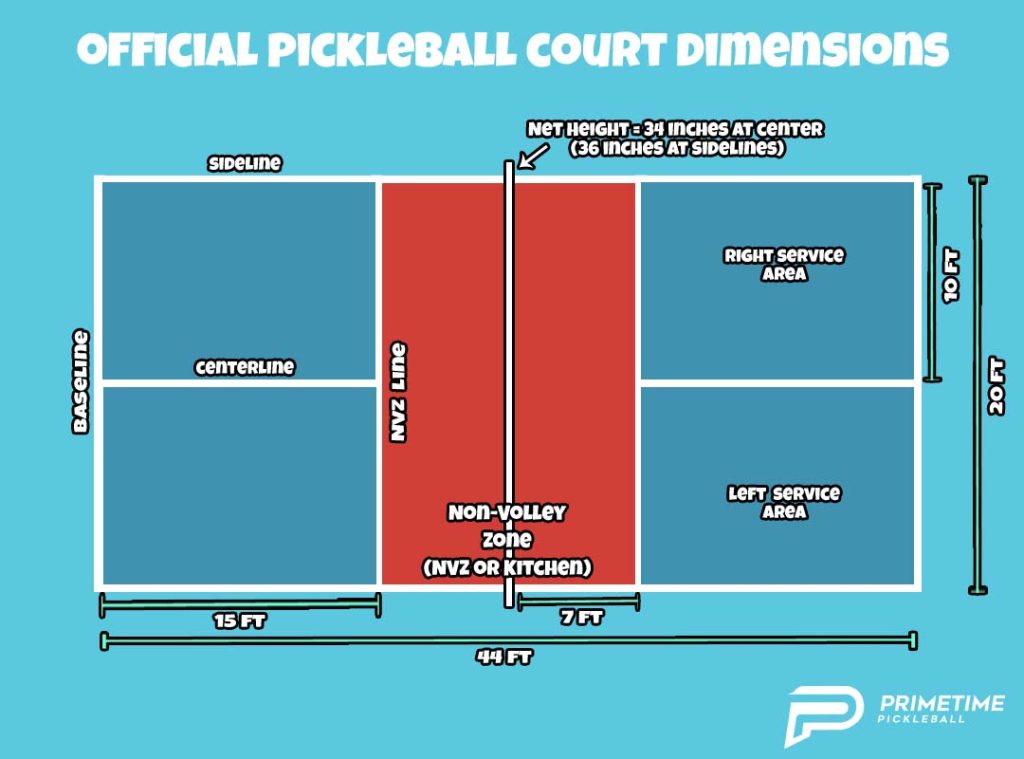
A regulation pickleball court is 20 by 44 feet. That is the same size used for singles and doubles. The lines are 2 inches wide.
- Non-volley zone, also called the kitchen: 7 feet from the net on each side
- Service boxes: 10 by 15 feet each
- Minimum playing area: 30 by 60 feet
- Preferred playing area: about 34 by 64 feet for events
If you build a home court, plan space for safe runs. A tight space leads to foot faults and sore knees. Correct pickleball court size helps beginners learn clean movement.

Net size and height standards
The net spans the 20-foot court width and attaches to posts outside the sidelines. A standard net is about 21 feet 9 inches long to reach the posts.
- Height at center: 34 inches
- Height at sidelines: 36 inches
Net height shifts play more than many think. A low center rewards drives and speed-ups. A true pickleball size for net height keeps dinks honest and lobs fair. I keep a small center strap tool in my bag and check before games.
How size choices change play
Even within legal specs, small size shifts change how a ball flies or how a paddle feels. Think of it like changing tires on a car. Same car, new feel.
- Ball diameter and weight: Larger or heavier can feel firmer and faster
- Hole pattern: More, smaller holes resist wind and cut float
- Paddle length: Longer shape adds reach and spin but shrinks width
- Grip size: Too large kills wrist whip, too small reduces control
- Net height: A half inch low makes speed-ups easier to land
When players say a court feels fast, they often mean the ball is hard or the surface is slick. Test gear in pairs. Keep one constant and change one size factor. Your best pickleball size setup will show fast.
Buying by pickleball size: quick picks
Use size first, then brand. It saves money and returns.
- Balls for outdoor play: Choose 40-hole, within legal diameter, bright color
- Balls for indoor play: Choose 26-hole, soft touch, clear bounce in range
- Paddles for control: Standard shape, 4.0 to 4.25 inch grip, midweight
- Paddles for power: Elongated shape, stable core, still within size rules
- Junior players: Shorter paddle, 4.0 inch grip, lighter build
- Court kits: Net with a center strap, lines at 2 inches, tape that holds
I have made size mistakes. I once ran a clinic with 26-hole balls on a windy day. The ball floated, and timing was off. We switched to 40-hole balls and play snapped back. Pickleball size choices fix problems fast.
Care, storage, and simple at-home tests
Size shifts with heat, cold, and wear. Care extends life and keeps specs true.
- Store balls at room temp and out of direct sun
- Do a bounce test from 78 inches when a ball feels dead
- Replace paddles with soft spots or edge warps
- Regrip when sweat loosens the handle fit
I keep a shoe box for balls. I mark a date on each new sleeve. If bounce drops below range, I move those balls to drills. This keeps my match balls at the right pickleball size feel.
Frequently Asked Questions of pickleball size
What is the official pickleball ball size?
A legal ball is 2.87 to 2.97 inches in diameter and weighs 0.78 to 0.935 ounces. It must bounce 30 to 34 inches from a 78-inch drop.
What is the standard pickleball court size?
A court is 20 by 44 feet with 2-inch lines. The kitchen is 7 feet deep on both sides of the net.
What is the regulation pickleball net height?
The net is 36 inches at the sidelines and 34 inches at the center. Use a center strap or ruler to check before play.
What is the maximum pickleball paddle size?
The paddle must be 17 inches or shorter. The total of length plus width cannot exceed 24 inches.
How do I choose the right grip size for my paddle?
Most adult grips range from 4.0 to 4.5 inches. Use the index finger test or try an overgrip to fine-tune.
Are indoor and outdoor pickleballs the same size?
Yes, both follow the same diameter and weight rules. The difference is the hole count and shell hardness.
Conclusion
Pickleball size is the backbone of fair and fun play. The ball, the paddle, the court, and the net all have clear numbers. Small shifts in size can change feel, spin, and safety.
Use this guide to check your gear and your setup. Test one change at a time and note the result. Ready to dial in your perfect setup? Subscribe for more hands-on tips, or drop a question and I’ll help you pick the right pickleball size for your game.