Pickleball tournaments approved balls must meet strict USA Pickleball standards for size, weight, bounce, and hardness.
Stepping onto the court for a tournament is a rush of excitement and nerves. You've drilled, you've practiced, and you're ready to compete. But have you thought about the one piece of equipment that's at the center of every single point? As a seasoned player and tournament competitor, I've learned that the ball you play with can dramatically impact your game. This guide will demystify the world of pickleball tournaments approved balls, breaking down what the "approved" label really means, how to choose the right one, and which models you're most likely to see in competitive play.

What Makes a Pickleball Ball "Tournament Approved"?
When you see a ball is "tournament approved," it means it has passed a series of rigorous tests conducted by USA Pickleball, the official governing body for the sport in the United States. This isn't just a fancy sticker; it's a guarantee of consistency. The goal is to ensure that every player, regardless of the venue, is competing on a level playing field where the ball behaves predictably.
Here’s a look at the specific criteria a ball must meet:
- Material and Construction: The ball must be made of a durable plastic material with a smooth surface and a uniform color. While most are yellow, white, or orange, other bright colors are allowed.
- Size: The diameter must be between 2.87 inches and 2.97 inches. This tight range prevents balls from being too large and slow or too small and fast.
- Weight: An approved ball must weigh between 0.78 and 0.935 ounces. A ball that is too light will be overly affected by wind, while one that is too heavy won't play correctly.
- Bounce: This is a crucial test. When dropped from a height of 78 inches onto a hard surface, the ball must bounce between 30 and 34 inches. This ensures a consistent rebound that players can rely on.
- Hardness: Measured on a Durometer D scale, the ball's hardness must be between 40 and 50 at a standard temperature. This affects how the ball feels off the paddle and how fast it plays.
I remember practicing for a tournament once with some cheap, non-approved balls. The bounce was all over the place, and they felt mushy off the paddle. The moment I switched back to one of the official pickleball tournaments approved balls, the difference was night and day. My timing felt right again, and I could trust where the ball was going.

Indoor vs. Outdoor: Why the Ball Matters
You might think a pickleball is just a pickleball, but the environment you play in makes a huge difference. That’s why there are two main types of balls: indoor and outdoor. Understanding their differences is key to preparing for any match, especially a tournament.
Indoor Pickleballs
- They typically have fewer, larger holes (around 26). This design helps them fly true in a controlled, wind-free environment.
- They are made from a softer plastic, which gives players more control and makes it easier to apply spin.
- The softer material means they play a bit slower and quieter, which is often preferred for indoor facilities.
Outdoor Pickleballs
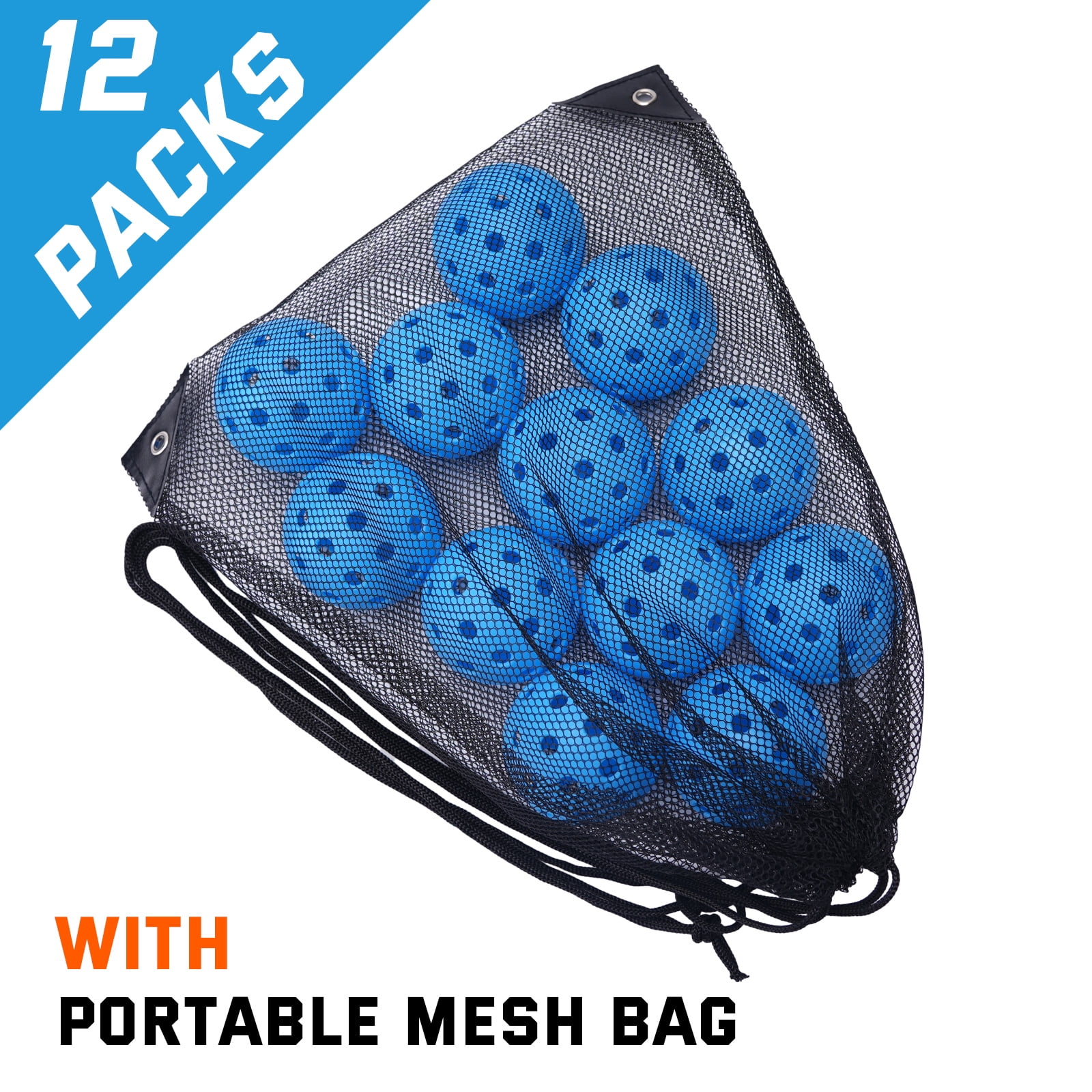
- These are designed to withstand the elements. They feature more, smaller holes (usually 40). This helps minimize the effect of wind, allowing for a more stable flight path.
- They are constructed from a harder, more brittle plastic to make them more durable on rough outdoor surfaces like asphalt or concrete.
- This harder plastic makes them play faster and come off the paddle with more pop.
Interestingly, many major indoor tournaments now use outdoor-style balls to ensure consistency across all major events. When I'm training for a tournament, I almost exclusively use outdoor pickleball tournaments approved balls, even if I'm playing inside. It keeps my reaction time sharp and ensures the ball feels the same in practice as it will on game day.

Top Pickleball Tournaments Approved Balls You'll See on the Court
While the official approved list contains dozens of balls, a few stand out as the most common choices for competitive play. These are the balls you'll see used in major professional tours and local tournaments alike. Knowing them will help you prepare for what to expect.
- Franklin X-40: This is arguably the most popular ball in the sport. As the official ball of USA Pickleball and the U.S. Open, the X-40 is known for its exceptional consistency, reliable bounce, and great durability. It's a true workhorse that performs well in a variety of conditions. In my experience, the X-40 offers a predictable flight that you can trust, which is exactly what you want in a high-pressure match.
- Dura Fast 40: For years, the Dura was the gold standard for high-level play, known for being one of the hardest and fastest balls available. Pros loved its speed, but it came with a reputation for being prone to cracking, especially in colder weather. It’s a fantastic ball when it's perfectly round, but players often have to inspect them before play.
- Onix Fuse G2: The Onix Fuse G2 strikes a great balance between performance and feel. It’s slightly softer than a Dura, offering a bit more control for players who rely on touch and spin. It's a popular choice for both tournament and recreational players because of its true flight and good durability.
- CORE Pickleball: As a newer brand on the scene, CORE has quickly gained a following for its durability and consistent play, particularly in changing weather conditions. Players find that it holds its shape and bounce well, whether it's a hot sunny day or a cool evening.
Remember, the list of pickleball tournaments approved balls is always evolving. It's a great idea to check the official USA Pickleball website before a tournament to see the most current list and find out which specific ball will be used.
How to Choose the Right Tournament Ball for Your Game
With so many approved options, how do you find the best one for you? It often comes down to a combination of tournament rules, conditions, and your personal playing style.
- Check the Tournament Rules First: This is the most important step. Most tournaments will designate an official ball. If the tournament you’re entering uses the Franklin X-40, you should be practicing with the Franklin X-40. There’s no substitute for getting used to the exact ball you'll be competing with.
- Consider the Climate: The weather plays a huge role. In colder temperatures, balls become harder and more brittle, while in extreme heat, they can become softer and bouncier. Some balls, like the CORE, are designed to perform more consistently across a range of temperatures.
- Match the Ball to Your Style: Do you have a power game? A harder, faster ball like a Dura might complement your style. If you rely more on dinks, drops, and spin, a slightly softer ball like an Onix Fuse G2 might give you the extra touch you’re looking for.
- Test Them Out: The best way to find your preference is to try a few different types of pickleball tournaments approved balls. I once thought I was set on one brand until a friend gave me a different approved ball to try. I immediately noticed I had better control on my third shot drops, and I've used that ball for practice ever since.

Frequently Asked Questions of pickleball tpurnaments approved balls
Can I use any pickleball for a tournament?
No, you must use a ball that is on the official USA Pickleball list of approved balls. Additionally, most tournaments specify one particular ball that all players must use for consistency.
Why are there different numbers of holes in pickleball balls?
The number and size of the holes are designed for different playing environments. Outdoor balls have more, smaller holes to resist wind, while indoor balls have fewer, larger holes for a truer flight in calm conditions.
How often does the list of approved balls change?
The list is updated several times a year as new balls are submitted by manufacturers and pass the required testing. It is always a good idea to check the USA Pickleball website for the most current list before a tournament.
Do pickleball tournaments approved balls wear out?
Absolutely. Over time, pickleballs can lose their roundness, develop soft spots, or crack. It’s important to inspect your balls before play and replace them when they show signs of significant wear to ensure fair play.
Is there one single best tournament approved ball?
There isn't a single "best" ball that fits every player. While the Franklin X-40 is widely used and considered a top performer, the ideal ball often depends on the tournament's choice, playing conditions, and your personal preference for speed and feel.
Conclusion
Selecting from the many pickleball tournaments approved balls is about more than just following the rules; it's a strategic choice that impacts every shot you make. Understanding the rigorous approval process, the critical differences between indoor and outdoor designs, and the characteristics of the top models gives you a competitive advantage. You can step onto the court with the confidence that comes from being prepared.
Before your next competition, find out which ball will be in play. Buy a sleeve, take them to the court, and get a feel for their bounce, speed, and flight. This small investment in preparation can make a world of difference when the pressure is on.
What is your go-to tournament ball, and why? Share your favorites and any personal experiences in the comments below