
Round robin pickleball is a format where players rotate to play multiple short matches.
I’ve run and played many round robin pickleball events, from casual club nights to competitive community tournaments. This guide explains what round robin pickleball is, how it works, how to organize one, rules and tie-breakers, plus coaching tips I’ve learned the hard way. Read on to get clear, practical steps and strategies you can use the next time you host or join a round robin pickleball event.

What is round robin pickleball?
Round robin pickleball is a tournament format where players or teams rotate through opponents so everyone plays multiple matches. Each match is usually short, often to 11 or with limited time, so play moves quickly. The goal is fair play and lots of court time rather than elimination.
Round robin pickleball is ideal for social play, skill-building, and ranking players in a friendly format. It balances competition and inclusivity by letting everyone play several opponents in one session. I’ve used this format to grow new club nights because it keeps people engaged and improves skills fast.
How a round robin pickleball tournament works
A round robin pickleball event follows a clear rotation and scoring plan. Here are the typical steps:
- Divide players into pools based on number of teams or skill.
- Schedule short matches so each team plays every other team in their pool.
- Use fixed match lengths or first-to-point rules, commonly 11 or 15 points.
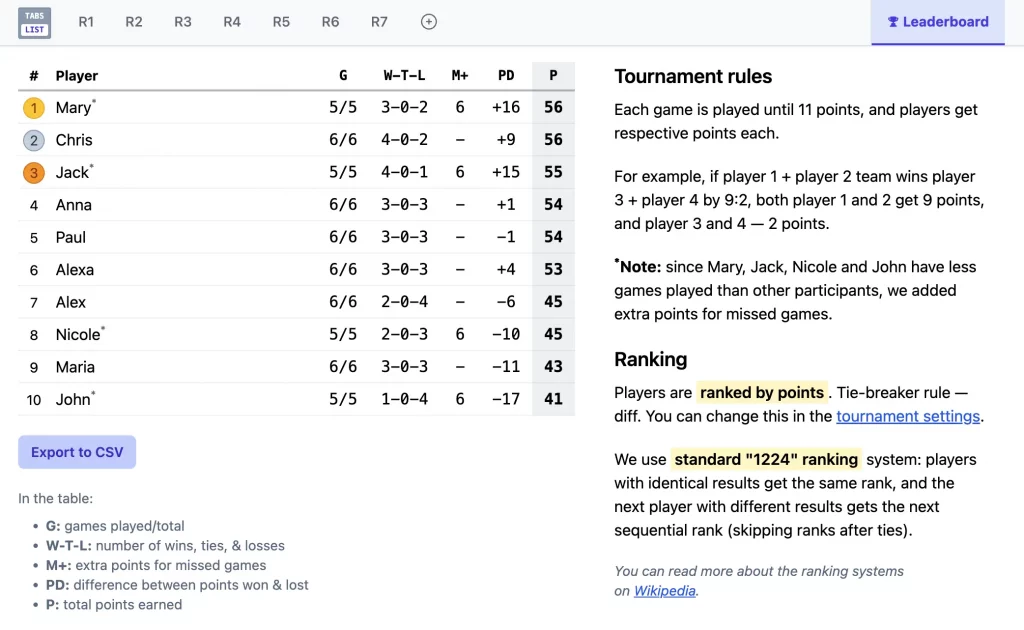
- Record results and rank teams by wins, head-to-head, or point differential.
- Advance top teams to playoffs if desired, or end with final pool standings.
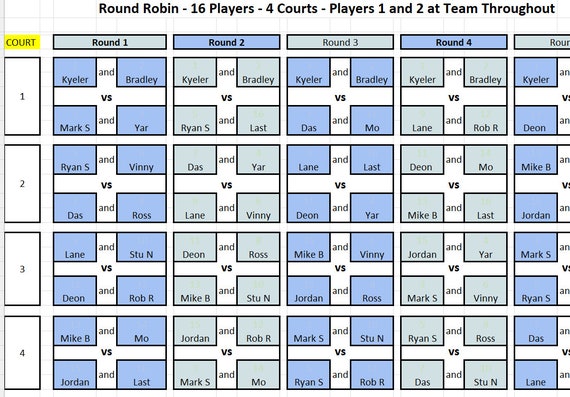
In practice, a 16-player night might be four pools of four teams. Each team plays three matches. The top teams then play semifinals. This structure keeps play moving and gives everyone 3–5 games in a session.
Benefits of running or playing round robin pickleball
Round robin pickleball has many advantages for players and organizers.
- More court time — Everyone gets multiple matches in one session, which helps skill development.
- Fair matchups — Rotations reduce luck of the draw and expose players to different styles.
- Social atmosphere — Players meet more opponents, which boosts club camaraderie.
- Easy to scale — Works for small groups or large tournaments with minor adjustments.
- Clear ranking data — You can evaluate players’ performance through multiple matches.
From experience, new players improve fastest in round robin pickleball because they face varied opponents and get repeated practice under pressure.
How to organize a successful round robin pickleball event
Good organization makes a round robin pickleball event feel effortless. Here’s a checklist:
- Plan pool sizes based on courts and time available.
- Decide match length; common choices are first-to-11 or timed 15-minute matches.
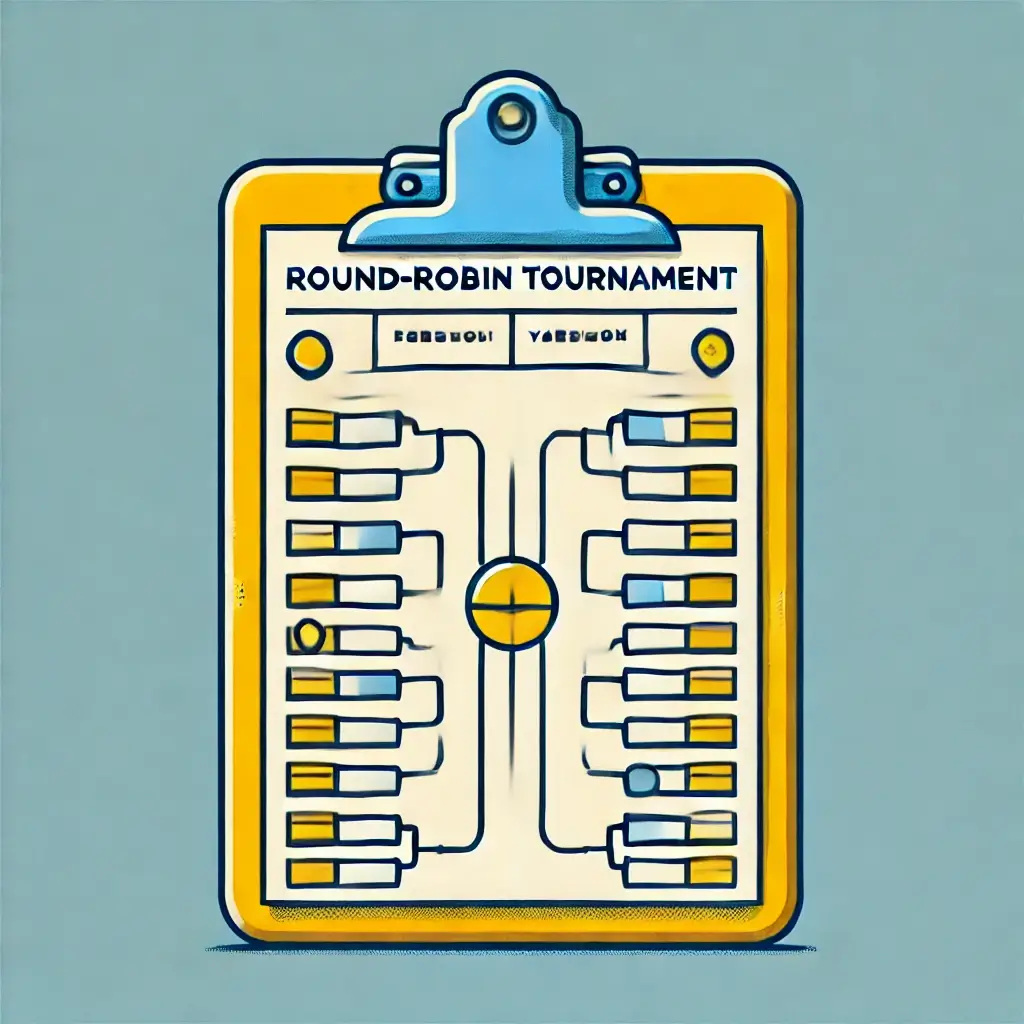
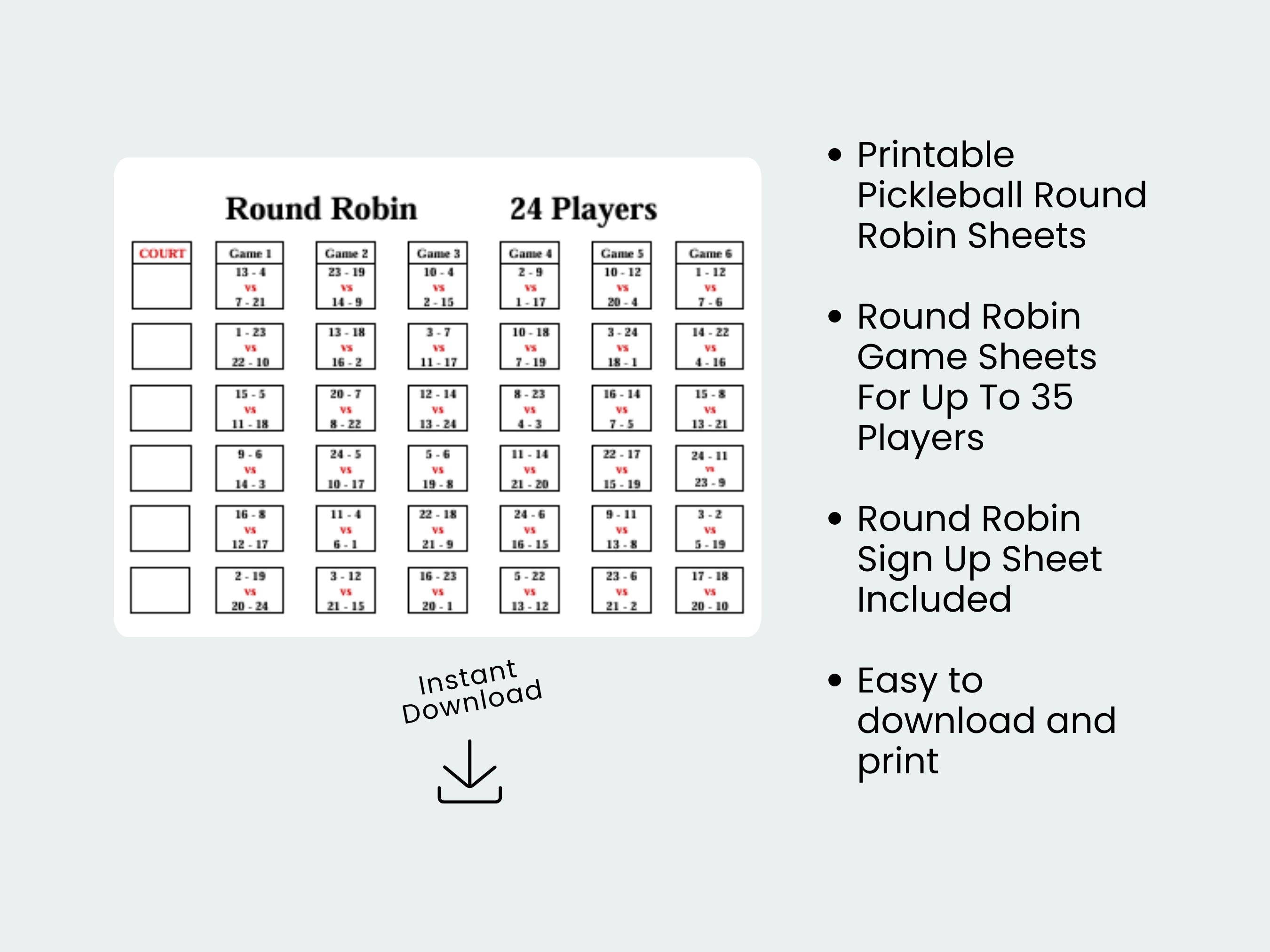
- Prepare printable or digital rotation sheets for each court.
- Assign a scorekeeper or use a simple app to track results.
- Set clear rules for substitutions and warm-ups.
- Communicate schedule and rules before play starts.
Pro tip from experience: keep match breaks short and post rotation sheets visibly. That prevents confusion and keeps momentum.
Scoring, rules, and tie-breakers in round robin pickleball
Scoring in round robin pickleball can be simple or detailed depending on goals. Common scoring systems:
- Traditional: best-of-three games to 11, win by 2.
- Short format: single game to 11, or timed matches (e.g., 12 minutes).
- Match points: award 1 point per match win, then use point differential for ties.
- Tie-breakers: use head-to-head first, then total points scored, then point differential.
If you want precise rankings, use points scored as a tiebreak. For social play, head-to-head followed by total wins is fine. I recommend a simple scoreboard for casual events and a detailed sheet for competitive rounds.
Strategies and tips to win more round robin pickleball matches
Round robin pickleball rewards consistency over one-off heroics. Try these tactics:
- Play safe early — steady serves and returns build momentum.
- Observe opponents quickly — identify weaknesses in the first two points.
- Rotate teammates smartly — if your event allows pair changes, pair strengths with weaknesses.
- Conserve energy — short matches mean you’ll play many games; avoid burnouts.
- Practice third-shot drops and dinks — control at the kitchen wins many matches.
I once lost multiple matches in a round robin because I sprinted every point early. After pacing and improving my dink game, my win rate rose noticeably.
Common mistakes and how to avoid them in round robin pickleball
Avoid these frequent pitfalls to keep your event smooth and fair.
- Poor scheduling — not leaving time for transitions causes delays.
- No clear tie-break rules — disputes happen if tie criteria aren’t posted.
- Overcomplicated rotations — simple grids reduce confusion.
- Skipping warm-ups — short matches make proper warm-up essential.
- Ignoring player skill balance — unbalanced pools lead to one-sided matches.
From experience organizing events, a clear printed rotation and a 5-minute buffer between rounds eliminate most issues.
Equipment, court setup, and logistics for round robin pickleball
Small details make big differences in round robin pickleball logistics.
- Courts — mark courts clearly and leave space for rotation traffic.
- Balls — use the same type and quality for fairness; have spares ready.
- Score sheets — paper or digital; assign someone to post results.
- Timing — use visible clocks or timers for timed matches.
- First aid and water — keep players safe and hydrated.
I always pack an extra set of paddles and balls. One blown-out ball can delay an entire rotation if you’re unprepared.
Frequently Asked Questions of round robin pickleball
What is the ideal match length for round robin pickleball?
Ideal match length depends on courts and time. For casual play, single games to 11 work well; for large groups, timed 12–15 minute matches keep rotations steady.
How do you handle ties in round robin pickleball standings?
Common tie-breakers are head-to-head results, then total match wins, then point differential. Predefine the order and post it so everyone knows the rules.
Can players switch partners during a round robin pickleball event?
Yes, many events allow partner rotation to mix skills and increase social play. Make sure rules about partner changes are clear before play.
How many players make the best round robin pickleball pool?
Pools of 4–6 teams work best for balance and time management. Smaller pools finish quickly; larger pools need more time or shorter matches.
Is round robin pickleball suitable for beginners?
Absolutely. Round robin pickleball gives beginners more court time and varied opponents, which speeds learning and builds confidence.
Do you need referees for round robin pickleball?
Referees are optional for casual rounds. For competitive events, a scorekeeper or referee is useful to handle disputes and keep time.
Conclusion
Round robin pickleball is a flexible, fair, and social format that gives players lots of court time and clear ranking feedback. With simple planning, clear rules, and good timing, you can host an event that delights beginners and challenges experienced players alike. Try a round robin at your next club night, use timed matches to keep things moving, and share results to help players improve. If you found this helpful, sign up for more tips, leave a comment about your experience, or try organizing a small round robin this week.