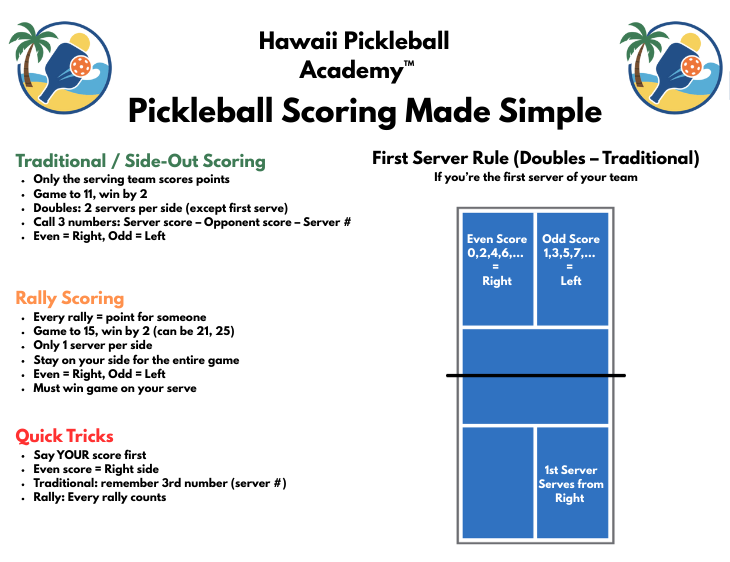
Scoring in pickleball is simple: only the serving team can score, games go to 11 (win by 2).
I’ve taught and played pickleball for years, and I’ll walk you through scoring in pickleball explained with clear rules, examples, and tips you can use today. This guide covers how points are counted, how to call the score, differences between singles and doubles, common faults, and real game scenarios. Read on to master scoring in pickleball explained and gain confidence on the court.

How scoring in pickleball explained works — the basics
Pickleball uses rally structure where only the serving team can earn points. Games are most often played to 11 points. A team must win by two points. Some tournaments play to 15 or 21. The score is called as three numbers in doubles: serving team score, receiving team score, server number. In singles you usually call two numbers: your score and opponent score. Learning these basics makes scoring in pickleball explained easy and fast.

Scoring in pickleball explained for doubles vs singles
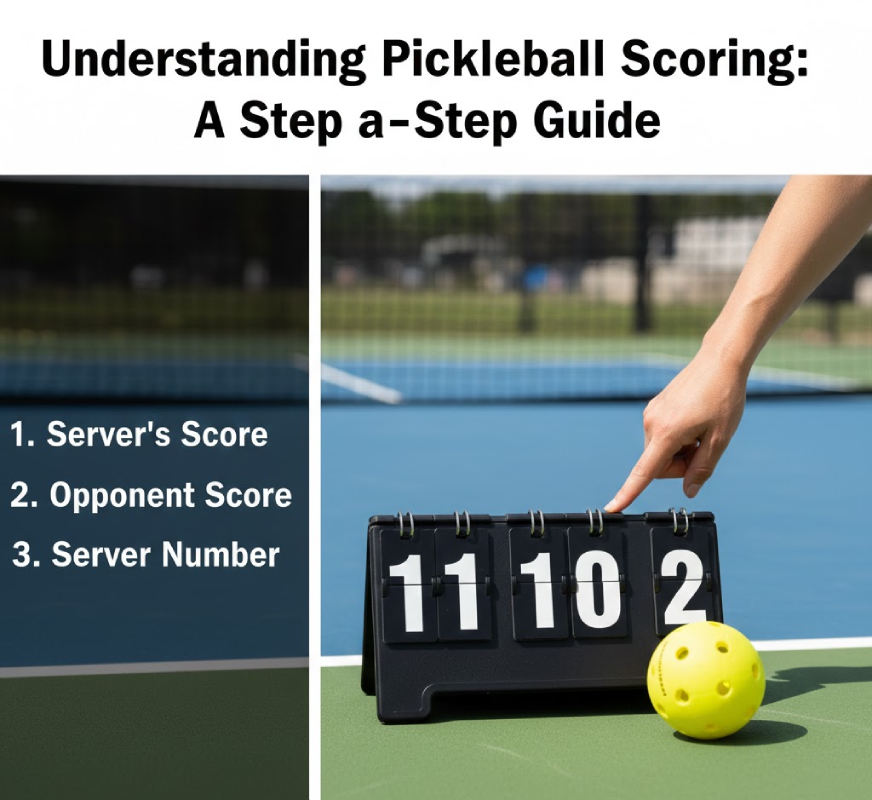
In doubles the score format is key. You call "serving team score – receiving team score – server number." Server number is 1 or 2 and shows which teammate is serving. At the start of a game the first serving team begins with only one server and the server number is 2. After a side-out each team may have two server turns before losing serve again. In singles you simply call "your score – opponent score" and only the server can score. Knowing the difference keeps scoring in pickleball explained consistent in both play styles.
How to serve and keep score — step-by-step
Start each point by calling the score before you serve. The serving player calls the serving team’s points first. Then call the receiving team’s points. In doubles add the server number last. Example calls include "5-3-1" for doubles or "5-3" for singles. A legal serve must be underhand, below the waist, and struck with an upward motion. If a serve is illegal or hits the net and lands out, it’s a fault and affects the score. Practice calling the score aloud to make scoring in pickleball explained second nature.

Faults and when points are awarded
A point is awarded to the serving team when the receiving team commits a fault. Common faults include:
- Serve hits net and lands out or is illegal
- Ball lands out of bounds on a return
- Double-bounce violation (not letting the ball bounce once on each side before volleying)
- Volleying in the non-volley zone (the kitchen)
- Foot faults on the serve
When the serving team commits a fault in doubles, that server loses their serve and the partner takes the next serve. If both servers on a team fault, serve goes to the opponents. These rules make scoring in pickleball explained predictable and fair.

Real scoring examples and common scenarios
Here are clear examples to make scoring in pickleball explained easy to visualize:
- Start of a doubles game: score is called "0-0-2." The starting team has only one server.
- Serving team wins first point: caller says "1-0-2." The serving team keeps serve and gains a point.
- Serving team faults on first serve: side out occurs and the opponents take serve. The new server calls their score first.
- Double-bounce occurs on return: fault by the team that volleyed early. If they were receiving, the serving team scores.
- Close game at 10-10: play continues until one side leads by two. Tournament rules may change the game length.
Using examples like these helps solidify how scoring in pickleball explained applies during play.
Scorekeeping tips and tools
Good scorekeeping prevents disputes and speeds up play. Try these tips:
- Always call the score aloud before each serve to avoid confusion.
- Use a simple scoreboard or dry-erase marker on the fence for social games.
- Track server number in doubles with a small mark or coin to avoid mistakes.
- Use phone apps or tournament software for organized play.
- Review the rules with new players before the first serve.
These practices make scoring in pickleball explained reliable and stress free.

Strategy related to scoring in pickleball explained
Scoring affects how you play. When you are serving, play more aggressively. When receiving, focus on neutral returns to get the serve back. Save risky shots until you have a clear chance to win the point. At match point, play high-percentage shots and avoid the kitchen on volleys. Knowing how scoring in pickleball explained influences strategy will help you win more points and matches.

Common mistakes and how to avoid them
New players make a few recurring errors that complicate scoring in pickleball explained. Watch for:
- Not calling the score before the serve, which causes disputes.
- Forgetting the server number in doubles and calling score wrong.
- Serving illegally with a high toss or overhand motion.
- Volleys in the non-volley zone while standing inside the kitchen line.
- Ignoring the two-bounce rule on the first two returns.
Avoiding these mistakes keeps play fair and helps your group enjoy the game.

Personal experience: lessons learned from playing and coaching
I once played a friendly tournament where both teams missed the initial rule that the starting team only has one serve. The match had several score mix-ups. After that I began telling new players the "0-0-2" start rule and always modeling score calls. That small habit cut arguments and made games flow. From coaching, I learned that simple drills on serving and calling the score build confidence. These real moments show how scoring in pickleball explained becomes simple with small routines.
Advanced notes for tournaments and variations
Tournament play may use different game lengths and formats. Some events use best-of-three games to 11, or single games to 15 or 21. Match and tournament directors may also use no-ad scoring in special formats. Always check the event rules before play. Clear pre-match communication prevents surprises and keeps scoring in pickleball explained consistent for all players.
Frequently Asked Questions of scoring in pickleball explained
What does the three-number score in doubles mean?
The three numbers mean serving team score, receiving team score, and server number (1 or 2). This tells players who serves next and the match state. It helps track which teammate is serving.
Can the receiving team score a point?
No. Only the serving team can score points in standard pickleball. If the receiving team wins the rally, they gain the serve but do not earn a point.
Why do doubles start with server number 2?
The starting team gets only one server on the first service sequence. That server is called number 2 by rule. This balances the serve rotation for both teams.
What happens after a double-bounce violation?
The team that violates the double-bounce rule loses the rally and commits a fault. If the serving team faults, they lose their serve or the partner’s serve depending on the situation.
How do you win a pickleball game?
You win by reaching the game target (commonly 11) and leading by at least two points. If neither side leads by two, play continues until someone does.
Conclusion
Scoring in pickleball explained is simple once you know the rule pattern. Only servers score, doubles use a three-number call, and common faults cost the rally. Use simple routines like calling the score loud and tracking the server number to avoid problems. Try these tips in your next game and watch your play and confidence improve. If you found this helpful, leave a comment with your toughest scoring question or subscribe for more pickleball tips.