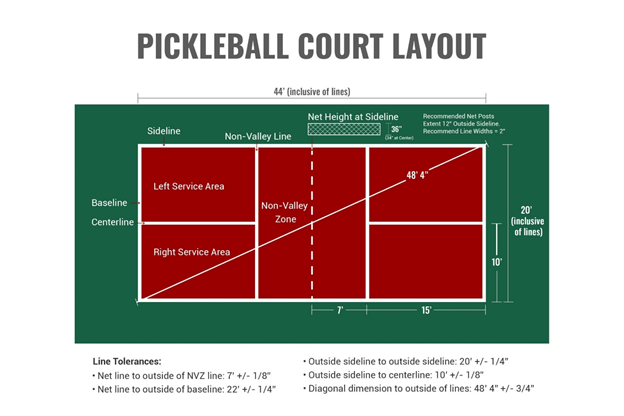
A standard pickleball court is 20 feet by 44 feet; allow about 30 by 60 feet for safe play.
I’ve built and played on dozens of courts, and I know the picky details matter. This guide explains the exact size needed for pickleball court, why those numbers matter, and how to plan a safe, comfortable space at home or for a club. You’ll get official dimensions, recommended clearances, conversion tips for tennis courts, budget guidance, and my real-life lessons so you can design the right court for your needs. Read on to get everything you need to measure, build, or convert the perfect pickleball space.
Official dimensions and what they mean
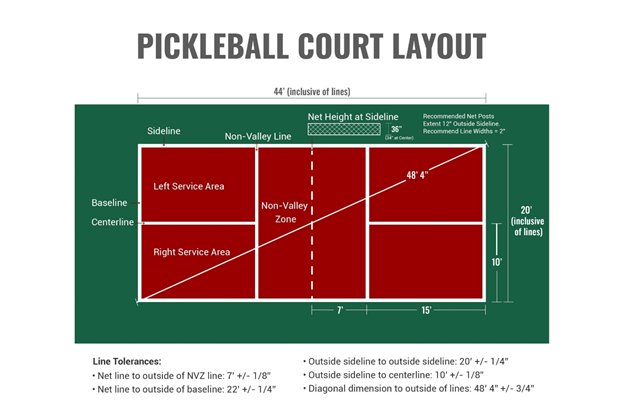
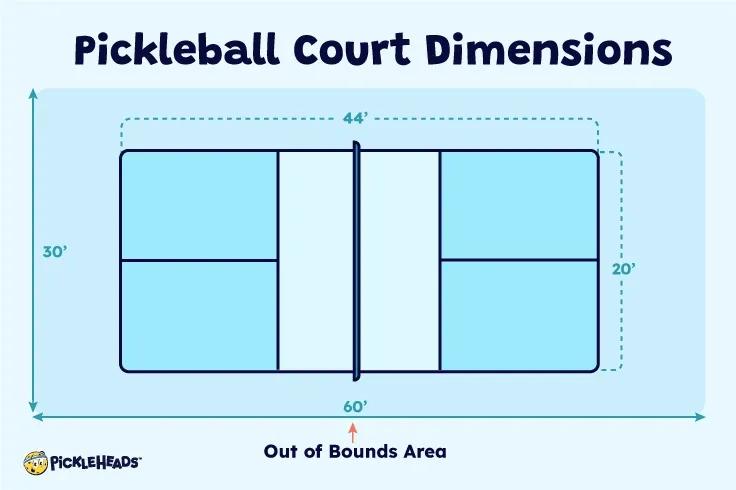
A regulation court area for play is 20 feet wide by 44 feet long. This size is the actual playing court used for both singles and doubles. The net crosses the 20-foot width at the center.
Key measurements to know:
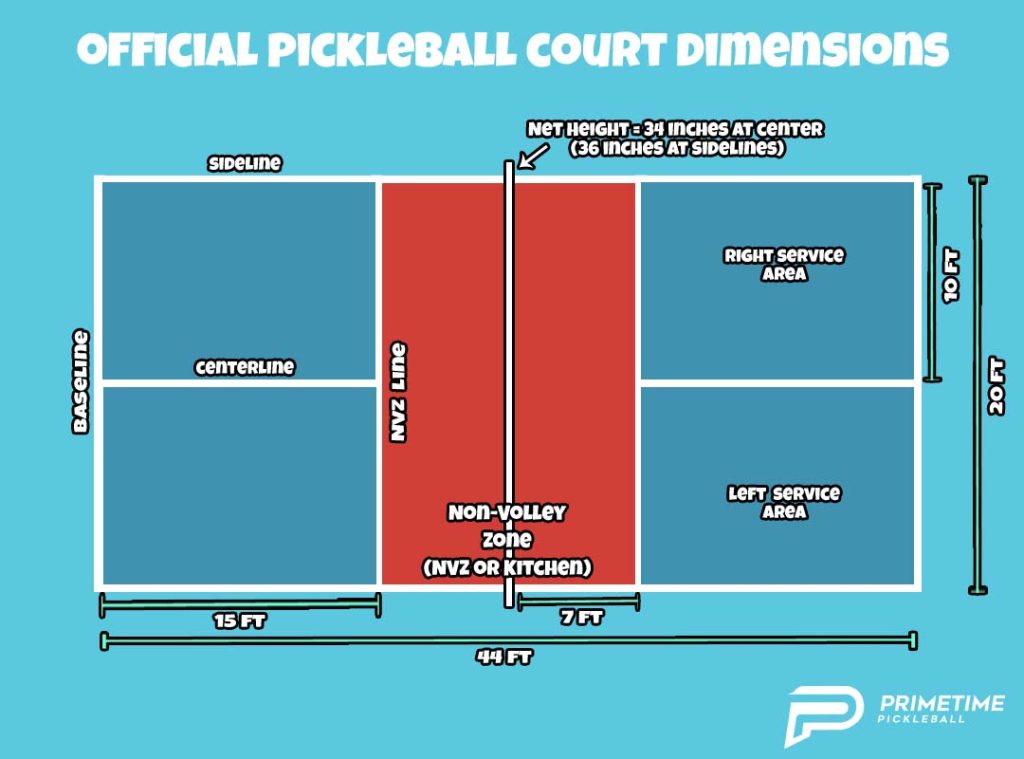
- Court lines measure 20 feet across and 44 feet long.
- Non-volley zone (the kitchen) extends 7 feet on each side of the net.
- Net height is 36 inches at the sidelines and 34 inches at the center.
- The net should be anchored so its center sags slightly to reach the correct height.
These are the base numbers for the size needed for pickleball court when you mark lines and set a net for regulation play. They matter for rules, court equipment, and tournament use.
Recommended playing area and clearances
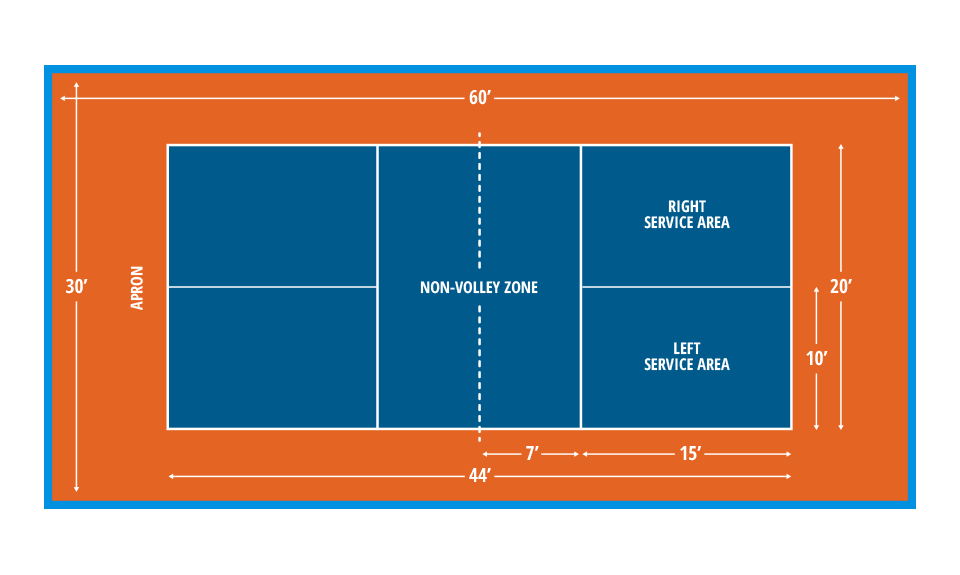
The 20 by 44 feet is the playing court. Players need room to move. Experts and facility planners typically recommend a minimum playing area of 30 feet by 60 feet. This gives space behind baselines and to the sides for safe movement.
Recommended clearances:
- Behind each baseline: at least 10 feet of clear space.
- Along each sideline: at least 5 feet of clear space.
- Overhead: 18 to 20 feet of clear vertical clearance, free of lights, beams, or trees.
If you can provide 30 by 60 feet, players can chase deep dinks, lobs, and volleys safely. When space is tight, the size needed for pickleball court can still be met for casual play, but expect more balls out and less run-back room.

Converting a tennis court or multi-use court
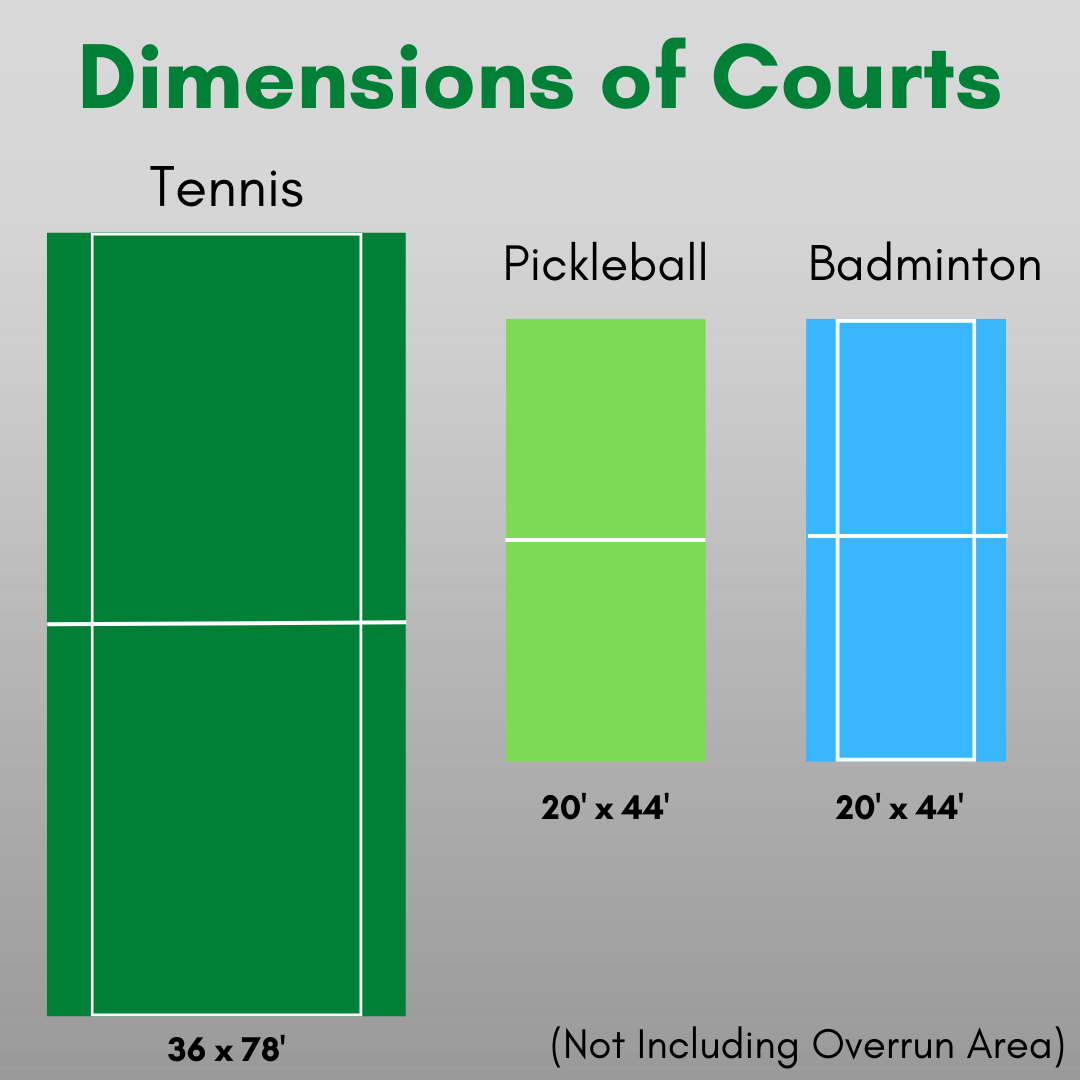
A standard tennis court runs about 60 feet by 120 feet for doubles. You can fit multiple pickleball courts inside that space. This is common at parks and clubs.
Conversion tips:
- Four pickleball courts often fit on one tennis court when arranged side-by-side.
- Paint pickleball lines in a contrasting color to keep visibility.
- Use portable or removable nets so tennis and pickleball can share the space.
When converting, plan for the size needed for pickleball court plus safe walkways between courts. Proper spacing avoids player collisions when multiple courts are in use.
Backyard and compact court options
Not everyone has space for a 30 by 60 area. You can still enjoy pickleball with smaller setups. For casual play, the essential size needed for pickleball court is the 20 by 44 feet playing area. Many backyards use slightly tighter clearances and portable nets.
Backyard ideas:
- Mini court: mark only the 20 by 44 playing area if space is limited.
- Reduce clearances: aim for at least 6 to 8 feet behind baselines if 10 feet isn’t possible.
- Portable net: use a 21–22 foot portable net that you can move or store.
From personal experience, I once built a backyard court with only 8 feet behind each baseline. It worked for family play but felt cramped for competitive rallies. If you plan to host games, prioritize extra clearance.
Surface, net, and equipment specs
Surface choice affects play speed and safety. Hard court, asphalt, concrete, and cushioned acrylic are common. Pick a flat, well-drained surface and maintain it to prevent trips.
Equipment basics:
- Net width: typical nets are 21 to 22 feet to cover the 20-foot court with posts.
- Net height: 36 inches at the sidelines, 34 inches at the center.
- Surface firmness: hard courts are faster; cushioned surfaces reduce impact.
- Lines: use contrasting paint for the 20 by 44 lines and kitchen lines.
For any court you build, match surface type to player needs. Older or younger players benefit from slightly cushioned surfaces to reduce joint strain.

Lighting, fencing, and overhead needs
Good lighting and fencing improve playability and safety. Consider these when planning the size needed for pickleball court.
Practical points:
- Lighting: even light across courts is important for night play. Aim for fixtures that minimize glare.
- Fencing: a 10-12 foot fence behind baselines keeps balls in play and reduces chasing.
- Overhead clearance: 18-20 feet helps with tall lobs and indoor gym fixtures.
If you add lights or a roof, check vertical clearance. Low ceilings can make volleys and overhead shots risky.
Cost, permits, and planning tips
Budget and local rules shape what you can build. Costs vary by surface, site prep, and local labor.
Typical cost ranges:
- Portable net and paint lines for an existing flat surface: low cost, often a few hundred dollars.
- Resurfacing or new asphalt/concrete with paint: mid-range, several thousand dollars.
- Fully built court with fencing and lights: higher-end, often $20,000+ depending on scope.
Planning checklist:
- Check local zoning and HOA rules for outdoor courts.
- Measure space before buying a net or paint.
- Get multiple quotes for surfacing and lighting.
- Consider drainage and slope to avoid pooling water.
When I planned my first court, I underestimated drainage needs. I learned to factor in grading early to avoid costly repairs.
Frequently Asked Questions of size needed for pickleball court
What is the minimum size needed for pickleball court for play?
The minimum official playing size is 20 feet by 44 feet. For safe play, most recommend a larger surrounding area, such as 30 by 60 feet.
Can I fit multiple pickleball courts on one tennis court?
Yes. A standard tennis court can often fit four pickleball courts side-by-side. Use contrasting paint and portable nets to share the space.
How much overhead clearance do I need?
Aim for 18 to 20 feet of clear vertical space. Lower ceilings make lobs and high shots difficult and unsafe.
What net height is required for a regulation court?
The net should be 36 inches at the sidelines and 34 inches at the center. Typical portable nets are designed to meet these heights.
Is 20 by 44 feet enough for a backyard setup?
Yes, that covers the playing lines. For comfort and safety, try to add at least 6 to 10 feet behind baselines and 5 feet on the sides when possible.
Do I need a fence around a pickleball court?
A fence is not required but recommended. A 10- to 12-foot fence behind the baselines helps keep balls in play and reduces chasing.
Conclusion
The core size needed for pickleball court is 20 by 44 feet. For real play comfort and safety, plan for roughly 30 by 60 feet with proper clearances, overhead height, and good surface choices. Start by measuring your space, prioritize safety clearances, and pick a surface that matches your players. If you’re unsure, test a marked 20 by 44 area first and adjust for extra clearance later.
Ready to design your court? Measure your space, sketch a plan, and share your dimensions below or subscribe for a step-by-step court-building checklist.