
A pickleball court measures 20 feet wide by 44 feet long, with a 34–36 inch net.
Whether you’re building a backyard setup or lining a gym floor, getting the size of pickleball court right changes everything. I’ve set up dozens of courts for leagues and clinics, and this guide distills what works, what fails, and how to plan with confidence. Stick with me for a friendly, expert walk-through that makes the size of pickleball court easy to understand and simple to apply.
Official size of a pickleball court
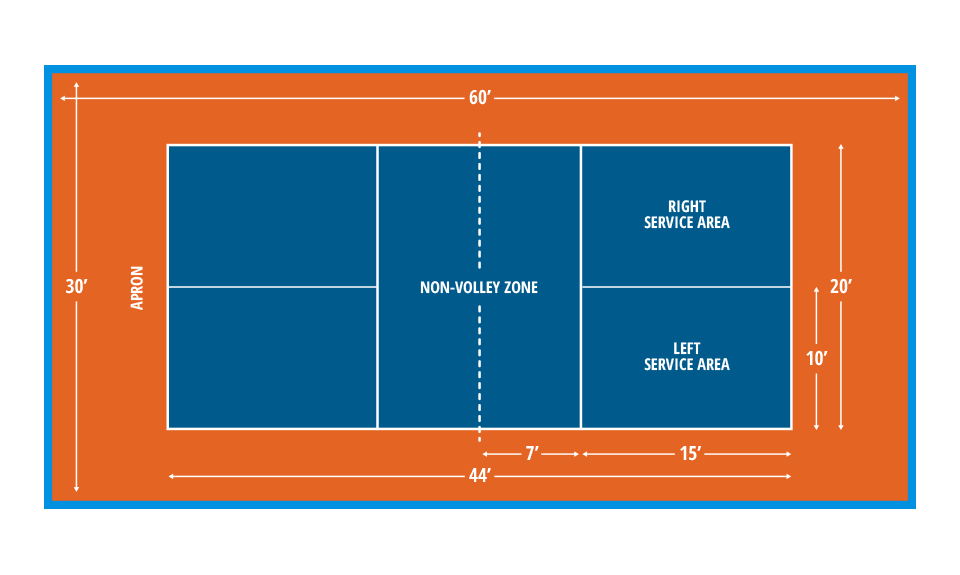
The official size of pickleball court, as defined in the rulebook, is 20 feet by 44 feet. This size is the same for singles and doubles. The net height is 36 inches at the sidelines and 34 inches at the center. Court lines are 2 inches wide and are part of the court.
If you want a court that plays well and feels safe, look beyond the taped lines. The minimum playing area is 30 feet by 60 feet. The preferred playing area is 34 feet by 64 feet for better run-off space and fewer safety issues.
In my experience, the preferred footprint saves ankles. Players chase lobs. They need room. Plan the size of pickleball court with that extra space, and your games will feel smoother and safer.
Court layout explained
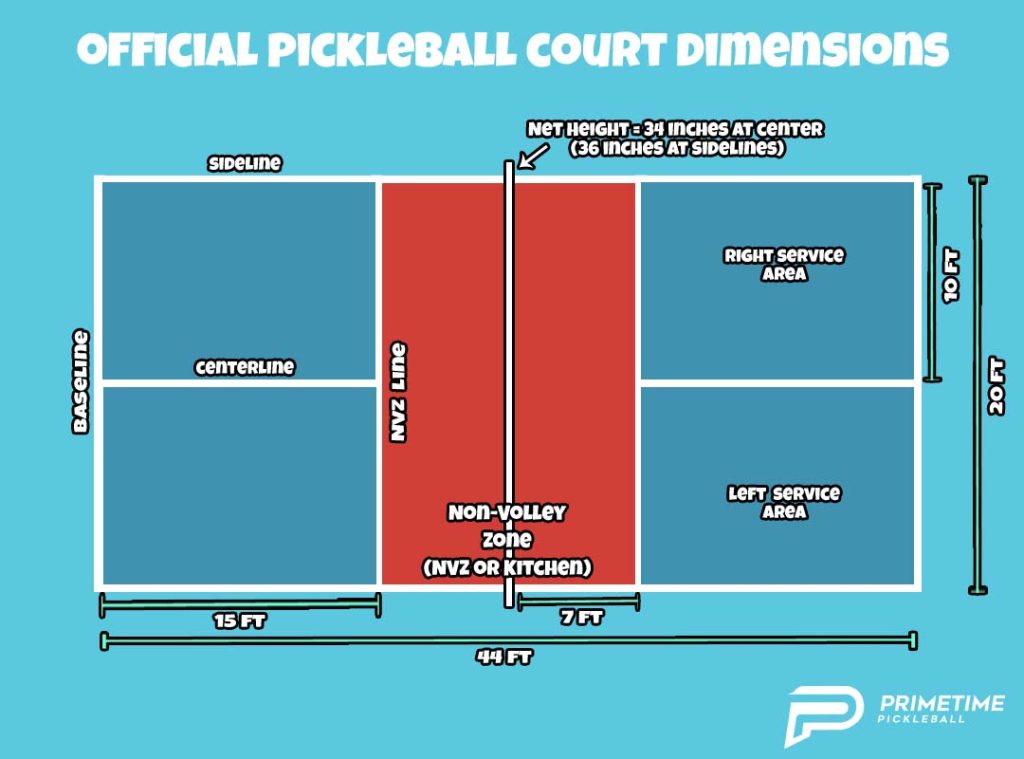
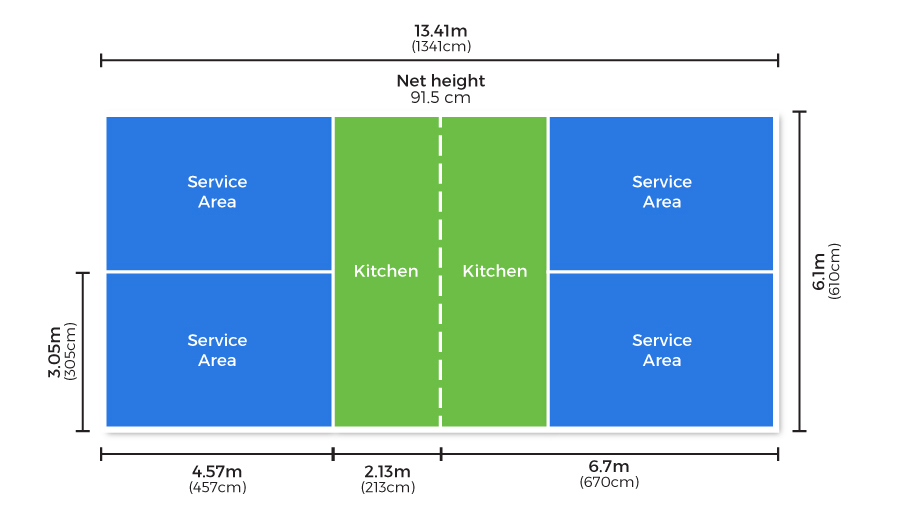
Understanding the layout helps you tape or paint it right the first time. From the net to the baseline is 22 feet on each side. The non-volley zone, often called the kitchen, extends 7 feet from the net on both sides.
Key parts of the layout:
- Baselines run the full 20-foot width at the back of the court.
- Sidelines run the full 44-foot length on both sides.
- The centerline splits the service area into two 10-foot wide service boxes.
- Each service box is 10 feet by 15 feet.
- The kitchen line is 7 feet from the net on each side.
The size of pickleball court also includes line width and clarity. Use high-contrast 2-inch lines. On gym floors, I prefer textured court tape. It holds up to heat and wear and makes edges crisp.

Playing area and space requirements
For safe play, think about the whole space, not just the court. The minimum total area is 30 feet by 60 feet. The preferred total area is 34 feet by 64 feet, which adds room behind baselines and at the sides.
What this extra space does:
- Reduces trips and falls near fences or walls.
- Makes lobs and deep returns playable.
- Cuts down on player congestion in doubles.
Indoors, I try to keep 8 to 10 feet behind each baseline and 5 to 7 feet on the sides. Outdoors, wind and sun can affect play, so space plus good orientation helps. North–south court alignment reduces glare at sunrise and sunset. This planning supports the right size of pickleball court and better play.
Converting spaces: driveway, gym, or tennis court
You can set up the right size of pickleball court in many places. Each has trade-offs.
Driveway or patio:
- Use a chalk line, laser measure, and outdoor tape or paint.
- Check slope. A slight slope is fine. Big slopes cause bad bounces.
- Add temporary net posts and a center strap for 34-inch middle height.
Gym floor:
- Use removable court tape that will not leave residue.
- Confirm the 20 by 44 measurements twice before you press the tape down.
- Avoid placing baselines on glossy seams to reduce slips.
Tennis court:
- A standard tennis court area (about 60 by 120 feet) can fit four pickleball courts.
- Use portable nets and corner markers to avoid repainting.
- Leave at least 8 to 10 feet between side-by-side playing areas for safety.
When I convert a tennis court, I chalk all corners first, then I connect the dots with tape. That one small habit keeps the size of pickleball court true and reduces rework.

How to build your own court: step-by-step
Here is a simple plan I use when helping homeowners and clubs. It keeps the size of pickleball court accurate and the process stress-free.
Plan and measure:
- Confirm you have at least 30 by 60 feet of space, 34 by 64 preferred.
- Map out sun, wind, and drainage.
- Mark a north–south baseline if possible.
Surface and prep:
- Asphalt or post-tension concrete works best outdoors.
- Indoors, wood or sport tile is fine.
- Clean, fill cracks, and level low spots.
Line and paint:
- Snap chalk lines for a 20 by 44 rectangle.
- Mark kitchen lines 7 feet from the net on both sides.
- Paint 2-inch lines in high-contrast color.
Net and posts:
- Set posts 22 feet apart inside faces, centered on the sidelines.
- Tension net to 36 inches at posts and 34 inches at center.
Optional upgrades:
- Add acrylic color coats and light texture for grip.
- Install perimeter fencing and windscreens.
- Add LED lights with minimal glare.
Budget ranges vary by surface and finish. A basic taped-court conversion can be a few hundred dollars. A full outdoor build with coating and lights can reach the high thousands. No matter the budget, lock in the size of pickleball court first. Everything else follows.
Common mistakes to avoid
I see the same errors over and over. They look small, but they change play in a big way.
- Short kitchen: A kitchen less than 7 feet kills the dink game and leads to disputes.
- Wrong net height: If the center sags below 34 inches, serves get too easy.
- Narrow space: Only using a 20 by 44 footprint, with no run-off, invites injuries.
- Fuzzy lines: Lines thicker than 2 inches or poorly taped lines cause bad calls.
- Bad orientation: East–west layouts glare out morning and evening play.
When in doubt, re-measure. A 15-minute check can save hours. It keeps the size of pickleball court accurate and fair.

Size of pickleball court vs other courts
It helps to compare sizes to visualize space and plan conversions.
- Tennis: Singles is 27 by 78 feet. Doubles is 36 by 78 feet. A tennis court area can fit four pickleball courts.
- Badminton: A singles badminton court is 17 by 44 feet; doubles is 20 by 44 feet. Pickleball shares the 44-foot length with badminton.
- Volleyball: An indoor volleyball court is 30 by 60 feet, which is the minimum recommended play area for one pickleball court.
These comparisons show why tennis conversions work well. They also explain why a gym can host several courts if ceiling height and spacing allow. Use them to confirm your space meets the size of pickleball court needs.

Frequently Asked Questions of size of pickleball court
What is the official size of pickleball court in feet?
The official court is 20 feet wide by 44 feet long. This size is standard for both singles and doubles play under the rules.
Is the size of pickleball court the same for singles and doubles?
Yes, singles and doubles use the same 20 by 44 court. Only player count and tactics change, not the dimensions.
How big is the kitchen on a pickleball court?
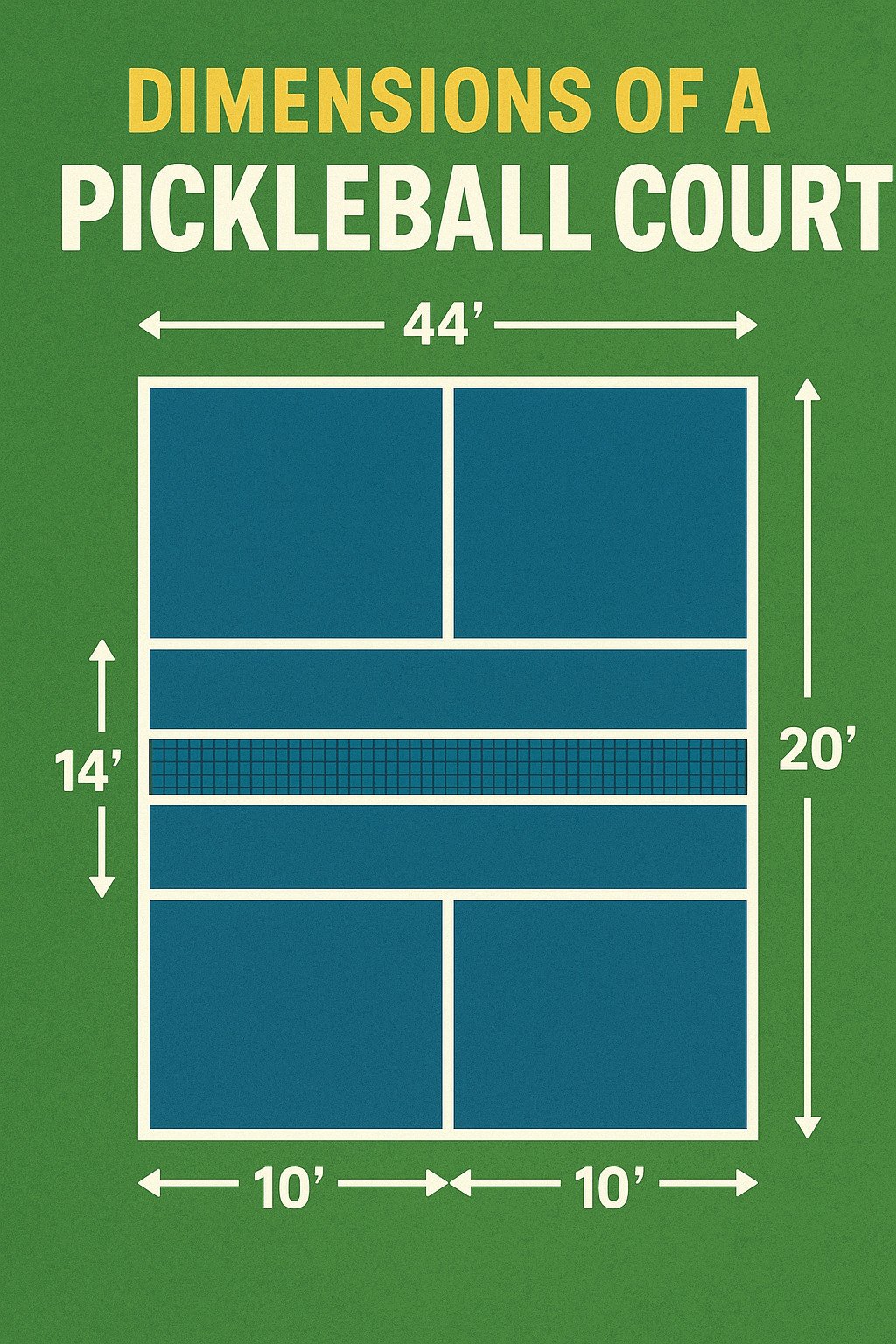
The non-volley zone, or kitchen, is 7 feet from the net on each side. That makes a 14-foot wide zone across the net.
How much space do I need around the court for safe play?
Aim for a total area of 34 by 64 feet if possible. The minimum safe footprint is 30 by 60 feet.
What is the net height on a pickleball court?
The net is 36 inches high at the sidelines and 34 inches at the center. Use a center strap or tape measure to confirm.
Can four pickleball courts fit on one tennis court?
Yes, four courts can fit within a standard tennis court area. Use portable nets and plan for safe spacing between courts.
What are the dimensions of each service box?
Each service court is 10 feet wide and 15 feet deep. The centerline splits the 20-foot width into two 10-foot boxes.
Conclusion
You now know the exact size of pickleball court, what space you need, and how to lay it out right. With correct lines, net height, and smart run-off room, your games will feel fair, fast, and safe. Small details, like a true 7-foot kitchen and 2-inch lines, make a big difference.
Ready to build or convert a space? Start with careful measurements, set the net to spec, and invite friends for a test rally. If this guide helped, share it, subscribe for more how-tos, or drop your questions in the comments so I can help you dial in your court.