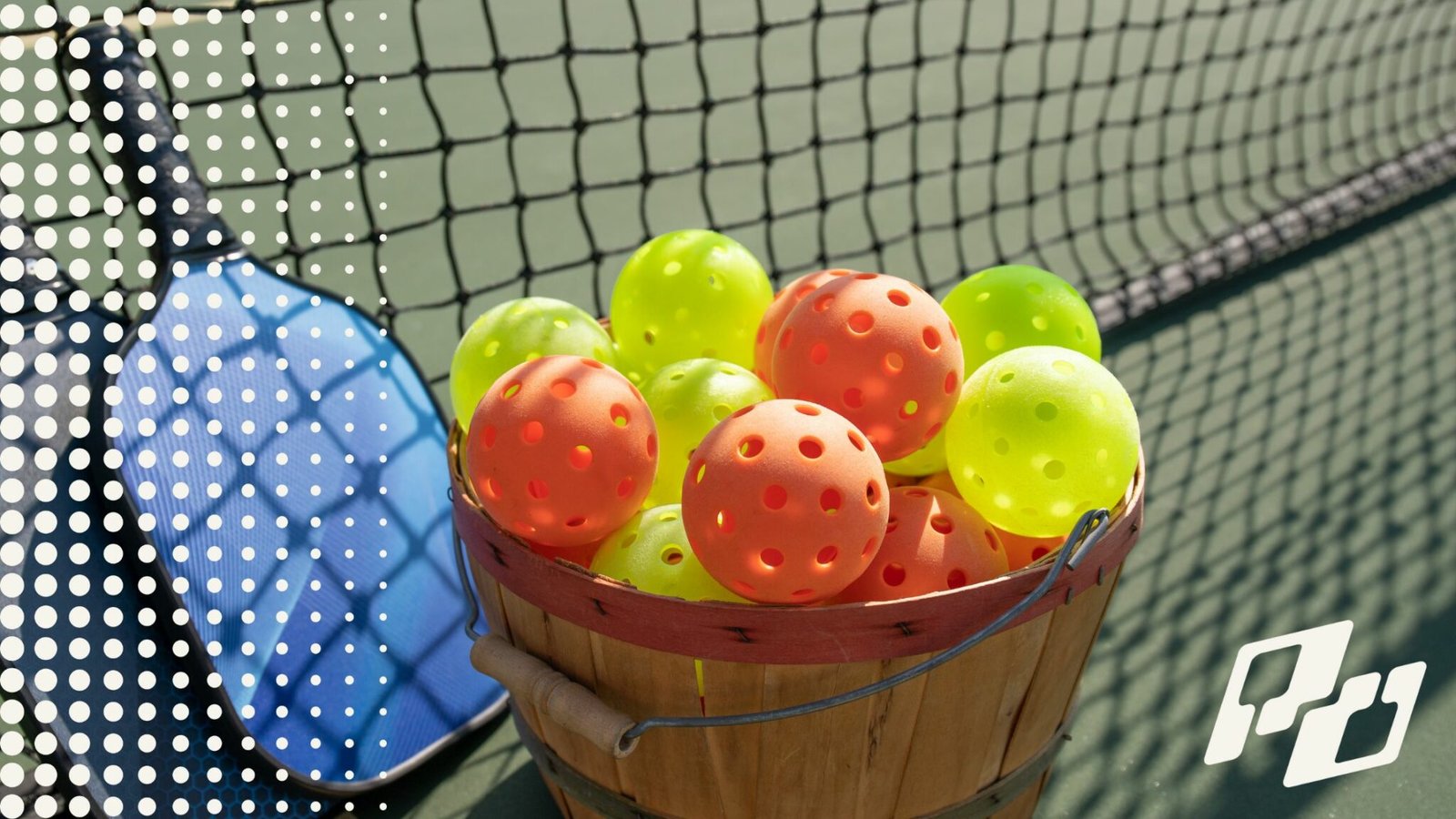
Pickleball uses a unique perforated plastic ball, often compared to a wiffle ball, with specific designs for indoor or outdoor courts.
As a seasoned player who has spent countless hours on both slick gym floors and gritty outdoor courts, I've learned that the ball you choose can make or break your game. It’s not just a simple piece of plastic; it’s the heart of every volley, dink, and smash. Understanding what ball is used for pickleball is the first step from being a casual player to a strategic one. In this guide, we'll dive deep into the differences between ball types, how to select the perfect one for your playing style, and why this small choice has such a big impact on your performance.

The Anatomy of a Pickleball
At first glance, a pickleball looks simple. It’s a lightweight, hollow plastic ball covered in holes. But the magic is in the details. Official regulations state that a pickleball must be between 2.87 and 2.97 inches in diameter and weigh between 0.78 and 0.935 ounces. This specific construction is what gives the game its unique, slower pace compared to tennis.
The material is typically a durable plastic polymer that allows for a consistent bounce. The perforations, or holes, are the most critical feature. They create drag, slowing the ball down and allowing for the controlled, strategic shots that define pickleball. The number and size of these holes are what primarily distinguish the different types of balls available.

Indoor vs. Outdoor Pickleballs: What's the Difference?
The single most important factor in determining what ball is used for pickleball is the playing environment. A ball designed for a quiet, controlled indoor game will perform poorly on a windy, abrasive outdoor court, and vice versa. Let's break down the key distinctions.
Indoor Pickleballs
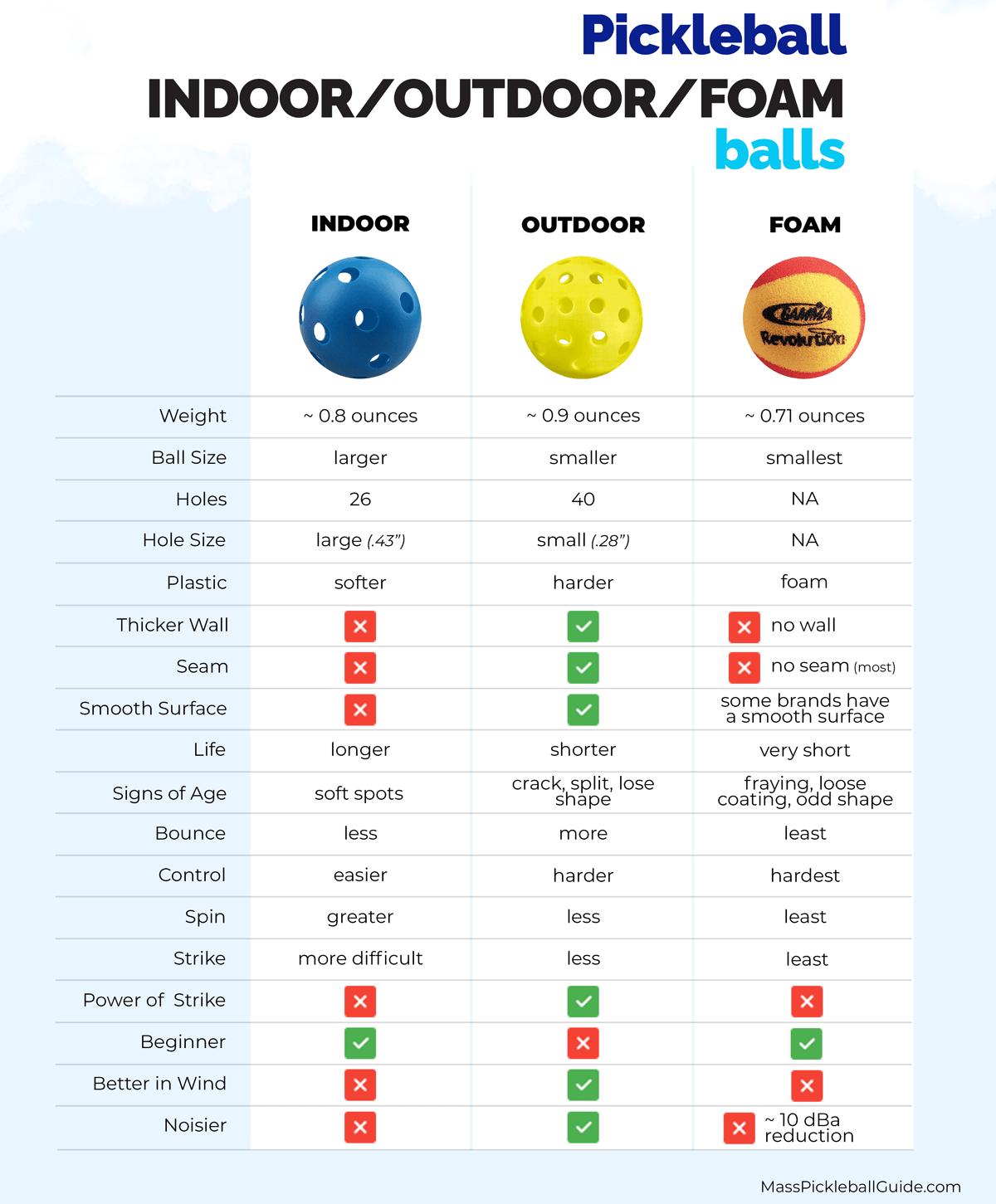
Indoor pickleballs are engineered for the controlled conditions of a gymnasium. They typically have 26 larger holes and are made from a softer plastic blend. This construction gives them a lighter feel and a much quieter sound off the paddle, which is a big plus for shared indoor facilities.
The softer material means they don't bounce as high and travel a bit slower through the air. From my experience, this makes them fantastic for beginners or for games focused on dinking and strategy. The larger holes give the ball a more consistent flight path without wind interference, but if you take one of these outside, a slight breeze will send it sailing off course. They also wear down and crack very quickly on rough outdoor surfaces.
Outdoor Pickleballs
If you're playing outside, you need a ball built to withstand the elements. Outdoor pickleballs are made from a harder, heavier plastic to make them more durable. They feature around 40 smaller, drilled holes, a design that helps minimize the effect of wind and ensures a truer flight path on breezy days.
This harder plastic results in a faster, livelier game. The ball comes off the paddle quicker and has a higher, more predictable bounce on asphalt or concrete courts. The downside? They are significantly louder, creating that classic "pop" sound pickleball is known for. They are also more prone to cracking in cold weather, so I always keep a few extras in my bag during the fall and winter months.
How to Choose the Right Pickleball for Your Game
Now that you understand the fundamental differences, picking the right ball becomes a matter of matching the equipment to your situation. Answering the question of what ball is used for pickleball is personal, but these factors will guide you to the perfect choice.
Consider Your Playing Environment
This is the number one rule. Are you playing on a smooth wooden gym floor? Grab an indoor ball. Are you heading to the local park courts? An outdoor ball is non-negotiable. Using the wrong ball for the surface will not only frustrate you with its poor performance but also cause it to wear out prematurely.
Think About Your Skill Level
While not a strict rule, your skill level can influence your preference. I often recommend that new players start with indoor balls, even when practicing drills outside. Their slower speed and softer feel are more forgiving, making it easier to learn control and master the soft game. More advanced players who rely on power and speed will almost always prefer the fast, crisp response of an outdoor ball.
Ball Color and Visibility
Pickleballs come in a variety of bright, high-visibility colors like optic yellow, orange, and lime green. The best color depends on your court's background and the lighting. I’ve found that optic yellow is a great all-around choice for blue or green outdoor courts in bright sunlight. For indoor courts with beige walls or floors, a bright orange or green ball can provide better contrast.
USA Pickleball Approved Balls
If you plan on playing in tournaments or sanctioned leagues, you must use a ball that is approved by USA Pickleball (USAP). The organization maintains a list of approved balls that have been tested to meet specific construction, size, weight, and bounce standards. Using an approved ball ensures a fair and consistent playing experience for everyone.
Caring for Your Pickleballs
Pickleballs don't last forever, especially the outdoor variety. To get the most life out of them, proper care is essential. The hard plastic of outdoor balls becomes brittle in the cold, leading to cracks after just a few hard hits. In contrast, they can become too soft and lose their bounce when left in a hot car.
I make it a habit to store my pickleballs in my gear bag at room temperature. Before every game, I give each ball a quick squeeze. If it feels soft or I hear a slight crackle, I know it's time to retire it. A cracked or out-of-round ball will fly erratically and produce an inconsistent bounce, so it's always best to play with a ball in good condition. Knowing when to replace your equipment is just as important as knowing what ball is used for pickleball in the first place.
Frequently Asked Questions
Can you use a wiffle ball for pickleball?
No, you should not use a wiffle ball for pickleball. While they look similar, wiffle balls are much lighter and have different hole patterns, which makes their flight path and bounce unpredictable and unsuitable for the game.
How long do pickleballs last?
The lifespan of a pickleball varies greatly. An outdoor ball can crack in a single game in cold weather, while an indoor ball may last for dozens of games before it needs to be replaced.
Why are there holes in a pickleball?
The holes are essential for the game's mechanics. They create aerodynamic drag that slows the ball down, allowing for longer rallies and more control on a smaller court compared to sports like tennis.
Do pickleballs come in different colors?
Yes, pickleballs come in many bright colors, most commonly optic yellow, orange, white, and green. The color choice is a matter of personal preference and what is most visible against the court and background.
What ball is used in professional pickleball tournaments?
Professionals use specific models of USA Pickleball-approved outdoor balls. The exact ball often depends on tournament sponsorships, but it will always be a hard, durable outdoor model designed for high-level, competitive play.
Conclusion
Choosing the right equipment is a key part of enjoying any sport, and pickleball is no exception. The answer to what ball is used for pickleball ultimately comes down to where you play. Use a softer, 26-hole indoor ball for gyms and a harder, 40-hole outdoor ball for open-air courts to get the best performance and durability. Beyond that, consider visibility and whether you need a tournament-approved ball.
The best way to find your favorite is to try a few different kinds. Now that you're armed with this knowledge, you can confidently select the right ball for your next match and focus on what really matters: having fun and hitting that perfect third-shot drop. What’s your go-to pickleball? Share your top pick in the comments below