
A fault in pickleball is any rule violation that stops a rally, resulting in a loss of the point. As a long-time player and certified coach, I've seen countless games won and lost over simple misunderstandings of the rules. Knowing what is a fault in pickleball isn't just about avoiding penalties; it's about understanding the game's strategy and flow. This guide will break down every type of fault in a simple, easy-to-understand way, transforming you from a confused player into a confident one who knows the rules inside and out.
The Basics: What is a Fault in Pickleball?
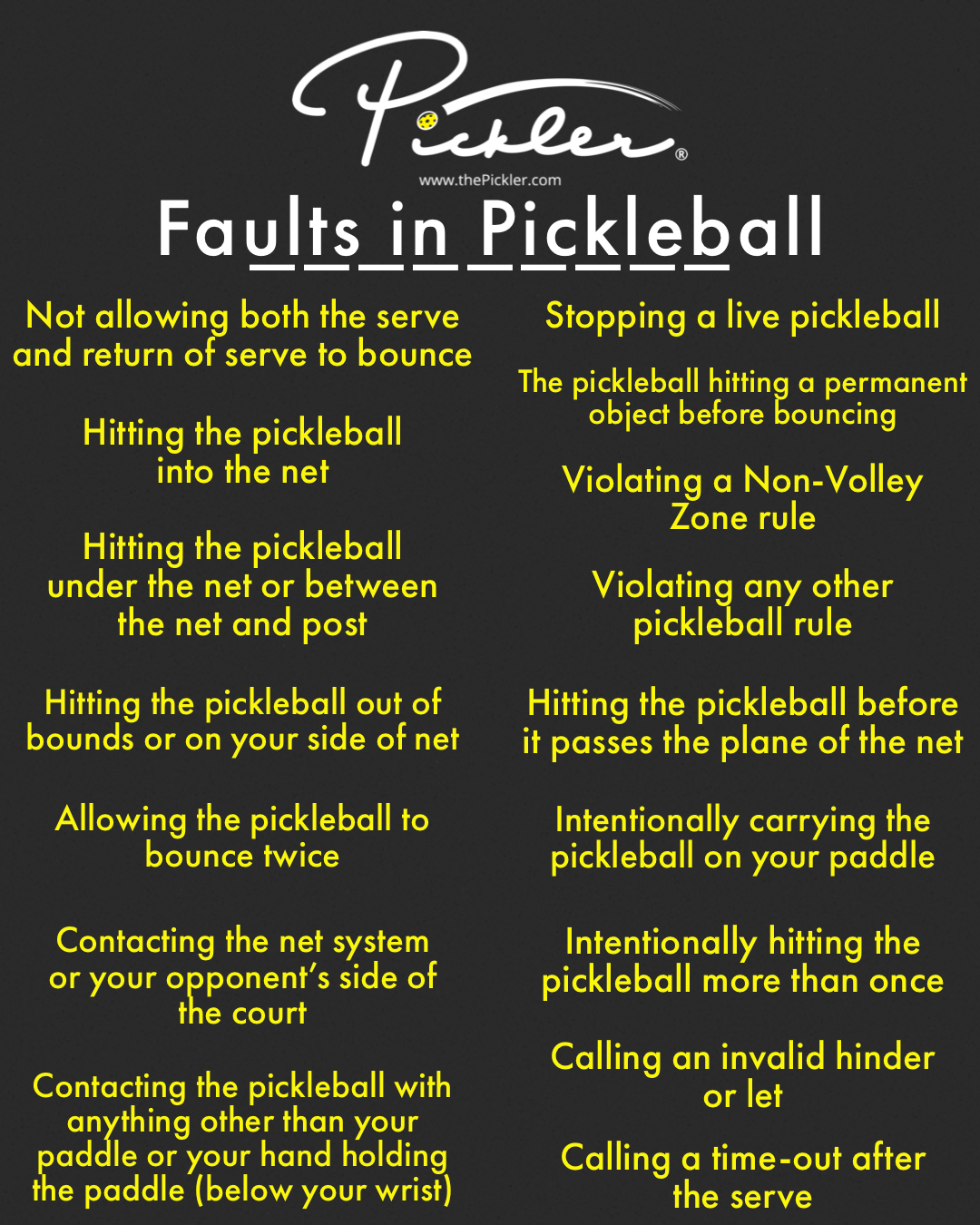
Think of a fault as a misstep in a conversation that brings it to an abrupt halt. In pickleball, a fault is any action that violates the rules and immediately stops the rally. The consequence of a fault depends on which team commits it. If the serving team faults, they lose the serve (this is called a "side out"). If the receiving team faults, the serving team scores a point and continues to serve.
Understanding the core concept of what is a fault in pickleball is the first step to mastering the game. It’s not just about hitting the ball over the net; it’s about doing so within a specific set of rules designed to keep the game fair, fun, and competitive. Many new players lose points not because of a lack of skill, but because they are unaware of these fundamental rules.

The Non-Volley Zone (NVZ) or "Kitchen" Faults
The Non-Volley Zone, affectionately known as the "kitchen," is the seven-foot area on both sides of the net. This zone is the source of some of the most common and confusing faults in the game. The primary rule is simple: you cannot hit a volley (hitting the ball out of the air before it bounces) while any part of your body is in the kitchen or touching the kitchen line.
I remember my early days playing, I had a great volley and would rush the net, only to be called for a fault repeatedly. It was frustrating until I realized my momentum was carrying me onto the kitchen line after my shot. This is a crucial detail many players miss. Even if your feet are behind the line when you hit the volley, if your follow-through or momentum causes you to step into the kitchen, it is still a fault.
Here are the key kitchen faults to remember:
- Volleying the ball while your feet are inside the kitchen or on the kitchen line.
- Letting your momentum carry you into the kitchen after a volley.
- Dropping your paddle or hat into the kitchen during or after a volley.
You are allowed to be in the kitchen at any other time. If the ball bounces in the kitchen, you can step in and hit it without any issue. The key is to remember the restriction only applies to volleys.
Serving Faults: Starting the Point Correctly
The serve is the only shot you have complete control over, yet it’s a place where many faults happen. A serving fault results in an immediate loss of serve. Understanding what is a fault in pickleball during the serve is critical to keeping possession and scoring points.
From my experience coaching, I see players struggle most with the motion and foot placement. They try to generate too much power and end up with an illegal serve. The pickleball serve is about placement and consistency, not pure speed.
Here are the primary serving faults to avoid:
- Foot Faults: At the moment you strike the ball, at least one of your feet must be behind the baseline. You cannot touch the baseline or the court surface inside the baseline during your service motion.
- Illegal Motion: The serve must be an underhand motion. This means the paddle must contact the ball below your waist (navel level), and the paddle head must be below your wrist when it strikes the ball.
- Wrong Target: The serve must land in the service court diagonally opposite you. It must clear the non-volley zone line. If the ball lands in the kitchen, on the kitchen line, or outside the service court lines, it is a fault.
Other Common Faults You Need to Know
Beyond the kitchen and the serve, there are several other rule violations that can result in a fault. These are just as important to know, as they can occur at any point during a rally. Being aware of these will help you avoid giving away easy points to your opponents.
One of the most frequent faults I see in recreational play is a violation of the double-bounce rule. Players get excited and try to volley the return of serve, which is an immediate fault. You have to let the ball bounce once on your side before you can start volleying.
Here is a list of other key faults:
- Double-Bounce Rule Violation: The ball must bounce once on the receiving side after the serve, and then it must bounce once on the serving side after the return. After these two bounces have occurred, players are free to volley the ball. This is also known as the two-bounce rule.
- Hitting the Ball Out of Bounds: If your shot lands outside the opponent's court lines (sidelines and baseline), it is a fault.
- Ball Hits the Net: If the ball hits the net and does not travel over to the opponent's side, it is a fault.
- Touching the Net System: If any part of your body, your paddle, or your clothing touches the net, the net posts, or the net system while the ball is in play, it is a fault.
- Ball Hits a Player: If the ball hits you or your partner before it bounces on the court, your team has committed a fault.

Frequently Asked Questions
What happens when a fault is called?
When a fault is called, the rally immediately stops. If the serving team committed the fault, it is a side out. If the receiving team committed the fault, the serving team wins the point.
Can my paddle cross the net?
Yes, but only after you have struck the ball on your side of the net. Your paddle can cross the plane of the net on your follow-through, as long as it does not touch the net itself.
Is it a fault if the ball hits the net on the serve?
No, this is not a fault. If the ball hits the net on the serve and lands in the correct service court, the ball is live and the rally continues. This is different from tennis, where it would be a "let."
What is a foot fault in pickleball?
A foot fault occurs during the serve when the server steps on or over the baseline before their paddle makes contact with the ball. It results in a loss of serve.
Can you step into the kitchen after the ball bounces?
Yes, absolutely. You can enter the non-volley zone at any time to hit a ball that has already bounced. The fault only occurs if you volley the ball from within the kitchen.
Conclusion
Mastering the rules is just as crucial as mastering your dink or your third-shot drop. Understanding what is a fault in pickleball protects you from giving away unearned points and empowers you to play with more confidence and strategic awareness. From kitchen violations and serving errors to the double-bounce rule, each fault is a learning opportunity.
Now that you have a clear picture of the most common faults, pay close attention to them in your next game. Focus on your footwork around the kitchen, ensure your serve is legal, and wait for that second bounce. You'll be surprised at how quickly your game improves just by playing smarter.
What is the most common fault you see on the court? Share your experiences in the comments below