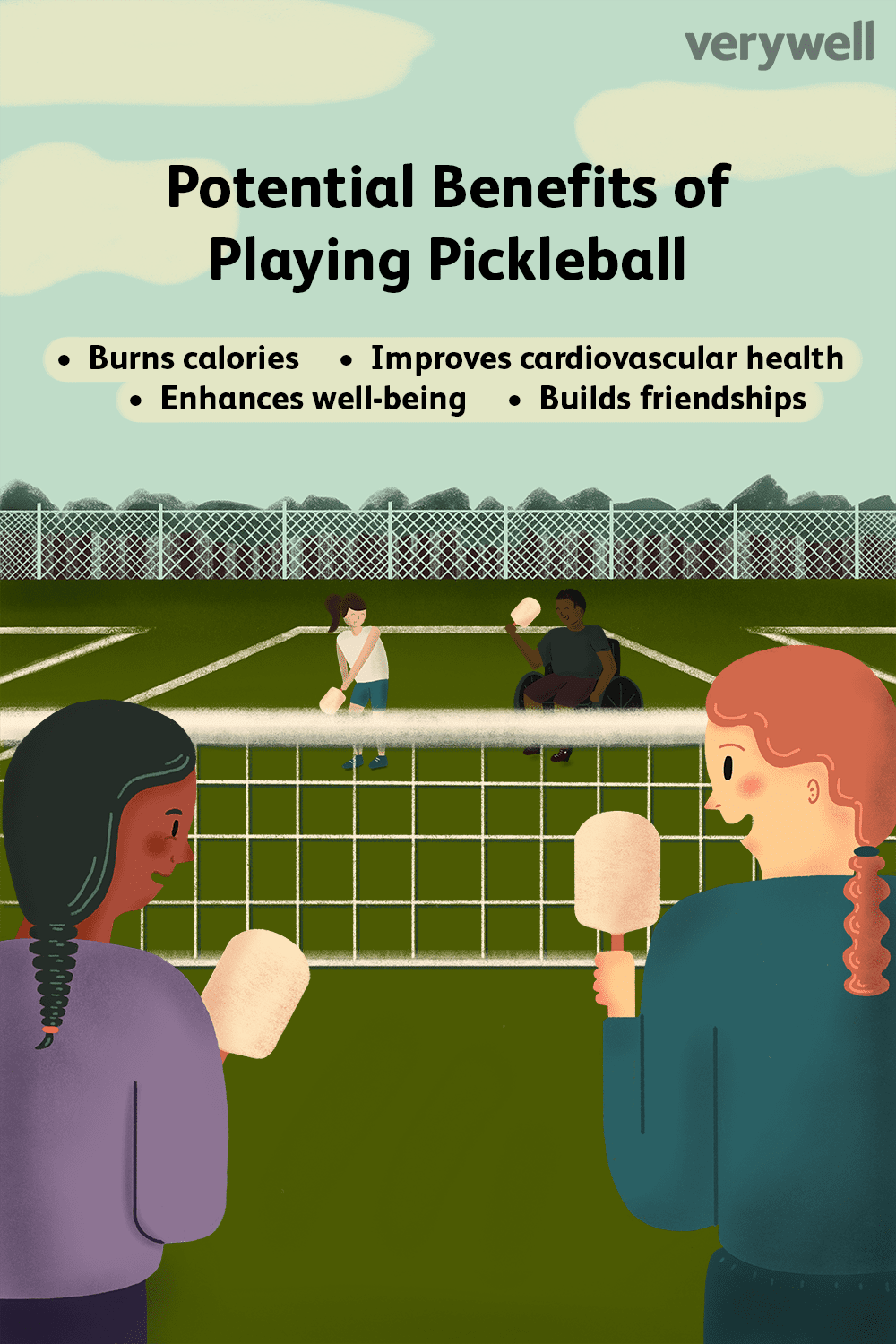
Pickleball is a fun paddle sport that combines elements of tennis, badminton, and ping-pong, played with a paddle and a plastic ball.
Have you noticed those courts popping up in parks, hearing the distinctive thwack of a plastic ball, and seeing people of all ages laughing and having a great time? That's pickleball, the fastest-growing sport in America, and I’m here to tell you everything you need to know about it. As someone who went from a curious spectator to a passionate player, I've seen firsthand how this game can bring people together. This guide will break down exactly what is pickleball and how is it played, covering everything from the court and gear to the rules and scoring, so you can step onto the court with confidence.
The Pickleball Court: Your Playground Explained
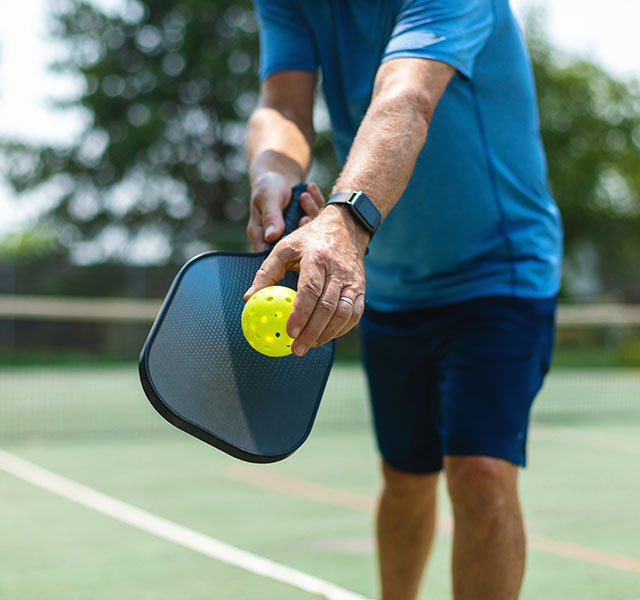
At first glance, a pickleball court looks like a miniature tennis court, and that’s a great way to think about it. The compact size is one of the key reasons the game is so accessible. It measures 44 feet long and 20 feet wide, the same dimensions as a doubles badminton court.
The court is divided into specific zones you need to know. The most important area is the Non-Volley Zone, affectionately known as "the kitchen." This is a seven-foot area on both sides of the net. As the name suggests, you cannot hit the ball out of the air (a volley) while your feet are inside this zone. I remember when I first started, staying out of the kitchen felt like a game of "the floor is lava," but it’s a crucial rule that prevents players from simply smashing the ball at the net, promoting a more strategic game of dinks and placement.
Gearing Up: The Essential Pickleball Equipment
One of the best things about pickleball is that you don't need a lot of expensive gear to get started. The barrier to entry is incredibly low. Here’s a simple breakdown of what you'll need.
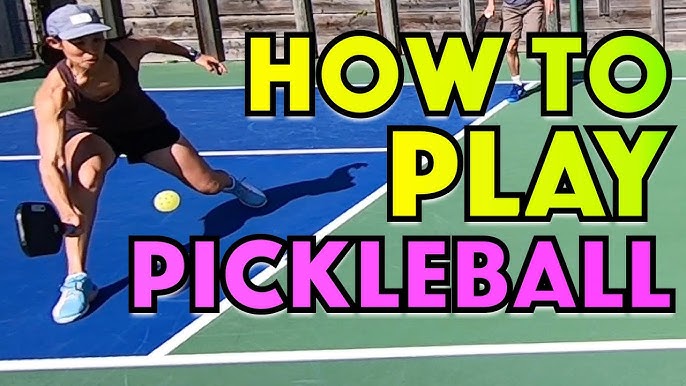
- The Paddle: Unlike a tennis racket, a pickleball paddle is solid with no strings. They come in various materials, from basic wood paddles for beginners to advanced composite and graphite models for more serious players. My first paddle was a simple wooden one, and it was perfect for learning the feel of the game without a big investment.
- The Ball: The pickleball itself is a lightweight plastic ball with holes, similar to a wiffle ball. There are slight differences between indoor balls (with larger holes, making them softer and slower) and outdoor balls (with smaller holes, making them harder and faster to cut through the wind).
- The Net: A pickleball net is 36 inches high at the sidelines and droops to 34 inches in the middle. This lower height makes it easier to get the ball over and encourages longer rallies.
- Appropriate Attire: You don't need a special uniform. Just wear comfortable athletic clothes and, most importantly, supportive court shoes. Running shoes can have too much grip and increase the risk of an ankle injury, so shoes designed for tennis or court sports are a much safer bet.
:max_bytes(150000):strip_icc()/how-to-play-pickleball-tips-for-getting-started-5119213_final-bf80f980ffce4deca59039e2d83a1a1a.png)
The Basics of Gameplay: How a Point is Played
Now for the fun part: understanding what is pickleball and how is it played during a live point. A game starts with the serve. The server must stand behind the baseline and hit the ball with an underhand motion, aiming diagonally into the opponent's service court.
After the serve, the "two-bounce rule" comes into play. This is a unique rule that often trips up new players. The receiving team must let the ball bounce once before returning it, and then the serving team must also let the return bounce once before hitting it. After these first two bounces, players are free to either volley the ball (hit it in the air) or play it off the bounce. This rule ensures that rallies get started and prevents the serving team from rushing the net for an easy smash.
From there, a rally continues until one team commits a fault. A fault can be hitting the ball out of bounds, into the net, volleying from inside the non-volley zone (the kitchen), or violating the two-bounce rule.

Scoring in Pickleball: Simple, But with a Twist
Scoring in pickleball is straightforward once you get the hang of it, but there are a couple of key differences from other racket sports. First, and most importantly, you can only score a point when your team is serving. If you win the rally as the receiving team, you don't get a point; instead, you win the serve.
Games are typically played to 11 points, and you must win by at least two points. When you call out the score before serving, you say three numbers: the serving team's score, the receiving team's score, and the server number (either 1 or 2, for the first or second server on that team). For example, if the score is 5 to 3 and the first server on a team is serving, they would announce "five, three, one" before hitting the ball. It sounds a little complex, but after a few games, it becomes second nature.

Key Rules You Must Know
While we've covered the basics of how a point works, a few specific rules are the heart and soul of what makes pickleball, well, pickleball. Understanding these will help you truly grasp what is pickleball and how is it played.
- The Kitchen is King: The Non-Volley Zone rule is the most important rule in pickleball. You cannot hit a volley while any part of your body is touching the kitchen line or is inside the kitchen. If the ball bounces in the kitchen, you are allowed to step in and hit it. This rule encourages the soft, strategic "dink" shots that make the game so tactical.
- The Underhand Serve: All serves must be hit underhand. The paddle must make contact with the ball below your waist. This keeps the serve from being an overpowering weapon and helps get rallies started.
- The Two-Bounce Rule: As mentioned earlier, the ball must bounce once on each side after the serve before any player can volley it. This is a fundamental rule that ensures a fair start to every point.
- Line Calls: A ball that lands on any line is considered in, except for the non-volley zone line during a serve. If a serve lands on the kitchen line, it is a fault.
Frequently Asked Questions
What do I wear to play pickleball?
Comfort is key! Wear athletic clothing that allows for free movement, like shorts or athletic pants and a t-shirt or tank top. Most importantly, wear supportive court shoes to protect your ankles during side-to-side movements.
Can I play pickleball on a tennis court?
Yes, you can! Many people put down temporary lines on a tennis court to create a pickleball court. Since a tennis court is larger, you can often fit two or even four pickleball courts within one tennis court space.
What is a "dink"?
A dink is a soft shot that is hit gently over the net, landing in your opponent's non-volley zone (the kitchen). It's a strategic shot used to force your opponents into a difficult position and is a fundamental part of a good pickleball strategy.
Why is it called pickleball?
There are a couple of popular stories. One is that it was named after the co-inventor's family dog, Pickles, who would chase the balls. The other story is that it was named after the "pickle boat" in crew, which is crewed by the leftover oarsmen from other boats, much like pickleball was created from a mix of other sports.
Is pickleball hard to learn?
Not at all! Pickleball is known for being one of the easiest sports to learn. The smaller court, slower ball, and simple underhand serve mean that absolute beginners can learn the basics and be playing a fun rally within their first hour on the court.
Conclusion
You now have a complete picture of what is pickleball and how is it played. It's a wonderfully accessible, social, and fun sport that offers a great workout without the high impact of other court sports. From the unique rules like the kitchen and the two-bounce rule to the simple equipment and scoring, it’s a game designed for everyone to enjoy.
The best way to truly understand the magic of pickleball is to experience it for yourself. So grab a friend, find a local court, and give it a try. You might just find your new favorite hobby.
What was your first pickleball experience like, or what are you most excited to try? Share your thoughts in the comments below