
The double bounce rule in pickleball requires each side to allow the ball to bounce once after the serve.
I’ve played, coached, and studied pickleball for years, so I know the confusion new players feel about rules like what is the double bounce rule in pickleball. This article breaks the rule down simply, shows how it shapes rallies, gives practical tips, and shares real-game lessons I learned on the court. Read on to master this key rule and play smarter from your very next match.

What is the double bounce rule in pickleball?
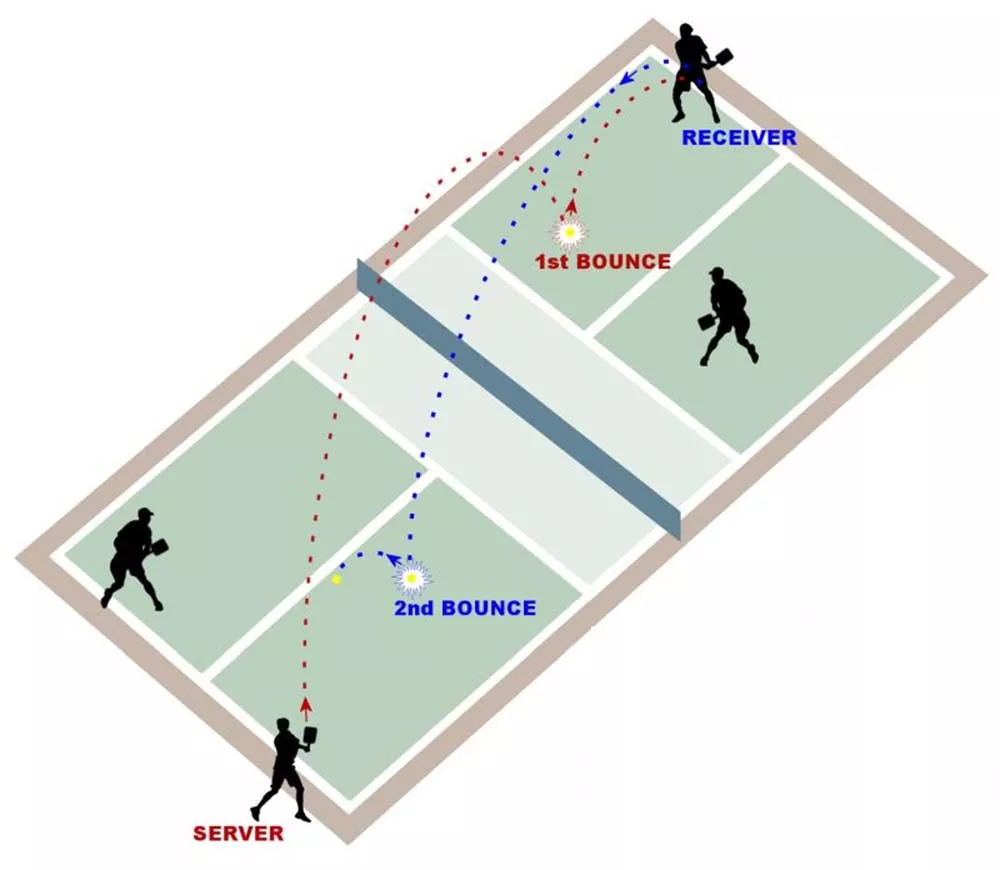
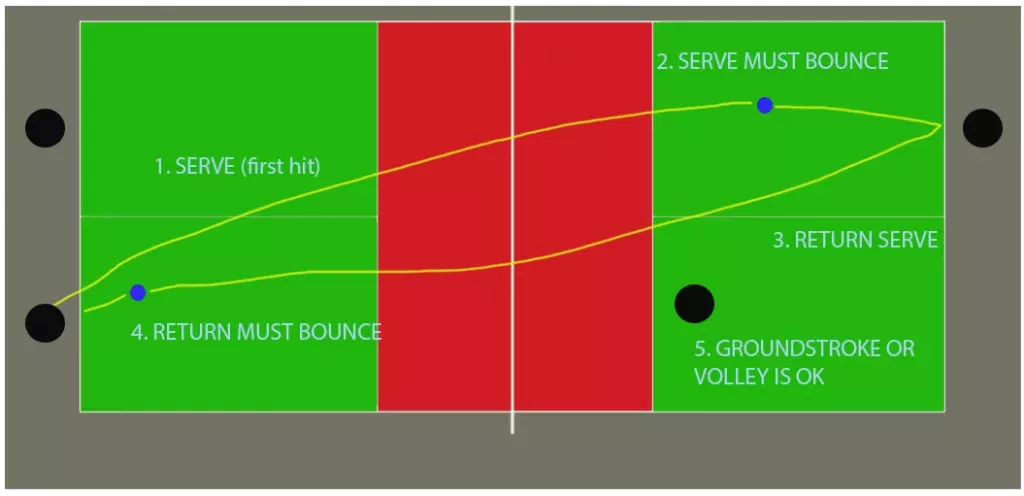
The double bounce rule in pickleball says the receiving team must let the serve bounce once, and the serving team must let the return bounce once, before either side can volley. That means two bounces happen — one on each side — before players may hit the ball in the air.
Why this matters:
- It prevents short, aggressive serves from being volleyed at the net right away.
- It creates a clearer rhythm for rallies.
- It reduces risk of injury by forcing baseline play at the start.
My experience: in early matches I tried to rush the net right after serving. I lost points because I forgot the double bounce rule. Once I learned to step up after two bounces, my net game improved and I made better choice plays.

Why the double bounce rule matters for strategy and safety
The double bounce rule shapes how players begin every point. It affects court position, shot selection, and team strategy.
How it impacts gameplay:
- Court position: Players usually stay back for the first two shots.
- Shot choice: Serves and returns are designed to land deep enough to make the opponent move.
- Net play timing: You only move up to volley after the two bounces, reducing chaos at the net.
Safety and fairness:
- It lowers injury risk from sudden near-net volleys after the serve.
- It evens the play between attackers and defenders early in the point.
From a tactical view, understanding what is the double bounce rule in pickleball lets you plan when to approach the net. When my partner and I used the rule to time our approach, we won more quick volleys and avoided being lobbed over.

How to apply the double bounce rule in real play
Follow these steps to use the rule correctly and confidently.
-
Serve deep and legal
- Aim for a serve that lands near the baseline of the receiving side.
- A deep serve forces a weaker return and buys time.
-
Receiver returns after the bounce
- Let the serve bounce once.
- Use a controlled, low return that lands near the baseline or kitchen line.
-
Server’s side must let the return bounce once
- Wait for the ball to bounce before you volley or hit an overhead.
- Then you may choose to move forward or play from the baseline.
-
Move to the net after the two bounces
- Most teams move up to the kitchen line after the second bounce.
- Communicate with your partner to avoid collisions.
Example sequence:
- Server serves; ball bounces on receiver side.
- Receiver returns; ball bounces on server side.
- Now either side can volley.
Practical tip: count the bounces mentally in early games until it becomes automatic. This helped me stop making illegal volleys under pressure.

Common mistakes, calls, and how officials enforce the rule
New players often miss simple points because of avoidable mistakes.
Common errors:
- Volleying the serve or the first return before it bounces.
- Poor footwork that crosses the kitchen line during the two-bounce period.
- Misreading whether the ball actually bounced inside court lines.
How officials call it:
- A fault is called if a player volleys before the second bounce has occurred.
- Umpires may warn recreational players once, but formal matches enforce the rule strictly.
Avoiding errors:
- Practice pausing after your shot until you see or feel the bounce.
- Use “mine” and “yours” calls with doubles partners to reduce confusion.
Real-game anecdote: I once hit a winner after rushing the net only to be called for fault because the return hadn’t bounced on my side. It was a costly lesson. Slow down on the first two shots and play smart.
Drills and practice tips to internalize the double bounce rule
Short drills help make the rule automatic.
Drills to try:
-
Serve-and-wait drill
- One player serves; both players delay moving for two bounces.
- Repeat until both players approach only after two bounces.
-
Two-bounce approach drill
- Server serves; return is played; server steps to the kitchen line only after the second bounce.
- Emphasize movement timing and split-step.
-
Live point restriction
- Play points where no one can volley until the second bounce.
- This builds discipline under pressure.
Practice notes:
- Start slow. Use half-speed rallies to focus on timing.
- Add pressure gradually by increasing shot speed.
- Record practice sessions to spot early volleys and fix them.
From my coaching: these drills fixed a bad habit where players constantly stepped forward too early. After a few sessions, it became muscle memory to wait for the second bounce.

Tips for doubles teams: communication and positioning
Doubles teams benefit most from clarity on the double bounce rule.
Key tips:
- Call “two” or “wait” if you’re unsure whether the second bounce occurred.
- The server’s partner should back up slightly on the return to avoid stepping in too soon.
- Plan who approaches the net after the second bounce. Anticipate the weaker side.
Positioning idea:
- Both players start away from the kitchen line.
- After the second bounce, the stronger mover attacks the net while the partner covers lobs.
I once coached a team that lost points by both players moving early. A simple plan — one moves, one covers — fixed their timing instantly.
Frequently Asked Questions of what is the double bounce rule in pickleball
What exactly is the double bounce rule in pickleball?
The rule requires that the ball bounce once on the return of serve and then bounce once again on the serving side before volleys are allowed. This ensures the first two shots are groundstrokes.
Can I hit a volley on the return of serve?
No. You cannot volley the return of serve. The return must bounce on the server’s side first, making a volley illegal until after two bounces.
Does the double bounce rule apply in singles and doubles?
Yes, the double bounce rule applies equally in singles and doubles play at all levels. Both formats must follow the same initial two-bounce requirement.
What happens if I volley before the second bounce?
If you volley before the second bounce, it is a fault and the point is awarded to the opponent. In tournaments, officials enforce this consistently.
How do referees prove the second bounce didn’t happen?
Referees watch the court and listen for the bounce. In formal matches, line judges and umpires coordinate to make the call. Video review is rare at amateur levels.
Can I step into the kitchen to volley after the two bounces?
Yes, you may enter the kitchen to volley after the two bounces, but you must avoid touching the non-volley line while volleying. Kitchen rules still apply.
Conclusion
The double bounce rule in pickleball is simple but powerful. It creates a fair, safer start to every point and shapes your strategy from serve to net play. Practice the two-bounce sequence in drills, communicate clearly with partners, and resist the urge to rush the net. Do this and you’ll reduce faults, win more points, and enjoy cleaner rallies.
Take action today: try a serve-and-wait drill in your next practice session, share this article with a partner, or leave a comment about your own double bounce stories.