
A pickleball court measures 20 by 44 feet with a 34-inch center net.
If you have ever wondered what size is a pickle ball court, you are in the right place. I’ve built and taped dozens of courts for schools, HOAs, and weekend players. In this friendly guide, I will explain what size is a pickle ball court, how to measure it right, and the space you need for safe play. Stick with me to learn the exact specs, pro tips from the field, and smart ways to convert the spaces you already have.
Standard Pickleball Court Dimensions
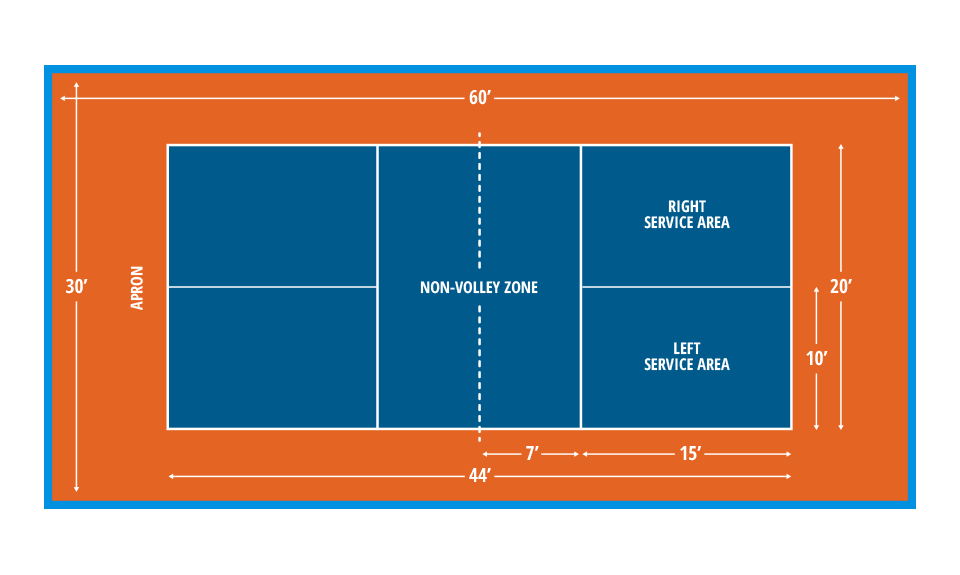
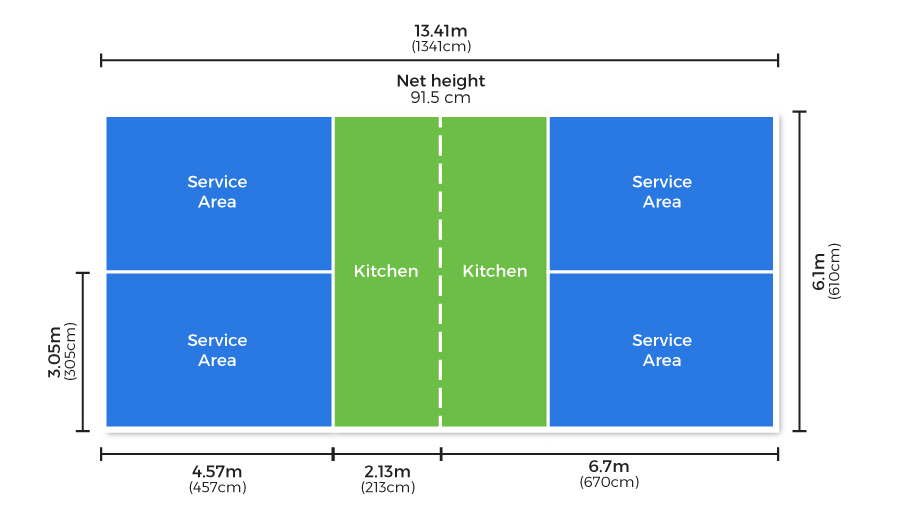
The official pickleball court size is 20 feet wide by 44 feet long for both singles and doubles. That is the playing area inside the lines. The net stands 36 inches high at the posts and 34 inches at the center.
Each side has a 7-foot non-volley zone, also called the kitchen. Service courts are the two boxes on each side, split by a centerline. Lines are 2 inches wide and are part of the area they mark.
In meters, the court is about 6.10 by 13.41. Most events follow these sizes, based on the current rulebook. If you searched what size is a pickle ball court, this is the official answer used for league and tournament play.
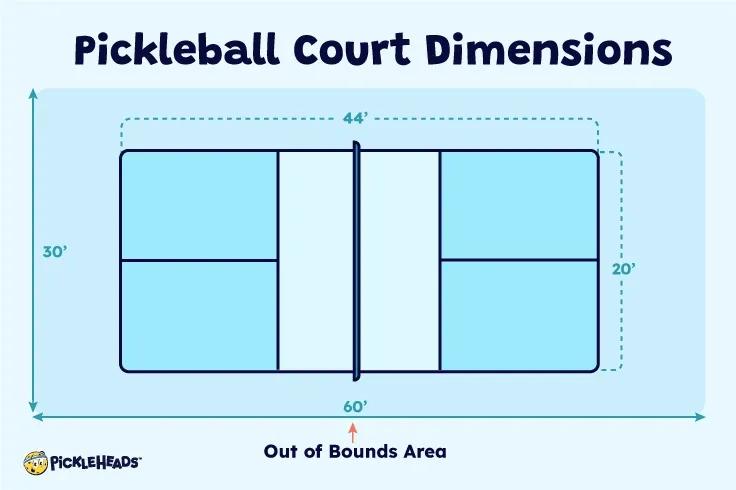
For overall space, plan more room around the court for safe movement. The minimum playing area is 30 by 60 feet. The preferred playing area is 34 by 64 feet. Some venues use about 40 by 64 feet for premier events and better run-out space.
If your goal is to teach a class, host open play, or set up a permanent court, use the full 20 by 44 feet. This ensures rules compliance and helps players build good footwork. When people ask what size is a pickle ball court, I always add: think beyond the lines. The buffer space is a big part of safe design.
Key Areas on the Court
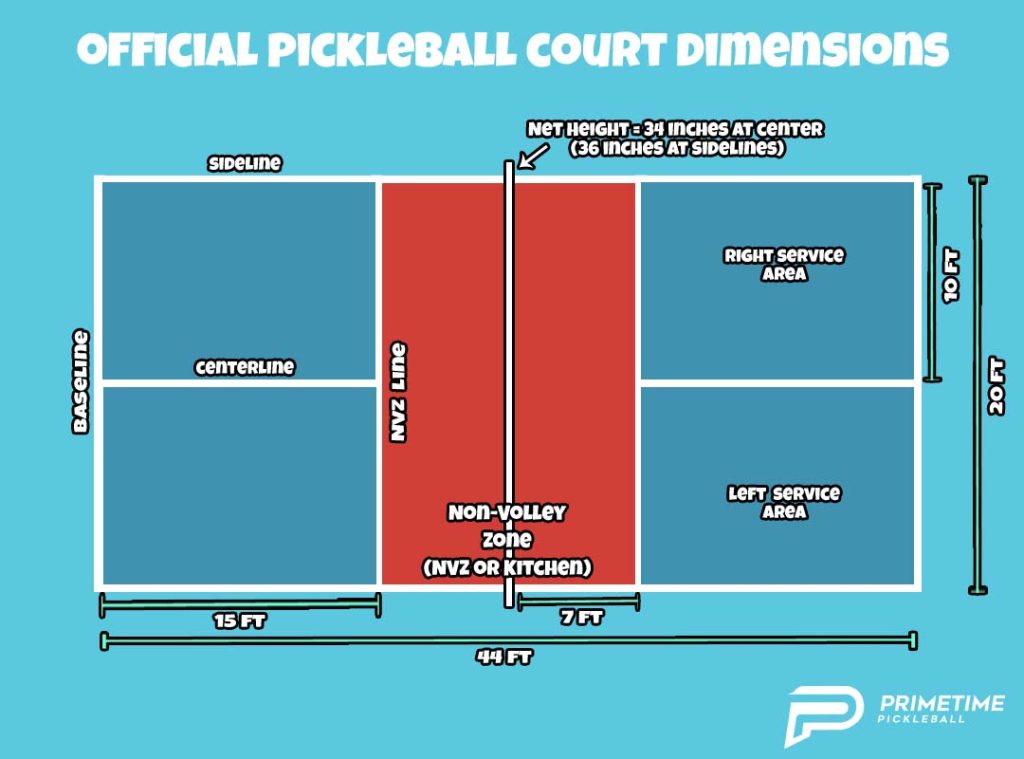
Understanding the zones makes play smoother and safer. Here is a fast tour.
- Baseline: The back line on each side. Serves must land in the opposite diagonal service box.
- Sidelines: The outer edges of the 20-foot width.
- Non-volley zone (the kitchen): 7 feet from the net on both sides. You cannot volley from inside this zone.
- Centerline: Splits the left and right service courts. It runs from the kitchen line to the baseline.
- Service courts: Each is 10 by 15 feet, formed by the centerline, kitchen line, sideline, and baseline.
- Net and posts: Posts are set so the net spans 21 feet 9 inches between the inside faces. That allows proper tension and the 34-inch center height.
These parts are the same indoors and outdoors. They also do not change for singles play. If a friend asks what size is a pickle ball court layout, show them these zones first.

Space Requirements and Layout Planning
Courts feel very different based on the space you leave around them. Small run-off zones can cause trips or jams.
- Minimum space: 30 by 60 feet per court. This is the least I suggest for casual play.
- Ideal space: 34 by 64 feet per court. This gives better run-out and safer corners.
- Orientation: North–south is best. This reduces glare from the sun across the net.
- Fencing: 10–12 feet high is common. Use wind screens outdoors when needed.
- Lighting: Aim for even light across the whole space. About 30–50 foot-candles is common for community play.
- Accessibility: Leave wide gates and aisles. A 42-inch gate helps wheelchairs and carts.
When I plan a layout, I walk the space and mock out the corners with string. This catches slope issues, drains, and door swings. If the first thing on your mind is what size is a pickle ball court, the next thing should be how much space your players need to move around it.
Converting Existing Spaces
You can set up great courts without building from scratch. Here are common conversions that work well.
- Tennis courts: A single tennis court can fit two to four pickleball courts. Four courts fit when you use the 30 by 60-foot minimum spaces and portable nets. Use a north–south layout if possible and add windscreens for comfort.
- Basketball gyms: Tape lines on wood or synthetic floors. Use portable nets. Check that the lighting is even and not harsh.
- Parking lots or driveways: Use chalk or painter’s tape. Watch for slope and cracks. Rubber bases can help keep nets stable.
- Multi-use rec rooms: Choose light, high-contrast line colors so players can spot the kitchen line fast.
I have taped four courts on one tennis court many times. The trick is good spacing, clear lines, and sturdy nets. If someone in your group asks what size is a pickle ball court when converting, remember it is always 20 by 44 feet. The change is in the buffer area and net type.
Net, Lines, and Equipment Specs
Small details matter. They help the court play true and stay safe.
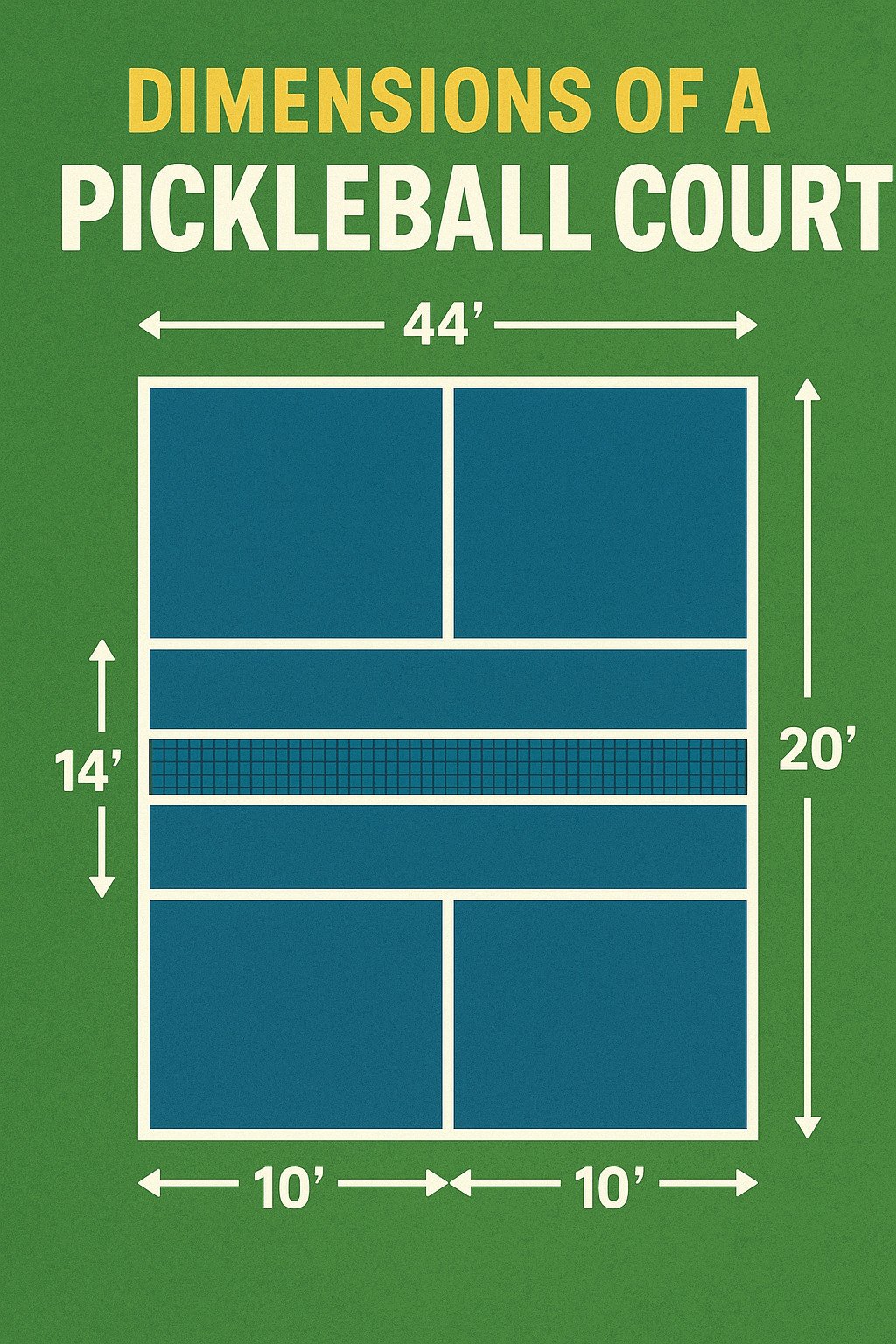
- Net height: 36 inches at the posts, 34 inches at the center.
- Net width: Net spans 21 feet 9 inches between inside faces of the posts. Posts sit just outside the 20-foot sidelines.
- Net tension: Use a center strap to hit 34 inches. This keeps bounce and volleys consistent.
- Line width: 2 inches. Non-volley zone lines are part of the kitchen, so touching them counts as being in the zone.
- Surface: Outdoor acrylic over asphalt or concrete is common. Indoors, wood or sport tiles work well.
- Color: Use high contrast between lines and surface. White or bright yellow lines show best on green or blue.
These standards come from the official rulebook and facility guidelines. If the question is what size is a pickle ball court with all its markings, use these specs every time.

Indoor vs Outdoor Considerations
Court size stays the same, but the experience changes by location.
- Surface feel: Indoors gives a truer bounce and less wind. Outdoors needs ball control in wind and sun.
- Ball types: Indoor balls have larger holes and softer feel. Outdoor balls have smaller holes and are stiffer.
- Lines and glare: Glossy floors can glare. Choose matte paints and strong contrast.
- Weather and drainage: Outdoors need a slight slope for runoff. Keep the surface clean to prevent slips.
I switch balls and adjust my dinks based on venue. Still, the answer to what size is a pickle ball court does not change indoors or outdoors. The court stays 20 by 44 feet.
Common Mistakes and Pro Tips
I see the same layout mistakes again and again. Avoid these and your court will feel great.
Common mistakes
- Short kitchen: Marking the non-volley zone at 6 feet instead of 7 feet.
- Tight run-off: Leaving less than 3 feet at the sides or 5 feet at the baselines.
- Wrong net height: Forgetting the 34-inch center strap.
- Low contrast lines: Using colors that blend into the surface.
- Crowded conversions: Cramming four courts on a tennis court without safe aisles.
Pro tips
- Use two 50-foot tapes. Hook both and measure from the same corner to speed up marking.
- Snap chalk lines, then tape. Paint last if it is a permanent build.
- Confirm the 44-foot length twice. Baselines creep if you only measure from one side.
- Test play with two games before painting. Adjust centerlines if needed.
- Keep a small level for the net posts. Straight posts hold tension better.
When we teach new volunteers, we always repeat what size is a pickle ball court and why the buffer space matters. A correct layout makes rallies longer and play safer.

Cost and DIY Taping Guide
Costs vary by site, surface, and gear. Here are typical ranges I see on projects.
Costs
- Painter’s tape and chalk for a temporary court: $20–$60 per court.
- Portable net systems: $120–$300 each, more for pro frames.
- Resurfacing and painting a dedicated court: Often a few thousand dollars depending on labor and coatings.
- Full build with base, fencing, and lights: Varies widely by region and site conditions.
Quick DIY taping steps
- Clear and sweep the surface.
- Mark one baseline. Measure 20 feet across for the width.
- From each baseline corner, measure 44 feet to set the opposite baseline.
- Connect sidelines to form the 20 by 44-foot rectangle.
- Mark the net line through the center. That is the 22-foot line from each baseline.
- From the net line, measure 7 feet on both sides to mark the kitchen lines.
- Add the centerline on each side from the kitchen line to the baseline.
- Tape all lines at 2 inches wide with high-contrast tape or paint.
- Set the net at 36 inches at the posts and 34 inches at center with a strap.
- Rally test for visibility and spacing, then adjust.
If a neighbor asks what size is a pickle ball court before you tape, tell them 20 by 44 feet. Then use this checklist to nail the rest.
Frequently Asked Questions of what size is a pickle ball court
What size is a pickle ball court in feet and meters?
It is 20 by 44 feet, which is about 6.10 by 13.41 meters. This applies to both singles and doubles.
Is a pickleball court the same size as a badminton court?
Yes, it matches a doubles badminton court footprint at 20 by 44 feet. The net height and zones differ, but the size is the same.
How much space do I need around the court?
The minimum playing area is 30 by 60 feet. The ideal playing area is 34 by 64 feet for safer movement.
What is the size of the non-volley zone?
The non-volley zone is 7 feet from the net on each side. The line is part of the zone.
What is the correct net height for pickleball?
Set the net to 36 inches at the posts and 34 inches at the center. Use a center strap to hold the height.
How many pickleball courts fit on one tennis court?
Often four courts can fit on one tennis court with portable nets and smart spacing. Some sites choose two courts for more buffer space.
Can I play on a smaller court at home?
You can practice skills in a smaller area, but games feel tight and unsafe. For real play, stick to the 20 by 44-foot size.
Conclusion
You now know exactly what size is a pickle ball court and how to set it up right. The official size is 20 by 44 feet, with a 34-inch center net, a 7-foot kitchen on each side, and clear 2-inch lines. With the right buffer space, your court will play smooth, safe, and fair.
Ready to build or upgrade your setup? Use the steps and tips here, share them with your crew, and set a play date. If this helped, subscribe for more how-tos, or drop your questions below so we can keep improving your game.