Consider paddle weight, grip size, core material, and surface for control, power, and spin.
Stepping onto the pickleball court for the first time is exciting, but walking into a store to buy a paddle can be overwhelming. As someone who has spent years on the court and tested dozens of paddles, I’ve seen countless new players grab the first paddle they see, only to struggle with their game later. Understanding what to look for in a pickleball paddle isn't just about picking a cool design; it's about finding a partner that complements your playing style and helps you improve. This guide will break down everything you need to know, from weight to shape, so you can choose your paddle with confidence and find the perfect one for your game.
Paddle Weight: The Foundation of Your Feel
The first and most important decision you'll make is about the paddle's weight. It dramatically affects your swing speed, power, and control. I remember using a paddle that was too heavy for me when I started, and my arm felt like jelly after just one game. Finding the right balance is key to understanding what to look for in a pickleball paddle.
Paddles are generally grouped into three weight categories:
- Lightweight (Under 7.5 ounces): These paddles offer excellent maneuverability and quick hand speed at the net. They are easier on your arm and shoulder, making them great for players who prioritize control and placement over raw power. The downside is that they can feel less stable against hard shots.
- Midweight (7.5 to 8.4 ounces): This is the sweet spot for most players, from beginners to pros. Midweight paddles provide a fantastic blend of power, control, and stability. They give you enough mass to drive the ball effectively without sacrificing too much hand speed during fast kitchen exchanges.
- Heavyweight (8.5 ounces and up): If you want to hit powerful drives from the baseline, a heavyweight paddle is your friend. The extra mass generates more power with less effort from you. However, this comes at the cost of slower reaction time and can lead to arm fatigue if you’re not used to it.

Grip Size: Your Connection to the Paddle
Grip size, or circumference, is often overlooked, but it's your direct link to the paddle. A grip that’s too large can slip in your hand and strain your wrist and elbow. One that’s too small forces you to squeeze too tightly, leading to fatigue and limiting your wrist action. This is a crucial element in what to look for in a pickleball paddle.
A simple way to find your approximate grip size is the finger test. Hold the paddle with your dominant hand. You should be able to slide the index finger of your other hand between your palm and your fingertips. If there's not enough room, the grip is too small. If there's too much space, it's too big. When in doubt, it’s always better to choose a smaller grip, as you can easily build it up with overgrip tape.

Core Material and Thickness: The Engine of Your Paddle
The inside of your paddle, known as the core, is its engine. It determines how the paddle feels, sounds, and performs. The material and its thickness are what separate a paddle built for power from one designed for delicate touch shots. Let's break down the most common types.
Polymer (Polypropylene) Core: The Modern Standard
This is by far the most popular core material on the market today. Polymer cores are made of a plastic honeycomb structure that offers a soft feel, a quiet sound, and excellent control. They absorb impact well, making them great for dinking and control shots. Most paddles you see on the court will have a polymer core.
Nomex Core: The Power Player's Choice
Nomex was the original honeycomb core material. It's a harder, denser material that provides a lot of pop and power. These paddles are known for being loud, creating a distinct "pop" sound on contact. While they excel at power, they offer less control and a smaller sweet spot compared to polymer cores.
Aluminum Core: The Control Specialist
Aluminum cores are less common now but still have their fans. They are known for providing exceptional control and a light feel. However, they are the least powerful of the core types and are more prone to denting over time, which can create dead spots on the paddle face.
Core Thickness Explained
Core thickness plays a massive role in performance. A thicker core (usually 16mm or more) absorbs more energy, which gives you more control and a softer feel. This is ideal for players who want to perfect their dink game. A thinner core (13mm or less) is stiffer and provides more pop and power, perfect for players who love to drive the ball.
Surface Material: Where Spin is Born
The paddle's face, or surface material, is where the ball makes contact. This is what influences your ability to generate spin and feel the ball. Figuring out the right surface is a big part of what to look for in a pickleball paddle.
Carbon Fiber/Graphite Face
These materials are very strong and stiff, creating a solid and responsive feel. Graphite faces are known for providing excellent touch and control. Carbon fiber offers similar benefits and is often used in high-end paddles for its durability and performance.
Fiberglass (Composite) Face
Fiberglass surfaces have a bit more flex than graphite or carbon fiber. This flexibility creates a "trampoline effect" that gives the ball more pop and power. Many players find it easier to generate spin with a fiberglass face because the ball stays on the paddle a fraction of a second longer.
Raw Carbon Fiber Face
This is the latest trend in paddle technology, designed for maximum spin. These surfaces have a naturally textured or gritty feel that grabs the ball, allowing you to generate massive amounts of topspin on drives and serves. I switched to a raw carbon paddle last year, and the difference in my spin game was immediate and undeniable.
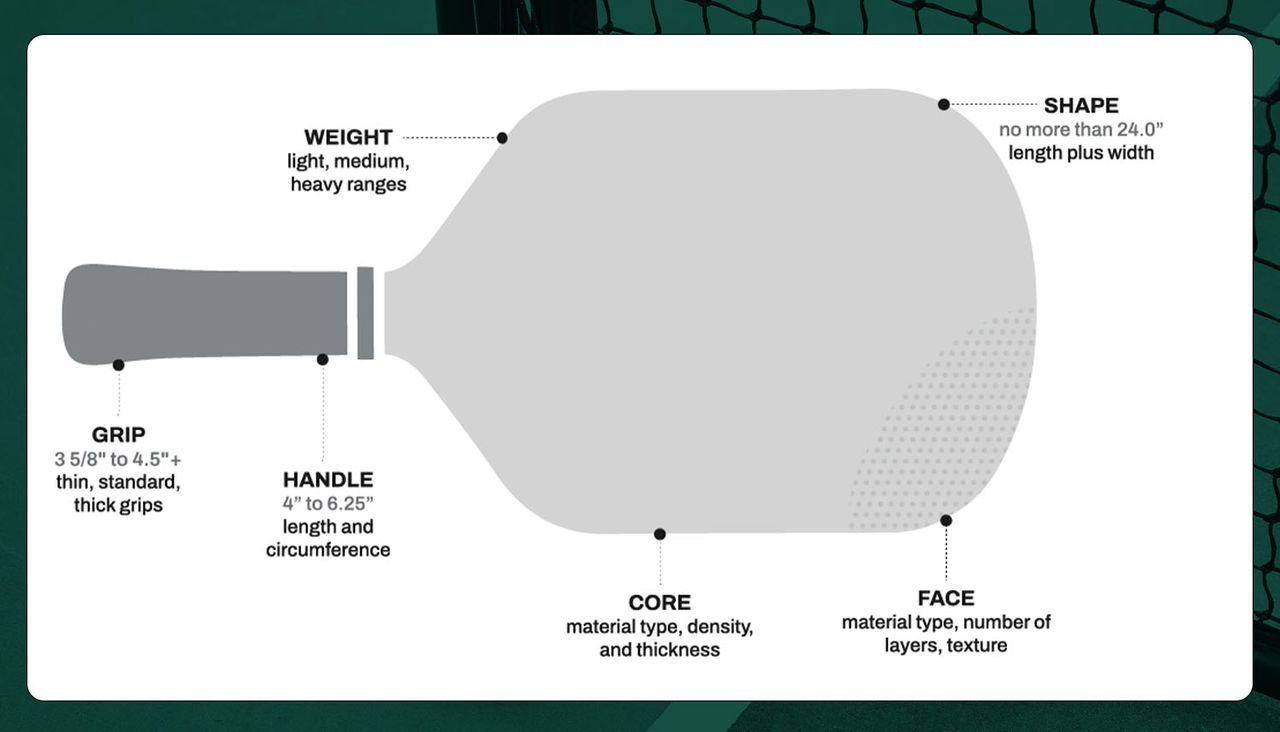
Paddle Shape: Tailoring Your Sweet Spot
Pickleball paddles come in a few different shapes, and each one offers a unique advantage. The shape affects the size and location of the sweet spot—the area on the paddle face that provides the most consistent and powerful response.
- Standard Shape: Also known as a wide-body paddle, this is the most common shape. It’s typically around 8 inches wide and offers a large, forgiving sweet spot in the center of the paddle. This is an excellent choice for beginners.
- Elongated Shape: These paddles are longer and narrower than standard shapes, giving you extra reach for shots near the baseline or out wide. The trade-off is a smaller, less forgiving sweet spot that is often located higher up on the paddle face.
- Edgeless vs. Edge Guard: Most paddles have a protective plastic edge guard around the perimeter. This protects the paddle from scrapes and dings. Edgeless designs offer a slightly larger hitting surface, but they are much more susceptible to damage if you scrape them on the court.
[Code-Img]
Putting It All Together: A Beginner's Checklist
If you're new to the sport, all this information can still feel like a lot. To simplify your search, here’s a quick checklist for what to look for in a pickleball paddle for your first purchase:
- Weight: Start with a midweight paddle (7.5 – 8.4 ounces).
- Core: Choose a polymer core for its forgiving nature and great all-around performance.
- Surface: A fiberglass or composite face will give you a good blend of power and control.
- Shape: A standard, wide-body shape will offer the largest sweet spot.
- Grip: Use the finger test to find a comfortable grip size, and remember you can always add an overgrip.
Most importantly, if you have the chance, try to demo a few paddles from friends or a local shop. Nothing beats feeling how a paddle performs in your own hands.
[Code-Img]
Frequently Asked Questions of what to look for in a pickleball paddle
How much should I spend on my first pickleball paddle?
For your first paddle, you can find excellent options in the $50 to $100 range. These paddles offer great technology and performance without the premium price tag of professional models.
What is the most important factor when choosing a paddle?
Weight is the most critical factor, as it impacts power, control, and your comfort on the court. Finding the right weight for your strength and play style will make the biggest difference in your game.
Does a paddle's color or design matter?
Functionally, the color or design has no impact on performance. Choose a design you love, but make sure the paddle’s technical specifications are what you need first.
How do I know if my grip size is correct?
Use the finger test: hold the paddle and slide your non-hitting index finger in the space between your palm and fingertips. A proper fit means your finger fits snugly in that gap.
How long does a pickleball paddle last?
A paddle's lifespan depends on how often you play, but most recreational players find their paddle lasts one to three years. Competitive players may replace their paddles more frequently as the core softens and the surface texture wears down.
Conclusion
Choosing the right pickleball paddle is a personal journey that balances power with control and comfort with performance. By focusing on the key factors—weight, grip size, core, and surface material—you can cut through the noise and find a paddle that truly feels like an extension of your arm. Remember that what works for your friend might not work for you, so think about your own style of play.
Now that you know what to look for in a pickleball paddle, you're ready to make an informed choice. Get out there, try some paddles if you can, and select the one that will help you enjoy this amazing sport to the fullest. Let us know in the comments which paddle you choose