A volley in pickleball is hitting the ball before it bounces, typically near the net.
I’ve played and coached pickleball for years, and I’ll walk you through exactly what us volley in pickleball means, why it matters, and how to volley with confidence. This guide covers rules, technique, footwork, drills, common mistakes, and strategies — all explained in clear, friendly language so you can start practicing right away.
What is a volley in pickleball?
A volley is any shot you make before the ball bounces. In pickleball, volleys usually happen close to the net. When you volley, you use a short swing and soft touch. The goal is to control pace and placement.
Understanding what us volley in pickleball starts with this simple rule. Volleys are a key part of net play. Good volleying forces errors and sets up put-away shots.
Rules tied to the volley and the non-volley zone
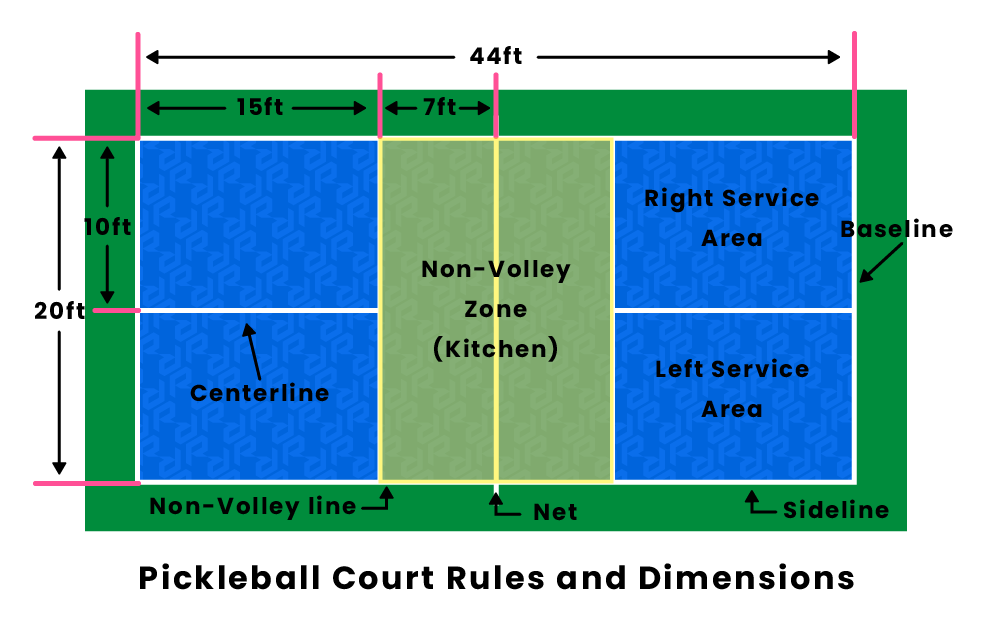
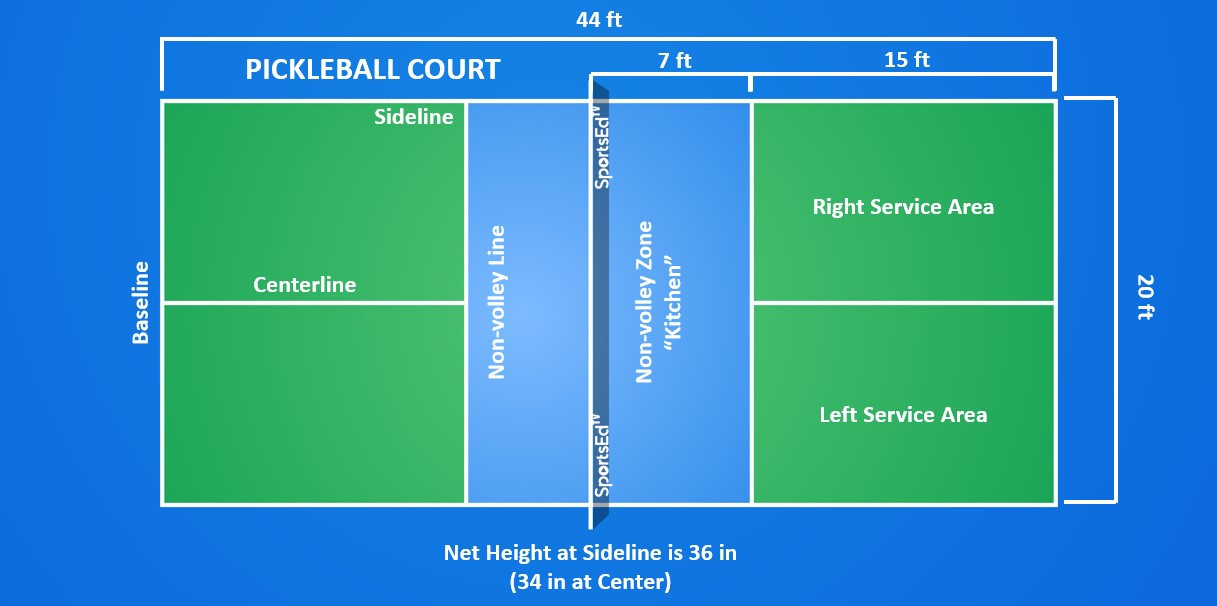
Pickleball has a special area called the non-volley zone. This zone is 7 feet from the net on both sides. You cannot volley the ball while your foot is in this zone. If you step in and volley, it is a fault.
Key rules about what us volley in pickleball include:
- You may volley anywhere outside the non-volley zone.
- If you jump and land in the non-volley zone after a volley, it’s a fault.
- The ball must clear the net and land in bounds, or the volley counts as a fault.
These rules make volley timing and foot placement crucial. Learn them well to avoid common errors.
Types of volleys and basic technique
There are several volley styles that players use. Each has a place depending on speed, angle, and opponent positioning.
Common volley types:
- Block volley: Minimal swing, use paddle face to redirect pace.
- Punch volley: Short, firm motion to drive the ball forward.
- Drop volley: Soft touch to make the ball fall short and tight to the net.
- Angle volley: Aim diagonally to stretch opponents off the court.
Basic technique steps:
- Keep paddle up and eyes on the ball.
- Use a continental grip for quick adjustments.
- Step forward with the non-dominant foot when punching.
- Keep your swing short and compact to reduce errors.
Practicing these basics improves your volley consistency and confidence.
Footwork, positioning, and court sense
Volley success depends on where you stand and how you move. Good footwork gets you into position quickly and keeps you ready for the next shot.
Tips for footwork and positioning:
- Stand just behind the non-volley zone line when serving or returning.
- Small, quick steps maintain balance and allow sudden moves.
- Turn shoulders early to prepare for an angle or punch volley.
- Recover to a neutral spot after each volley to cover mid-court.
Learning court sense helps you predict opponent shots. Anticipation often beats raw speed.
Drills to practice volleys
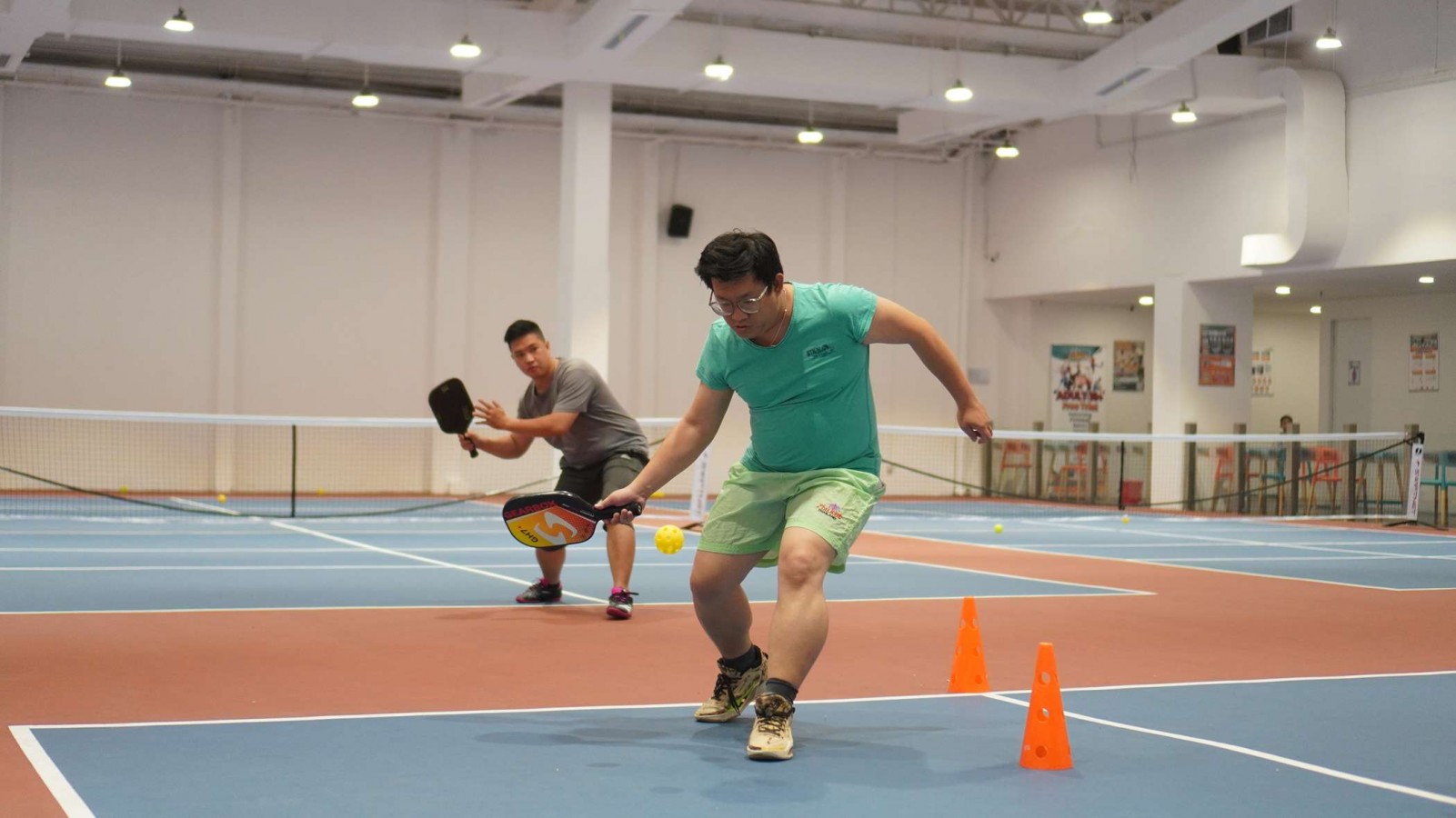
Practice with purpose. Short drills build muscle memory for what us volley in pickleball should feel like.
Simple volley drills:
- Partner block drill: Stand close and block rapid shots back and forth.
- Punch volley drill: Feed medium-paced balls and practice short, firm drives.
- Drop-and-volley drill: Alternate soft drops with aggressive volley returns.
- Footwork ladder: Combine volleying with lateral quick steps to improve balance.
Do focused sets of 5–10 minutes to see steady improvement.
Common mistakes and how to fix them
Many players struggle at first with volleying. Fixing these mistakes speeds progress.
Mistakes and fixes:
- Over-swinging: Shorten your swing and focus on paddle face control.
- Planting feet: Keep moving; avoid freezing when the ball comes.
- Wrong grip: Use a neutral continental grip to handle both forehand and backhand volleys.
- Standing too deep: Move closer to the NVZ line for better attack opportunities.
I remember early matches where I stood too upright. A coach told me to bend knees and keep paddle higher. That tip changed my volley game.

When to volley vs when to let it bounce
Knowing whether to volley or let the ball bounce is part of good strategy. The choice depends on speed, angle, and risk.
Guidelines for choosing:
- Volley when the ball is short, low, and near the net.
- Let it bounce if you’re out of position or the ball is too high.
- Use volleys to pressure opponents and shorten rallies.
- Choose a bounce when you want time to reset or attack from a better angle.
Deciding quickly and committing makes your play more consistent.

Equipment and grip choices for better volleys
Your paddle and grip affect volley outcomes. Small tweaks yield big returns.
Equipment tips:
- Choose a paddle with good touch and control for short volleys.
- Lighter paddles help with quick reaction volleys.
- Use a comfortable grip size to avoid wrist strain.
Grip advice:
- Continental grip is ideal for most volley situations.
- Slightly choke up for faster reactions and better control.
- Switch grip intentionally during practice to know the feel.
Good gear and a practiced grip improve what us volley in pickleball looks like in real games.
Advanced volley strategies and tactics
Once basic volleys are reliable, add strategy. Advanced play combines angles, pace changes, and teamwork.
Tactical ideas:
- Use sharp angle volleys to force wide returns.
- Alternate between soft drops and hard punches to disrupt rhythm.
- Communicate with your partner to cover poaches and switches.
- Step into the kitchen line to threaten volleys, then retreat safely.
These strategies help you convert volley opportunities into points.
Frequently Asked Questions of what us volley in pickleball
What us volley in pickleball exactly mean?
It means hitting the ball before it bounces, usually near the net. Volleys are quick volleys used to control the point.
Can you volley inside the non-volley zone?
No. You cannot volley while standing in the non-volley zone. Stepping into it during a volley results in a fault.
Which grip is best for volleying?
The continental grip is most recommended. It allows quick changes between forehand and backhand volleys.
How do I practice volley contact consistency?
Use short, repetitive drills and focus on a compact swing. Slow practice with a partner builds consistent contact.
When should I avoid volleying in a match?
Avoid volleying if you are off-balance, the ball is high and heavy, or if you’re too deep on the court. Letting it bounce may be safer.
Does paddle weight affect volley performance?
Yes. Lighter paddles help with fast reaction volleys, while heavier paddles can add power but slow quick responses.
How close should I stand to the net for volleys?
Stand just behind the non-volley zone line when ready to volley. This gives good reach while staying legal.
Conclusion
Volleys are a core skill in pickleball. They let you control the net, shorten rallies, and create point-winning chances. Practice simple drills, master compact technique, and learn the rules around the non-volley zone. Start with basic block volleys, build to punches and drops, and add strategy as you improve. Try focused practice sessions, keep your paddle up, and commit to short swings — you’ll see faster progress.
Get out on the court, practice the volley tips here, and leave a comment with your favorite volley drill or question.